
Choosing a Ceramic Insulated Band Heater in 2026 requires more than comparing price, wattage, and delivery time. The right selection must match temperature, barrel geometry, material flow, and maintenance conditions. It must also support stable production.
The International Energy Agency’s Energy Technology Perspectives 2024 reports that industry consumes approximately 37% of global final energy. Process heating remains a major energy challenge. The U.S. Department of Energy’s Industrial Decarbonization Roadmap also identifies industrial heat as a key electrification opportunity. These findings make heater efficiency, control accuracy, and service life increasingly important.
Small details matter.
A band heater with incorrect diameter can create air gaps, hot spots, and uneven plastic melting. Excessive watt density may damage a barrel surface or degrade sensitive materials. A weak clamping system can worsen heat transfer during repeated thermal cycling. Engineers should verify the required operating temperature, maximum temperature, insulation type, voltage, wattage, lead protection, and thermocouple position.
Ceramic insulation usually suits demanding applications because it can tolerate higher temperatures than many conventional mica designs. However, “higher temperature” does not mean universal suitability. The machine’s heating zone, clamp design, airflow, and controller quality still determine performance. This is where product data sheets and application records deserve careful review.
Relevant safety requirements should be checked against applicable standards, including IEC 60519 and local electrical codes. Manufacturer testing, traceable materials, and documented quality procedures provide stronger evidence than marketing claims. Still, no specification sheet predicts every factory condition. Real installations may reveal uneven surfaces, contamination, or unexpected thermal losses. A thoughtful 2026 selection process leaves room for testing, measurement, and reconsideration.
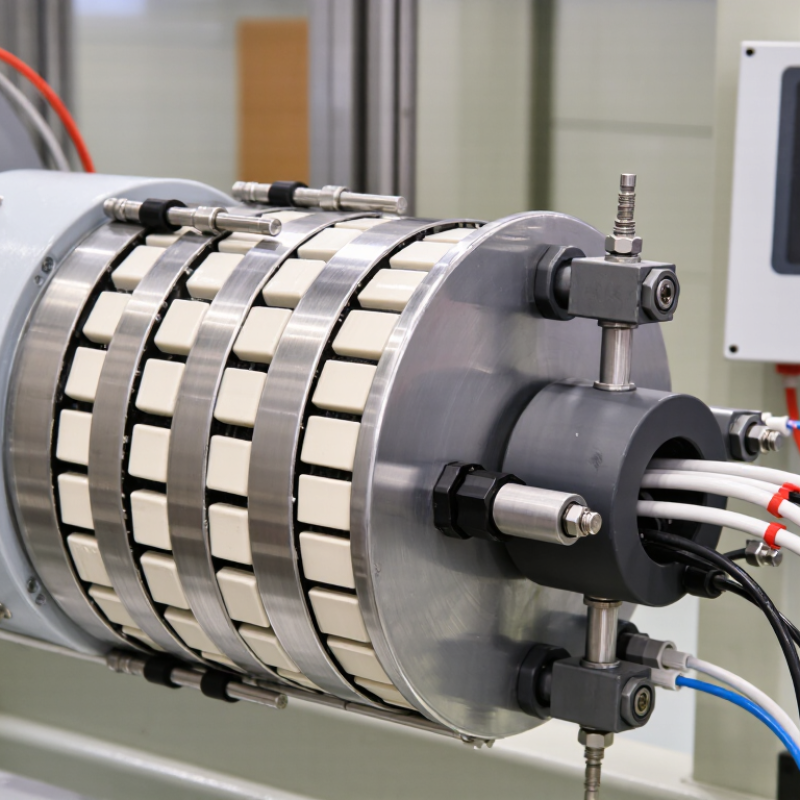
A ceramic insulated band heater is an electrical heating device shaped like a flexible metal collar. It fits around barrels, nozzles, pipes, and other cylindrical surfaces. Inside, resistance coils generate heat, while ceramic fiber insulation reduces heat loss. The metal jacket spreads warmth across the contact area. That matters.
Ceramic insulation also helps the heater reach higher operating temperatures than many basic band designs. In plastic processing, it can support steady barrel heating and reduce energy escaping into the surrounding air.
Technicians usually check the heater’s inner diameter, width, voltage, wattage, and maximum temperature before installation. A small size mismatch can create cold spots. Too much wattage can damage the surface or connected controls.
From practical maintenance work, clamping pressure deserves attention. A loose band leaves air gaps, while excessive tightening may deform the heater. Both problems can shorten service life. A temperature sensor should sit firmly against the heated surface, not against insulation or an exposed coil. Electrical resistance and insulation should be tested before power is applied. Ceramic fiber can crack after repeated vibration, although minor surface wear may not immediately affect performance. It is not perfect. Dust, moisture, poor alignment, and rapid thermal cycling still require inspection when choosing a ceramic insulated band heater in 2026.

How to Choose a Ceramic Insulated Band Heater in 2026?
A ceramic insulated band heater converts electrical energy into controlled surface heat. Resistance coils generate heat when electric current passes through them. Ceramic blocks hold the coils in place and limit heat loss. The metal band then transfers heat around a barrel, nozzle, or die. That difference matters.
For 2026 selection, start with the surface that needs heating. Measure its diameter, width, and available installation space. Specify the target temperature and operating cycle. Match the wattage to the material and production speed. Lower watt density usually supports gentler heating. Higher watt density can respond faster, but it may create hot spots. Check the insulation rating, terminal position, and temperature sensor opening. In practical maintenance work, uneven clamping often causes cold areas. I have seen heaters fail early because installers ignored small gaps.
Choose corrosion-resistant metal for humid or demanding environments. Confirm that the heater suits the equipment’s voltage and control system. Request insulation resistance data and temperature test records from the supplier. A qualified technician should inspect wiring, grounding, and controller settings. Installation still matters. Tighten the band evenly, then recheck it after several heating cycles. Ceramic material can crack under impact or excessive pressure. My preference is cautious sizing, not maximum power. Still, no selection is perfect. A compact heater may warm quickly, but it can demand closer control. Record actual surface temperatures before changing the design.
How to Choose a Ceramic Insulated Band Heater in 2026?
Which Heater Specifications Match Your Application?
Choosing a ceramic insulated band heater starts with the equipment, not the catalogue. Measure the barrel diameter, heated width, and available clearance. A small measuring error can create uneven contact, slow heating, or damaged terminals. The heater’s inside diameter should fit closely when installed, while allowing proper clamping and thermal expansion.
Match the voltage and wattage to the machine’s electrical system. Then check watt density, because two heaters with equal wattage may heat different surfaces. Higher watt density can shorten heat-up time, but it may create hot spots on sensitive materials. For steady processing, moderate power and accurate temperature control are often safer. Check the maximum operating temperature, insulation rating, lead position, and terminal design. A thermocouple opening may also be necessary.
Think about the actual working conditions. Dust, vibration, frequent cleaning, and limited access can change the best specification. Ceramic insulation transfers heat efficiently, but poor installation can still waste energy. I have seen heaters fail early because installers tightened clamps unevenly. That detail matters. Confirm the controller, sensor location, and circuit protection before ordering. The heater should not simply fit the barrel; it should fit the process. Maybe this is where many selections go wrong. A specification sheet cannot replace checking the machine during a real production cycle.
| Application | Typical Equipment Diameter | Recommended Heater Width | Typical Operating Temperature | Suggested Watt Density | Common Voltage | Insulation and Construction | Temperature Sensing and Control | Recommended Configuration |
|---|---|---|---|---|---|---|---|---|
| Plastic injection molding barrel | 50–250 mm | 50–100 mm per zone | 180–350°C | 3–6 W/in² (0.47–0.93 W/cm²) | 120, 230, or 240 V | Ceramic fiber insulation with stainless-steel or nickel-chromium heating elements | Thermocouple or RTD in each heating zone; closed-loop controller | Multi-zone bands with adjustable clamps and a close-fit inner diameter |
| Extrusion barrel | 75–350 mm | 75–150 mm per zone | 200–400°C | 3–7 W/in² (0.47–1.09 W/cm²) | 230 or 240 V; three-phase systems may use separate circuits | Heavy-duty ceramic insulation designed for continuous operation | One sensor per controlled zone; PID control with solid-state switching | Several shorter bands to reduce temperature gradients and simplify replacement |
| Blown-film die and feed throat | 75–300 mm | 50–100 mm | 160–280°C | 2.5–5 W/in² (0.39–0.78 W/cm²) | 120 or 230 V | Low-profile ceramic band with reinforced terminals | Surface thermocouple or embedded sensor; independent over-temperature limit | Low-to-medium watt density and uniform circumferential heating |
| Rubber processing and compounding equipment | 100–400 mm | 75–150 mm per zone | 150–300°C | 2–5 W/in² (0.31–0.78 W/cm²) | 230 or 240 V | Vibration-resistant ceramic assembly with protected lead exits | RTD or thermocouple with gradual ramping to limit thermal shock | Moderate watt density, robust clamping, and allowance for thermal expansion |
| Chemical, laboratory, and pilot-scale vessels | 50–300 mm | 50–100 mm | 100–300°C | 1.5–4 W/in² (0.23–0.62 W/cm²) | 120 or 230 V | Ceramic insulation with corrosion-resistant external metal cover where required | RTD or thermocouple; use a separate safety limit controller | Lower watt density for sensitive materials and stable temperature control |
| Hot-melt adhesive and coating equipment | 50–250 mm | 50–100 mm | 120–220°C | 1.5–4 W/in² (0.23–0.62 W/cm²) | 120 or 230 V | Compact ceramic insulation with smooth outer surfaces for easier cleaning | Thermocouple or RTD close to the process zone; PID control | Low watt density, fast response, and independent temperature cutoff |
| Food, packaging, and sealing machinery | 25–150 mm | 25–75 mm | 100–250°C | 1.5–3.5 W/in² (0.23–0.54 W/cm²) | 120 or 230 V | Protected ceramic insulation with hygienic, easy-to-clean outer surfaces | Fast-response thermocouple and closed-loop controller | Short bands, accurate sensing, and guarded terminals in washdown areas |
| High-temperature metal and thermal-process equipment | 50–300 mm | 50–150 mm | 350–650°C maximum heater surface range, depending on design | 2–6 W/in² (0.31–0.93 W/cm²) | 230 or 240 V | High-temperature ceramic insulation; terminals and leads must be rated for the actual environment | High-temperature thermocouple, PID controller, and independent over-temperature protection | Use only when the heater, wiring, clamps, and controlled surface are all temperature-rated |
Choosing a ceramic insulated band heater starts with the process, not the catalog photograph. Ceramic fiber insulation reduces heat loss around barrels, pipes, and nozzles. Resistance wire quality affects temperature stability and service life. Stainless steel outer covers resist oxidation and repeated handling. Check each material’s maximum operating temperature, insulation rating, and thermal expansion data. A cheaper shell may look acceptable but deform after frequent heat cycles. That detail is easy to miss.
Design also changes performance. Hinged bands open quickly, while bolt-on designs often provide stronger contact. Split bands suit equipment with limited access. Measure the heated surface carefully. A small gap can create a bright hot spot and slow the rest of the barrel. Not ideal. Compare watt density, voltage, and total wattage together. Higher watt density may shorten warm-up time, but it can damage sensitive materials. Use a controller with a properly placed sensor, preferably near the actual process zone. Do not judge performance from surface temperature alone.
In practical testing, I would record warm-up time, energy use, and temperature variation at several points. Infrared readings can help, but reflective metal may distort them. Confirm readings with a calibrated contact sensor when accuracy matters. Some selection decisions remain imperfect because insulation, airflow, and machine age can change results.
How to Choose a Ceramic Insulated Band Heater in 2026?
Selecting the right ceramic insulated band heater starts with the barrel, not the catalogue. Measure the diameter, heating width, operating temperature, and available voltage. Confirm the heater’s watt density matches the material and process speed. Excessive watt density can scorch polymers and shorten service life. Too little power creates unstable temperature control. The IEA’s Energy Efficiency 2023 report states that industry consumed about 37% of global final energy in 2022. Small heating losses deserve attention. In practical maintenance work, loose clamping is a common and expensive mistake. Specify a heater that fits tightly around clean, even surfaces. Leave no air gaps. However, a perfect selection is not always possible. Process changes may require adjustable control or several heating zones.
Installation should follow the heater manufacturer’s torque, clearance, and wiring instructions. Isolate power before fitting or removing the unit. Use correctly rated cables, protective grounding, and independent over-temperature protection. Position sensors near the actual process surface, rather than relying only on air temperature. IEC 60519-1 addresses safety for industrial electroheating installations, making documented electrical checks essential. After installation, increase temperature gradually and inspect for hot spots. During routine service, check terminals, insulation, clamping pressure, and sensor response. Remove polymer residue carefully. Do not scrape ceramic parts aggressively. Record current draw and temperature drift. A simple trend log often reveals failure earlier than visual inspection. Yet maintenance schedules should be reviewed after every production change. Old assumptions can become unsafe.
Typical polymer processing setpoints help determine the heater temperature rating, watt density, insulation design, and control requirements. The values below are representative industry ranges and should be confirmed with the material supplier and equipment manufacturer.
Selection guidance: Choose a ceramic insulated band heater with a maximum operating temperature above the required process setpoint, while matching the heater diameter, width, voltage, wattage, terminal position, and available installation clearance. Use a properly rated temperature controller, sensor, and over-temperature protection.
Installation and maintenance: Ensure the heater is tightly fitted to a clean, properly sized surface. Recheck terminal tightness after initial heat cycles, prevent contamination or liquid ingress, inspect wiring and insulation regularly, and replace the heater if it shows cracks, hot spots, damaged leads, or unstable resistance.

Cepex is the brand for the fluid handling market belonging to the Fluidra group. One of the leading european manufacturer of valves and fittings in thermoplastic materials.
Dedicated to the swimming pool, irrigation and industrial markets, we distribute our products worldwide with the Fluidra commercial network and presence in 46 countries with 136 sales branches.


