
How to Choose a BOV Aerosol Cans Filling Machine in 2026?
FLUID HANDLING EXPERTS

Blog, all our news

How to Choose a BOV Aerosol Cans Filling Machine in 2026?

Choosing a Bov Aerosol Cans Filling Machine in 2026 requires more than comparing prices and filling speeds. The right equipment must match your product formula, can dimensions, valve design, and planned production volume. A machine that performs well in a demonstration may struggle with foaming, inconsistent pressure, or frequent container changes on a busy factory floor. Real conditions matter.

Experienced manufacturers usually examine the complete filling process. This includes dosing accuracy, propellant handling, crimping quality, leak testing, cleaning access, and operator protection. Stainless steel contact parts can support hygiene and durability when they suit the formulation. Servo-controlled dosing may improve repeatability, while quick-change tooling can reduce downtime between batches. Ask suppliers for test records, maintenance schedules, training plans, and documented quality controls. Evidence is stronger than attractive claims.

Safety and compliance should guide every decision. The machine must be designed for the intended materials and installed under applicable workplace, pressure, electrical, and packaging requirements. A reliable supplier should explain inspection routines and provide clear technical documentation. Do not accept vague answers.

Budget calculations also need patience. A cheaper machine may create hidden costs through rejected cans, difficult cleaning, or unavailable spare parts. No machine is perfect. Even a strong specification can overlook a small but costly detail, such as valve alignment during a long shift. Request sample trials using representative cans and formulas. Watch the cycle closely. Record actual output, noise, changeover time, and operator feedback. This practical review helps buyers choose equipment with confidence, while leaving room to question their original assumptions.
How to Choose a BOV Aerosol Cans Filling Machine in 2026?

BOV Aerosol Technology and Its Role in Modern Filling Systems

How to Choose a BOV Aerosol Cans Filling Machine in 2026?

BOV aerosol technology separates the formula from the propellant. The product sits inside a flexible bag. Compressed air or nitrogen surrounds it. This design supports cleaner dispensing and helps protect sensitive formulas from direct gas contact. Modern filling systems must handle bag insertion, product dosing, valve placement, crimping, and pressure charging with stable timing. In production trials, even a small dosing error can create weak spray performance. I would check accuracy at different viscosities, not only with water-like samples.

A suitable machine should offer controlled filling pressure, repeatable crimping force, and reliable leak detection. Stainless steel contact parts simplify sanitation and resist corrosion. Servo-driven dosing can improve consistency, but it may increase maintenance demands. That trade-off deserves attention. The control system should record batch data, alarms, pressure readings, and operator actions. These records support quality investigations and responsible manufacturing. Safety features must match the selected propellant, room design, and applicable regional requirements. A fast machine is not always the best machine.

Tips: Test real containers, valves, and formulas before purchase. Measure fill weight, crimp height, leakage, and spray output. Ask for cleaning procedures and spare-part details. Confirm operator training and technical support. Leave room for adjustment. A machine that works perfectly during one demonstration may need changes after installation.

Key Machine Components and How the Filling Process Works

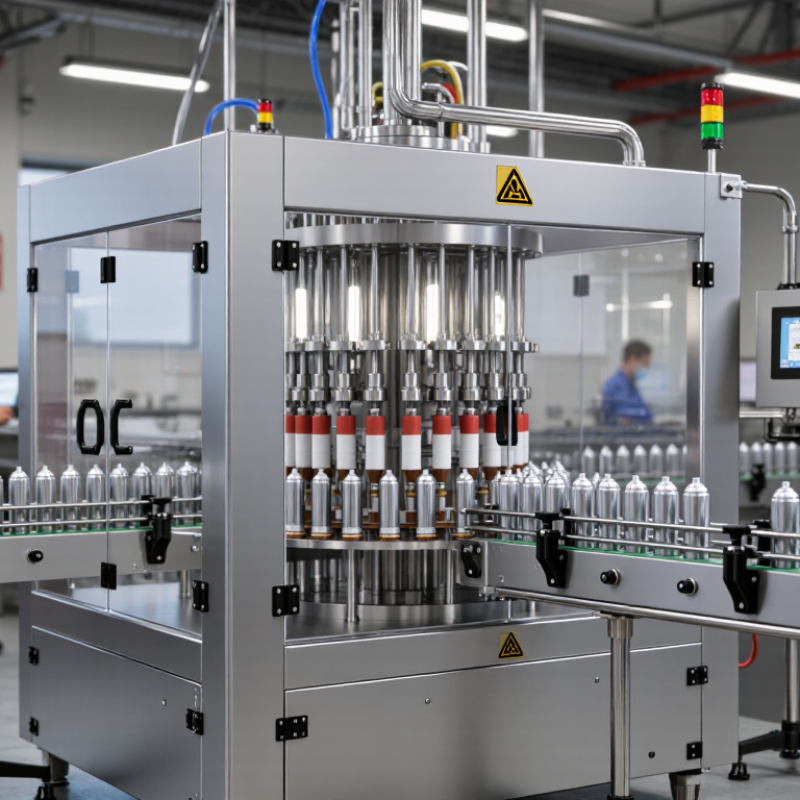
Choosing a BOV aerosol cans filling machine in 2026 requires attention to the complete filling system, not just its speed. A practical assessment starts with the product tank, transfer pump, valve filling head, crimping unit, propellant charger, and control panel. Each component affects filling accuracy, safety, and cleaning time. The product tank should provide stable pressure and smooth mixing. A hygienic design matters when operators change formulas frequently. Small dead spaces can retain material.

The process follows a controlled sequence. The machine doses the product into the aerosol can first. A bag-on-valve assembly is then positioned over the opening. The crimping head fixes the valve and creates a reliable seal. Next, the propellant enters through the valve, expanding the inner bag and pressurizing the container. Sensors check pressure, filling weight, and valve position during production. A leak-testing station can detect weak crimps or damaged seals before packing. It is a simple check, but it prevents expensive recalls.

I would also examine changeover access, emergency stops, and data recording. Fast machines are not always better. Excessive speed may increase foam, splashing, or weight variation. That problem is easy to overlook. Operators should test several container sizes and viscosities before purchase. The control system should show alarms clearly, although some interfaces still make troubleshooting unnecessarily difficult. Reliable machines need accurate calibration, accessible seals, and replacement parts that technicians can inspect without dismantling half the line.

How to Match Machine Specifications With Product Requirements

Choosing a BOV aerosol filling machine starts with the formula, not the machine’s advertised speed. Product viscosity, foam behavior, temperature, container volume, valve design, and oxygen sensitivity must guide every specification. A thin lotion may suit a servo-driven piston pump, while a thick cream needs larger passages and stronger suction control. Pressure matters. Ask for documented product-fill accuracy, propellant-fill accuracy, crimping force, and leak-test performance.

Smithers’ The Future of Aerosols to 2028 identifies personal care and household products as important growth areas, with sustainability and dispensing performance shaping equipment investment. Grand View Research also forecasts steady growth in the global aerosol cans market through 2030. These trends make flexible changeover and material efficiency practical requirements, not decorative features. Match the machine’s rated output to your real batch size. A line rated at 120 cans per minute may perform poorly with frequent size changes.

Request trials using your actual formula, can, valve, and bag assembly. Record fill weight variation across the run. Check whether the machine handles start-up waste without excessive product loss. PMMI’s recent packaging reports emphasize automation, data collection, and labor efficiency, so consider recipe control, fault history, and traceability. Do not guess. A basic machine may be safer for a stable product, while a complex line can create maintenance problems. I have seen specifications look excellent on paper, yet cleaning access and operator training were overlooked. That mistake deserves a second review.

Safety, Quality Control, and Regulatory Compliance Factors

Choosing a BOV aerosol cans filling machine in 2026 requires more than comparing speed and price. Safety must lead the decision. The European Aerosol Federation’s 2023 industry statistics reported more than five billion aerosol units filled in Europe, showing the scale of this responsibility. Select equipment with enclosed filling zones, pressure-rated components, reliable grounding, and explosion-protected electrical systems. Nitrogen or compressed-air systems also need controlled pressure and filtration. A minor seal failure can create a serious leak during storage or transport.

Quality control should be measurable, not promised. The machine should verify propellant pressure, product weight, valve placement, crimp depth, and final leak performance. Automatic reject systems reduce human error, but they are not perfect. I would require calibration records, batch traceability, and repeatable test results before approving installation. Regulatory checks must match the destination market, including UN Model Regulations for transport, the EU Aerosol Dispensers Directive, or applicable United States hazard communication rules. These requirements can change, so confirm them with a qualified compliance specialist.

Tips: Ask for documented factory acceptance tests. Test filled cans after temperature cycling. Inspect valves under magnification. Keep digital records for every batch. Choose suppliers offering operator training and preventive maintenance. The fastest machine is not always the safest choice. A slower line with stronger controls may protect quality, workers, and compliance better.

How to Choose a BOV Aerosol Cans Filling Machine in 2026?

The chart presents a practical procurement scorecard for comparing BOV aerosol filling machines. Safety, filling accuracy, leak and pressure testing, regulatory documentation, hygiene, and serviceability should all be verified against the target market, product formula, container specification, and applicable aerosol regulations.

The percentages are recommended evaluation weights for a purchasing checklist, not legal requirements. Before purchase, request documented validation of safety interlocks, filling accuracy, leak detection, pressure-control procedures, batch traceability, cleanability, and compliance documentation.

Evaluating Capacity, Automation, Maintenance, and Total Cost

How to Choose a BOV Aerosol Cans Filling Machine in 2026?

Capacity should match your real production pattern, not an impressive brochure number. Check cans per minute at your actual container sizes and product viscosities. Ask for tested output, filling accuracy, and changeover time. A machine rated for 120 cans per minute may deliver less after cleaning, inspection, and minor stops. Leave practical capacity for growth. Too much unused capacity becomes expensive floor space.

Automation should reduce errors without making operators helpless. Look for recipe storage, servo-controlled dosing, automatic can detection, and clear fault messages. Data logging can reveal underfilling, rejects, and repeated stoppages. Safety interlocks and guarded access are essential. However, more sensors mean more potential failure points. Simple controls are sometimes easier to repair. That trade-off deserves an honest trial.

Maintenance affects the total cost more than many buyers expect. Inspect valve access, sealing components, change parts, lubrication points, and cleaning procedures. Ask how quickly common parts can be replaced. Local technical support and operator training also matter. Calculate energy use, compressed-air demand, labor, spare parts, installation, validation, and expected downtime. A lower purchase price can hide costly interruptions. Request a factory acceptance test with your materials and containers. Results may still differ after installation, so keep a contingency budget and review the assumptions.

How to Choose a BOV Aerosol Cans Filling Machine in 2026? – Evaluating Capacity, Automation, Maintenance, and Total Cost

Evaluation Dimension Semi-Automatic BOV Line Compact Automatic Inline Line Automatic Rotary Line High-Output Integrated Line
Typical output 300–900 cans/hour 1,200–3,000 cans/hour 2,400–6,000 cans/hour 6,000–12,000 cans/hour
Recommended production scale Pilot production, seasonal demand, and multiple small batches Small to medium contract filling and regular production Medium to large continuous production Large-volume production with stable product demand
Operating personnel 2–4 operators per shift 1–2 operators per shift 1–2 operators per shift 1 operator plus quality and maintenance support
Automation level Manual can loading; pneumatic or semi-automatic filling and crimping Automatic indexing, filling, crimping, and basic conveyor transfer Automatic rotary indexing, dosing, crimping, and discharge Integrated conveying, filling, crimping, propellant charging, leak testing, and coding
Typical fill accuracy Approximately ±1.0% to ±2.0%, depending on product viscosity Approximately ±0.5% to ±1.5% with calibrated dosing systems Approximately ±0.5% to ±1.0% under stable operating conditions Approximately ±0.25% to ±0.75% when product, temperature, and pressure are controlled
Suitable product viscosity Low to medium viscosity; frequent adjustment may be required Low to medium viscosity with recipe-based settings Low to medium viscosity; optional pumps support selected higher-viscosity products Broad product range with dedicated pumps, heated lines, or agitation where required
BOV process capability Product filling and manual or semi-automatic valve placement; propellant charging may be separate Product filling, valve placement, crimping, and external propellant charging module Integrated product dosing, valve crimping, propellant charging, and reject handling Fully integrated BOV filling, crimp verification, leak testing, coding, and line monitoring
Compressed-air requirement Typically 6–8 bar; approximately 0.3–0.8 m³/min Typically 6–8 bar; approximately 0.8–1.5 m³/min Typically 6–8 bar; approximately 1.2–2.5 m³/min Typically 6–8 bar; approximately 2.0–4.0 m³/min, depending on line configuration
Changeover time 20–60 minutes, mainly manual 15–40 minutes using recipe settings and quick-adjust tooling 30–75 minutes, depending on can and valve dimensions 45–120 minutes; faster when dedicated tooling is available
Routine maintenance Daily cleaning and lubrication; weekly inspection of seals, hoses, and pneumatic components Daily cleaning; weekly inspection; monthly calibration and wear-part review Daily sanitation; weekly lubrication and inspection; scheduled quarterly service Planned preventive maintenance, sensor checks, calibration, and quarterly or semiannual service
Expected technical availability Approximately 85%–92% Approximately 88%–94% Approximately 90%–96% Approximately 92%–97% after commissioning and process stabilization
Indicative equipment investment US$20,000–60,000 US$60,000–150,000 US$150,000–350,000 US$350,000–800,000+
Main maintenance-cost drivers Labor, seals, filling nozzles, pneumatic valves, and manual setup time Dosing seals, sensors, pneumatic valves, conveyors, and calibration Rotary indexing parts, pumps, crimping tooling, sensors, and planned downtime Servo drives, PLC and sensors, pumps, safety systems, specialized tooling, and technician support
Five-year ownership profile Lowest capital cost; highest labor cost per can Balanced investment and labor cost for moderate demand Lower unit cost at sustained utilization; higher tooling and service commitment Lowest potential unit cost at high utilization; highest financial exposure during downtime
Best selection criterion Flexibility and low initial investment Short changeovers and reliable medium-volume output High utilization, repeatable quality, and reduced labor dependency Maximum throughput, traceability, and integration with a larger packaging line
Planning notes: The figures are indicative engineering ranges for preliminary comparison, not quotations. Actual performance depends on can diameter and height, valve type, product viscosity, filling volume, propellant, container material, hygienic requirements, local safety regulations, and the selected operating schedule. For total-cost evaluation, compare labor, compressed air, utilities, changeover losses, reject rate, spare parts, validation, training, installation, and planned downtime—not only the purchase price.
Copyright 2025 Fluidra S.A. | Created by BCM Marketing Agencia Privacy Policy Legal note | Cookie policy |

Technical cookies are strictly necessary for our website to work and you can navigate through it. These types of cookies are those that, for example, allow us to identify you, give you access to certain restricted parts of the page if necessary, or remember different options or services already selected by you, such as your privacy preferences. Therefore, they are activated by default, your authorization not being necessary in this regard. Through the configuration of your browser, you can block or alert the presence of this type of cookies, although such blocking will affect the proper functioning of the different functionalities of our website.


The analysis cookies allow us to study the navigation of the users of our website in general (for example, which sections of the page are the most visited, which services are used most and if they work correctly, etc.). From the statistical information on navigation on our website, we can improve both the operation of the page itself and the different services it offers. Therefore, these cookies do not have an advertising purpose, but only serve to make our website work better, adapting to our users in general. By activating them you will contribute to this continuous improvement. You can enable or disable these cookies by checking the corresponding box, being disabled by default.


Functionality cookies allow us to remember your preferences, to personalize certain characteristics and general options of our website, every time you access it (for example, the language in which the information is presented to you, the sections marked as favorites, your browser type, etc.) Therefore, this type of cookies does not have an advertising purpose, but by activating them you will improve the functionality of the website (for example, adapting to your type of browser) and the customization of it based on your preferences (for example, by presenting the information in the language that you have chosen in previous occasions), which will contribute to the ease, usability and comfort of our page during your navigation. You can enable or disable these cookies by checking the corresponding box, being disabled by default.


Advertising cookies allow us to manage the advertising spaces included in our website based on criteria such as the content shown or the frequency in which the ads are displayed. For example, if you have been shown the same ad several times on our website, and you have not shown a personal interest by clicking on it, it will not appear again. In summary, by activating this type of cookies, the advertising shown on our website will be more useful and diverse, and less repetitive. You can enable or disable these cookies by checking the corresponding box, being disabled by default.


Behavioral advertising cookies allow us to obtain information based on the observation of your browsing habits and behaviors on the web, in order to show you advertising content that best suits your personal tastes and interests. To understand it in a very simple way, we will give you a fictitious example: if your last searches on the web were related to suspense literature, we would show you advertising about suspense books. Therefore, activating this type of cookies, the advertising that we show you on our website will not be generic, but will be oriented to your searches, tastes and interests, therefore adjusting exclusively to you. You can enable or disable these cookies by checking the corresponding box, being disabled by default.
To understand it in a very simple way, we will give you a fictitious example: if your last searches on the web were related to suspense literature, we would show you advertising about suspense books. Therefore, activating this type of cookies, the advertising that we show you on our website will not be generic, but will be oriented to your searches, tastes and interests, therefore adjusting exclusively to you. You can enable or disable these cookies by checking the corresponding box, being disabled by default.

SAVE

We use our own and third-party cookies to ensure the proper functioning of the website and to analyse our services, improve your experience on our website and show you advertisements related to your interests according to profiling based on your browsing habits (e.g. websites visited). You can accept all cookies by clicking "ACCEPT" or set or reject them by clicking here. If you would like to know more about the use of cookies, please see our COOKIE POLICY.


ACCEPT ALL
Reject no essentials


