
7 Tips for Choosing a 50W Explosion Proof High Bay Hood
FLUID HANDLING EXPERTS

Blog, all our news

7 Tips for Choosing a 50W Explosion Proof High Bay Hood

Choosing a 50W explosion-proof high bay hood involves more than matching a wattage to a room. The right choice depends on the site’s classification, mounting height, lighting needs, and operating conditions. A fixture above a washdown area, for example, may face moisture, dust, and vibration every day. Small details matter. Check the product’s markings and documentation against the actual installation requirements, and consult a qualified lighting or safety professional when specifications are unclear.

This guide introduces seven practical checks to make comparison easier. It covers certification and construction, light output and distribution, materials, temperature limits, mounting options, maintenance, and warranty support. The phrase “xplosion-proof high bay hood 50w” may appear in product searches, but a search term alone cannot establish that a fixture suits a particular hazardous location. Verify the model number, ratings, and manufacturer’s documentation before making a decision. A 50W unit may be adequate in one space and insufficient in another; room dimensions, ceiling height, and task visibility all affect the result. Not every fixture fits. I’ve seen specifications that look complete at first glance, yet leave an important mounting or temperature detail uncertain. That is worth a second look. Use the tips that follow as a comparison framework, not as a substitute for site-specific assessment.
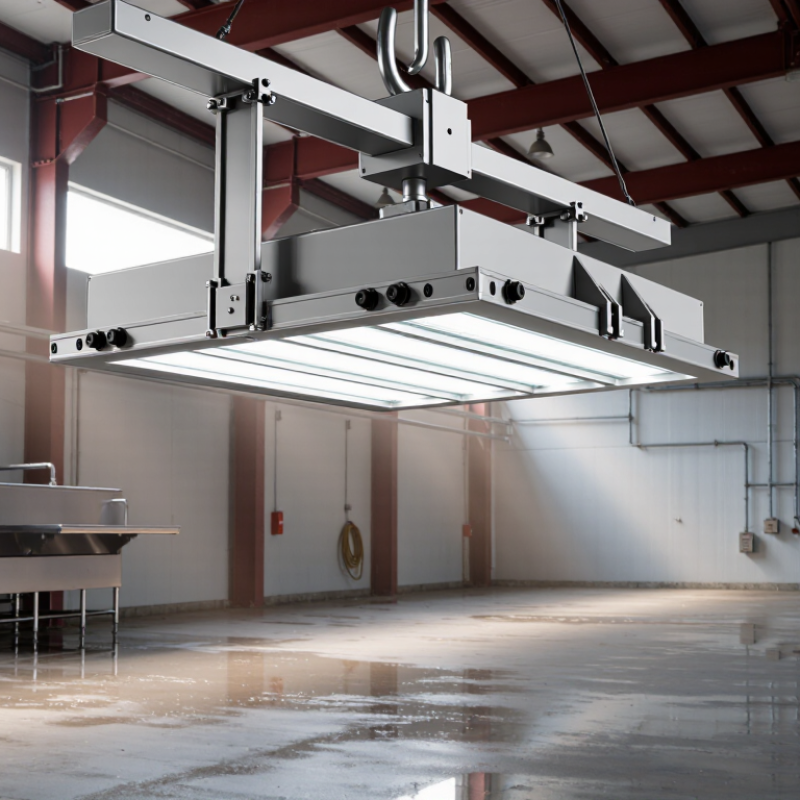
7 Tips for Choosing a 50W Explosion Proof High Bay Hood

Understanding the Role of a 50W Explosion-Proof High Bay Hood

A 50W explosion-proof high bay hood is designed to direct light in demanding industrial spaces, such as process rooms or enclosed work areas. The hood can help shape the beam and reduce stray light on nearby equipment. At a mounting height of several metres, that difference affects how evenly workers can see floors, labels, and control panels. That matters.

The hood is only one part of the lighting system. A suitable fixture needs an enclosure and rating matched to the site’s classified area, along with appropriate temperature limits and environmental protection. The complete luminaire must meet the required specifications; a hood alone does not make an ordinary light explosion-proof. Wattage also does not guarantee brightness. Lens condition, optics, ceiling height, and surface reflectance all influence useful illumination.

A pale ceiling may return more light than a dark, oil-stained one.

Before choosing a fixture, compare its rated light output, beam distribution, mounting method, and maintenance requirements with the actual space. Check whether heat can dissipate as intended, especially in a warm enclosure. Small detail. Site conditions can be messy, and drawings may not show every obstruction. Have a qualified lighting or safety professional verify the area classification and installation requirements rather than relying on wattage or appearance alone.

Confirming Hazardous-Area Ratings and Required Certifications

For a 50W explosion-proof high bay hood, wattage alone cannot determine suitability. The correct rating depends on the facility’s hazardous-area classification and operating conditions. Identify whether the hazard involves gas, vapor, or combustible dust, then confirm the applicable zone or division, material group, and temperature class. Do not infer these details from nearby equipment. The term “explosion-proof” can also have different meanings across certification systems.

Tip 1: Match the product’s marking to the documented area classification. Check the certificate, not just the sales description, for the exact model and approved configuration.

Tip 2: Confirm the permitted ambient temperature and temperature code. A hood, gasket, or cable entry may affect the approved assembly, so verify that the listed parts match what will be installed.

Tip 3: Review the certificate’s scope, issuing body, and applicable standards. Requirements vary by location, so compare the documentation with local rules and facility specifications.

Tip 4: Have a qualified electrical or safety professional check the selection before purchase. Keep the certificate and installation instructions with project records. A paperwork mismatch is easy to miss; I would check it twice rather than assume similar markings mean equivalent protection.

Matching Light Output and Beam Angle to Ceiling Height

Tip 1: Check the fixture’s rated lumen output, not just its 50W power. Two lights using the same wattage can deliver different usable light. Review photometric data where available, and consider the target brightness at the work surface. A bright-looking lens can still leave dim patches below.

Tip 2: Match the beam angle to the ceiling height and layout. A narrower beam can concentrate light from a high ceiling, but may create bright pools and darker aisles. A wider beam can spread light across a lower space, though shelves or machinery may block it. Measure the mounting height before choosing. Guessing is easy.

Tip 3: Think about spacing as well as beam width. For example, mark fixture positions on a simple floor plan and check whether adjacent light patterns overlap. This can help reduce shadows around workbenches and walkways. The ideal choice depends on room dimensions, mounting height, and obstructions; one angle rarely fits every bay. Recheck the plan against the fixture’s photometric layout before installation.

Comparing Housing Materials and Environmental Protection

A 50W explosion-proof high bay hood may use die-cast aluminum, stainless steel, or coated steel. Aluminum keeps the fixture lighter and helps move heat away from LED components. Stainless steel resists corrosion better around washdown areas and chemical vapors, but adds weight and cost. Coated steel can be economical indoors, though a scratched coating may expose bare metal. Small detail, big consequence.

Check environmental protection separately from housing material. IEC 60529 defines IP ratings: the first digit covers solid ingress, and the second covers water; IP6X indicates dust-tight protection, while IPX5 covers water jets. These ratings do not prove resistance to every chemical, impact, or hazardous atmosphere. NEMA 250 also classifies enclosure types for environmental conditions, but NEMA ratings and IP ratings are not directly interchangeable. Ask for the exact test report and certification for the complete fixture, not just its hood. A sealed-looking joint is not evidence.

Match the material and rating to the actual site. In a dusty grain-handling area, inspect gaskets, cable entries, and lens seals as closely as the metal body. Near salt spray, examine corrosion-test results and coating details. UL 844 addresses luminaires for hazardous locations; confirm the fixture’s marked classification matches the installation. A 50W rating alone says little about durability. I would also check service access: a difficult-to-open housing can encourage rushed gasket replacement, and that is an easy detail to overlook.

Checking Installation Needs, Maintenance, and Operating Costs

Before choosing a 50W explosion-proof high bay hood, check the installation conditions at the actual mounting point. Confirm the hazardous-area classification, ambient temperature, ceiling height, and required light level with the site’s drawings and a qualified electrical professional. The hood must match the luminaire and its certified configuration; a housing that merely looks compatible is not enough. Check cable entry points, clearance from pipes, and whether existing supports can carry the assembly. Small details matter. A narrow aisle or dusty ceiling can change access needs and cleaning frequency.

Maintenance and operating costs deserve equal attention. Ask how the lens, seals, and fasteners are inspected, and whether workers can reach the fixture safely without disrupting production. The U.S. Department of Energy reports that LED lighting uses at least 75% less energy and lasts up to 25 times longer than incandescent lighting. That benchmark is not a direct comparison with every industrial high bay, so calculate savings using the existing fixture’s wattage, daily hours, and local electricity tariff. Include labor, access equipment, and replacement parts. A tidy spreadsheet can still miss those costs. I would check the maintenance plan twice; it is easy to underestimate the time needed to inspect fittings in a crowded, high-ceiling area.

Copyright 2025 Fluidra S.A. | Created by BCM Marketing Agencia Privacy Policy Legal note | Cookie policy |

Technical cookies are strictly necessary for our website to work and you can navigate through it. These types of cookies are those that, for example, allow us to identify you, give you access to certain restricted parts of the page if necessary, or remember different options or services already selected by you, such as your privacy preferences. Therefore, they are activated by default, your authorization not being necessary in this regard. Through the configuration of your browser, you can block or alert the presence of this type of cookies, although such blocking will affect the proper functioning of the different functionalities of our website.


The analysis cookies allow us to study the navigation of the users of our website in general (for example, which sections of the page are the most visited, which services are used most and if they work correctly, etc.). From the statistical information on navigation on our website, we can improve both the operation of the page itself and the different services it offers. Therefore, these cookies do not have an advertising purpose, but only serve to make our website work better, adapting to our users in general. By activating them you will contribute to this continuous improvement. You can enable or disable these cookies by checking the corresponding box, being disabled by default.


Functionality cookies allow us to remember your preferences, to personalize certain characteristics and general options of our website, every time you access it (for example, the language in which the information is presented to you, the sections marked as favorites, your browser type, etc.) Therefore, this type of cookies does not have an advertising purpose, but by activating them you will improve the functionality of the website (for example, adapting to your type of browser) and the customization of it based on your preferences (for example, by presenting the information in the language that you have chosen in previous occasions), which will contribute to the ease, usability and comfort of our page during your navigation. You can enable or disable these cookies by checking the corresponding box, being disabled by default.


Advertising cookies allow us to manage the advertising spaces included in our website based on criteria such as the content shown or the frequency in which the ads are displayed. For example, if you have been shown the same ad several times on our website, and you have not shown a personal interest by clicking on it, it will not appear again. In summary, by activating this type of cookies, the advertising shown on our website will be more useful and diverse, and less repetitive. You can enable or disable these cookies by checking the corresponding box, being disabled by default.


Behavioral advertising cookies allow us to obtain information based on the observation of your browsing habits and behaviors on the web, in order to show you advertising content that best suits your personal tastes and interests. To understand it in a very simple way, we will give you a fictitious example: if your last searches on the web were related to suspense literature, we would show you advertising about suspense books. Therefore, activating this type of cookies, the advertising that we show you on our website will not be generic, but will be oriented to your searches, tastes and interests, therefore adjusting exclusively to you. You can enable or disable these cookies by checking the corresponding box, being disabled by default.
To understand it in a very simple way, we will give you a fictitious example: if your last searches on the web were related to suspense literature, we would show you advertising about suspense books. Therefore, activating this type of cookies, the advertising that we show you on our website will not be generic, but will be oriented to your searches, tastes and interests, therefore adjusting exclusively to you. You can enable or disable these cookies by checking the corresponding box, being disabled by default.

SAVE

We use our own and third-party cookies to ensure the proper functioning of the website and to analyse our services, improve your experience on our website and show you advertisements related to your interests according to profiling based on your browsing habits (e.g. websites visited). You can accept all cookies by clicking "ACCEPT" or set or reject them by clicking here. If you would like to know more about the use of cookies, please see our COOKIE POLICY.


ACCEPT ALL
Reject no essentials


