
Why Choose a 10Gb SFP Cable for Your Network?
FLUID HANDLING EXPERTS

Blog, all our news

Why Choose a 10Gb SFP Cable for Your Network?

A 10gb Sfp Cable can connect switches, servers, and storage systems at 10-gigabit speeds, but the label alone does not guarantee a good fit. Check the port type, cable length, and equipment compatibility before ordering. Small details matter. A short direct-attach copper cable may suit a nearby rack connection, while fiber can be more practical across longer runs. The right choice depends on the actual link, not the most impressive product description.

Ethernet co-inventor Bob Metcalfe has described Ethernet as “the most successful local area networking technology in history.” That broader observation helps explain why reliable connections still deserve careful planning. For a 10gb Sfp Cable, verify whether your devices support the same SFP+ connection and cable type. Also consider airflow, bend radius, and how easily technicians can reach the cable after installation. Those details can be overlooked during a fast upgrade. They should not be.

There is no universally best cable. Copper can be cost-effective over short distances, while fiber offers different reach and installation options. Check manufacturer specifications rather than assuming every cable labeled “10G” will work with every switch. A failed link can waste more time than a modest upfront compatibility check. And, honestly, cable selection is not exciting. It is still worth getting right. This guide explores the practical trade-offs, common checks, and installation decisions behind choosing a 10gb Sfp Cable for your network.
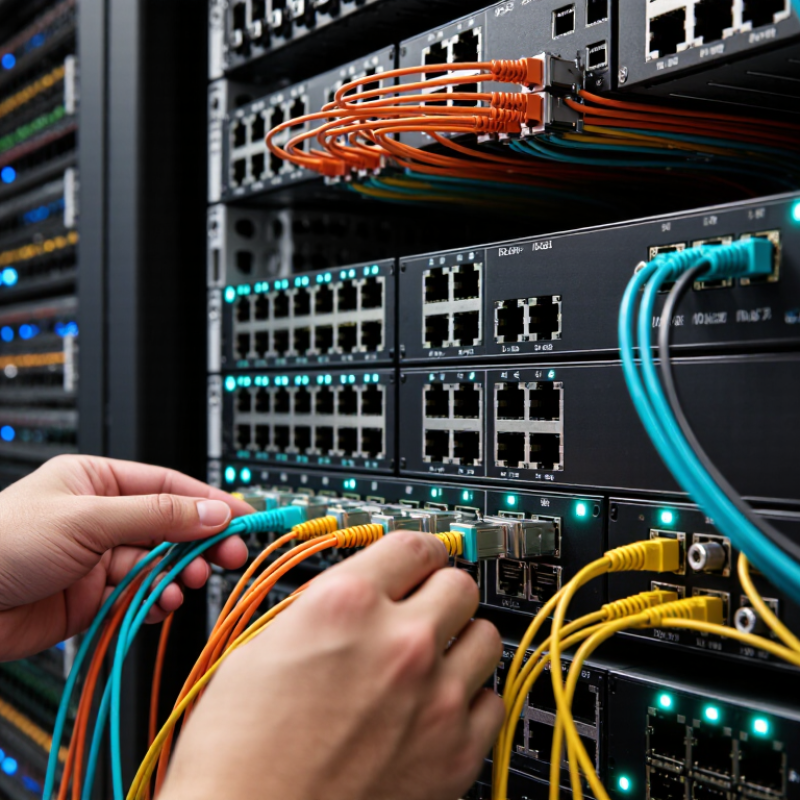
Why Choose a 10Gb SFP Cable for Your Network?

What a 10Gb SFP Cable Is and How It Connects Network Devices

A 10Gb SFP cable usually means a direct-attach copper cable, or DAC, with an SFP+ connector at each end. Plug one end into a switch and the other into a server or storage device with a compatible SFP+ port. The cable carries data directly between the ports; separate optical transceivers are not needed for a DAC link.

A small detail matters: the connector may fit, but the equipment must still support the cable’s specifications.

IEEE 802.3-2022 specifies Ethernet operation at 10 Gb/s, while the Ethernet Alliance’s 2024 Ethernet Roadmap includes 10GbE among the established Ethernet speeds. That is the line rate, not the amount of application data users receive; protocol overhead reduces usable throughput.

Short passive DACs are commonly used between devices in the same rack, where their copper conductors avoid extra optical components. For longer runs, fiber links generally use separate transceivers and fiber-optic cable instead.

Check the device documentation for supported cable types and reach. Compatibility can be oddly specific, and a neat-looking connection is not proof that the link is working correctly.

How 10Gb SFP Cables Transmit Data

A 10Gb SFP+ link carries data as a fast serial stream between a switch and a network device. In a direct-attach copper cable, electrical signals travel through paired conductors. With fiber, the transceiver converts electrical signals into light pulses, then converts incoming light back into electrical data. The receiver rebuilds the bit stream. Small timing differences matter.

For 10GBASE-R Ethernet, 64b/66b encoding adds overhead, so the line rate is 10.3125 Gb/s rather than exactly 10 Gb/s. IEEE 802.3-2022 specifies 10GBASE-SR distances up to 300 meters on OM3 fiber and 400 meters on OM4. These are maximum link distances under specified conditions, not guarantees for every installed route. Connector cleanliness, fiber type, and link budget still matter. A cable that fits may not deliver a stable link.

Tip: Check the switch port, cable type, fiber grade, and connector polarity before installation. For fiber, inspect and clean the end faces; dust can interrupt light transmission. Also check the link’s reported speed after connecting. It is easy to blame the cable too soon. Sometimes the port configuration is the real issue.

Why Choose a 10Gb SFP Cable for Your Network? - How 10Gb SFP Cables Transmit Data

Connection Type Transmission Medium Typical Maximum Reach Power and Latency Common Use
10Gb SFP+ Passive DAC Direct-attach twinaxial copper cable with SFP+ connectors attached Commonly up to 5 m; supported distance depends on the cable and equipment No signal-conditioning electronics in the cable; typically low power and very low latency Short links between switches, servers, and storage systems in the same rack or nearby racks
10Gb SFP+ Active DAC Twinaxial copper cable with signal-conditioning electronics Often used for links longer than passive DAC; actual reach is product- and equipment-dependent Uses more power than passive DAC because of active electronics; remains a low-latency direct connection Short-to-medium equipment connections where a passive copper cable is not supported at the required distance
10GBASE-SR over Multimode Fiber Multimode optical fiber with compatible SFP+ optical transceivers Up to 300 m on OM3 or 400 m on OM4 fiber under the 10GBASE-SR standard Requires optical transceivers at both ends; power use depends on the transceiver Data-center links between racks or across rooms where copper DAC reach is insufficient
10GBASE-LR over Single-Mode Fiber Single-mode optical fiber with compatible SFP+ optical transceivers Up to 10 km under the 10GBASE-LR standard Requires optical transceivers at both ends; power use depends on the transceiver Longer campus or building links that need substantially more reach than a copper DAC

How data is transmitted: A 10Gb SFP+ DAC carries electrical signals over copper between compatible ports. Fiber connections use optical transceivers to convert electrical signals into light and back again. Confirm port compatibility, cable coding, and supported reach with the equipment specifications before installation.

Key Benefits of Using a 10Gb SFP Cable

A 10Gb SFP cable can provide a simple, efficient link between nearby switches, servers, or storage devices. Many are direct-attach copper cables, with transceivers built into each end. This design avoids separate optical modules for short connections. Less clutter, too. In a rack, one cable can connect adjacent devices without a bundle of patch leads. That can make labeling and tracing connections easier during maintenance.

Power use and cost can also be lower than with separate optics, though the exact difference depends on equipment and cable length. A short, compatible cable can deliver 10Gb speeds with low latency, making it useful for heavy file transfers or busy server links. Check the port type, supported cable length, and device compatibility before buying; similar-looking ports do not guarantee support. Longer runs may need fiber instead. The trade-off is easy to miss: a fixed-length cable can be awkward when equipment moves, and copper cables may be stiffer than expected in a crowded rack. Measure the route, including bends, before choosing a length.

Why Choose a 10Gb SFP+ Cable for Your Network?

A 10 Gb/s SFP+ connection offers ten times the nominal link rate of 1 GbE, making it useful for high-bandwidth server connections and network uplinks. Actual throughput depends on hardware, configuration, and protocol overhead; the cable must be compatible with the SFP+ ports at both ends.

Common Network Applications for 10Gb SFP Cables

Why Choose a 10Gb SFP Cable for Your Network?

Common Network Applications for 10Gb SFP Cables

In a server rack, a 10Gb SFP cable can connect a switch directly to a nearby server or storage unit. Short direct-attach copper cables keep these links tidy and avoid separate transceivers. Less clutter helps. They are useful when several servers sit within a few rack units of a top-of-rack switch, where cable length and bend radius still matter.

These cables also suit switch-to-switch links in compact wiring closets and small data centers. For longer runs between rooms, fiber cabling with compatible optics is often a better fit. Check the port type, supported cable length, and device compatibility before ordering; “10Gb” alone does not guarantee a working connection. Heat and tight cable bundles can affect a crowded rack, too. A neat installation is not always a cool one.

Network teams may use 10Gb links for storage traffic, virtualization hosts, or uplinks that aggregate several slower connections. The right setup depends on traffic patterns, not just headline speed. A single busy storage link can benefit, while an underused server may not. Measure before upgrading. That step is easy to skip, and sometimes the old layout is the real bottleneck.

Factors to Consider When Choosing a 10Gb SFP Cable

Why Choose a 10Gb SFP Cable for Your Network?

Factors to Consider When Choosing a 10Gb SFP Cable

A 10Gb link is only useful when its cable matches the route, ports, and environment. Cisco’s 2020 Annual Internet Report forecast global IP traffic at 396 exabytes per month by 2022, up from 122 exabytes in 2017. That forecast shows why capacity planning matters, though it does not tell you which cable to buy.

For a short connection between switches in one rack, direct-attach copper can avoid separate optical transceivers. Check that both devices support the cable type. Small detail, big headache.

Distance should guide your choice. IEEE 802.3 specifies 10GBASE-SR operation up to 300 meters over OM3 multimode fiber and 400 meters over OM4. For longer paths, check the required optical standard, fiber type, and transceiver compatibility rather than relying on “10Gb” alone.

Measure the route, including slack and patch-panel connections. Check both ends. Also consider cable bend radius, airflow, and how often the link may be moved; a tight bundle can complicate maintenance.

There is no perfect pick. A copper cable may be convenient in a rack, while fiber may suit longer runs or electrically noisy areas. Verify port documentation before ordering, because compatibility assumptions are easy to make—and sometimes wrong.

Copyright 2025 Fluidra S.A. | Created by BCM Marketing Agencia Privacy Policy Legal note | Cookie policy |

Technical cookies are strictly necessary for our website to work and you can navigate through it. These types of cookies are those that, for example, allow us to identify you, give you access to certain restricted parts of the page if necessary, or remember different options or services already selected by you, such as your privacy preferences. Therefore, they are activated by default, your authorization not being necessary in this regard. Through the configuration of your browser, you can block or alert the presence of this type of cookies, although such blocking will affect the proper functioning of the different functionalities of our website.


The analysis cookies allow us to study the navigation of the users of our website in general (for example, which sections of the page are the most visited, which services are used most and if they work correctly, etc.). From the statistical information on navigation on our website, we can improve both the operation of the page itself and the different services it offers. Therefore, these cookies do not have an advertising purpose, but only serve to make our website work better, adapting to our users in general. By activating them you will contribute to this continuous improvement. You can enable or disable these cookies by checking the corresponding box, being disabled by default.


Functionality cookies allow us to remember your preferences, to personalize certain characteristics and general options of our website, every time you access it (for example, the language in which the information is presented to you, the sections marked as favorites, your browser type, etc.) Therefore, this type of cookies does not have an advertising purpose, but by activating them you will improve the functionality of the website (for example, adapting to your type of browser) and the customization of it based on your preferences (for example, by presenting the information in the language that you have chosen in previous occasions), which will contribute to the ease, usability and comfort of our page during your navigation. You can enable or disable these cookies by checking the corresponding box, being disabled by default.


Advertising cookies allow us to manage the advertising spaces included in our website based on criteria such as the content shown or the frequency in which the ads are displayed. For example, if you have been shown the same ad several times on our website, and you have not shown a personal interest by clicking on it, it will not appear again. In summary, by activating this type of cookies, the advertising shown on our website will be more useful and diverse, and less repetitive. You can enable or disable these cookies by checking the corresponding box, being disabled by default.


Behavioral advertising cookies allow us to obtain information based on the observation of your browsing habits and behaviors on the web, in order to show you advertising content that best suits your personal tastes and interests. To understand it in a very simple way, we will give you a fictitious example: if your last searches on the web were related to suspense literature, we would show you advertising about suspense books. Therefore, activating this type of cookies, the advertising that we show you on our website will not be generic, but will be oriented to your searches, tastes and interests, therefore adjusting exclusively to you. You can enable or disable these cookies by checking the corresponding box, being disabled by default.
To understand it in a very simple way, we will give you a fictitious example: if your last searches on the web were related to suspense literature, we would show you advertising about suspense books. Therefore, activating this type of cookies, the advertising that we show you on our website will not be generic, but will be oriented to your searches, tastes and interests, therefore adjusting exclusively to you. You can enable or disable these cookies by checking the corresponding box, being disabled by default.

SAVE

We use our own and third-party cookies to ensure the proper functioning of the website and to analyse our services, improve your experience on our website and show you advertisements related to your interests according to profiling based on your browsing habits (e.g. websites visited). You can accept all cookies by clicking "ACCEPT" or set or reject them by clicking here. If you would like to know more about the use of cookies, please see our COOKIE POLICY.


ACCEPT ALL
Reject no essentials


