
How to Choose the Right Machinery CNC Parts?
FLUID HANDLING EXPERTS

Blog, all our news

How to Choose the Right Machinery CNC Parts?

Choosing the right Machinery Cnc Parts can determine whether a production line runs smoothly or stops without warning. A small mismatch in diameter, thread, or material may damage a spindle, distort a workpiece, or create repeated scrap. The decision deserves more than a quick price comparison.

Henry Ford, a recognized manufacturing pioneer, said, “Quality means doing it right when no one is looking.” His principle remains practical for CNC purchasing. Buyers should examine dimensional tolerances, alloy grade, surface treatment, hardness, and compatibility with the machine. A stainless steel part may resist corrosion, but it may not suit every cutting load. A hardened component may last longer, yet it can increase machining difficulty and replacement cost.

Start with the working conditions. Check heat, vibration, coolant exposure, pressure, and cycle frequency. Request material certificates, inspection reports, and sample measurements from the supplier. Reliable manufacturers should explain their testing process clearly. They should also confirm drawing revisions and packaging protection. Tiny details matter.

Do not ignore installation. A precisely made part can still fail when alignment is poor. Experience helps, but experience can also create overconfidence. Even skilled buyers sometimes choose familiar parts without reviewing changed operating conditions. That mistake is costly.

This guide will compare performance, accuracy, supplier reliability, service life, and total ownership cost. The cheapest Machinery Cnc Parts may appear efficient today. They may become expensive after repeated downtime. A careful choice should support stable production, predictable maintenance, and measurable quality. There is no perfect option. The best option fits the machine, the workload, and the evidence.
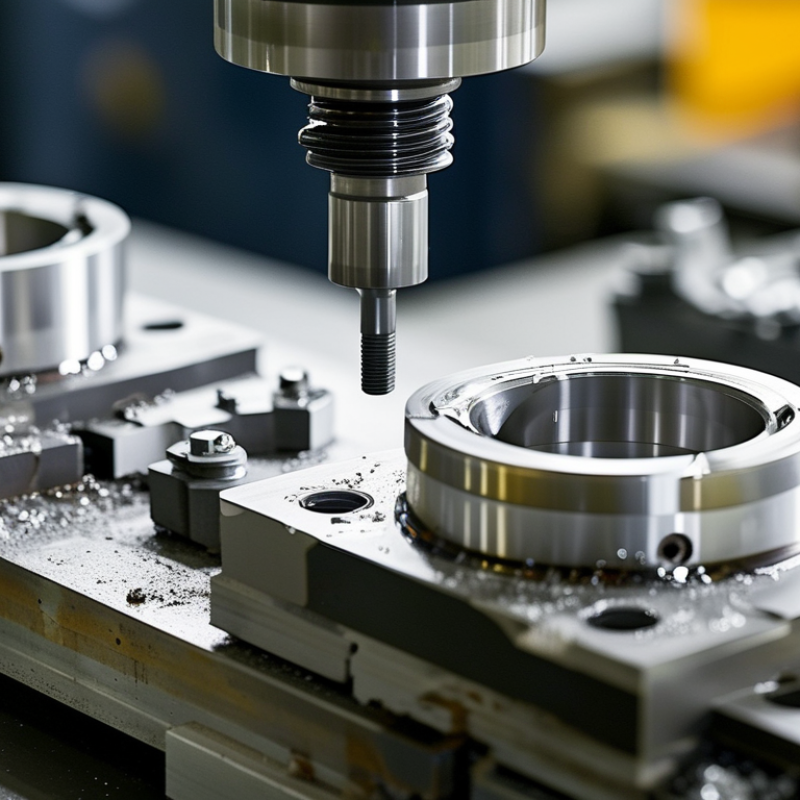
How to Choose the Right Machinery CNC Parts?

Understanding the Role of CNC Parts in Machinery

How to Choose the Right Machinery CNC Parts?

CNC parts are the working links between digital instructions and physical motion. They guide, support, position, and transfer force during machining. A small error in one part can appear as vibration, rough edges, or poor dimensional accuracy. The part is never “just a part.”

When selecting components, examine load, speed, heat, lubrication, and exposure to dust or coolant. Linear guides need suitable load capacity and smooth travel. Ball screws require correct lead, preload, and alignment. Spindles need enough torque for the material, not only a high maximum speed. Seals and protective covers also matter in dirty workshops. They often receive too little attention.

In practical maintenance work, I have seen machines perform poorly after an apparently minor replacement. The component matched the drawing, but its tolerance and surface finish were unsuitable. That mistake was expensive. Measure the mounting area, shaft diameter, hole spacing, and available travel before ordering. Check material certificates, inspection records, and test data from the supplier. Reliable documentation supports better decisions.

Compatibility matters more than attractive specifications. A hardened steel part may outlast a softer alternative, but it can still fail with poor alignment. I also question catalog ratings because real loads include shock, heat, and contamination. Laboratory figures do not always match a crowded factory floor. Choose parts that fit the machine, the process, and the maintenance habits of the people using it.

How to Choose the Right Machinery CNC Parts?

Understanding the Role of CNC Parts in Machinery

Material strength is an important factor when selecting CNC parts for machinery. Higher-strength materials are generally better suited to highly loaded shafts, gears, fixtures, and structural components, while lighter materials can reduce moving mass. The values shown are representative typical ultimate tensile strengths and may vary according to grade, heat treatment, and manufacturing condition.

Identifying Material, Precision, and Performance Requirements

Choosing CNC parts starts with the material, not the catalog photograph. Aluminum cuts quickly, but steel handles greater load and heat. Stainless alloys resist corrosion, yet they can distort if cutting heat is poorly controlled. For sliding assemblies, compare hardness, wear resistance, and lubrication needs. A part used near coolant may need different protection than one inside a dry enclosure. Ask for the material certificate and verify its grade against the drawing. Small mismatches become expensive failures.

Precision requirements should be tied to function. A bearing seat may need tight diameter control, while a cover plate may tolerate broader dimensions. Check tolerances, surface roughness, concentricity, and flatness separately. They are not interchangeable. On a measurement report, look for actual readings, not only a pass statement. In practice, I have seen a part meet size tolerance but fail assembly because burrs were ignored. That detail is easy to miss. It still matters.

Performance also depends on geometry, load cycles, temperature, and installation. Ask how the part will be machined, inspected, and tested. Request sample data from comparable production, while remembering that one sample proves little. A 0.01 mm tolerance may sound impressive, but it is useless if the machine cannot hold it repeatedly. Specify critical features, inspection methods, and acceptance ranges in plain language. Leave room for review. Real projects change, and an overly rigid specification can create waste. I still question whether every requested tolerance serves the machine.

Comparing CNC Part Types, Specifications, and Compatibility

Choosing the right machinery CNC part starts with comparing part types, not just dimensions. Rotating components, mounting plates, shafts, and precision brackets each face different stresses. A shaft may need tight concentricity, while a mounting plate may depend more on flatness and hole spacing. Treating them alike creates avoidable failures.

Check the specifications against the machine’s working conditions. Confirm material grade, hardness, surface finish, tolerance, thread type, and allowable load. A part exposed to coolant may require corrosion resistance. A component near a spindle needs balanced geometry and reliable vibration control. Measure the mating part, including hole diameter, keyway size, and clearance. Small errors matter.

Compatibility is more than “it fits.” Verify the interface, operating temperature, lubrication method, and maintenance access. In practical inspections, a part can match the drawing yet fail because its shoulder is too short. I once overlooked access for a fastening tool. The installation fit, but servicing became awkward. That mistake changed how I review specifications. I now compare drawings with the actual assembly and request a sample measurement when uncertainty remains. Standardized dimensions help, but they do not replace verification. Ask for inspection records, material certificates, and tolerance reports before approving a critical part. Credible documentation supports better decisions, although paperwork alone cannot reveal every installation problem.

Evaluating Manufacturers, Quality Standards, and Production Methods

How to Choose the Right Machinery CNC Parts?

Choosing CNC parts begins with evaluating the manufacturer, not just the quoted price. Ask how long the supplier has produced similar components. Review their equipment, skilled operators, and technical drawing procedures. A capable manufacturer should explain material selection, machining limits, and expected tolerances clearly.

Request material certificates, inspection records, and part samples before placing a large order. Quality systems such as ISO 9001 can show process discipline, but certification alone cannot guarantee perfect parts. Check whether the supplier uses calibrated micrometers, gauges, and coordinate measuring machines. Surface roughness reports may also matter for sealing or sliding components. Traceable records are essential.

Look closely at the production method. Three-axis machining may suit simple brackets, while five-axis equipment can reduce setups for complex surfaces. Turning works well for shafts, bushings, and other round parts. For repeated production, ask about fixture design, first article inspection, and process capability. Short lead times sound attractive. However, rushed machining may increase burrs, distortion, or dimensional variation.

I have found that clear communication often reveals more than polished brochures. Ask how the manufacturer handles a failed inspection. Do they investigate the cause, or simply replace the part? No supplier is flawless. I would still question unclear answers, inconsistent measurements, and unusually low prices. A reliable choice balances technical competence, documented quality, realistic production methods, and honest limitations.

Checking Costs, Lead Times, Maintenance, and Long-Term Value

Choosing CNC parts is less about the lowest quote than the cost of keeping a machine productive. Ask for material certificates, dimensional reports, and a clear quotation breakdown. A cheap spindle component can become expensive when poor balance causes vibration, scrap, and repeated setup. In workshop reviews, hidden shipping fees and inspection charges often changed the original calculation. That surprised me.

Lead time deserves the same scrutiny as price. Request a realistic production schedule, not only a promised dispatch date. Confirm drawing approval, machining, surface treatment, inspection, packaging, and transport separately. For urgent repairs, one delayed seal or bearing can stop an entire line for days. However, rushing critical parts may increase error risk, so a documented inspection gate is essential. I once underestimated approval time. That mistake was avoidable.

Maintenance value depends on access, wear resistance, and replacement practicality. Choose parts with traceable specifications and tolerances suited to actual operating loads. Ask how often lubrication, alignment, cleaning, or calibration will be required. A part that lasts longer but needs specialized servicing may not deliver better value. Compare expected service life, downtime, energy use, and replacement availability over several years. Keep records of failures and maintenance hours; real operating data is more reliable than optimistic estimates. Some calculations will be imperfect. Review them anyway.

Copyright 2025 Fluidra S.A. | Created by BCM Marketing Agencia Privacy Policy Legal note | Cookie policy |

Technical cookies are strictly necessary for our website to work and you can navigate through it. These types of cookies are those that, for example, allow us to identify you, give you access to certain restricted parts of the page if necessary, or remember different options or services already selected by you, such as your privacy preferences. Therefore, they are activated by default, your authorization not being necessary in this regard. Through the configuration of your browser, you can block or alert the presence of this type of cookies, although such blocking will affect the proper functioning of the different functionalities of our website.


The analysis cookies allow us to study the navigation of the users of our website in general (for example, which sections of the page are the most visited, which services are used most and if they work correctly, etc.). From the statistical information on navigation on our website, we can improve both the operation of the page itself and the different services it offers. Therefore, these cookies do not have an advertising purpose, but only serve to make our website work better, adapting to our users in general. By activating them you will contribute to this continuous improvement. You can enable or disable these cookies by checking the corresponding box, being disabled by default.


Functionality cookies allow us to remember your preferences, to personalize certain characteristics and general options of our website, every time you access it (for example, the language in which the information is presented to you, the sections marked as favorites, your browser type, etc.) Therefore, this type of cookies does not have an advertising purpose, but by activating them you will improve the functionality of the website (for example, adapting to your type of browser) and the customization of it based on your preferences (for example, by presenting the information in the language that you have chosen in previous occasions), which will contribute to the ease, usability and comfort of our page during your navigation. You can enable or disable these cookies by checking the corresponding box, being disabled by default.


Advertising cookies allow us to manage the advertising spaces included in our website based on criteria such as the content shown or the frequency in which the ads are displayed. For example, if you have been shown the same ad several times on our website, and you have not shown a personal interest by clicking on it, it will not appear again. In summary, by activating this type of cookies, the advertising shown on our website will be more useful and diverse, and less repetitive. You can enable or disable these cookies by checking the corresponding box, being disabled by default.


Behavioral advertising cookies allow us to obtain information based on the observation of your browsing habits and behaviors on the web, in order to show you advertising content that best suits your personal tastes and interests. To understand it in a very simple way, we will give you a fictitious example: if your last searches on the web were related to suspense literature, we would show you advertising about suspense books. Therefore, activating this type of cookies, the advertising that we show you on our website will not be generic, but will be oriented to your searches, tastes and interests, therefore adjusting exclusively to you. You can enable or disable these cookies by checking the corresponding box, being disabled by default.
To understand it in a very simple way, we will give you a fictitious example: if your last searches on the web were related to suspense literature, we would show you advertising about suspense books. Therefore, activating this type of cookies, the advertising that we show you on our website will not be generic, but will be oriented to your searches, tastes and interests, therefore adjusting exclusively to you. You can enable or disable these cookies by checking the corresponding box, being disabled by default.

SAVE

We use our own and third-party cookies to ensure the proper functioning of the website and to analyse our services, improve your experience on our website and show you advertisements related to your interests according to profiling based on your browsing habits (e.g. websites visited). You can accept all cookies by clicking "ACCEPT" or set or reject them by clicking here. If you would like to know more about the use of cookies, please see our COOKIE POLICY.


ACCEPT ALL
Reject no essentials


