
How to Choose Spring Energized Seals for Optimal Performance?
FLUID HANDLING EXPERTS

Blog, all our news

How to Choose Spring Energized Seals for Optimal Performance?

Choosing the right Spring Energized Seals is crucial for the performance of various industrial applications. As reported by the Global Sealing Solutions Association, over 70% of machinery failures are linked to sealing failures. These statistics emphasize the importance of selecting seals that not only fit specifications but also enhance efficiency and longevity.

Dr. Samuel McClure, a leading expert in sealing technologies, stated, "The right seal choice can dramatically reduce downtime and maintenance costs." This highlights the role of proper selection in industries where reliability is paramount. When dealing with applications that face extreme temperatures or aggressive media, the quality of Spring Energized Seals becomes even more significant.

However, the process of choosing these seals is not always straightforward. Diverse materials and configurations create a complex landscape. Companies must carefully consider factors such as pressure, temperature, and application type. The implications of an incorrect seal choice can lead to significant operational setbacks. This emphasizes the need for thorough research and expert consultation in the selection process to avoid costly mistakes.
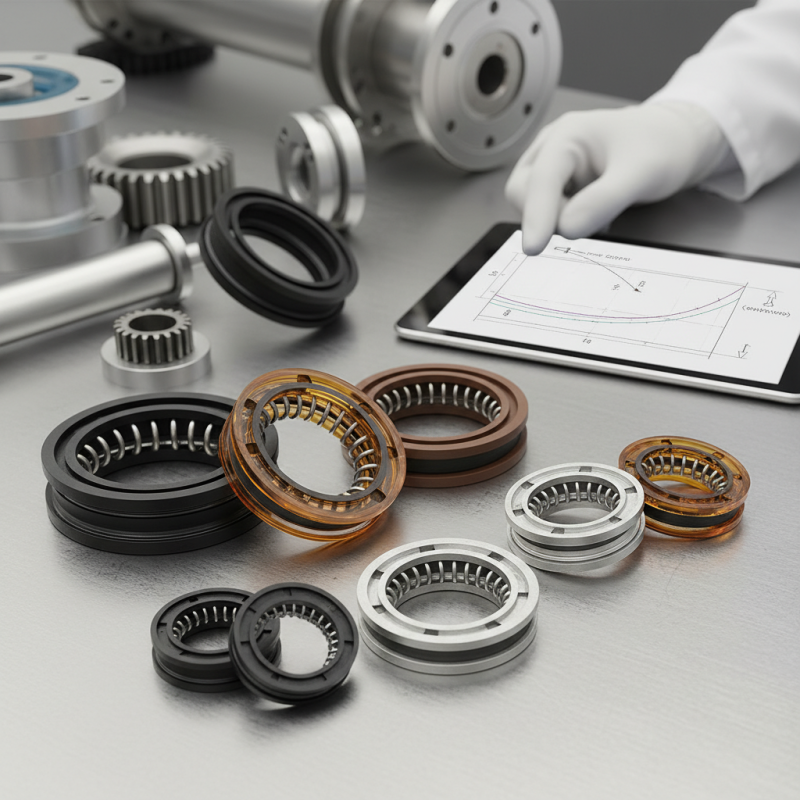
How to Choose Spring Energized Seals for Optimal Performance?

Understanding the Importance of Spring Energized Seals in Sealing Technology

Spring energized seals are crucial in sealing technology due to their ability to maintain a tight seal under varying conditions. These seals utilize a spring mechanism to ensure constant pressure against the mating surface. This adaptability makes them ideal for challenging environments, including high temperatures and aggressive chemicals. Their effectiveness can greatly improve the longevity of equipment and reduce maintenance requirements.


For optimal performance, selecting the right spring energized seal involves understanding material composition and environmental factors. Different materials offer varying resistance to temperature and chemicals. The decision-making process can be complex and sometimes overwhelming. Careful consideration of the specific application is vital.


In some cases, users may overlook minor details that impact seal performance. A small change in pressure or temperature can affect the seal efficacy. To avoid failures, it is essential to conduct proper testing and analysis. Even experienced professionals can benefit from revisiting the fundamentals of seal selection. Understanding every aspect of a seal's functionality not only enhances reliability but also contributes to overall process efficiency.

Key Factors Influencing Spring Energized Seal Selection and Performance

Selecting the right spring energized seals is crucial for ensuring optimal performance in various applications. Different factors influence this choice, impacting the seal's longevity and efficiency. Material selection plays an essential role. Each material has unique properties and tolerances that affect its compatibility with different fluids and temperatures. Evaluating the environment in which the seal will operate is critical. Factors like pressure, media, and temperature can significantly impact performance.

Another vital aspect is the spring design. The spring must apply appropriate pressure to keep the seal in contact with the mating surfaces. An improperly designed spring can lead to premature wear or failure. It’s also important to consider the dynamic or static nature of the application. Dynamic seals require different considerations than static ones, often demanding higher wear resistance.

A common oversight is underestimating installation processes. Incorrect installation can lead to immediate failure, regardless of material choice. Training personnel and following guidelines can mitigate this risk. Additionally, testing the seals under operational conditions is necessary. Real-world performance provides insights that theoretical assessments may miss. Understanding these factors leads to wiser decisions and enhances seal reliability over time.

Material Selection: Evaluating Options for Diverse Applications in Sealing

When selecting spring energized seals, the material plays a crucial role in performance. Different applications require careful consideration of various materials. Common options include elastomers and thermoplastics. Each material has unique properties that can affect sealing efficiency. For instance, certain elastomers excel in low-temperature environments. Thermoplastics might perform better under high pressure. Understand the conditions your seals will face.

The choice also involves evaluating chemical compatibility. Some materials resist specific chemicals while others degrade rapidly. This can impact not only seal life but also equipment functionality. Testing in real-world conditions is essential. Don’t overlook the environment where the seals operate. Factors such as temperature variations and exposure to moisture can alter the seal’s effectiveness.

Be open to adjustments based on initial testing results. Not every material will suit every application perfectly. It’s important to remain flexible. Regular evaluations of your selected seals can highlight areas needing improvement. Engaging with industry experts can also provide insights into better material choices. Seek feedback and be willing to adapt your strategy for optimal sealing performance.

Analyzing Environmental Conditions: Temperature, Pressure, and Media Compatibility

When selecting spring energized seals, understanding environmental conditions is crucial. Temperature, pressure, and media compatibility directly impact performance. According to industry reports, seals exposed to extreme temperatures can suffer from accelerated wear. For example, materials like PTFE perform well up to 500°F, but can degrade faster when consistently above their optimal range.

Pressure also plays a significant role. High-pressure environments can lead to seal deformation. A study published in the Journal of Sealing Technology indicated that seals operating above their rated pressure can fail in just a few weeks. Understanding the specific pressure range is essential for long-term performance. You may need to experiment during installation.

Media compatibility is another critical factor. Different liquids and gases react differently with materials. For instance, oils and solvents can cause rubber seals to swell or break down. A compatibility chart can guide these choices, but it's not foolproof. Industry data shows that even slight changes in media can affect seal integrity. Make sure to test seals in real-world scenarios to evaluate performance accurately.

Performance Testing: Industry Standards and Best Practices for Seal Evaluation

Performance testing for spring energized seals is crucial for ensuring reliability in various applications. According to a report by the Society of Tribologists and Lubrication Engineers, over 30% of seal failures can be traced to inadequate performance evaluation. Therefore, adopting industry standards during testing is essential. ASTM D2000, for instance, outlines specific criteria for seal materials. This helps in selecting seals that can withstand extreme conditions.


Evaluating seals involves assessing multiple factors. Compression set, wear resistance, and temperature stability are critical metrics. A study published in the Journal of Mechanical Engineering highlights that seals tested under high pressure experienced a 25% reduction in lifespan when subjected to subpar materials. This indicates the necessity for rigorous testing against established benchmarks. Furthermore, continuous monitoring can reveal performance degradation before failures occur.


However, not all testing methods are foolproof. Some tests may not simulate actual working conditions accurately. For instance, standard laboratory tests often overlook factors such as dynamic motion and environmental exposure. This gap can lead to misguided selections. As an industry, more emphasis on real-world testing would enhance reliability. Engaging in reflective practices may prompt improvements in our approach to seal evaluations.

Copyright 2025 Fluidra S.A. | Created by BCM Marketing Agencia Privacy Policy Legal note | Cookie policy |

Technical cookies are strictly necessary for our website to work and you can navigate through it. These types of cookies are those that, for example, allow us to identify you, give you access to certain restricted parts of the page if necessary, or remember different options or services already selected by you, such as your privacy preferences. Therefore, they are activated by default, your authorization not being necessary in this regard. Through the configuration of your browser, you can block or alert the presence of this type of cookies, although such blocking will affect the proper functioning of the different functionalities of our website.


The analysis cookies allow us to study the navigation of the users of our website in general (for example, which sections of the page are the most visited, which services are used most and if they work correctly, etc.). From the statistical information on navigation on our website, we can improve both the operation of the page itself and the different services it offers. Therefore, these cookies do not have an advertising purpose, but only serve to make our website work better, adapting to our users in general. By activating them you will contribute to this continuous improvement. You can enable or disable these cookies by checking the corresponding box, being disabled by default.


Functionality cookies allow us to remember your preferences, to personalize certain characteristics and general options of our website, every time you access it (for example, the language in which the information is presented to you, the sections marked as favorites, your browser type, etc.) Therefore, this type of cookies does not have an advertising purpose, but by activating them you will improve the functionality of the website (for example, adapting to your type of browser) and the customization of it based on your preferences (for example, by presenting the information in the language that you have chosen in previous occasions), which will contribute to the ease, usability and comfort of our page during your navigation. You can enable or disable these cookies by checking the corresponding box, being disabled by default.


Advertising cookies allow us to manage the advertising spaces included in our website based on criteria such as the content shown or the frequency in which the ads are displayed. For example, if you have been shown the same ad several times on our website, and you have not shown a personal interest by clicking on it, it will not appear again. In summary, by activating this type of cookies, the advertising shown on our website will be more useful and diverse, and less repetitive. You can enable or disable these cookies by checking the corresponding box, being disabled by default.


Behavioral advertising cookies allow us to obtain information based on the observation of your browsing habits and behaviors on the web, in order to show you advertising content that best suits your personal tastes and interests. To understand it in a very simple way, we will give you a fictitious example: if your last searches on the web were related to suspense literature, we would show you advertising about suspense books. Therefore, activating this type of cookies, the advertising that we show you on our website will not be generic, but will be oriented to your searches, tastes and interests, therefore adjusting exclusively to you. You can enable or disable these cookies by checking the corresponding box, being disabled by default.
To understand it in a very simple way, we will give you a fictitious example: if your last searches on the web were related to suspense literature, we would show you advertising about suspense books. Therefore, activating this type of cookies, the advertising that we show you on our website will not be generic, but will be oriented to your searches, tastes and interests, therefore adjusting exclusively to you. You can enable or disable these cookies by checking the corresponding box, being disabled by default.

SAVE

We use our own and third-party cookies to ensure the proper functioning of the website and to analyse our services, improve your experience on our website and show you advertisements related to your interests according to profiling based on your browsing habits (e.g. websites visited). You can accept all cookies by clicking "ACCEPT" or set or reject them by clicking here. If you would like to know more about the use of cookies, please see our COOKIE POLICY.


ACCEPT ALL
Reject no essentials


