
Why Choose Rubber Couplings for Your Industrial Needs?
FLUID HANDLING EXPERTS

Blog, all our news

Why Choose Rubber Couplings for Your Industrial Needs?

In various industrial applications, choosing the right coupling is crucial. One option that stands out is the Rubber Coupling. These couplings offer a unique blend of flexibility and durability. They can effectively absorb shock and reduce vibrations, making them suitable for a wide range of machines.

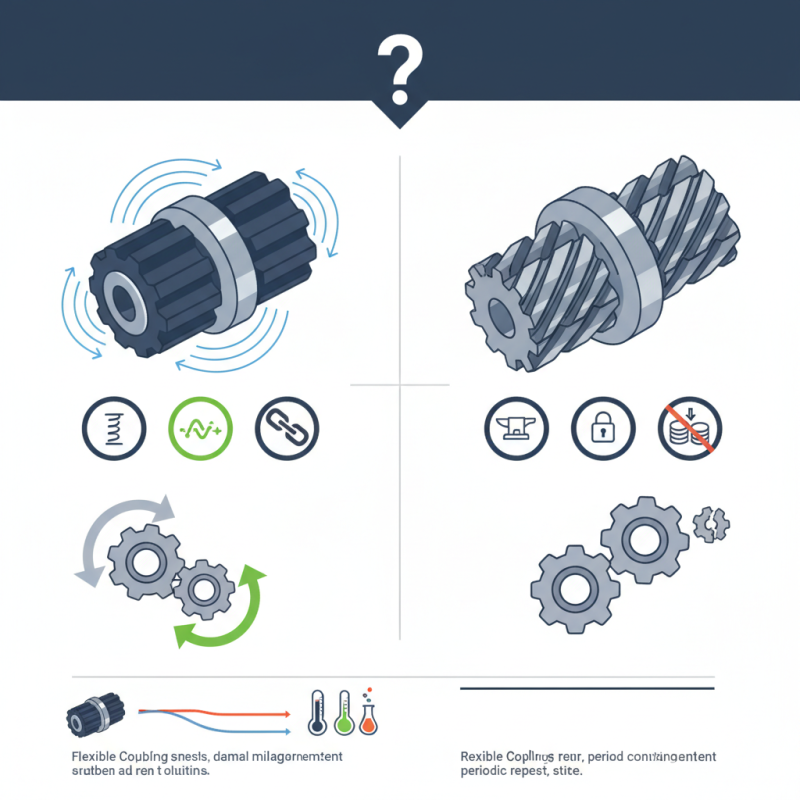
Many industries utilize Rubber Couplings due to their resilience. They can handle misalignment better than rigid connections. This ability minimizes wear on equipment, which can lead to significant cost savings. Despite their advantages, some may question their long-term reliability compared to metal couplings.

It’s essential to evaluate both options carefully. Rubber Couplings may wear down over time, needing periodic replacement. Their performance can be influenced by environmental factors, like temperature and exposure to chemicals. Understanding these aspects will help in making an informed decision for your industrial needs.
Why Choose Rubber Couplings for Your Industrial Needs?

Understanding the Basics of Rubber Couplings in Industrial Applications

Rubber couplings serve an essential role in various industrial applications. They are commonly used to connect shafts in machinery. Their flexibility allows for misalignment correction between the two connected components. This feature is crucial in environments where precise alignment may not always be possible.

In addition to addressing misalignment, rubber couplings help absorb shock and vibrations. This characteristic minimizes wear and tear on connected equipment. Over time, however, the rubber material can degrade, leading to potential failures. Regular inspection is necessary to ensure performance remains optimal. Understanding the specific requirements of your equipment is vital in selecting the right type of coupling.

Beyond functionality, the installation process can be tricky. Misalignment during installation may counteract the benefits of the coupling. This emphasizes the need for expertise in coupling installation. Many industries face challenges with rubber's durability under extreme conditions. Proper selection based on environmental factors is key to long-term reliability in applications.

Advantages of Rubber Couplings Compared to Other Coupling Types

Rubber couplings offer numerous advantages over traditional coupling types like metal or gear couplings. One significant benefit is their ability to absorb shock and vibrations. According to industry reports, rubber couplings can reduce vibration transmission by up to 90%. This characteristic is essential for applications involving high-speed machinery, where excessive vibration can lead to wear and tear on components.

Moreover, rubber couplings provide exceptional flexibility and alignment tolerances. This can be particularly valuable in systems with misalignment issues. Studies show that rubber couplings can accommodate misalignments of up to 5 degrees without compromising performance. Their elasticity allows them to deform under stress, ensuring that machinery operates smoothly without the risk of jamming or failure.

Additionally, rubber couplings are resistant to various environmental factors, such as moisture and chemicals. Many industrial environments expose couplings to harsh elements. Rubber can withstand these conditions better than several other materials, ensuring longer service life. However, it's important to note that exposure to extreme temperatures and certain oils can degrade rubber couplings over time. This necessitates regular inspections to maintain their effectiveness in critical applications.

Common Applications of Rubber Couplings in Various Industries

Rubber couplings are vital in various industries due to their flexibility and shock-absorbing properties. They are commonly used in applications such as power transmission, automotive systems, and conveyor systems. In manufacturing, rubber couplings can connect motors to other machinery, minimizing vibration and ensuring smooth operation. The ability to accommodate misalignment makes them ideal for high-stress environments.

In the automotive sector, rubber couplings serve a crucial role in drivetrain systems. They help reduce noise and vibration, leading to improved comfort for passengers. This adaptability is essential for handling the dynamic forces present during vehicle operation. Likewise, in HVAC systems, rubber couplings assist in dampening vibrations from compressors, enhancing overall system longevity.

**Tip:** Regularly inspect rubber couplings for signs of wear or damage. Broken couplings can lead to equipment failure.

Another application is in the marine industry, where they connect engines to propellers. Their resistance to corrosion and water makes them invaluable in this environment.

**Tip:** Choosing the right type of rubber is crucial. Different formulations can affect performance and lifespan significantly.

Ultimately, these couplings highlight the balance between functionality and safety in industrial applications, emphasizing the need for thoughtful selection and maintenance.

Factors to Consider When Choosing Rubber Couplings for Your Needs

When choosing rubber couplings for industrial applications, several factors play a critical role. The flexibility of rubber couplings allows for misalignment compensation. This is essential in machinery where precise alignment is challenging. A rubber coupling can absorb shock, reducing wear on equipment, but it may not suit high-torque applications effectively. Evaluating your machinery's requirements is vital to ensure you do not underestimate or overestimate the torque capacity.

Temperature resistance is another significant aspect. Rubber couplings can degrade in extreme temperatures. Some industrial environments expose couplings to harsh conditions. You should consider the operating temperature range of your application. Additionally, environmental factors like exposure to chemicals may affect durability. Regular inspection is necessary to prevent unexpected failures.

Load capacity and overall longevity are also important. Couplings must handle peak loads without failure. However, it’s essential to remember that rubber deteriorates over time, regardless of load. Repeated stress can lead to cracks and issues. Many manufacturers may offer warranty options, but regular maintenance is crucial. Reflecting on your specific needs will guide you toward making an informed decision.

Maintenance and Care Tips for Rubber Couplings in Industrial Use

Rubber couplings are essential components in industrial applications. These flexible connectors reduce vibration and misalignment. However, they require regular maintenance to ensure optimal performance.

Regular inspection is vital. Look for cracks or wear on the rubber material. According to a report by the American Society of Mechanical Engineers, over 30% of coupling failures occur due to improper upkeep. Consider cleaning the coupling surfaces to remove dirt and debris. This enhances sealing and prevents further damage. Lubrication can help reduce friction, but avoid over-lubricating as too much can attract contaminants.

Environmental factors play a significant role in the lifespan of rubber couplings. Exposure to extreme temperatures can degrade rubber materials faster. A study from the Rubber Manufacturers Association indicates that temperature changes can shorten the lifespan by up to 25%. Monitoring the operating environment helps in planning timely replacements. Remember, ignoring these factors can lead to costly downtime and repairs.

Why Choose Rubber Couplings for Your Industrial Needs?

The chart above illustrates the key benefits of rubber couplings for industrial applications. With high flexibility and durability, these components play a crucial role in enhancing operational efficiency.

Copyright 2025 Fluidra S.A. | Created by BCM Marketing Agencia Privacy Policy Legal note | Cookie policy |

Technical cookies are strictly necessary for our website to work and you can navigate through it. These types of cookies are those that, for example, allow us to identify you, give you access to certain restricted parts of the page if necessary, or remember different options or services already selected by you, such as your privacy preferences. Therefore, they are activated by default, your authorization not being necessary in this regard. Through the configuration of your browser, you can block or alert the presence of this type of cookies, although such blocking will affect the proper functioning of the different functionalities of our website.


The analysis cookies allow us to study the navigation of the users of our website in general (for example, which sections of the page are the most visited, which services are used most and if they work correctly, etc.). From the statistical information on navigation on our website, we can improve both the operation of the page itself and the different services it offers. Therefore, these cookies do not have an advertising purpose, but only serve to make our website work better, adapting to our users in general. By activating them you will contribute to this continuous improvement. You can enable or disable these cookies by checking the corresponding box, being disabled by default.


Functionality cookies allow us to remember your preferences, to personalize certain characteristics and general options of our website, every time you access it (for example, the language in which the information is presented to you, the sections marked as favorites, your browser type, etc.) Therefore, this type of cookies does not have an advertising purpose, but by activating them you will improve the functionality of the website (for example, adapting to your type of browser) and the customization of it based on your preferences (for example, by presenting the information in the language that you have chosen in previous occasions), which will contribute to the ease, usability and comfort of our page during your navigation. You can enable or disable these cookies by checking the corresponding box, being disabled by default.


Advertising cookies allow us to manage the advertising spaces included in our website based on criteria such as the content shown or the frequency in which the ads are displayed. For example, if you have been shown the same ad several times on our website, and you have not shown a personal interest by clicking on it, it will not appear again. In summary, by activating this type of cookies, the advertising shown on our website will be more useful and diverse, and less repetitive. You can enable or disable these cookies by checking the corresponding box, being disabled by default.


Behavioral advertising cookies allow us to obtain information based on the observation of your browsing habits and behaviors on the web, in order to show you advertising content that best suits your personal tastes and interests. To understand it in a very simple way, we will give you a fictitious example: if your last searches on the web were related to suspense literature, we would show you advertising about suspense books. Therefore, activating this type of cookies, the advertising that we show you on our website will not be generic, but will be oriented to your searches, tastes and interests, therefore adjusting exclusively to you. You can enable or disable these cookies by checking the corresponding box, being disabled by default.
To understand it in a very simple way, we will give you a fictitious example: if your last searches on the web were related to suspense literature, we would show you advertising about suspense books. Therefore, activating this type of cookies, the advertising that we show you on our website will not be generic, but will be oriented to your searches, tastes and interests, therefore adjusting exclusively to you. You can enable or disable these cookies by checking the corresponding box, being disabled by default.

SAVE

We use our own and third-party cookies to ensure the proper functioning of the website and to analyse our services, improve your experience on our website and show you advertisements related to your interests according to profiling based on your browsing habits (e.g. websites visited). You can accept all cookies by clicking "ACCEPT" or set or reject them by clicking here. If you would like to know more about the use of cookies, please see our COOKIE POLICY.


ACCEPT ALL
Reject no essentials


