
How to Choose the Right Oil Filter for Your Vehicle?
FLUID HANDLING EXPERTS

Blog, all our news

How to Choose the Right Oil Filter for Your Vehicle?

Choosing the right Oil Filter for your vehicle can be daunting. The oil filter is crucial for maintaining engine health. According to a report by the Automotive Oil Change Association, about 70% of engine wear occurs due to poor oil filtration. Inadequate filtration can lead to costly damages and decreased engine performance.

Expert Mark Bennett, an oil filter industry authority, emphasizes, "A quality oil filter is essential for protecting your engine." He stresses that selecting the right oil filter goes beyond brand names or price. Many car owners tend to overlook the specifications needed for their vehicles. They often assume that all oil filters are interchangeable, which is misleading.

Navigating through the numerous products available can cause confusion. Each vehicle has unique requirements based on its make and model. This makes understanding oil filter compatibility vital. Familiarizing yourself with relevant data can optimize your choice. Ultimately, this choice directly influences the longevity and efficiency of your vehicle's engine.
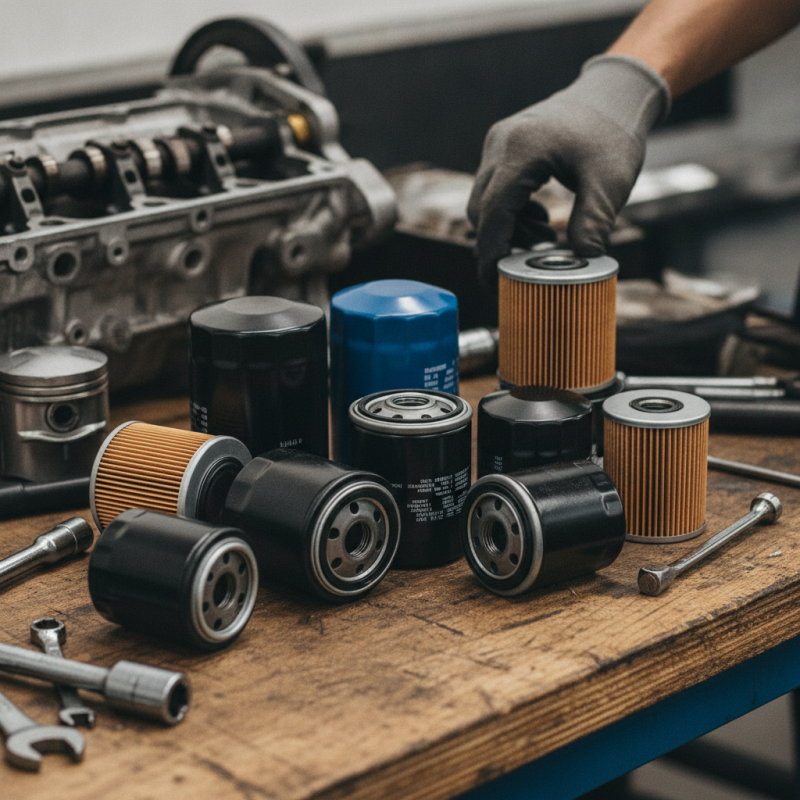
How to Choose the Right Oil Filter for Your Vehicle?

Understanding the Importance of Oil Filters in Vehicle Maintenance

Oil filters play a crucial role in vehicle maintenance. They remove contaminants from engine oil, preventing damage to engine components. According to a study by the Society of Automotive Engineers, dirty oil can reduce engine performance by up to 20%. This highlights the importance of regular oil filter changes for optimal engine health.

Choosing the right oil filter isn't just about fit; it's about efficiency. A good filter traps larger particles and lets smaller ones pass through. Filters also vary in filtration efficiency. A high-quality filter can remove 99% of debris, compared to lower-quality options that may only achieve 80%. This difference can significantly impact engine longevity and performance.

Tips: Always consult your vehicle manual for specifications. Pay attention to filter ratings and warranty information. Not all filters are created equal. Researching and selecting filters based on third-party tests can lead to more informed decisions. Regularly check and replace your oil filter to ensure your engine runs smoothly and efficiently.

Identifying Your Vehicle's Oil Filter Type and Compatibility

Choosing the right oil filter for your vehicle is crucial. Understanding your vehicle’s oil filter type and compatibility is essential for optimal engine performance. Most vehicles utilize one of three common oil filter types: spin-on, cartridge, or remote. Each type has unique specifications that cater to different engine designs.

Compatibility is vital. A report from the Automotive Aftermarket Industry Association indicates that using the wrong oil filter can lead to reduced oil flow and contamination. This could potentially harm your engine. Always check your vehicle’s manual. It typically lists the appropriate specifications for oil filter selection. The manual can also guide you on the filter size, thread specifications, and the necessary filtration level.

Many car owners skip ensuring compatibility. This oversight can result in costly repairs down the road. Studies have shown that a significant percentage of drivers do not replace their oil filters consistently. Failing to replace the oil filter when changing oil can lead to a buildup of contaminants. This reduces the oil's effectiveness, compromising engine performance. Always prioritize compatibility to maintain your vehicle’s health.

How to Choose the Right Oil Filter for Your Vehicle?

Vehicle Make Vehicle Model Engine Type Oil Filter Type Compatibility
Toyota Camry 2.5L I4 Spin-on Compatible with 2018+ models
Ford F-150 3.5L V6 Screw-on Compatible with 2015+ models
Honda Civic 2.0L I4 Cartridge Compatible with 2016+ models
Chevrolet Silverado 5.3L V8 Screw-on Compatible with 2014+ models
Subaru Outback 2.5L I4 Spin-on Compatible with 2020+ models

Evaluating Key Features of Oil Filters: Material, Design, and Capacity

When selecting an oil filter, evaluating its material, design, and capacity is essential. The material determines its durability and effectiveness. Common choices include paper and synthetic materials. Paper filters are affordable but may not capture fine particles effectively. Synthetic options often offer better filtration and longevity.

Design also plays a vital role. A well-designed filter ensures optimal oil flow while trapping contaminants. Look for features like a bypass valve, which allows oil to flow even if the filter becomes clogged. This can prevent engine damage. However, not all designs ensure efficiency.

**Tip:** Always check the filter’s specifications before purchase. A high-capacity filter may extend oil change intervals, saving you time.

Capacity refers to how much dirt and debris a filter can hold. Higher capacity means a longer lifespan for the filter, but it may come with a higher price tag. Balance your choices based on driving habits and maintenance frequency.

**Tip:** Regularly inspect your oil filter and replace it as advised. It can prevent costly engine repairs.

Be cautious with your choices. Sometimes, cheaper filters compromise on quality. Research and seek reliable sources to guide your selection process. Prioritize quality to enhance engine performance and longevity.

Oil Filter Comparison: Key Features

This chart evaluates oil filters based on key features such as material type, design, and capacity. The effectiveness rating ranges from 1 to 10, highlighting the advantages of different oil filter characteristics.

Comparing Popular Oil Filter Brands and Their Performance

When choosing an oil filter, many vehicle owners consider different brands. Each brand claims superior performance and reliability. However, factors such as filter media, design, and durability are crucial in determining the right one for your car.

Some filters use synthetic media for better filtration efficiency. Others might have thicker canister walls to withstand higher pressures. While a thicker wall is often beneficial, it can also add weight, impacting fuel efficiency. Additionally, some filters have anti-drainback valves, which help retain oil in the filter when the engine is off. This feature can prevent dry starts but may not be necessary for all vehicles.

Comparing filters might reveal inconsistent performance across brands. Some filters perform well in high-mileage conditions while others excel in regular usage. User feedback on different platforms often highlights these discrepancies. It's essential to weigh the pros and cons based on your specific driving conditions and engine type. Ultimately, the choice may depend not only on brand reputation but also on personal experience and vehicle requirements.

Tips for Proper Installation and Maintenance of Oil Filters

Installing the right oil filter is crucial for your vehicle's health. A poorly fitted filter can lead to oil leaks or contamination. Follow some essential tips for proper installation and maintenance of oil filters.

Always start with a clean surface. Before replacing the oil filter, make sure the mounting surface is free of dirt. A dirty area can disrupt the seal, causing leaks. Use a gasket scraper to remove old adhesive material carefully. Pay attention to the rubber O-ring, which must be lubricated with a bit of oil. A dry O-ring may stick to the engine, leading to issues during the next filter change.

Check the filter type regularly. Not all oil filters are the same. Use the correct type for your engine. A mismatch can lead to reduced efficiency. Monitor your oil levels and filter condition. If your oil appears dark or gritty, consider a filter change even if it’s not time yet. Regular check-ups prevent bigger issues down the road. Remember, it's better to be proactive than reactive with your vehicle's maintenance.

Article Source:

Copyright 2025 Fluidra S.A. | Created by BCM Marketing Agencia Privacy Policy Legal note | Cookie policy |

Technical cookies are strictly necessary for our website to work and you can navigate through it. These types of cookies are those that, for example, allow us to identify you, give you access to certain restricted parts of the page if necessary, or remember different options or services already selected by you, such as your privacy preferences. Therefore, they are activated by default, your authorization not being necessary in this regard. Through the configuration of your browser, you can block or alert the presence of this type of cookies, although such blocking will affect the proper functioning of the different functionalities of our website.


The analysis cookies allow us to study the navigation of the users of our website in general (for example, which sections of the page are the most visited, which services are used most and if they work correctly, etc.). From the statistical information on navigation on our website, we can improve both the operation of the page itself and the different services it offers. Therefore, these cookies do not have an advertising purpose, but only serve to make our website work better, adapting to our users in general. By activating them you will contribute to this continuous improvement. You can enable or disable these cookies by checking the corresponding box, being disabled by default.


Functionality cookies allow us to remember your preferences, to personalize certain characteristics and general options of our website, every time you access it (for example, the language in which the information is presented to you, the sections marked as favorites, your browser type, etc.) Therefore, this type of cookies does not have an advertising purpose, but by activating them you will improve the functionality of the website (for example, adapting to your type of browser) and the customization of it based on your preferences (for example, by presenting the information in the language that you have chosen in previous occasions), which will contribute to the ease, usability and comfort of our page during your navigation. You can enable or disable these cookies by checking the corresponding box, being disabled by default.


Advertising cookies allow us to manage the advertising spaces included in our website based on criteria such as the content shown or the frequency in which the ads are displayed. For example, if you have been shown the same ad several times on our website, and you have not shown a personal interest by clicking on it, it will not appear again. In summary, by activating this type of cookies, the advertising shown on our website will be more useful and diverse, and less repetitive. You can enable or disable these cookies by checking the corresponding box, being disabled by default.


Behavioral advertising cookies allow us to obtain information based on the observation of your browsing habits and behaviors on the web, in order to show you advertising content that best suits your personal tastes and interests. To understand it in a very simple way, we will give you a fictitious example: if your last searches on the web were related to suspense literature, we would show you advertising about suspense books. Therefore, activating this type of cookies, the advertising that we show you on our website will not be generic, but will be oriented to your searches, tastes and interests, therefore adjusting exclusively to you. You can enable or disable these cookies by checking the corresponding box, being disabled by default.
To understand it in a very simple way, we will give you a fictitious example: if your last searches on the web were related to suspense literature, we would show you advertising about suspense books. Therefore, activating this type of cookies, the advertising that we show you on our website will not be generic, but will be oriented to your searches, tastes and interests, therefore adjusting exclusively to you. You can enable or disable these cookies by checking the corresponding box, being disabled by default.

SAVE

We use our own and third-party cookies to ensure the proper functioning of the website and to analyse our services, improve your experience on our website and show you advertisements related to your interests according to profiling based on your browsing habits (e.g. websites visited). You can accept all cookies by clicking "ACCEPT" or set or reject them by clicking here. If you would like to know more about the use of cookies, please see our COOKIE POLICY.


ACCEPT ALL
Reject no essentials


