
How to Choose the Right Battery Fuse for Your Needs?
FLUID HANDLING EXPERTS

Blog, all our news

How to Choose the Right Battery Fuse for Your Needs?

Choosing the right battery fuse can be a challenging process. There are several types, each serving distinct purposes. Understanding the requirements of your specific application is crucial. A battery fuse is not a one-size-fits-all solution. It can safeguard your equipment against overloads and short circuits.

When selecting a battery fuse, consider the voltage and current rating. Different batteries have varying specifications. The fuse must match these specifications to ensure optimal performance. A mismatch could lead to equipment failure or dangerous situations. Familiarity with the electrical systems you are working with will help make an informed decision.

Some users may overlook the importance of quality. Reliable battery fuses are essential for safety. A poorly made fuse could fail to protect your device. Reading reviews and consulting professionals can enhance your selection process. Armed with knowledge and insight, you can choose a battery fuse that meets your needs effectively.
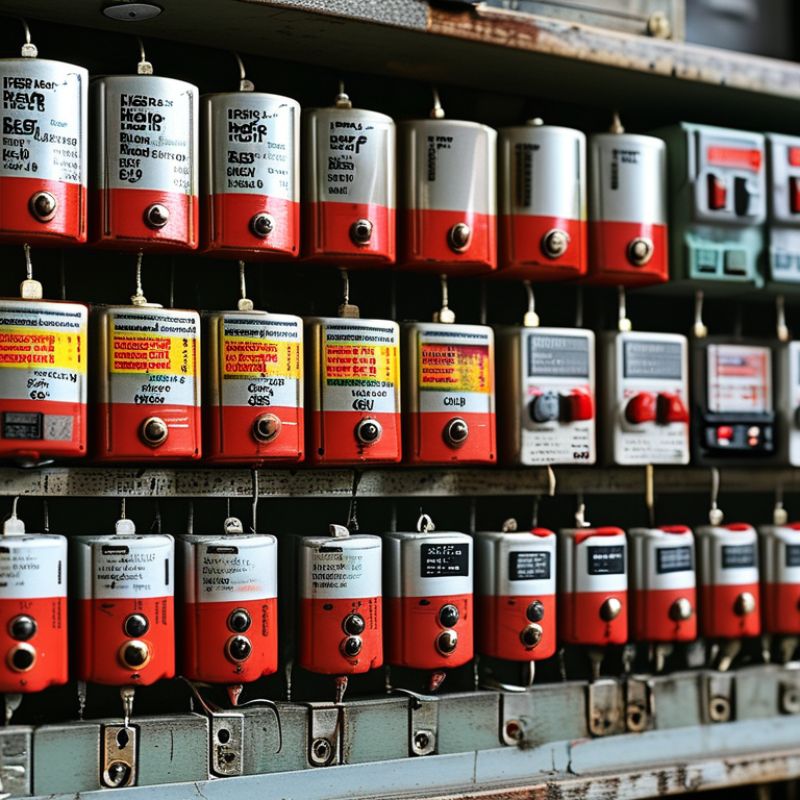
How to Choose the Right Battery Fuse for Your Needs?

Understanding Battery Fuses and Their Importance

Battery fuses play a crucial role in protecting electrical systems. They ensure that the current flow remains within safe limits. A battery fuse can prevent overheating, fires, or damage to electrical components. Understanding how battery fuses work is essential for making informed choices. Proper use of these fuses can enhance the reliability of your setup.

Choosing the right battery fuse requires careful consideration. Assess your system's voltage and current requirements first. Fuses come in various ratings. Selecting one too high may not provide adequate protection. On the other hand, a fuse with a low rating can blow frequently, causing frustration.

Tips: Always match the fuse to the wire gauge used in your system. This combination ensures safety and efficiency. Double-check the manufacturer’s specifications. If you’re uncertain, consult a professional. Remember, a poor choice can lead to serious issues down the line. Take your time when selecting the appropriate battery fuse. It’s not just about function but also about safety.

Battery Fuse Ratings Comparison

This chart illustrates the recommended usage of different battery fuse ratings based on typical devices that utilize them. Understanding the appropriate rating helps in selecting the right fuse to protect your electrical systems and devices.

Key Factors to Consider When Choosing a Battery Fuse

When selecting a battery fuse, it's critical to consider several key factors to ensure optimal safety and performance. One significant aspect is the fuse rating. A fuse’s rating, measured in amperes, should match the load it will protect. According to industry regulations, a fuse rated too high might not blow in time, risking damage to the battery and other components. Conversely, a lower-rated fuse could blow unnecessarily, causing inconvenience.

Another vital factor is the fuse type. There are various fuses available, including blade, glass, and ceramic types, each suited for different applications. Research indicates that blade fuses are common in automotive applications due to their easy installation and replacement. In contrast, glass fuses might be better in specific electronics due to their compact design. The environment where the fuse will function also matters. Ambient temperature and humidity can influence fuse performance. High temperatures may cause fuses to fail prematurely, while humidity can lead to corrosion.

Understanding these aspects is fundamental. Yet, the selection process isn't always straightforward. The compatibility with existing systems and circuit protection standards can complicate choices. Many users overlook these details, leading to potential electrical failures. It's essential to do thorough research. Reviewing technical specifications and consulting industry reports can provide valuable insights. Emphasizing the correct considerations will enhance the reliability and safety of your battery systems.

Types of Battery Fuses and Their Specific Uses

When selecting a battery fuse, understanding the types available is crucial. Blade fuses are common. They are easy to replace and widely used in automotive applications. These fuses come in various amperages and sizes. You must choose the correct rating to prevent overheating.

Glass fuse types, on the other hand, offer reliability for smaller devices. They have a transparent casing, allowing for quick visual inspections. However, they can be more fragile than other types. Be cautious if you're using them in high-vibration environments.

Consider the application when choosing a fuse. For instance, a slow-blow fuse can handle temporary overloads. This makes it suitable for devices that draw high current briefly. In contrast, a fast-acting fuse is essential for sensitive electronics. It protects against sudden surges. Always assess your specific needs before making a decision.

How to Calculate the Correct Fuse Rating for Your Battery

Choosing the correct fuse for a battery is essential for safety and efficiency. The fuse protects the battery and the connected devices from overload. To select the right fuse, one must calculate the appropriate fuse rating.

Start by determining the battery's capacity. Check the amp-hour (Ah) rating printed on the battery. A general rule is to use a fuse that is rated for 1.5 to 2 times the battery's capacity. For example, if your battery has a 20 Ah rating, a fuse rated between 30A to 40A would suffice. However, this can vary based on your specific application and load requirements.

Next, consider the nature of your devices. Devices with high starting currents may require a higher fuse rating. On the contrary, delicate electronics may need a lower rating for protection. It's crucial to balance these factors to avoid unnecessary blown fuses or, worse, potential fire hazards. Testing and adjustments may be necessary to find the optimal fuse rating. Regular checks on connections can help ensure everything is functioning properly.

Installation Tips for Battery Fuses and Safety Precautions

When installing a battery fuse, safety must be the top priority. According to a report by the National Fire Protection Association, faulty electrical installations account for a significant percentage of household fires. Ensure that you choose a fuse rated for your specific battery size and application. A fuse that is not correctly rated could lead to overheating or, in the worst case, explosions.

Proper installation involves placing the fuse as close to the battery as possible. This position minimizes the risk of short circuits. It is important to use high-quality connectors and cables, as lower-quality materials may introduce points of failure. Always check for signs of wear or corrosion. Regular inspections can prevent dangerous issues down the line.

Before connecting the fuse, ensure all power is turned off. A surprising number of accidents occur simply due to forgetfulness. Be mindful of the polarity when connecting the fuse. Incorrect connections not only damage the fuse but can also idle the entire electrical system.

Follow these guidelines to enhance your safety and the longevity of your electrical setup.

Article Source:

Copyright 2025 Fluidra S.A. | Created by BCM Marketing Agencia Privacy Policy Legal note | Cookie policy |

Technical cookies are strictly necessary for our website to work and you can navigate through it. These types of cookies are those that, for example, allow us to identify you, give you access to certain restricted parts of the page if necessary, or remember different options or services already selected by you, such as your privacy preferences. Therefore, they are activated by default, your authorization not being necessary in this regard. Through the configuration of your browser, you can block or alert the presence of this type of cookies, although such blocking will affect the proper functioning of the different functionalities of our website.


The analysis cookies allow us to study the navigation of the users of our website in general (for example, which sections of the page are the most visited, which services are used most and if they work correctly, etc.). From the statistical information on navigation on our website, we can improve both the operation of the page itself and the different services it offers. Therefore, these cookies do not have an advertising purpose, but only serve to make our website work better, adapting to our users in general. By activating them you will contribute to this continuous improvement. You can enable or disable these cookies by checking the corresponding box, being disabled by default.


Functionality cookies allow us to remember your preferences, to personalize certain characteristics and general options of our website, every time you access it (for example, the language in which the information is presented to you, the sections marked as favorites, your browser type, etc.) Therefore, this type of cookies does not have an advertising purpose, but by activating them you will improve the functionality of the website (for example, adapting to your type of browser) and the customization of it based on your preferences (for example, by presenting the information in the language that you have chosen in previous occasions), which will contribute to the ease, usability and comfort of our page during your navigation. You can enable or disable these cookies by checking the corresponding box, being disabled by default.


Advertising cookies allow us to manage the advertising spaces included in our website based on criteria such as the content shown or the frequency in which the ads are displayed. For example, if you have been shown the same ad several times on our website, and you have not shown a personal interest by clicking on it, it will not appear again. In summary, by activating this type of cookies, the advertising shown on our website will be more useful and diverse, and less repetitive. You can enable or disable these cookies by checking the corresponding box, being disabled by default.


Behavioral advertising cookies allow us to obtain information based on the observation of your browsing habits and behaviors on the web, in order to show you advertising content that best suits your personal tastes and interests. To understand it in a very simple way, we will give you a fictitious example: if your last searches on the web were related to suspense literature, we would show you advertising about suspense books. Therefore, activating this type of cookies, the advertising that we show you on our website will not be generic, but will be oriented to your searches, tastes and interests, therefore adjusting exclusively to you. You can enable or disable these cookies by checking the corresponding box, being disabled by default.
To understand it in a very simple way, we will give you a fictitious example: if your last searches on the web were related to suspense literature, we would show you advertising about suspense books. Therefore, activating this type of cookies, the advertising that we show you on our website will not be generic, but will be oriented to your searches, tastes and interests, therefore adjusting exclusively to you. You can enable or disable these cookies by checking the corresponding box, being disabled by default.

SAVE

We use our own and third-party cookies to ensure the proper functioning of the website and to analyse our services, improve your experience on our website and show you advertisements related to your interests according to profiling based on your browsing habits (e.g. websites visited). You can accept all cookies by clicking "ACCEPT" or set or reject them by clicking here. If you would like to know more about the use of cookies, please see our COOKIE POLICY.


ACCEPT ALL
Reject no essentials


