
How to Choose Gravity Conveyor Manufacturers in 2026
FLUID HANDLING EXPERTS

Blog, all our news

How to Choose Gravity Conveyor Manufacturers in 2026

Choosing Gravity Conveyor Manufacturers in 2026 is not just a price comparison. The right supplier should understand your loads, layout, and daily operating conditions. A conveyor for light cartons may not suit dense totes or uneven packages. Small details matter.

Start with the application. Note package weight, dimensions, contact surfaces, and the distance goods must travel. Measure the available floor space and check every incline, curve, and transfer point. Ask manufacturers to explain how roller spacing, roller diameter, frame construction, and load ratings fit those conditions. Published ratings may assume evenly distributed loads, so confirm what they mean for your actual products. Get the answer in writing.

Look beyond the equipment sheet. Request layout drawings, clear warranty terms, realistic lead times, and details about replacement rollers and technical support. If possible, speak with customers who use similar conveyor sections in a comparable setting. Their experience can reveal issues that a polished quotation will not. Check how the manufacturer handles changes after installation, too. Plans shift.

A low quote can still be the right choice, but only when its scope is clear. Compare equivalent specifications, not just totals. It is easy to overlook a transfer gap or an awkward loading height during early planning. Revisit those assumptions before you commit. A careful review will help you shortlist Gravity Conveyor Manufacturers that can support a practical, dependable system—not merely deliver a conveyor.
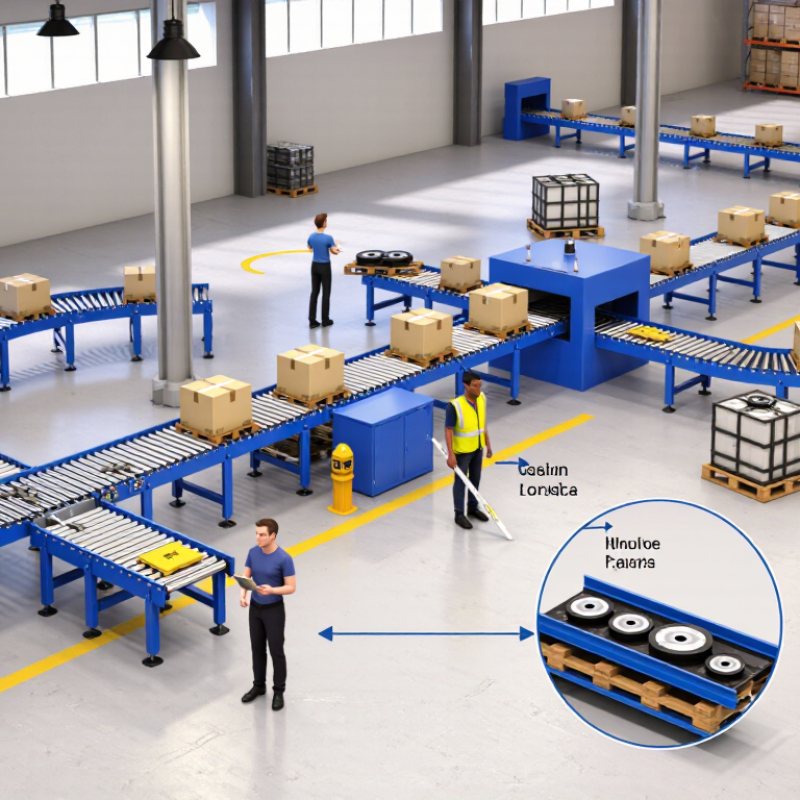
How to Choose Gravity Conveyor Manufacturers in 2026

Define Your Gravity Conveyor Requirements

Before comparing gravity conveyor manufacturers, define what the conveyor must move and where it will operate. Record the package’s length, width, weight, and base condition. A small carton with a flat bottom behaves differently from a soft bag or an uneven tote. Include the heaviest expected load, not just the average. Peak conditions matter.

Map the route with actual measurements. Note straight sections, curves, transfer points, and available floor space. Specify whether packages will move by gravity on a slope or be pushed across a level roller bed. Even a modest slope can affect speed and stopping distance, so test it with representative packages when possible. Keep workers in mind, too: loading height and reach can make a technically sound layout awkward in daily use.

Describe the working environment. Dust, moisture, temperature changes, and frequent cleaning can affect material and component choices. Estimate the number of packages handled per hour, and identify busy periods rather than relying on a daily average. Leave room for future changes, but avoid paying for capacity you cannot use. That balance is not always obvious. Share a simple floor plan, package samples, and operating assumptions with prospective manufacturers. Their questions may reveal gaps in your specification; revise it if needed. A neat spreadsheet helps, but it cannot replace a real package test.

Compare Conveyor Types and Manufacturer Specialties

Gravity conveyors differ in how they support and move a load. Roller models suit cartons with flat, rigid bottoms because several rollers share the weight. Skate-wheel conveyors are lighter and often handle small cartons or gentle curves well. Flexible gravity sections can bend around packing stations, though their joints need careful alignment. For pallets, look for heavier rollers, reinforced frames, and appropriate braking or stopping options. Small details matter.

Manufacturer specialties vary just as much as conveyor designs. Some focus on standard carton lines, while others build expandable sections, curves, or systems for heavier loads. Ask what load ranges and conveyor widths they regularly produce, and whether they can supply layout drawings and installation guidance. A useful manufacturer will ask about carton dimensions, bottom condition, daily volume, and floor slope before recommending a model. If they only discuss maximum capacity, keep asking.

A catalogue rating is not the whole story. Test a sample load, especially if cartons vary in size or have soft, uneven bottoms. Watch how it tracks through curves and whether it stops safely at the discharge point. I may be overcautious here, but it is easy to underestimate noise, gaps, and awkward hand-offs between sections. Compare the manufacturer’s practical fit for your loads and layout, not just the quoted price.

Assess Manufacturing Quality and Customization Options

A gravity conveyor may look simple: steel frames, rollers, bearings, and a gentle slope. Small quality differences matter. Check frame welds, roller alignment, bearing movement, and finish consistency on a sample section. Ask how the manufacturer verifies rated loads and documents inspection results. A polished catalog is not proof. Request test records and clear tolerances.

Customization should fit the real route, not just a drawing. Share package dimensions, weights, base materials, transfer points, and available floor space. Then review roller spacing, conveyor width, curves, stops, side guides, and connection heights. Ask which parts are standard and which require custom fabrication; this affects replacement time and future extensions. The 2024 Smart Manufacturing Survey by Deloitte and MAPI found that 86% of surveyed manufacturers expect smart manufacturing to drive competitiveness within five years. For gravity systems, that makes practical data readiness worth discussing: can the supplier provide usable drawings, load specifications, and interfaces for planned controls?

Request a layout review and a sample acceptance checklist before ordering. Walk through a typical carton by hand. Does it track straight? Does it stop safely? That test is useful, but not enough. Confirm performance across the lightest and heaviest loads, and ask how changes are handled after approval. Customization can solve a difficult corner; it can also add complexity. I would challenge any proposal that cannot explain the trade-off plainly.

Evaluate Pricing, Delivery, and After-Sales Support

How to Choose Gravity Conveyor Manufacturers in 2026

Evaluate Pricing, Delivery, and After-Sales Support

A low quotation can hide costly gaps. Compare each proposal by usable conveyor length, roller spacing, frame material, load rating, guards, and installation scope. Ask for itemized freight, spare parts, and commissioning costs. In MHI’s 2024 Annual Industry Report, 55% of surveyed supply-chain professionals said they were increasing technology and innovation investment. That finding is not conveyor-specific, but it reflects pressure to make material-handling systems dependable and scalable. A modest initial saving may not help if a line cannot expand later.

Check delivery promises against a written schedule. Request dates for drawing approval, fabrication, dispatch, and site support—not just an estimated lead time. Ask how delays are reported and which components could hold up shipment. For after-sales support, verify response hours, parts availability, troubleshooting options, and warranty exclusions. A clear service commitment matters when a damaged roller slows a busy packing lane. Some details are easy to overlook; even experienced buyers can miss them.

Tips: Send every manufacturer the same layout, load data, and operating hours. Compare quotations line by line. Ask for a sample maintenance checklist and a realistic spare-parts list. Then call one or two existing customers and ask how quickly support arrived. Keep the answers in writing. Be wary of unusually broad promises; they may be difficult to verify.

Verify Credentials and Select a Manufacturer

When comparing gravity conveyor manufacturers in 2026, verify credentials before discussing price. Ask for current quality certificates and check that their stated scope covers conveyor design or production. Request references for installations handling similar loads, carton sizes, and operating conditions. Paperwork matters. Check the details.

A capable manufacturer should ask about your actual line, not just its total length. Share the product’s weight, base dimensions, required throughput, and available floor space. Ask how roller spacing and conveyor slope will support the smallest or most unstable items. Request drawings, load ratings, material specifications, and clear guidance on installation and maintenance. If answers stay vague, pause. A polished brochure can still hide gaps in engineering support.

Compare warranty terms, replacement-part availability, and response times for technical questions. If possible, inspect the facility or arrange a live review of a similar system. Notice whether staff explain limitations plainly. Even a strong supplier may not fit every layout, and a checklist cannot replace careful site planning. One detail is easy to miss: changes in product packaging can affect smooth movement. Confirm who will review final dimensions and approve design changes before manufacturing begins.

Copyright 2025 Fluidra S.A. | Created by BCM Marketing Agencia Privacy Policy Legal note | Cookie policy |

Technical cookies are strictly necessary for our website to work and you can navigate through it. These types of cookies are those that, for example, allow us to identify you, give you access to certain restricted parts of the page if necessary, or remember different options or services already selected by you, such as your privacy preferences. Therefore, they are activated by default, your authorization not being necessary in this regard. Through the configuration of your browser, you can block or alert the presence of this type of cookies, although such blocking will affect the proper functioning of the different functionalities of our website.


The analysis cookies allow us to study the navigation of the users of our website in general (for example, which sections of the page are the most visited, which services are used most and if they work correctly, etc.). From the statistical information on navigation on our website, we can improve both the operation of the page itself and the different services it offers. Therefore, these cookies do not have an advertising purpose, but only serve to make our website work better, adapting to our users in general. By activating them you will contribute to this continuous improvement. You can enable or disable these cookies by checking the corresponding box, being disabled by default.


Functionality cookies allow us to remember your preferences, to personalize certain characteristics and general options of our website, every time you access it (for example, the language in which the information is presented to you, the sections marked as favorites, your browser type, etc.) Therefore, this type of cookies does not have an advertising purpose, but by activating them you will improve the functionality of the website (for example, adapting to your type of browser) and the customization of it based on your preferences (for example, by presenting the information in the language that you have chosen in previous occasions), which will contribute to the ease, usability and comfort of our page during your navigation. You can enable or disable these cookies by checking the corresponding box, being disabled by default.


Advertising cookies allow us to manage the advertising spaces included in our website based on criteria such as the content shown or the frequency in which the ads are displayed. For example, if you have been shown the same ad several times on our website, and you have not shown a personal interest by clicking on it, it will not appear again. In summary, by activating this type of cookies, the advertising shown on our website will be more useful and diverse, and less repetitive. You can enable or disable these cookies by checking the corresponding box, being disabled by default.


Behavioral advertising cookies allow us to obtain information based on the observation of your browsing habits and behaviors on the web, in order to show you advertising content that best suits your personal tastes and interests. To understand it in a very simple way, we will give you a fictitious example: if your last searches on the web were related to suspense literature, we would show you advertising about suspense books. Therefore, activating this type of cookies, the advertising that we show you on our website will not be generic, but will be oriented to your searches, tastes and interests, therefore adjusting exclusively to you. You can enable or disable these cookies by checking the corresponding box, being disabled by default.
To understand it in a very simple way, we will give you a fictitious example: if your last searches on the web were related to suspense literature, we would show you advertising about suspense books. Therefore, activating this type of cookies, the advertising that we show you on our website will not be generic, but will be oriented to your searches, tastes and interests, therefore adjusting exclusively to you. You can enable or disable these cookies by checking the corresponding box, being disabled by default.

SAVE

We use our own and third-party cookies to ensure the proper functioning of the website and to analyse our services, improve your experience on our website and show you advertisements related to your interests according to profiling based on your browsing habits (e.g. websites visited). You can accept all cookies by clicking "ACCEPT" or set or reject them by clicking here. If you would like to know more about the use of cookies, please see our COOKIE POLICY.


ACCEPT ALL
Reject no essentials


