
Why Choose Electric Cylinders for Your Automation Needs?
FLUID HANDLING EXPERTS

Blog, all our news

Why Choose Electric Cylinders for Your Automation Needs?

In the world of automation, the choice of actuation technology can greatly impact efficiency and productivity. Electric Cylinders are becoming increasingly popular among engineers for their numerous advantages. According to Dr. Jane Foster, an expert in automation technology, "Electric cylinders provide unmatched precision and control in automated systems." Her insights emphasize the reliability these devices offer.

Electric cylinders are known for their clean operation and energy efficiency. Unlike traditional pneumatic or hydraulic systems, they eliminate messy fluids and reduce operational costs. This means lower maintenance and longer lifespan, making them an attractive option for various applications.

Yet, not all systems may benefit immediately from this transition. Some manufacturers may find it challenging to integrate electric cylinders into existing processes. Understanding the specific needs and environments is crucial. Even with their advantages, the shift to electric cylinders warrants careful consideration and planning.
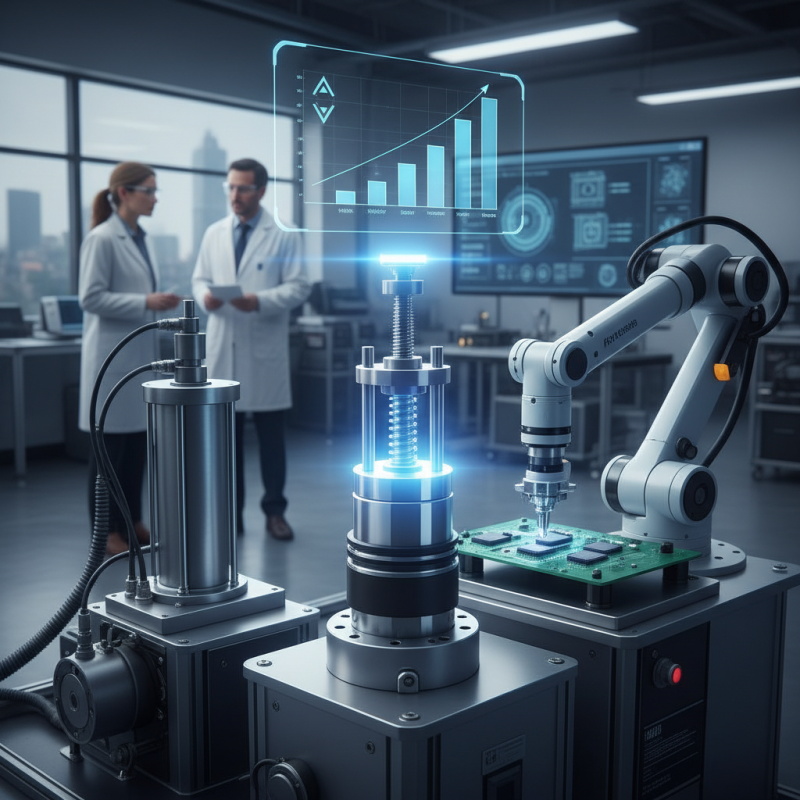
Why Choose Electric Cylinders for Your Automation Needs?

Benefits of Using Electric Cylinders in Automation Systems

Electric cylinders are gaining popularity in automation systems. They offer precision and reliability. Unlike pneumatic or hydraulic systems, they do not rely on air or fluid pressure. This makes them cleaner and easier to maintain. They can operate in tight spaces and can be easily integrated into existing systems.

One key benefit is their energy efficiency. Electric cylinders consume less power when compared to traditional systems. This can lead to significant cost savings over time. Additionally, their ability to operate under varying loads makes them highly versatile. They can adjust their speed and force as needed, which enhances their effectiveness in different applications.

Some may wonder if electric cylinders can handle extreme conditions. They can struggle with very high or low temperatures. Understanding the operational limits is essential for proper implementation. Testing them in specific scenarios can yield valuable insights. This careful consideration can ultimately lead to better performance in the automation process.

Comparison of Electric Cylinders with Hydraulic and Pneumatic Systems

Electric cylinders are increasingly favored in automation due to their advantages over hydraulic and pneumatic systems. Unlike hydraulic systems, electric cylinders eliminate leaks and require less maintenance. They operate with precision, offering better control over speed and position. This level of efficiency can lead to significant energy savings. On the other hand, pneumatic systems often involve compressed air, which can be less efficient in energy consumption. Their power may diminish with distance, but electric cylinders maintain performance.

However, electric cylinders do have limitations. Their initial cost can be higher than pneumatic and hydraulic options. Some users may find complexities in integrating them into existing systems. In environments with extreme temperatures, electric cylinders may struggle compared to hydraulic systems, which excel in demanding conditions. Yet, the need for lower noise levels and minimal vibrations often makes electric cylinders the preferred choice.

Overall, the choice between electric and traditional systems depends on specific application needs. Users should evaluate their priorities, such as cost, efficiency, and the environment in which they operate. Embracing electric cylinders reflects a growing trend toward precision and sustainability in automation.

Key Features and Technologies of Electric Cylinders

Electric cylinders are an excellent choice for automation needs. They combine the precision of electric drives with the mechanical simplicity of hydraulic systems. Key features of electric cylinders include their high efficiency and precise control. This leads to reduced energy consumption and lower operational costs.

Flexibility is another important aspect. Electric cylinders can easily integrate with various automation systems, allowing for versatile application in different industries. They are also equipped with advanced position sensors that enhance accuracy. However, not all electric cylinders are designed alike. Some may fall short in terms of load capacity or speed for specific applications, necessitating careful selection.

Technologies used in electric cylinders have advanced significantly. Many now feature closed-loop control systems. These systems provide real-time feedback, ensuring optimal performance. However, challenges such as environmental factors and installation difficulties can affect performance. Users need to weigh these factors when considering electric cylinders for their specific automation needs.

Applications of Electric Cylinders in Various Industries

Electric cylinders are revolutionizing automation across various industries. They provide precise control, making them invaluable in manufacturing. For instance, in automotive production, electric cylinders enhance assembly line efficiency. They enable quick adjustments for different vehicle models. This flexibility significantly reduces downtime and production delays.

In packaging, electric cylinders facilitate swift and accurate movement. They handle materials with care, preventing damage. Businesses in this sector benefit from the improved reliability of electric systems. Even in food processing, hygiene and precision are crucial. Electric cylinders offer a clean solution for handling various products.

Despite their advantages, challenges remain. Initial costs can be higher than pneumatic systems. Maintenance also requires specialized knowledge. Companies need to weigh these factors carefully. Understanding specific application needs helps in making informed decisions. The choice of electric cylinders should align with operational goals.

Applications of Electric Cylinders in Various Industries

Factors to Consider When Choosing Electric Cylinders for Automation

When selecting electric cylinders for automation, several key factors come into play. One important aspect is the load capacity. Understand the weight and force that the cylinder needs to handle. Knowing this ensures optimal performance in various applications. Additionally, the speed of operation is another critical factor. Different tasks may demand varying speeds, and choosing the wrong one can lead to inefficiency.

Another consideration is the size and installation space. Electric cylinders come in various dimensions, making it essential to assess your environment. Limited space can restrict your options. Moreover, power supply requirements should not be overlooked. Ensure that the electrical specifications match the existing setup to avoid compatibility issues.

Lastly, control options play a crucial role in overall functionality. Some cylinders offer more advanced features like programmable controls. This flexibility can enhance productivity but may also require more time to learn and implement. Balancing these elements can be challenging. It's essential to weigh the pros and cons before making a decision to ensure the selected cylinder meets your automation goals.

Copyright 2025 Fluidra S.A. | Created by BCM Marketing Agencia Privacy Policy Legal note | Cookie policy |

Technical cookies are strictly necessary for our website to work and you can navigate through it. These types of cookies are those that, for example, allow us to identify you, give you access to certain restricted parts of the page if necessary, or remember different options or services already selected by you, such as your privacy preferences. Therefore, they are activated by default, your authorization not being necessary in this regard. Through the configuration of your browser, you can block or alert the presence of this type of cookies, although such blocking will affect the proper functioning of the different functionalities of our website.


The analysis cookies allow us to study the navigation of the users of our website in general (for example, which sections of the page are the most visited, which services are used most and if they work correctly, etc.). From the statistical information on navigation on our website, we can improve both the operation of the page itself and the different services it offers. Therefore, these cookies do not have an advertising purpose, but only serve to make our website work better, adapting to our users in general. By activating them you will contribute to this continuous improvement. You can enable or disable these cookies by checking the corresponding box, being disabled by default.


Functionality cookies allow us to remember your preferences, to personalize certain characteristics and general options of our website, every time you access it (for example, the language in which the information is presented to you, the sections marked as favorites, your browser type, etc.) Therefore, this type of cookies does not have an advertising purpose, but by activating them you will improve the functionality of the website (for example, adapting to your type of browser) and the customization of it based on your preferences (for example, by presenting the information in the language that you have chosen in previous occasions), which will contribute to the ease, usability and comfort of our page during your navigation. You can enable or disable these cookies by checking the corresponding box, being disabled by default.


Advertising cookies allow us to manage the advertising spaces included in our website based on criteria such as the content shown or the frequency in which the ads are displayed. For example, if you have been shown the same ad several times on our website, and you have not shown a personal interest by clicking on it, it will not appear again. In summary, by activating this type of cookies, the advertising shown on our website will be more useful and diverse, and less repetitive. You can enable or disable these cookies by checking the corresponding box, being disabled by default.


Behavioral advertising cookies allow us to obtain information based on the observation of your browsing habits and behaviors on the web, in order to show you advertising content that best suits your personal tastes and interests. To understand it in a very simple way, we will give you a fictitious example: if your last searches on the web were related to suspense literature, we would show you advertising about suspense books. Therefore, activating this type of cookies, the advertising that we show you on our website will not be generic, but will be oriented to your searches, tastes and interests, therefore adjusting exclusively to you. You can enable or disable these cookies by checking the corresponding box, being disabled by default.
To understand it in a very simple way, we will give you a fictitious example: if your last searches on the web were related to suspense literature, we would show you advertising about suspense books. Therefore, activating this type of cookies, the advertising that we show you on our website will not be generic, but will be oriented to your searches, tastes and interests, therefore adjusting exclusively to you. You can enable or disable these cookies by checking the corresponding box, being disabled by default.

SAVE

We use our own and third-party cookies to ensure the proper functioning of the website and to analyse our services, improve your experience on our website and show you advertisements related to your interests according to profiling based on your browsing habits (e.g. websites visited). You can accept all cookies by clicking "ACCEPT" or set or reject them by clicking here. If you would like to know more about the use of cookies, please see our COOKIE POLICY.


ACCEPT ALL
Reject no essentials


