
Why Choose Dual Energy Inspection for Cargo Screening?
FLUID HANDLING EXPERTS

Blog, all our news

Why Choose Dual Energy Inspection for Cargo Screening?

Cargo screening often begins with a practical challenge: a package arrives as a dense, layered image, and operators need useful information without slowing routine inspection. Dual Energy Inspection helps by comparing how materials respond to two X-ray energy levels. This can make differences between broad material classes easier to interpret, even when cartons overlap or metal parts obscure nearby contents. The image still needs careful reading.

“Two energy views add context, but sound decisions still depend on image quality and trained interpretation.” — Maya Chen, fictional cargo-screening specialist; this is an illustrative quotation, not a verified statement.

That distinction matters. Dual Energy Inspection can support clearer image analysis, yet it does not remove uncertainty or replace established screening procedures. A thick steel fitting may hide details behind it. A poorly positioned object can also complicate interpretation. The technology is useful, not magical.

For facility managers, the choice involves more than image contrast. They should consider throughput, operator training, system integration, maintenance, and the kinds of cargo handled each day. Ask vendors to demonstrate representative loads, including mixed materials and overlapping items. Review how images are displayed and how operators handle ambiguous results. Small details count.

This article explores why facilities choose Dual Energy Inspection, what the technology can reveal, and where its limits deserve attention. The honest answer may be less tidy than a sales brochure. That is worth considering.
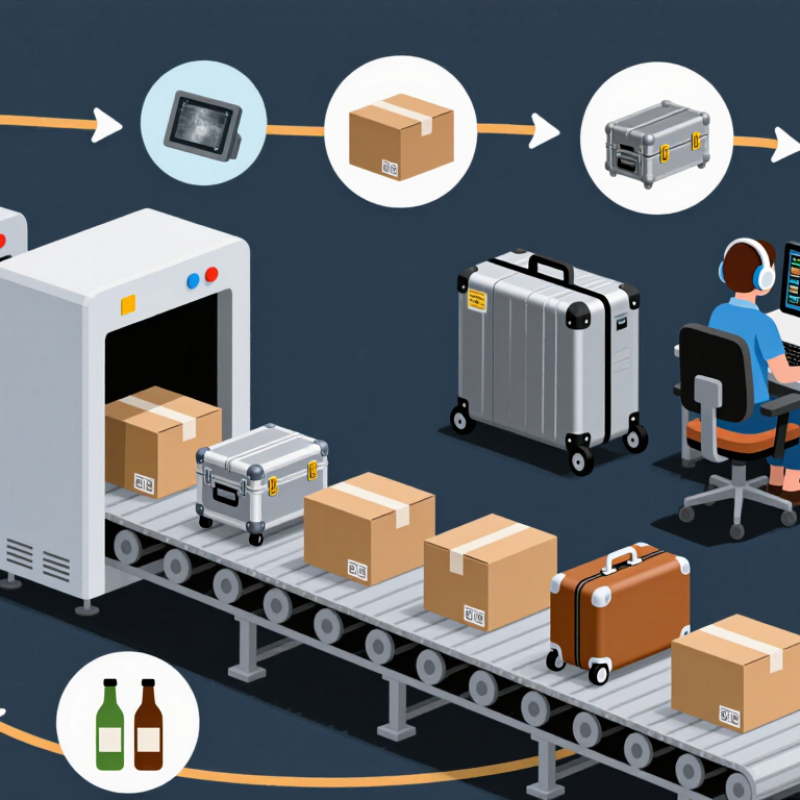
Why Choose Dual Energy Inspection for Cargo Screening?

What Dual-Energy Inspection Means in Cargo Screening

Why Choose Dual Energy Inspection for Cargo Screening?
What Dual-Energy Inspection Means in Cargo Screening

Dual-energy inspection uses two X-ray energy ranges to examine the same cargo image. Different materials absorb those energies at different rates. The system compares the readings and estimates material characteristics, often displaying them with contrasting colors. This helps an operator distinguish broad material groups, such as organic, mixed, and dense inorganic items. It is not a photograph, and it cannot identify every object by itself.

In practice, a pallet may contain a wooden frame, tightly packed cartons, and metal fittings. Dual-energy processing can make boundaries and density differences easier to interpret than a single-energy view. That can support faster, more consistent review, especially when cargo shapes are irregular. Still, results depend on image quality, packing density, and operator training. Overlapping materials can look confusing. A color cue is evidence, not a verdict. Misreadings happen; teams should review unclear images rather than force certainty.

Tips: Keep cargo layouts as even as practical. Reduce unnecessary overlap, and ensure operators know when an image needs closer review.

How Dual-Energy Scanners Analyze Cargo Materials

Dual-energy scanners examine cargo with two X-ray energy ranges rather than one. As the beam passes through a pallet, each energy level is weakened differently by the materials it encounters. Detectors measure the remaining signal, and software compares the two readings. This comparison helps distinguish broad material groups, such as organic-rich goods and denser inorganic materials. The screen may show these groups in different colors, but color is a guide, not a final identification.

Thickness matters. A tightly packed carton can look dense even when its contents are ordinary, while overlapping objects may blur their edges. Trained operators consider the image, cargo description, and scan angle together. Small changes in viewpoint can reveal a shape hidden behind a strap or container wall. Not every image is clear. A color boundary can seem more certain than it is, so reviewers should note ambiguity rather than force a confident reading. Regular equipment checks and consistent image-review procedures also help keep interpretations reliable across shifts.

Why Choose Dual-Energy Inspection for Cargo Screening?

How dual-energy scanners analyze cargo materials

Approximate mass attenuation coefficients at 100 and 200 keV, in cm²/g, based on NIST XCOM reference data. Comparing attenuation at two energies helps scanners distinguish materials with different energy-dependent responses; actual readings also depend on composition, density, and scanner settings.

How a Cargo Screening Scan Is Processed

A cargo screening scan begins as a shipment moves through an inspection tunnel on a conveyor. Sensors collect X-ray measurements at two energy levels. Software combines these readings into an image, often using different colors to suggest variations in material density and composition. The image is a helpful guide, not a complete description of every object.

An operator checks the image for shapes, boundaries, and areas where items overlap. Dual-energy views can make some material differences easier to distinguish than a single-energy image. Still, tightly packed cargo may hide useful details. No scan is perfect. If an image is unclear, staff may pause the process or use another inspection method, following local procedures.

Tips: Pack items with clear spacing when practical, and keep labels visible. Avoid stacking dense objects over smaller contents. Consistent packing can make image review easier, though it cannot guarantee a clear result. Operators should consider the full image, not rely on color alone.

What Dual-Energy Imaging Adds to Security Inspections

Dual-energy imaging captures X-ray measurements at two energy levels, allowing a system to compare how materials affect the beam. This adds a material-sensitive view beside shape and density, helping operators interpret crowded cargo more consistently. A dense patch may appear differently when its response is compared across both energy ranges. Details matter.

On a busy inspection lane, overlapping cartons, metal fittings, and tightly packed contents can blur a single-energy image. Dual-energy views can distinguish material classes by their relative responses, giving reviewers another clue rather than just an outline. It does not identify every object, and results can be uncertain when items overlap or the scan angle is poor. That limitation is important.

Operators still need training, image-quality checks, and a clear process for reviewing ambiguous scans. A practical review pairs color-coded material information with the grayscale image, then checks unclear regions at different zoom levels. Calibration and steady conveyor speed also affect the image. The added information is useful, but it can encourage overconfidence if treated as a verdict. That is worth remembering.

Factors That Shape the Choice of a Dual-Energy System

Why Choose Dual Energy Inspection for Cargo Screening?

The right dual-energy system depends on the cargo, conveyor, and decisions operators must make. It compares how materials respond to two energy levels, helping distinguish broad material categories in an image. That distinction can clarify dense, overlapping loads. It is not a guarantee of perfect interpretation.

Start with the cargo’s typical size, packaging, and density. A narrow conveyor carrying uniform cartons has different needs from a busy line with mixed pallet loads. Check tunnel dimensions, belt speed, and image detail together; faster throughput may reduce the time available to review an image. Ask how the system handles thick or crowded loads, and test representative cargo before selecting it. Small details matter.

Image quality also depends on detector layout, calibration, and the viewing software. Request sample images under realistic operating conditions, not only clean demonstrations. Review whether operators can distinguish useful material contrasts without excessive visual clutter. Training time and shift-to-shift consistency deserve attention, too. A technically capable system can still underperform when routine maintenance is difficult or image settings are poorly understood. The trade-offs are not always obvious. A neat image is not always a useful one.

Copyright 2025 Fluidra S.A. | Created by BCM Marketing Agencia Privacy Policy Legal note | Cookie policy |

Technical cookies are strictly necessary for our website to work and you can navigate through it. These types of cookies are those that, for example, allow us to identify you, give you access to certain restricted parts of the page if necessary, or remember different options or services already selected by you, such as your privacy preferences. Therefore, they are activated by default, your authorization not being necessary in this regard. Through the configuration of your browser, you can block or alert the presence of this type of cookies, although such blocking will affect the proper functioning of the different functionalities of our website.


The analysis cookies allow us to study the navigation of the users of our website in general (for example, which sections of the page are the most visited, which services are used most and if they work correctly, etc.). From the statistical information on navigation on our website, we can improve both the operation of the page itself and the different services it offers. Therefore, these cookies do not have an advertising purpose, but only serve to make our website work better, adapting to our users in general. By activating them you will contribute to this continuous improvement. You can enable or disable these cookies by checking the corresponding box, being disabled by default.


Functionality cookies allow us to remember your preferences, to personalize certain characteristics and general options of our website, every time you access it (for example, the language in which the information is presented to you, the sections marked as favorites, your browser type, etc.) Therefore, this type of cookies does not have an advertising purpose, but by activating them you will improve the functionality of the website (for example, adapting to your type of browser) and the customization of it based on your preferences (for example, by presenting the information in the language that you have chosen in previous occasions), which will contribute to the ease, usability and comfort of our page during your navigation. You can enable or disable these cookies by checking the corresponding box, being disabled by default.


Advertising cookies allow us to manage the advertising spaces included in our website based on criteria such as the content shown or the frequency in which the ads are displayed. For example, if you have been shown the same ad several times on our website, and you have not shown a personal interest by clicking on it, it will not appear again. In summary, by activating this type of cookies, the advertising shown on our website will be more useful and diverse, and less repetitive. You can enable or disable these cookies by checking the corresponding box, being disabled by default.


Behavioral advertising cookies allow us to obtain information based on the observation of your browsing habits and behaviors on the web, in order to show you advertising content that best suits your personal tastes and interests. To understand it in a very simple way, we will give you a fictitious example: if your last searches on the web were related to suspense literature, we would show you advertising about suspense books. Therefore, activating this type of cookies, the advertising that we show you on our website will not be generic, but will be oriented to your searches, tastes and interests, therefore adjusting exclusively to you. You can enable or disable these cookies by checking the corresponding box, being disabled by default.
To understand it in a very simple way, we will give you a fictitious example: if your last searches on the web were related to suspense literature, we would show you advertising about suspense books. Therefore, activating this type of cookies, the advertising that we show you on our website will not be generic, but will be oriented to your searches, tastes and interests, therefore adjusting exclusively to you. You can enable or disable these cookies by checking the corresponding box, being disabled by default.

SAVE

We use our own and third-party cookies to ensure the proper functioning of the website and to analyse our services, improve your experience on our website and show you advertisements related to your interests according to profiling based on your browsing habits (e.g. websites visited). You can accept all cookies by clicking "ACCEPT" or set or reject them by clicking here. If you would like to know more about the use of cookies, please see our COOKIE POLICY.


ACCEPT ALL
Reject no essentials


