
How to Choose the Best Horizontal Drilling Rig for Your Needs?
FLUID HANDLING EXPERTS

Blog, all our news

How to Choose the Best Horizontal Drilling Rig for Your Needs?

Choosing the right horizontal drilling rig can be a challenge. Industry expert John Smith, known for his work with major drilling companies, once stated, “The key to successful drilling lies in selecting the right rig for specific projects.” This insight highlights the importance of understanding your unique needs.

When evaluating horizontal drilling rigs, consider factors like project requirements and budget constraints. For instance, some rigs are designed for tight spaces while others handle larger sites. Each type offers different capabilities, impacting efficiency and cost. Many users often rush this decision. They may overlook essential specifications, which can lead to project delays.

Additionally, balancing quality and affordability can be complex. Rigs may seem similar at first glance but differ significantly in reliability and performance. Researching user reviews and consulting with experts can reveal critical insights. Reflection on past experiences with equipment can guide better choices, ultimately ensuring success in your drilling projects.
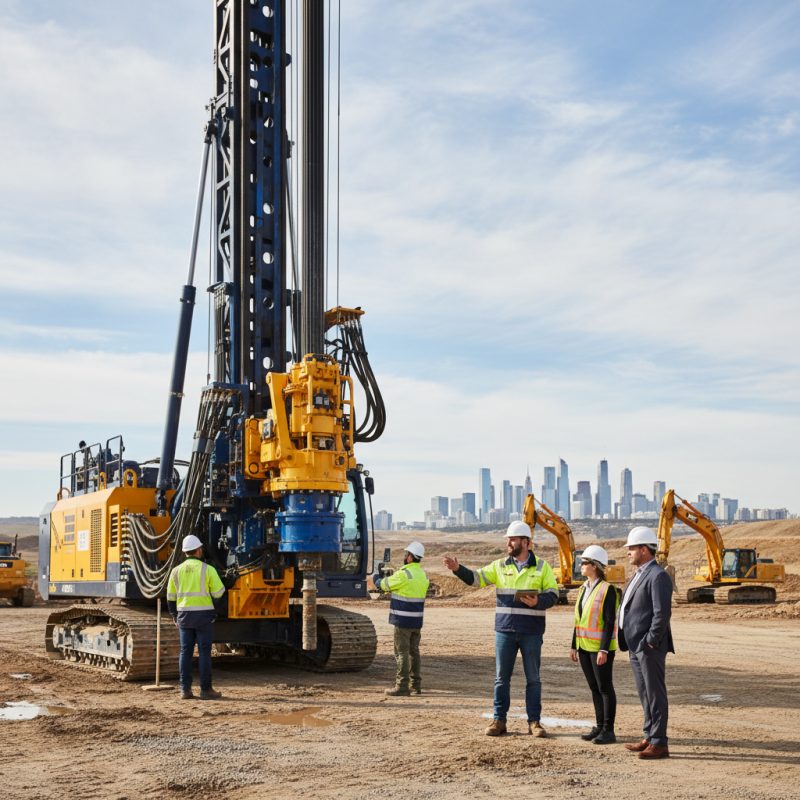
How to Choose the Best Horizontal Drilling Rig for Your Needs?

Identifying Your Project Requirements for Horizontal Drilling Rigs

When selecting a horizontal drilling rig, understanding your project requirements is crucial. Begin by assessing the scale of your project. Will you drill short or long distances? The type of soil and terrain also plays a significant role. Soft soils may allow easier drilling, while rocky environments demand more powerful rigs. These factors influence the rig's capabilities and cost.

Next, consider the operational environment. Outdoor conditions, such as weather and accessibility, can impact drilling efficiency. Evaluate if the site has enough space for rig setup and operation. Moreover, think about how often you’ll need to move the rig. A more mobile rig may be suitable for projects requiring frequent site changes.

Equipment maintenance is another essential aspect. Regular checks can prevent delays. It's wise to have a plan for repairs. Not all rigs perform equally, even under similar conditions. A thorough review of your requirements helps pinpoint the right rig. This approach avoids unnecessary expenditures and project setbacks. Decisions should reflect not only immediate needs but also long-term project goals.

Comparison of Horizontal Drilling Rig Features

Understanding Different Types of Horizontal Drilling Rigs and Their Applications

When selecting a horizontal drilling rig, it's essential to understand the various types available and their specific applications. The most common types include rotary and directional drilling rigs. Rotary rigs excel in projects needing deep drilling capabilities. They are robust and efficient for accessing oil and gas reserves. Directional rigs, on the other hand, allow for flexible drilling paths. This is particularly useful in urban areas where space is limited.

Each type of rig serves distinct purposes. For instance, trenchless technology is beneficial for installing pipelines without disturbing the surface. These rigs are designed to minimize environmental impact and reduce restoration costs. However, the initial investment and complexity can lead to challenges. Operators must be trained to handle potential issues correctly.

In choosing the right rig, consider your project's depth and space requirements. The cost-effectiveness of operation should also influence your decision. Think about maintenance and how often you'll need replacements. Balancing these factors can be tricky. Ensure you spend time researching and reflecting on the best option for your unique situation.

Evaluating Rig Specifications: Power, Torque, and Depth Capabilities

When selecting a horizontal drilling rig, understanding its specifications is vital. Power and torque capabilities significantly influence drilling performance. Higher horsepower typically enables faster penetration rates. Reports indicate that rigs with 300-600 horsepower can efficiently handle various soil conditions. Torque ratings also play a crucial role. Standard torque values range from 15,000 lb-ft to 50,000 lb-ft. Higher torque allows for effective drilling in tougher geological formations.

Depth capabilities are equally important. Most horizontal drilling rigs can reach depths between 300 to 1,000 feet. Choosing a rig with appropriate depth capability ensures it meets your project needs. If the project site has challenging terrain, more depth can be necessary. Advanced hydraulic systems can enhance penetration rates, making them an ideal feature.

Tip: Always match the rig's torque and depth capacity with your specific drilling objectives. Conducting thorough tests can illustrate performance variances under real conditions. Consider consulting with industry experts to evaluate your options. It’s essential to reflect on your project requirements before making a final decision. Not every heavy-duty rig is suitable for every task. Your unique needs should shape your choices.

Assessing the Importance of Mobility and Setup Time in Rig Selection

When choosing a horizontal drilling rig, mobility and setup time are key factors. A rig that’s easy to transport can save both time and costs. If you work in different locations, consider a model that can be quickly moved. A lightweight design can enhance your efficiency.

Assessing setup time is equally critical. Delays can lead to increased expenses and frustrated teams. Look for rigs with features that streamline the setup process. For instance, integrated hydraulic systems can reduce the time needed for assembly.

Tips: Evaluate the terrain where you’ll operate. If you expect rugged landscapes, choose a rig that can handle rough conditions. Test the rig on-site before making a commitment. This can reveal potential setbacks and help visualize daily operations more effectively. Reflect on the team's ability to adapt to various setups; flexibility in approach is essential. Ensure that you document any challenges encountered during tests.

Cost-Benefit Analysis: Budgeting for Purchase vs. Rental of Drilling Rigs

When considering whether to purchase or rent a horizontal drilling rig, conducting a thorough cost-benefit analysis is essential. Buying a rig often involves high upfront costs. These include the price of the rig, transportation, and maintenance expenses. However, ownership allows for long-term use and availability whenever needed. This can lead to greater flexibility in projects and potential savings in the long run.

On the other hand, renting a rig can be financially appealing for short-term projects. It reduces initial investment and immediate maintenance concerns. Renters can avoid equipment depreciation and storage costs. However, over time, frequent rentals can accumulate significant expenses. It's crucial to analyze project timelines and frequency of use when making this decision.

Tips: Analyze your project duration. If it's a one-time job, rental might be wiser. Also, evaluate maintenance capabilities. Owning a rig means enduring costs for upkeep. Finally, consider future projects. Investing in equipment might serve multiple needs. But ensure it fits your budget and business model. Before committing, weigh all financial impacts carefully.

How to Choose the Best Horizontal Drilling Rig for Your Needs? - Cost-Benefit Analysis: Budgeting for Purchase vs. Rental of Drilling Rigs

Criteria Purchase Cost (USD) Rental Cost (Monthly) (USD) Expected Lifetime (Years) Total Cost of Ownership (5 Years) (USD)
Basic Horizontal Drilling Rig $200,000 $3,500 10 $200,000
Mid-Range Horizontal Drilling Rig $400,000 $7,000 12 $400,000
Advanced Horizontal Drilling Rig $600,000 $10,000 15 $600,000
High-Capacity Horizontal Drilling Rig $1,000,000 $16,000 20 $1,000,000
Copyright 2025 Fluidra S.A. | Created by BCM Marketing Agencia Privacy Policy Legal note | Cookie policy |

Technical cookies are strictly necessary for our website to work and you can navigate through it. These types of cookies are those that, for example, allow us to identify you, give you access to certain restricted parts of the page if necessary, or remember different options or services already selected by you, such as your privacy preferences. Therefore, they are activated by default, your authorization not being necessary in this regard. Through the configuration of your browser, you can block or alert the presence of this type of cookies, although such blocking will affect the proper functioning of the different functionalities of our website.


The analysis cookies allow us to study the navigation of the users of our website in general (for example, which sections of the page are the most visited, which services are used most and if they work correctly, etc.). From the statistical information on navigation on our website, we can improve both the operation of the page itself and the different services it offers. Therefore, these cookies do not have an advertising purpose, but only serve to make our website work better, adapting to our users in general. By activating them you will contribute to this continuous improvement. You can enable or disable these cookies by checking the corresponding box, being disabled by default.


Functionality cookies allow us to remember your preferences, to personalize certain characteristics and general options of our website, every time you access it (for example, the language in which the information is presented to you, the sections marked as favorites, your browser type, etc.) Therefore, this type of cookies does not have an advertising purpose, but by activating them you will improve the functionality of the website (for example, adapting to your type of browser) and the customization of it based on your preferences (for example, by presenting the information in the language that you have chosen in previous occasions), which will contribute to the ease, usability and comfort of our page during your navigation. You can enable or disable these cookies by checking the corresponding box, being disabled by default.


Advertising cookies allow us to manage the advertising spaces included in our website based on criteria such as the content shown or the frequency in which the ads are displayed. For example, if you have been shown the same ad several times on our website, and you have not shown a personal interest by clicking on it, it will not appear again. In summary, by activating this type of cookies, the advertising shown on our website will be more useful and diverse, and less repetitive. You can enable or disable these cookies by checking the corresponding box, being disabled by default.


Behavioral advertising cookies allow us to obtain information based on the observation of your browsing habits and behaviors on the web, in order to show you advertising content that best suits your personal tastes and interests. To understand it in a very simple way, we will give you a fictitious example: if your last searches on the web were related to suspense literature, we would show you advertising about suspense books. Therefore, activating this type of cookies, the advertising that we show you on our website will not be generic, but will be oriented to your searches, tastes and interests, therefore adjusting exclusively to you. You can enable or disable these cookies by checking the corresponding box, being disabled by default.
To understand it in a very simple way, we will give you a fictitious example: if your last searches on the web were related to suspense literature, we would show you advertising about suspense books. Therefore, activating this type of cookies, the advertising that we show you on our website will not be generic, but will be oriented to your searches, tastes and interests, therefore adjusting exclusively to you. You can enable or disable these cookies by checking the corresponding box, being disabled by default.

SAVE

We use our own and third-party cookies to ensure the proper functioning of the website and to analyse our services, improve your experience on our website and show you advertisements related to your interests according to profiling based on your browsing habits (e.g. websites visited). You can accept all cookies by clicking "ACCEPT" or set or reject them by clicking here. If you would like to know more about the use of cookies, please see our COOKIE POLICY.


ACCEPT ALL
Reject no essentials


