
How to Choose the Best Container Generator for Your Needs?
FLUID HANDLING EXPERTS

Blog, all our news

How to Choose the Best Container Generator for Your Needs?

In today’s rapidly evolving energy landscape, choosing the right Container Generator is essential for various applications. With the global generator market expected to reach USD 23.3 billion by 2025, more industries are recognizing the importance of reliable power sources. Container Generators provide flexibility and mobility, making them ideal for construction sites, events, and emergency situations.

Understanding your specific needs is critical. There are numerous brands and models available, each with unique features. According to a recent market study, portable generators are increasing in demand, reflecting a trend toward energy independence. Selecting a Container Generator that meets your requirements can ensure uninterrupted operations while minimizing costs.

It’s easy to overlook details when choosing a generator. Factors like fuel efficiency, noise levels, and load capacity often influence the decision. Data shows that many users find themselves dissatisfied with their initial choice due to improper assessments. Taking the time to evaluate your unique circumstances will yield a more effective solution. The right Container Generator can significantly enhance productivity and reduce downtime in your operations.
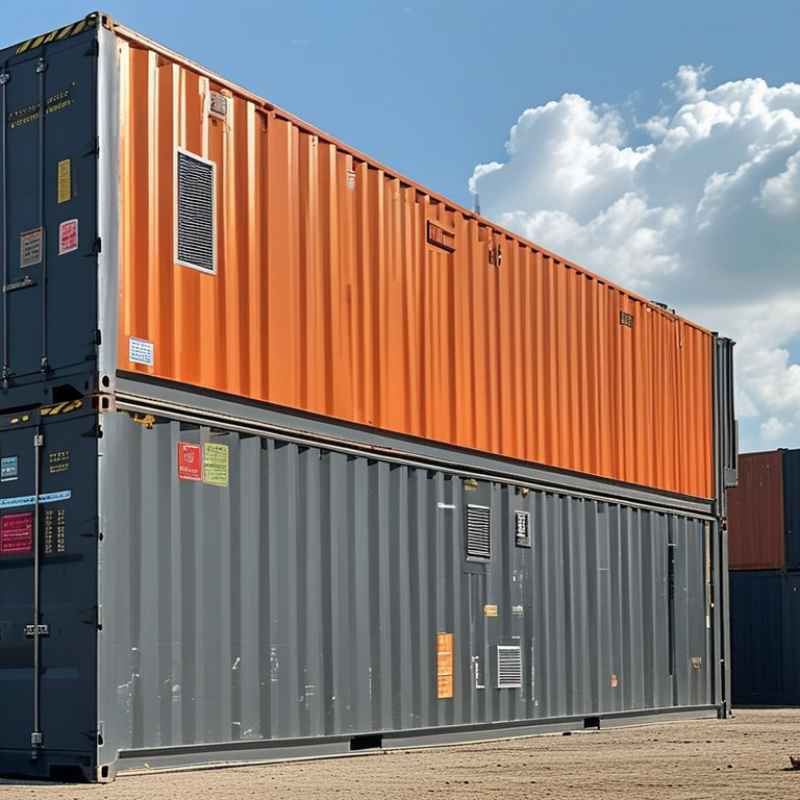
How to Choose the Best Container Generator for Your Needs?

Understanding Your Power Needs and Applications for Container Generators

Understanding your power needs is crucial when selecting a container generator. Consider the devices you plan to power. Are they high consumption, like industrial equipment, or lower consumption, like lighting? Knowing this helps determine your generator's wattage requirements.

Tips: Always calculate your total wattage. Overestimating can lead to overspending. Underestimating can cause your generator to underperform.

Evaluate the environment where you'll use the generator. A quiet setting may require a quieter model. Meanwhile, rugged conditions might demand a robust, weather-resistant design. Assess accessibility, too; if you frequently relocate, portability becomes essential.

Tips: Check the fuel efficiency of the generator. More fuel-efficient models save money over time. Additionally, consider maintenance requirements to avoid unexpected downtime.

Ultimately, reflect on how frequently you'll use the generator. Steady, demanding projects may require a higher capacity. Casual use may allow for a smaller, economical option. Balance your needs with what you'll realistically use. It’s about finding the sweet spot in your requirements.

Evaluating Container Generator Types: Diesel vs. Gas vs. Renewable Fuels

When selecting a container generator, deciding between diesel, gas, and renewable fuel types is crucial. Diesel generators are known for their durability and efficiency. They typically provide higher power outputs and are favored for long-term use in demanding environments. However, they can be heavier and may have higher emissions. This raises concerns about their environmental impact.


Gas generators, on the other hand, offer cleaner emissions and quieter operation. They are generally easier to maintain and can be cost-effective for smaller applications. Yet, their power output can be less consistent compared to diesel. Depending on your specific needs, these factors might influence your decision significantly.


Renewable fuel options, like biofuels, are becoming popular. They can reduce carbon footprints and offer sustainability. Still, they might require careful sourcing and management. Users may find themselves questioning the reliability of these fuels in demanding scenarios. Balancing efficiency, cost, and environmental responsibility is key to making the right choice.

Key Features to Consider in Container Generators: Size, Capacity, and Portability

Choosing a container generator requires careful consideration of key features. Size, capacity, and portability play crucial roles in determining which generator best suits your needs. A generator that is too large can take up valuable space, while one that's too small may not provide enough power. Measure your available space and match it to the generator's dimensions. This ensures a perfect fit for your setup.

Capacity is another vital aspect. It refers to the amount of power the generator can produce. Think about the equipment you plan to run. Calculate the wattage of each device you intend to connect. This helps you gauge the total capacity needed. It's essential to have a generator that can handle your appliances comfortably. Underestimating your requirements can lead to frustrating power shortages.

Portability cannot be overlooked. A heavy generator may hinder your ability to move it when necessary. Consider weight and design factors. Are there handles or wheels? If you often need to relocate the generator, lightweight options with good mobility features are beneficial. Remember, the right generator should make your life easier, not complicate it.

How to Choose the Best Container Generator for Your Needs?

Feature Description Example Values
Size Physical dimensions of the generator that affect storage and transport. 20" x 30" x 33"
Capacity The power output of the generator typically measured in watts (W) or kilowatts (kW). 3000W, 5000W, 10000W
Portability Features that make it easy to transport, such as wheels or a lightweight design. Wheeled model, under 100 lbs
Fuel Type The type of fuel the generator uses, impacting convenience and cost. Gasoline, Diesel, Propane
Noise Level Measured in decibels (dB), important for residential use. 50 dB, 60 dB, 70 dB
Run Time How long the generator can run on a full tank. 8 hours, 12 hours, 18 hours
Safety Features Design elements to prevent accidents or hazardous situations. Automatic shutoff, surge protection

Assessing Noise Levels and Emissions Standards for Compliance and Comfort

Noise levels and emissions standards are crucial when selecting a container generator. They impact not only user comfort but also environmental compliance. A quiet generator enhances comfort, especially in residential areas. A study by the Noise Pollution Clearinghouse found that noise levels above 70 decibels can lead to disturbances. Many generators now operate around 50-60 decibels, aligning with residential standards. This makes them suitable for events or construction sites near populated areas.

Emissions standards vary based on region. In many locations, generators must meet EPA regulations to limit harmful emissions. This includes nitrogen oxides, carbon monoxide, and particulate matter. According to the Environmental Protection Agency, portable generators must adhere to strict guidelines to minimize health risks. Choosing generators that comply with Tier 4 emissions standards ensures fewer pollutants. This decision reflects not just regulatory compliance but a commitment to sustainability.

It is important to remember that not all generators are created equal. Some may advertise low noise and emissions, but real-world performance can differ. Regular maintenance plays a role in keeping noise levels down. Over time, wear and tear can lead to increased noise and emissions. Understand how your generator performs and prioritize regular checks to ensure compliance and comfort.

Container Generator Noise Levels and Emissions Standards Analysis

Budgeting for Your Container Generator: Cost, Maintenance, and Efficiency Factors

Budgeting for a container generator involves careful consideration of several key factors. First, the initial cost is a major factor. Prices vary significantly based on capacity and fuel type. Know your budget limits before shopping. You might find lower-end options attractive, but consider their long-term costs. Cheaper models can lead to higher maintenance expenses.

Maintenance costs also warrant attention. Regular servicing is necessary. Minimize downtime by selecting models with good support. Review user feedback on durability. Efficiency plays a crucial role too. A generator that consumes less fuel helps save money over time. Balancing upfront costs against operational efficiency is essential. Evaluate operating hours; high usage may justify a higher initial investment.

Ultimately, weigh all these aspects together. Don’t rush the decision-making process. Take time to reflect on your unique needs. An ill-informed choice can lead to regret down the line. Investing time in research helps avoid pitfalls. Your generator should support your operations, without breaking the bank in the long run.

Copyright 2025 Fluidra S.A. | Created by BCM Marketing Agencia Privacy Policy Legal note | Cookie policy |

Technical cookies are strictly necessary for our website to work and you can navigate through it. These types of cookies are those that, for example, allow us to identify you, give you access to certain restricted parts of the page if necessary, or remember different options or services already selected by you, such as your privacy preferences. Therefore, they are activated by default, your authorization not being necessary in this regard. Through the configuration of your browser, you can block or alert the presence of this type of cookies, although such blocking will affect the proper functioning of the different functionalities of our website.


The analysis cookies allow us to study the navigation of the users of our website in general (for example, which sections of the page are the most visited, which services are used most and if they work correctly, etc.). From the statistical information on navigation on our website, we can improve both the operation of the page itself and the different services it offers. Therefore, these cookies do not have an advertising purpose, but only serve to make our website work better, adapting to our users in general. By activating them you will contribute to this continuous improvement. You can enable or disable these cookies by checking the corresponding box, being disabled by default.


Functionality cookies allow us to remember your preferences, to personalize certain characteristics and general options of our website, every time you access it (for example, the language in which the information is presented to you, the sections marked as favorites, your browser type, etc.) Therefore, this type of cookies does not have an advertising purpose, but by activating them you will improve the functionality of the website (for example, adapting to your type of browser) and the customization of it based on your preferences (for example, by presenting the information in the language that you have chosen in previous occasions), which will contribute to the ease, usability and comfort of our page during your navigation. You can enable or disable these cookies by checking the corresponding box, being disabled by default.


Advertising cookies allow us to manage the advertising spaces included in our website based on criteria such as the content shown or the frequency in which the ads are displayed. For example, if you have been shown the same ad several times on our website, and you have not shown a personal interest by clicking on it, it will not appear again. In summary, by activating this type of cookies, the advertising shown on our website will be more useful and diverse, and less repetitive. You can enable or disable these cookies by checking the corresponding box, being disabled by default.


Behavioral advertising cookies allow us to obtain information based on the observation of your browsing habits and behaviors on the web, in order to show you advertising content that best suits your personal tastes and interests. To understand it in a very simple way, we will give you a fictitious example: if your last searches on the web were related to suspense literature, we would show you advertising about suspense books. Therefore, activating this type of cookies, the advertising that we show you on our website will not be generic, but will be oriented to your searches, tastes and interests, therefore adjusting exclusively to you. You can enable or disable these cookies by checking the corresponding box, being disabled by default.
To understand it in a very simple way, we will give you a fictitious example: if your last searches on the web were related to suspense literature, we would show you advertising about suspense books. Therefore, activating this type of cookies, the advertising that we show you on our website will not be generic, but will be oriented to your searches, tastes and interests, therefore adjusting exclusively to you. You can enable or disable these cookies by checking the corresponding box, being disabled by default.

SAVE

We use our own and third-party cookies to ensure the proper functioning of the website and to analyse our services, improve your experience on our website and show you advertisements related to your interests according to profiling based on your browsing habits (e.g. websites visited). You can accept all cookies by clicking "ACCEPT" or set or reject them by clicking here. If you would like to know more about the use of cookies, please see our COOKIE POLICY.


ACCEPT ALL
Reject no essentials


