
China Top 10 Hardox Liner Manufacturers for Global Buyers
FLUID HANDLING EXPERTS

Blog, all our news

China Top 10 Hardox Liner Manufacturers for Global Buyers

Choosing a Hardox Liner is not simply a matter of selecting the hardest plate. Buyers need to match wear resistance, toughness, thickness, and fabrication requirements to the actual job. A chute carrying sharp iron ore faces different wear from a truck body hauling rounded gravel. The difference shows up in service life, repair intervals, and downtime.

Professor Lars Bergström’s research in abrasive wear offers a useful engineering perspective: wear depends on the interaction between material, particles, and operating conditions. The following line is an editorial summary, not a verbatim quotation: “Choose the liner for the wear mechanism, not the name on the plate.” That distinction matters. A supplier’s claims should be checked against grade certificates, technical data, processing guidance, and evidence from comparable applications.

This guide examines ten China-based manufacturers serving global buyers. It considers product range, customization, quality controls, export experience, and the clarity of technical support. A low quoted price can look attractive. But an unclear grade, inconsistent thickness, or weak inspection records may cost more after installation. Ask how plates are identified, how dimensions are verified, and whether the supplier can explain its recommendations in writing. Small details count.

No shortlist can replace application-specific engineering. Some information may still be hard to verify from public materials. Buyers should treat that as a reason to ask better questions, not as proof of poor quality. The aim is practical: compare suppliers carefully and select a Hardox Liner that fits the real working conditions.
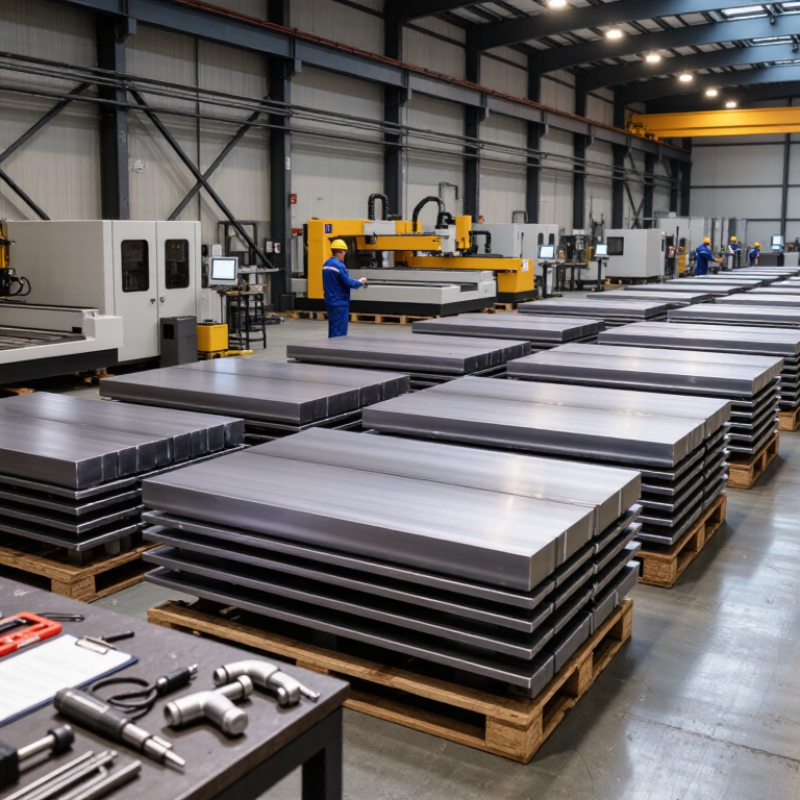
China Top 10 Hardox Liner Manufacturers for Global Buyers

Hardox Liners Explained: 400–600 HBW Grades and Wear Applications

Abrasion-resistant liners in the 400–600 HBW range are selected to slow material loss where rock, ore, or aggregate repeatedly scrapes steel surfaces. Around 400 HBW, a plate may offer a useful balance of wear resistance and toughness for chutes, hoppers, and truck bodies. Grades closer to 600 HBW can suit severe sliding abrasion, but hardness alone does not predict service life. It matters.

A liner exposed to large, falling stones faces impact as well as abrasion. In that setting, a very hard plate may not be the best choice; thickness, support, and operating conditions matter too. Check the material’s hardness certificate, plate thickness, and recommended welding procedure before fabrication. On site, inspect high-wear zones near feed points and corners, where material often strikes or changes direction. Small details count.

There is no universal grade for every application. Compare actual failure patterns, not just purchase price or a headline hardness figure. A liner that wears more slowly can still perform poorly if it cracks, distorts, or is difficult to replace. One limitation is that wear conditions vary widely, so laboratory figures cannot fully predict field results. Regular inspection helps refine the selection over time.

How Chinese Manufacturers Cut, Form, Weld, and Inspect Wear Liners

Wear liners start with the right plate, thickness, and drawing revision. Before cutting, shops should confirm material certificates, plate identification, and required dimensions. CNC plasma or laser cutting can produce accurate profiles, but settings must suit the plate thickness. Operators check kerf allowance and watch for excessive heat near edges. Small details matter.

Forming needs careful control. The bend radius, tooling, and rolling direction should follow the plate grade and thickness guidance. A trial bend can reveal springback or edge cracking before a full batch is made. After forming, welders clean joints and select consumables suited to the application. Preheat and interpass temperatures should follow documented welding procedures, not guesswork. Welds need consistent preparation and heat input.

Inspection should cover more than appearance. Teams can verify dimensions, hole locations, flatness, and weld quality against the drawing. Visual checks may identify undercut, porosity, or incomplete welds; additional testing depends on the project specification. Traceability links each liner to its material records and inspection results. A tidy surface is not proof of sound work, though inspection can also miss problems when rushed. That trade-off deserves attention.

China’s Top 10 Hardox Liner Manufacturers: Products and Capabilities

China’s leading wear-liner manufacturers supply flat plates and fabricated parts for mining, cement, ports, and material handling. Common products include chute liners, hopper panels, truck-body plates, and replaceable wear strips. Product ranges vary, so buyers should confirm steel grade, thickness, and hardness using current mill documentation. A liner that suits abrasive ore may not perform well against repeated impact.

Manufacturing capabilities often include CNC cutting, drilling, bending, and assembly to customer drawings. Some suppliers can produce large panels; others focus on smaller, accurately fitted components. Ask how they control heat during cutting and forming, since excessive heat can affect the plate’s properties. Details matter. Request dimensional inspection records, material certificates, and clear marking for each batch. Welding procedures should also be discussed when a liner arrives as a fabricated assembly.

A useful comparison looks beyond machine lists. Check whether the manufacturer can review wear conditions, installation clearances, and fastening points before production. A few millimeters can decide whether a panel fits cleanly or needs site rework. Fit is unforgiving. Request a sample drawing or trial component when specifications are uncertain. And be candid: wear life is difficult to predict from a catalogue alone; material flow, particle size, and maintenance habits all change the result.

Comparing Suppliers by Plate Thickness, Fabrication Capacity, and Quality Standards

China Top 10 Hardox Liner Manufacturers for Global Buyers

Comparing suppliers means looking beyond quoted plate thickness. Ask for the grade-specific thickness range, maximum plate size, and documented forming limits. A 20 mm liner may fit a hopper, while a curved chute can require tighter control over rolling and springback. Check whether cutting, drilling, and welding are completed in-house, and request sample inspection records. Bigger is not always better.

Quality claims need evidence. ISO 9001 describes a quality management system; it does not certify a plate’s hardness or chemistry. Ask for material test certificates and clarify which tests apply, such as hardness testing under ISO 6506-1. The World Steel Association reported global crude steel production of 1,892.2 million tonnes in 2023 in World Steel in Figures 2024. That scale shows a broad supply base, not any individual supplier’s capacity. Verify workshop equipment, inspection steps, and delivery records directly.

Tips: Compare like with like. Request a drawing-based quotation, thickness tolerances, and a clear definition of usable fabrication capacity. Confirm how the supplier protects cut edges and records batch traceability. Small details matter. A polished brochure cannot replace a verifiable inspection report.

Global Buyer Checks: EN 10204 3.1 Certificates and ASTM G65 Abrasion Testing

For wear-resistant steel liners, an EN 10204 3.1 certificate helps buyers connect supplied plates to documented inspection results. Check that the certificate lists the steel grade, heat number, thickness, and relevant mechanical properties. Then match the heat number against the plate markings and packing records. Small gaps in traceability can become costly when a shipment is already cut.

Ask which ASTM G65 procedure was used and request the test report, not just a statement of compliance. The dry sand and rubber wheel test reports mass loss under specified conditions; lower loss generally indicates better abrasion resistance in that test. It does not predict service life by itself. Feed material, impact, moisture, and liner fit can change wear considerably. Site conditions matter.

Compare results only when test procedures and reporting units match. Ask whether the tested sample came from the same heat and product thickness as the proposed supply. A certificate may be genuine yet still leave practical questions unanswered. That gap matters. If the application is severe, review the test data alongside operating history and, where possible, inspect a representative sample before ordering.

Copyright 2025 Fluidra S.A. | Created by BCM Marketing Agencia Privacy Policy Legal note | Cookie policy |

Technical cookies are strictly necessary for our website to work and you can navigate through it. These types of cookies are those that, for example, allow us to identify you, give you access to certain restricted parts of the page if necessary, or remember different options or services already selected by you, such as your privacy preferences. Therefore, they are activated by default, your authorization not being necessary in this regard. Through the configuration of your browser, you can block or alert the presence of this type of cookies, although such blocking will affect the proper functioning of the different functionalities of our website.


The analysis cookies allow us to study the navigation of the users of our website in general (for example, which sections of the page are the most visited, which services are used most and if they work correctly, etc.). From the statistical information on navigation on our website, we can improve both the operation of the page itself and the different services it offers. Therefore, these cookies do not have an advertising purpose, but only serve to make our website work better, adapting to our users in general. By activating them you will contribute to this continuous improvement. You can enable or disable these cookies by checking the corresponding box, being disabled by default.


Functionality cookies allow us to remember your preferences, to personalize certain characteristics and general options of our website, every time you access it (for example, the language in which the information is presented to you, the sections marked as favorites, your browser type, etc.) Therefore, this type of cookies does not have an advertising purpose, but by activating them you will improve the functionality of the website (for example, adapting to your type of browser) and the customization of it based on your preferences (for example, by presenting the information in the language that you have chosen in previous occasions), which will contribute to the ease, usability and comfort of our page during your navigation. You can enable or disable these cookies by checking the corresponding box, being disabled by default.


Advertising cookies allow us to manage the advertising spaces included in our website based on criteria such as the content shown or the frequency in which the ads are displayed. For example, if you have been shown the same ad several times on our website, and you have not shown a personal interest by clicking on it, it will not appear again. In summary, by activating this type of cookies, the advertising shown on our website will be more useful and diverse, and less repetitive. You can enable or disable these cookies by checking the corresponding box, being disabled by default.


Behavioral advertising cookies allow us to obtain information based on the observation of your browsing habits and behaviors on the web, in order to show you advertising content that best suits your personal tastes and interests. To understand it in a very simple way, we will give you a fictitious example: if your last searches on the web were related to suspense literature, we would show you advertising about suspense books. Therefore, activating this type of cookies, the advertising that we show you on our website will not be generic, but will be oriented to your searches, tastes and interests, therefore adjusting exclusively to you. You can enable or disable these cookies by checking the corresponding box, being disabled by default.
To understand it in a very simple way, we will give you a fictitious example: if your last searches on the web were related to suspense literature, we would show you advertising about suspense books. Therefore, activating this type of cookies, the advertising that we show you on our website will not be generic, but will be oriented to your searches, tastes and interests, therefore adjusting exclusively to you. You can enable or disable these cookies by checking the corresponding box, being disabled by default.

SAVE

We use our own and third-party cookies to ensure the proper functioning of the website and to analyse our services, improve your experience on our website and show you advertisements related to your interests according to profiling based on your browsing habits (e.g. websites visited). You can accept all cookies by clicking "ACCEPT" or set or reject them by clicking here. If you would like to know more about the use of cookies, please see our COOKIE POLICY.


ACCEPT ALL
Reject no essentials


