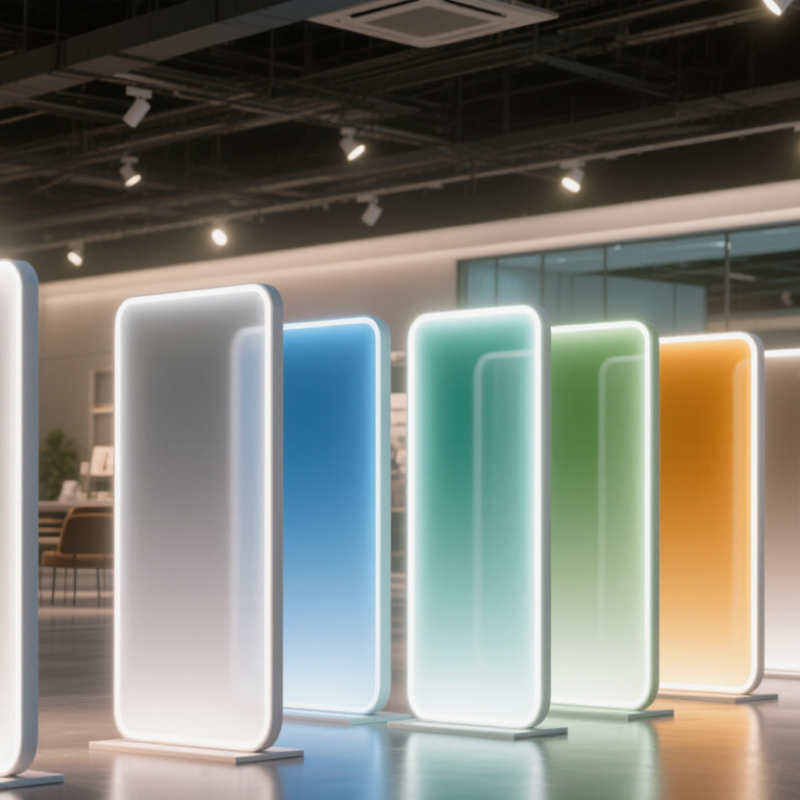
China Top 10 Digital Acrylic Sign Board Manufacturers
China’s Digital Acrylic Sign Board market brings together manufacturers serving retail, hospitality, exhibitions, and corporate interiors. This guide introduces ten suppliers and considers the details buyers can actually compare: acrylic clarity, edge finishing, LED consistency, color accuracy, control options, and production support. These details matter. A bright display may catch the eye, but uneven lighting or visible wiring can weaken the finished installation.
Design expert Steve Jobs once said, “Design is not just what it looks like and feels like. Design is how it works.” That principle offers a useful lens for evaluating a Digital Acrylic Sign Board. The panel should look clean under real lighting, remain readable at its intended viewing distance, and fit the space without awkward cables or bulky mounts. A sample can reveal more than a polished product photo.
Manufacturer rankings also deserve a careful read. Factory capacity, customization, communication, and quality checks vary, and a strong catalog does not guarantee a smooth project. Ask for material details, lighting specifications, sample images, and clear production timelines. Small points matter. Even a slight color shift can change a brand’s appearance across several locations. This comparison aims to make the options easier to assess, while recognizing that no single supplier is right for every application. One limitation remains: published claims are not a substitute for inspecting a sample and confirming project requirements directly.
A digital acrylic sign board combines an acrylic panel with digitally displayed or digitally produced visual content. Depending on its design, the panel may carry printed graphics, sit in front of an LED or LCD screen, or diffuse light around lettering. The term is not fully standardized, so buyers should check whether a product is an active display or a printed sign. That distinction matters. An active screen can update menus and promotions, while a printed panel stays static until replaced. Acrylic is valued for its smooth finish, clean edges, and relatively light weight. Thickness and mounting still affect durability.
In a café, a slim panel might show a changing menu beside the counter; in a showroom, illuminated lettering can draw attention without filling a wall. Good results depend on contrast, viewing distance, ambient light, and glare. Small text can vanish beneath bright ceiling lights. Details matter. Screen brightness and resolution should suit the location, not merely look impressive on a specification sheet. For routine care, use a soft microfiber cloth and avoid abrasive cleaners that may scratch or cloud the surface. Heat, direct sunlight, and poor ventilation can shorten the life of electronic components. Acrylic may look premium, yet fingerprints show quickly. A sample viewed under the actual lighting can reveal issues before installation.
How Digital Acrylic Sign Boards Are Designed and Manufactured
Design begins with a viewing-distance sketch, not a cutting file. The team defines screen size, brightness, mounting points, cable routes, and the acrylic’s role: cover, diffuser, or structural panel. Clear cast acrylic offers clean edges and good optical clarity, while thickness and support spacing affect rigidity. A Grand View Research report estimated the global digital signage market at USD 28.83 billion in 2023, with an 8.1% projected compound annual growth rate from 2024 to 2030. This is a market-wide figure, not an acrylic-specific forecast, but it signals demand for carefully integrated displays.
Production typically moves from CAD drawings to CNC routing or laser cutting, followed by edge finishing and assembly. The fabricator checks that holes align with brackets and that the panel does not press against the display. Small gaps matter. Heat can build up. LED modules, power supplies, and ventilation openings must be positioned around the acrylic without creating glare or visible hotspots. Before shipment, technicians test brightness, content playback, connections, and stability under normal operating conditions. A frequent design compromise deserves another look: thinner acrylic reduces weight, but can flex during installation. A prototype often reveals problems that drawings miss, though testing every lighting condition is rarely practical.
China Top 10 Digital Acrylic Sign Board Manufacturers - How Digital Acrylic Sign Boards Are Designed and Manufactured
Stage
Design or Manufacturing Activity
Materials and Components
Typical Considerations
Quality Check
1. Requirements and layout
Define the sign’s message, dimensions, viewing distance, mounting method, lighting needs, and indoor or outdoor use.
Project drawings, site measurements, artwork, and installation details
Legibility, available wall space, viewing angle, and local installation conditions guide the design.
Confirm approved dimensions, artwork, and mounting requirements before production.
2. Material selection
Select acrylic type, color, thickness, and finish for the intended construction and appearance.
Cast or extruded acrylic sheet; optional diffuser or backing materials
Acrylic sheet is available in a range of thicknesses. The appropriate choice depends on sign size, support, fabrication method, and design.
Check sheet condition, color, thickness, surface quality, and protective film.
Allow for kerf, assembly clearances, mounting holes, and text readability at the intended viewing distance.
Review file scale, spelling, dimensions, and alignment against the approved proof.
4. Sheet cutting
Cut acrylic components to the specified outline and make openings for fasteners, wiring, or display elements.
Acrylic sheet; laser or CNC cutting equipment
Cutting method and settings are selected according to sheet thickness, edge requirements, and part geometry.
Measure parts and inspect edges, corners, and openings for defects or dimensional variation.
5. Edge finishing
Deburr, smooth, and finish exposed edges where required by the design.
Polishing tools and suitable finishing equipment
Edge appearance depends on the acrylic grade, cutting process, and specified finish.
Check for chips, scratches, uneven edges, and visible finishing marks.
6. Printing and graphics
Apply logos, text, color fields, or decorative graphics to the acrylic or a separate graphic layer.
UV-curable inks, printed films, or other specified graphic media
Print method, ink compatibility, surface preparation, and whether graphics are applied to the front or reverse side affect the result.
Inspect color, registration, adhesion, legibility, and the approved artwork.
7. Lighting and electrical assembly
Install LEDs and route wiring when an illuminated sign is specified.
LED modules or strips, wiring, connectors, and a compatible power supply
LED layout, heat management, brightness, and power-supply capacity should suit the sign design and operating conditions.
Test illumination, connections, polarity, and operation using the specified power supply.
8. Layering and assembly
Join acrylic panels, spacers, backing plates, graphics, and lighting into the finished sign.
Mechanical fasteners, suitable adhesives, spacers, and backing materials
Assembly method depends on sign construction, service access, mounting plan, and whether components may need replacement.
Check alignment, bond quality, fit, surface cleanliness, and secure fastening.
9. Inspection and testing
Review the completed sign against the approved drawings and specified functions.
Finished sign and relevant electrical test equipment
Inspection criteria may include dimensions, appearance, graphic placement, illumination, and installation features.
Record visual and functional checks; verify electrical safety requirements applicable to the product and destination market.
10. Protection and delivery
Protect the finished surfaces and prepare the sign and accessories for transport and installation.
Protective film, cushioning, cartons, and installation hardware as specified
Packaging should limit abrasion, impact, and movement during transit; installation instructions should match the supplied hardware.
Confirm the sign, accessories, and documentation are complete and protected before dispatch.
The table describes a general digital acrylic sign design and manufacturing workflow, not a ranked list of companies. Materials, dimensions, fabrication methods, and inspection requirements vary by project and supplier; confirm final specifications with the manufacturer.
How to Evaluate Chinese Digital Acrylic Sign Board Manufacturers
When evaluating Chinese digital acrylic sign board manufacturers, ask for details about materials, fabrication, and inspection—not just a quotation. Confirm the acrylic thickness, light source, and panel dimensions match your drawings. Ask how edges are polished and how the board is protected from dust during assembly. Small details matter. Uneven illumination or a cloudy edge can be obvious in a dim showroom.
Request recent production photos and a sample made with the same materials as your planned order. Check brightness across the full panel, color consistency, viewing angle, and heat after several hours of operation. Ask how wiring is secured and what checks workers perform before packing. A written inspection record is useful, though it does not replace examining a sample. No checklist is perfect.
Discuss customization, minimum order quantity, lead time, packaging, and how defects are handled. Ask for clear answers about replacement parts and after-sales support, preferably in writing. Compare the quote with the specifications line by line; a lower price may reflect thinner acrylic or fewer quality checks. A spreadsheet can make suppliers look easier to compare than they really are. Note where answers feel vague, and ask again before placing an order.
How to Evaluate Chinese Digital Acrylic Sign Board Manufacturers
Suggested evaluation weighting for comparing suppliers. These percentages are a practical assessment framework, not measured industry statistics or ratings of specific companies.
Compare suppliers using documented evidence such as material specifications, sample testing, safety certificates, quality-control records, production schedules, and warranty terms. Adjust the weights to fit your project requirements.
Profiles of China’s Top 10 Digital Acrylic Sign Board Manufacturers
Profiles of China’s Top 10 Digital Acrylic Sign Board Manufacturers
A useful comparison of ten Chinese manufacturers should look beyond product photos. Acrylic signs combine sheet cutting, edge finishing, printed graphics, lighting, and control components. Each step affects clarity and service life. Some suppliers focus on custom retail displays, while others handle larger batches for offices, transport spaces, or exhibitions. Their profiles should specify production capacity, sample lead time, material thickness, and inspection procedures. Small details matter. Ask how they prevent scratches during packing and check brightness across a full panel.
Market demand offers context, but not a quality guarantee. Grand View Research estimated the global digital signage market at USD 28.83 billion in 2023 and projected an 8.1% compound annual growth rate from 2024 to 2030. This points to expanding use of digital displays, not a forecast for acrylic sign makers specifically. Buyers should treat the figure as sector context, then verify each manufacturer’s capabilities with drawings, material specifications, and working samples.
A strong profile also explains where a supplier’s strengths end. One may excel at precise laser-cut lettering but outsource electronic components; another may offer integrated assembly yet have longer customization cycles. Request close-up photos of polished edges, wiring layouts, and illuminated samples in ordinary room lighting. Ask about replacement parts and batch-to-batch color consistency. Paper claims are easy. Real samples reveal more. Even then, one sample cannot represent every production run, so independent checks remain worthwhile.
Key Applications and Industry Trends in China
Digital acrylic signboards serve practical roles across China’s retail, hospitality, healthcare, and office sectors. In shops, backlit acrylic panels can highlight promotions without blocking window displays. Restaurants use menu screens to update prices and daily specials, while clinics need clear, readable wayfinding near busy entrances. Acrylic diffusers soften LED light, but glare can still make small text difficult to read. That matters. China’s National Bureau of Statistics reported 2024 retail sales of consumer goods at RMB 48.79 trillion. Online retail sales reached RMB 15.52 trillion, reinforcing the value of consistent messages across physical and digital shopping channels.
Industry demand is also shaped by more frequent content updates and energy-conscious display design. Grand View Research valued the global digital signage market at USD 28.83 billion in 2023 and forecast an 8.1% compound annual growth rate through 2030. This broader forecast signals momentum, not a China-specific acrylic-board growth rate. Manufacturers are responding with slimmer LED assemblies, sharper screens, and network-based content management. Not every screen wins. A display near a sunlit doorway may need higher brightness, while a quiet reception desk may benefit more from clean typography than animation. Installation conditions still deserve more attention; polished panels cannot fix poor placement.
Cepex is the brand for the fluid handling market belonging to the Fluidra group. One of the leading european manufacturer of valves and fittings in thermoplastic materials.
Dedicated to the swimming pool, irrigation and industrial markets, we distribute our products worldwide with the Fluidra commercial network and presence in 46 countries with 136 sales branches.
Your data will be processed by CEPEX S.A., with address at C. Lluís Companys, 51-53, 08400, Granollers (Barcelona), and C.I.F. nº A-08928707, to send you communications about our products based on your interests. You can consult more information about the processing of your data and how to exercise your rights as described in the Privacy Policy.
Technical cookies are strictly necessary for our website to work and you can navigate through it. These types of cookies are those that, for example, allow us to identify you, give you access to certain restricted parts of the page if necessary, or remember different options or services already selected by you, such as your privacy preferences. Therefore, they are activated by default, your authorization not being necessary in this regard. Through the configuration of your browser, you can block or alert the presence of this type of cookies, although such blocking will affect the proper functioning of the different functionalities of our website.
The analysis cookies allow us to study the navigation of the users of our website in general (for example, which sections of the page are the most visited, which services are used most and if they work correctly, etc.). From the statistical information on navigation on our website, we can improve both the operation of the page itself and the different services it offers. Therefore, these cookies do not have an advertising purpose, but only serve to make our website work better, adapting to our users in general. By activating them you will contribute to this continuous improvement. You can enable or disable these cookies by checking the corresponding box, being disabled by default.
Functionality cookies allow us to remember your preferences, to personalize certain characteristics and general options of our website, every time you access it (for example, the language in which the information is presented to you, the sections marked as favorites, your browser type, etc.) Therefore, this type of cookies does not have an advertising purpose, but by activating them you will improve the functionality of the website (for example, adapting to your type of browser) and the customization of it based on your preferences (for example, by presenting the information in the language that you have chosen in previous occasions), which will contribute to the ease, usability and comfort of our page during your navigation. You can enable or disable these cookies by checking the corresponding box, being disabled by default.
Advertising cookies allow us to manage the advertising spaces included in our website based on criteria such as the content shown or the frequency in which the ads are displayed. For example, if you have been shown the same ad several times on our website, and you have not shown a personal interest by clicking on it, it will not appear again. In summary, by activating this type of cookies, the advertising shown on our website will be more useful and diverse, and less repetitive. You can enable or disable these cookies by checking the corresponding box, being disabled by default.
Behavioral advertising cookies allow us to obtain information based on the observation of your browsing habits and behaviors on the web, in order to show you advertising content that best suits your personal tastes and interests. To understand it in a very simple way, we will give you a fictitious example: if your last searches on the web were related to suspense literature, we would show you advertising about suspense books. Therefore, activating this type of cookies, the advertising that we show you on our website will not be generic, but will be oriented to your searches, tastes and interests, therefore adjusting exclusively to you. You can enable or disable these cookies by checking the corresponding box, being disabled by default. To understand it in a very simple way, we will give you a fictitious example: if your last searches on the web were related to suspense literature, we would show you advertising about suspense books. Therefore, activating this type of cookies, the advertising that we show you on our website will not be generic, but will be oriented to your searches, tastes and interests, therefore adjusting exclusively to you. You can enable or disable these cookies by checking the corresponding box, being disabled by default.
We use our own and third-party cookies to ensure the proper functioning of the website and to analyse our services, improve your experience on our website and show you advertisements related to your interests according to profiling based on your browsing habits (e.g. websites visited). You can accept all cookies by clicking "ACCEPT" or set or reject them by clicking here. If you would like to know more about the use of cookies, please see our COOKIE POLICY.