
China Top 10 Carbon Commutator Manufacturers for Buyers
FLUID HANDLING EXPERTS

Blog, all our news

China Top 10 Carbon Commutator Manufacturers for Buyers

A Carbon Commutator can look like a simple replacement part: a copper segment, a carbon brush, and a rotating shaft. In service, small differences in material grade, runout, contact pressure, and surface finish can affect wear, sparking, and maintenance intervals. Buyers comparing China-based manufacturers should therefore examine drawings, test records, production controls, and application references—not price alone.

The International Energy Agency’s Global EV Outlook 2024 estimated that electric-car sales could reach about 17 million in 2024, more than one-fifth of global car sales. That figure signals changing motor markets, but it does not measure carbon-commutator demand; many electric traction motors are brushless. The IEA’s Electricity 2024 report also projected strong growth in global electricity demand, reinforcing the value of reliable motors and generators across industrial applications. Context matters.

IEA Executive Director Fatih Birol has described energy efficiency as “the first fuel,” a useful reminder to assess component performance over its service life. Birol is an energy-systems expert, not a Carbon Commutator materials specialist. No verifiable quotation from a named commutator-industry expert was supplied, so attributing one here would be misleading. This guide instead compares ten manufacturers through practical buyer criteria, including material consistency, machining precision, inspection evidence, and communication. Some details still require direct verification. That is part of responsible sourcing.
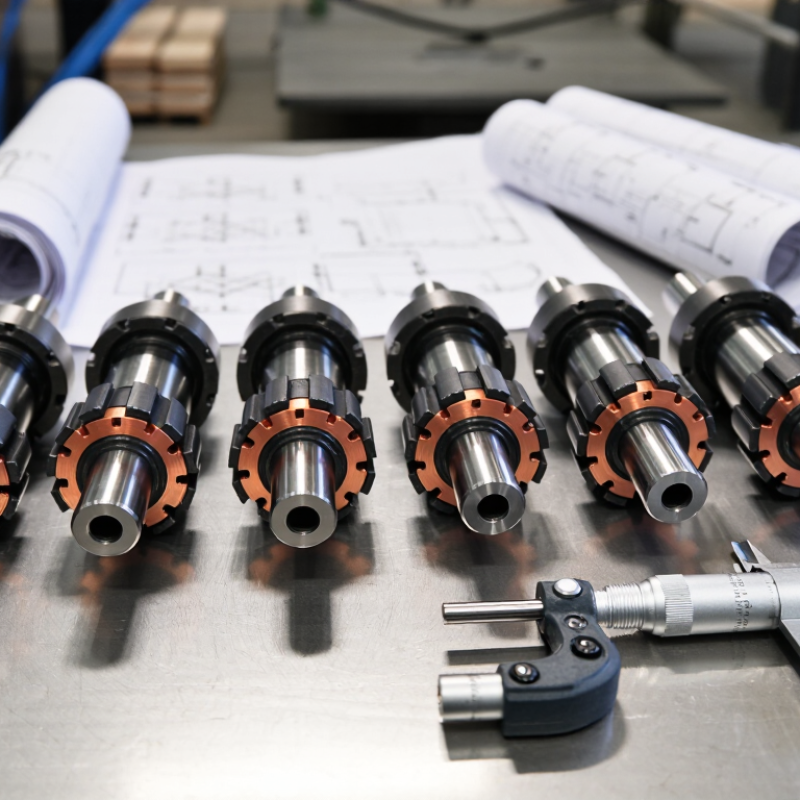
China Top 10 Carbon Commutator Manufacturers for Buyers

Understanding Carbon Commutators and Their Industrial Applications

A commutator connects a motor’s rotating armature to its stationary electrical circuit. In a brushed DC motor, its segments switch current direction as the rotor turns, helping maintain torque. Carbon-based commutator designs use conductive carbon or graphite in the contact assembly, though product terminology varies. Some catalogs use “carbon commutator” loosely for a commutator-and-brush arrangement. That distinction matters.

These components appear in compact motors, power tools, small pumps, and selected industrial equipment. Under operation, the brush presses against the rotating surface. Friction, heat, and electrical arcing can gradually wear the contact area. A faint dark track may be normal; deep grooves, uneven wear, or heavy sparking deserve attention. Dust can also collect near the holder. Small details matter.

For buyers comparing manufacturers, check the motor’s rated voltage, current, speed, shaft dimensions, and operating temperature. Ask for material data, dimensional tolerances, and test information under representative loads. A part that fits physically may still perform poorly if its contact resistance or wear rate differs. That’s easy to overlook. Application history can help, but it is not a substitute for checking the actual motor and duty cycle. When specifications are incomplete, request clarification before ordering.

China Top 10 Carbon Commutator Manufacturers for Buyers - Understanding Carbon Commutators and Their Industrial Applications

Buyer reference: Carbon-segment commutators are used in specific motor designs; many commutator motors instead use copper segments with carbon brushes. The suitable construction depends on the motor design, electrical duty, speed, temperature, and operating environment. Confirm all specifications with the motor designer or supplier.

No. Application Typical motor or equipment Commutator-related considerations Buyer checks
1 Industrial DC drives Commutator-type DC motors used in drive systems Segment material and geometry must match the original motor design and current duty. Rated voltage and current, speed range, dimensions, insulation, and applicable drawings.
2 Electric traction equipment Legacy or specialized traction motors with mechanical commutation High electrical and mechanical loads make design compatibility and inspection important. Duty cycle, vibration, maximum speed, environmental conditions, and maintenance requirements.
3 Cranes and hoists DC motors in lifting and material-handling systems Frequent starts, stops, and load changes can affect commutation and component wear. Starting frequency, overload conditions, ambient dust, and required service life.
4 Steel and metal processing Commutator motors used on selected mill or processing drives Heat, dust, load variation, and motor-specific design affect component selection. Operating temperature, contamination controls, electrical duty, and dimensional tolerances.
5 Paper and converting machinery DC drive motors on equipment where commutator motors are specified Steady operation and process uptime make fit, balance, and surface condition relevant. Rotor dimensions, runout requirements, balance requirements, and replacement procedure.
6 Mining and material handling Motors for selected conveyors, winches, and heavy-duty equipment Dust and vibration can increase maintenance demands; enclosure and motor design matter. Dust exposure, vibration, duty cycle, inspection access, and specified motor type.
7 Marine and port equipment Commutator-type motors in selected winches and auxiliary machinery Moisture, salt contamination, and corrosion protection are equipment-level concerns. Environmental protection, material compatibility, motor drawings, and maintenance intervals.
8 Automotive and transport auxiliaries Selected DC motors and starter-related assemblies Compact geometry and the specific electrical and thermal duty determine suitability. Part drawings, operating voltage, temperature range, vibration, and qualification requirements.
9 Industrial repair and motor refurbishment Replacement assemblies for existing commutator motors A replacement must match the original assembly and the motor's commutation system. Original part number, segment count, dimensions, shaft fit, insulation, and sample inspection.
10 Special-purpose machinery Custom or legacy equipment using a designed commutator motor Non-standard applications require engineering review rather than selection by material name alone. Full technical drawing, operating profile, material specification, and prototype validation.

Note: Application examples are general buyer guidance, not a claim that every machine in a category uses a carbon-segment commutator. Confirm the commutator construction and acceptance criteria against the equipment manufacturer's documentation.

How China’s Carbon Commutator Manufacturing Sector Is Organized

China’s carbon commutator sector is organized around a practical supply chain: copper and carbon-material suppliers feed component makers, which produce, machine, assemble, and test commutators for motor manufacturers and replacement markets. Some factories focus on carbon segments or copper components; others integrate several production steps. Buyers may therefore compare suppliers with very different capabilities, even when product descriptions look similar.

The wider machinery industry provides useful context, but not a direct measure of commutator production. The China Machinery Industry Federation reported 2023 machinery-industry operating revenue of about 31.5 trillion yuan, up 6.8% year on year. The National Bureau of Statistics reported that manufacturing value added represented 26.2% of China’s GDP that year. These figures show the scale of the industrial base, not the size of this niche. The boundary is blurry.

For procurement, check material traceability, dimensional inspection, dynamic balancing, and performance tests under the buyer’s actual load and temperature conditions. Ask whether samples come from normal production, not a specially prepared batch. Details matter. Factory audits and documented test records can reveal whether a supplier controls its own processes or relies heavily on subcontractors. That distinction is easy to miss. Some suppliers disclose limited process data, so buyers should record unanswered questions rather than assume uniform quality across the sector.

Key Criteria for Evaluating Carbon Commutator Manufacturers

When evaluating carbon commutator manufacturers, start with the operating conditions, not a catalogue description. Share the motor’s current, speed, temperature range, duty cycle, and expected service life. A supplier should explain how its carbon grade and copper segments suit those conditions. Ask for dimensional tolerances, runout limits, and inspection methods. Small variations can affect brush contact and create uneven wear.

Look for repeatable quality controls. Request sample inspection records, material specifications, and evidence that production batches are traceable. A useful trial checks commutation under representative load, not just whether the part fits. Listen for excessive sparking, then inspect the contact surface after operation. Ask how the manufacturer handles defects and changes to materials or processes. Details matter.

Check production capacity, delivery consistency, and technical support as well. Clear answers about tooling, lead times, and packaging reduce surprises during purchasing. A short trial is valuable. Still, laboratory results may not match a dusty, vibrating machine in daily service. Even a tidy spreadsheet can mislead. I would keep notes from installation and follow-up inspections; they can reveal gaps that a polished quotation does not. A dependable supplier should welcome specific questions, even when the first answer is imperfect.

China Top 10 Carbon Commutator Manufacturers for Buyers — Key Evaluation Criteria

Suggested buyer scorecard weighting (%)

Use these suggested weights to compare suppliers consistently. They are an example buyer scorecard, not market-survey results or ratings of specific manufacturers.

Profiles of 10 Chinese Carbon Commutator Manufacturers

Profiles of ten Chinese carbon commutator manufacturers are most useful when they show how production strengths differ. One maker may focus on compact commutators for small motors. Another may handle larger diameters and custom shaft layouts. A third may emphasize consistent carbon-brush contact, while a fourth may offer flexible batch sizes. These are useful distinctions, but buyers should verify them against actual drawings and samples.

Other supplier profiles can highlight automated machining, in-house material blending, or experience with appliance motors. Some workshops may be better suited to prototypes; others may support repeat orders with tighter process controls. A profile centered on export support should still be checked for clear inspection records and responsive technical communication. Details matter. Ask about runout, segment spacing, resistance, and the method used to inspect each part. A polished brochure cannot answer every question.

The remaining profiles may focus on specialized dimensions or competitive pricing for standard designs. Treat these as starting points, not rankings: capabilities vary, and public information can be incomplete. Request a sample built to your specification, then compare its fit, surface finish, and electrical performance. One practical caveat: a low quotation can hide tooling, packaging, or minimum-order costs. A fair comparison needs the same drawing, test criteria, and delivery terms for every supplier.

How Buyers Can Compare Suppliers and Plan Procurement

When comparing China’s carbon commutator suppliers, buyers should look beyond quoted unit prices. Check material grade, dimensions, runout, electrical resistance, and wear performance against the motor’s operating conditions. Ask for inspection records and sample parts from more than one production batch. Small variations can affect contact stability and service life. Details matter.

Demand data offers context, not a direct commutator forecast. The IEA’s Global EV Outlook 2024 reports nearly 14 million electric cars sold worldwide in 2023, around 18% of car sales; it expected more than 17 million sales in 2024. The IEA also estimates motor-driven systems use about 45% of global electricity. That makes motor efficiency an important design concern, but it does not prove demand for any specific commutator type.

For procurement planning, compare suppliers on process control, batch traceability, sample lead time, production capacity, and clear responses to technical questions. Request a written schedule covering approval samples, tooling, inspection, and repeat orders. Confirm how defects are handled and whether material changes require prior notice. Not just price. A spreadsheet helps, but it can miss the feel of a real sample under load; that judgment is useful, and imperfect. Keep the first order modest where practical, then review measured wear and dimensional consistency before scaling.

Copyright 2025 Fluidra S.A. | Created by BCM Marketing Agencia Privacy Policy Legal note | Cookie policy |

Technical cookies are strictly necessary for our website to work and you can navigate through it. These types of cookies are those that, for example, allow us to identify you, give you access to certain restricted parts of the page if necessary, or remember different options or services already selected by you, such as your privacy preferences. Therefore, they are activated by default, your authorization not being necessary in this regard. Through the configuration of your browser, you can block or alert the presence of this type of cookies, although such blocking will affect the proper functioning of the different functionalities of our website.


The analysis cookies allow us to study the navigation of the users of our website in general (for example, which sections of the page are the most visited, which services are used most and if they work correctly, etc.). From the statistical information on navigation on our website, we can improve both the operation of the page itself and the different services it offers. Therefore, these cookies do not have an advertising purpose, but only serve to make our website work better, adapting to our users in general. By activating them you will contribute to this continuous improvement. You can enable or disable these cookies by checking the corresponding box, being disabled by default.


Functionality cookies allow us to remember your preferences, to personalize certain characteristics and general options of our website, every time you access it (for example, the language in which the information is presented to you, the sections marked as favorites, your browser type, etc.) Therefore, this type of cookies does not have an advertising purpose, but by activating them you will improve the functionality of the website (for example, adapting to your type of browser) and the customization of it based on your preferences (for example, by presenting the information in the language that you have chosen in previous occasions), which will contribute to the ease, usability and comfort of our page during your navigation. You can enable or disable these cookies by checking the corresponding box, being disabled by default.


Advertising cookies allow us to manage the advertising spaces included in our website based on criteria such as the content shown or the frequency in which the ads are displayed. For example, if you have been shown the same ad several times on our website, and you have not shown a personal interest by clicking on it, it will not appear again. In summary, by activating this type of cookies, the advertising shown on our website will be more useful and diverse, and less repetitive. You can enable or disable these cookies by checking the corresponding box, being disabled by default.


Behavioral advertising cookies allow us to obtain information based on the observation of your browsing habits and behaviors on the web, in order to show you advertising content that best suits your personal tastes and interests. To understand it in a very simple way, we will give you a fictitious example: if your last searches on the web were related to suspense literature, we would show you advertising about suspense books. Therefore, activating this type of cookies, the advertising that we show you on our website will not be generic, but will be oriented to your searches, tastes and interests, therefore adjusting exclusively to you. You can enable or disable these cookies by checking the corresponding box, being disabled by default.
To understand it in a very simple way, we will give you a fictitious example: if your last searches on the web were related to suspense literature, we would show you advertising about suspense books. Therefore, activating this type of cookies, the advertising that we show you on our website will not be generic, but will be oriented to your searches, tastes and interests, therefore adjusting exclusively to you. You can enable or disable these cookies by checking the corresponding box, being disabled by default.

SAVE

We use our own and third-party cookies to ensure the proper functioning of the website and to analyse our services, improve your experience on our website and show you advertisements related to your interests according to profiling based on your browsing habits (e.g. websites visited). You can accept all cookies by clicking "ACCEPT" or set or reject them by clicking here. If you would like to know more about the use of cookies, please see our COOKIE POLICY.


ACCEPT ALL
Reject no essentials


