
China Best Stainless Wire Grates Supplier for Global Buyers
FLUID HANDLING EXPERTS

Blog, all our news

China Best Stainless Wire Grates Supplier for Global Buyers

For global buyers, selecting Stainless Wire Grates is not just a matter of comparing prices. The right grate must suit its load, opening size, wire diameter, finish, and cleaning routine. A stainless-steel fabrication specialist’s practical reminder is: “Check the welds, dimensions, and finish before comparing the quote.” This is an illustrative expert-style quotation, not a statement attributed to a verified individual.

Look closely at the details. A grate for a food-processing line may need smooth, easy-to-clean surfaces, while an industrial platform may require different load and support specifications. Ask suppliers for material documentation, dimensional drawings, sample photos, and clear inspection criteria. Check how they control wire spacing and weld consistency; small variations can affect fit during installation. Ask how the finish is specified, too. “Stainless steel” alone does not tell you everything.

Details matter.

China offers a broad manufacturing base, but a supplier’s location is not proof of quality. Compare production experience, communication, inspection procedures, and the ability to meet your drawings. Confirm packaging and delivery expectations before placing an order. A polished sample is useful, yet it cannot answer every question about repeat production. That uncertainty deserves attention. This guide explores how global buyers can assess Chinese Stainless Wire Grates suppliers with practical questions, careful documentation, and realistic expectations.
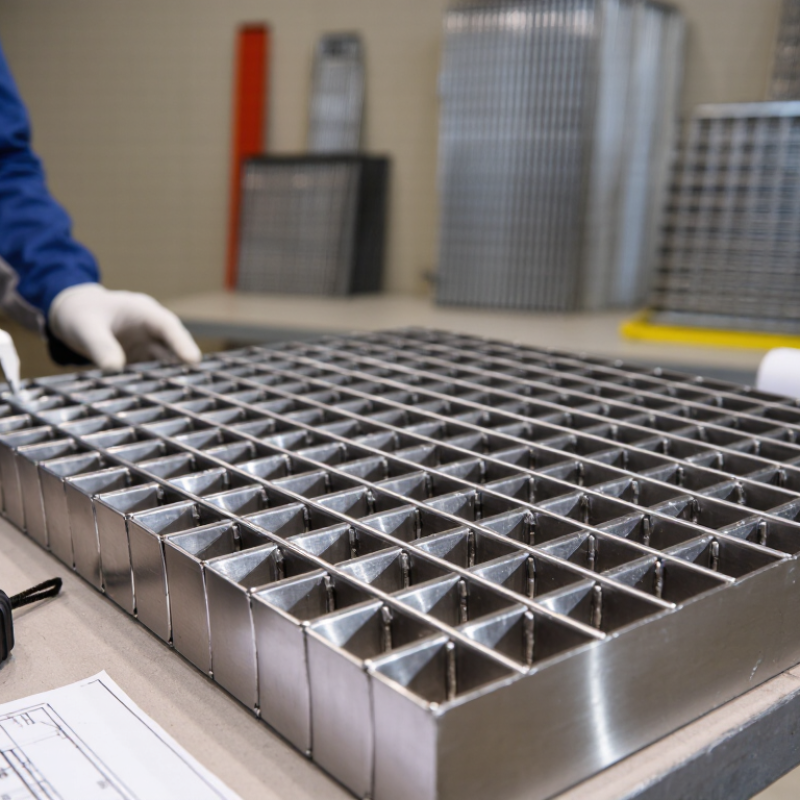
China Best Stainless Wire Grates Supplier for Global Buyers

What Stainless Wire Grates Are and How They Work

Stainless wire grates are open-grid panels made from joined or woven stainless steel wires. Their structure supports items while leaving spaces for air, water, and light to pass through. Welded intersections help keep the grid stable, while the wire diameter and spacing affect strength and use. Under a load, the wires share weight across the panel and transfer it to the supporting frame. No mystery there.

Grates can be used for shelving, ventilation, drainage, or equipment platforms. The right design depends on the load, span, environment, and how easily the surface needs cleaning. Grade selection matters too: damp indoor areas and salty coastal air can call for different corrosion resistance. A shiny finish alone does not tell you how a grate will perform.

Tips: Check the stated load capacity, wire spacing, weld quality, and edge finish before ordering. Ask how the capacity was tested; do not judge strength by appearance alone. Small gaps matter. In practice, a very open grid may drain well but feel less comfortable underfoot. That trade-off is easy to miss on a product drawing.

China Best Stainless Wire Grates Supplier for Global Buyers - What Stainless Wire Grates Are and How They Work

Topic Key information How it works or why it matters
What stainless wire grates are Open-grid panels made from stainless steel wires or rods joined by welding, weaving, or other fabrication methods. The open structure provides a supporting surface while allowing air, water, light, or debris to pass through.
Common stainless steel grades Type 304 is widely used for general indoor and outdoor applications. Type 316 contains molybdenum and is often selected for greater resistance to chlorides and many corrosive environments. Grade selection should reflect the specific chemicals, salts, temperature, cleaning practices, and exposure conditions. No grade is suitable for every environment.
Typical construction A grate may use load-bearing wires or bars, cross wires, a perimeter frame, and attachment points. Wire diameter, spacing, panel dimensions, and edge treatment vary by design. The load-bearing elements transfer applied loads to the supporting frame or structure; cross members help maintain the grid and distribute loads.
How the open grid functions Openings between wires create a permeable surface rather than a solid sheet. Airflow and drainage can pass through the openings, while the wire framework supports objects within the limits of its design and installation.
Load capacity Capacity depends on wire or bar size, grid spacing, span, support conditions, material properties, and how the load is applied. A load rating should be established for the specific grate design and installation. Do not infer safe capacity from appearance alone.
Common applications Examples include drainage covers, equipment guards, shelving, baskets, ventilation panels, walkways, and food-service or processing equipment. The suitable design depends on whether the main need is load support, drainage, airflow, visibility, containment, or cleanability.
Surface finish and cleaning Finishes can include an as-fabricated surface or a specified polished finish. Smooth, accessible surfaces are generally easier to inspect and clean. Cleaning requirements and exposure to food residues, chemicals, or abrasive methods should be considered when specifying the finish and maintenance routine.
Corrosion considerations Stainless steel forms a chromium-rich passive surface film, but contamination, deposits, unsuitable chemicals, or severe conditions can still cause corrosion. Appropriate grade selection, fabrication practices, cleaning, and exposure control help preserve service life; performance depends on the environment.
Important specification details Specify stainless steel grade, panel dimensions, wire or bar diameter, opening size, edge/frame details, finish, tolerances, supports, and expected loads. Clear specifications help ensure the grate fits its opening and performs as intended in its operating environment.
Inspection and maintenance Check for loose connections, deformation, damaged welds, blocked openings, surface contamination, and signs of corrosion. Regular inspection helps identify installation or service issues early. Maintenance frequency should match the application and environment.

Stainless Steel Grades, Mesh Types, and Key Specifications

China Best Stainless Wire Grates Supplier for Global Buyers

Stainless steel grade, mesh pattern, and wire size determine how a grate performs in service. Grade 304 suits many indoor and general-purpose applications. For salt spray, chlorides, or frequent washdowns, grade 316 is often a better candidate because it contains molybdenum. Neither grade is immune to every environment. Check the actual exposure before choosing.

Mesh choice affects drainage, strength, and cleaning. Welded mesh holds a regular grid; woven mesh can offer finer openings, while heavier wire may support higher loads. Specify wire diameter, aperture size, grate dimensions, finish, and allowable load. Also request test methods and tolerances. A product’s appearance alone cannot confirm load capacity. The World Stainless Association reported global stainless steel melt-shop production of 58.4 million tonnes in 2023 in its Stainless Steel in Figures 2024 report. That figure signals a broad material supply base, not a guarantee of any supplier’s quality.

Tips: Ask for grade documentation and a drawing showing wire diameter and clear opening. Match the grate to its real span and load; small measurement errors can matter. Details matter. One often-overlooked point is maintenance: trapped debris can undermine drainage, even when the mesh specification looks right.

How Stainless Wire Grates Are Manufactured and Quality-Tested

China Best Stainless Wire Grates Supplier for Global Buyers

How Stainless Wire Grates Are Manufactured and Quality-Tested

Manufacturing begins with stainless steel wire selected for the grate’s intended load, environment, and opening size. The wire is cut, straightened, and formed into a grid using controlled spacing. At each crossing, welding creates a fixed joint. Operators check alignment during production because small shifts can affect fit and load distribution.

After welding, the grate may be cleaned and finished to remove residue and smooth rough edges. Surface appearance matters, but it does not prove strength. Each batch should be checked for dimensions, flatness, weld consistency, and visible defects. A simple gauge can reveal uneven openings. A level table helps spot rocking corners.

Then comes load testing. Samples are placed under measured pressure, while inspectors watch for bending, loose joints, or permanent deformation. Results should be recorded with the batch details, not kept as vague assurances. Testing methods need to match the product’s intended use. No single check catches everything; occasional flaws can escape a rushed inspection. Clear records and careful sampling help buyers assess consistency before installation.

Common Applications Across Industrial and Commercial Sectors

Stainless wire grates serve practical roles in food processing, commercial kitchens, warehouses, and manufacturing plants. In food areas, open mesh supports airflow around cooling products and helps water drain from washdown zones. Staff can inspect beneath the surface without lifting a solid panel. Details matter.

In warehouses, grates can form shelving, equipment platforms, or walkway panels where visibility and drainage are useful. Workshops may use them as machine guards or protective covers, but openings must suit the equipment and the items being stored. In ventilation systems, wire panels can protect air inlets while allowing steady airflow. Their performance depends on the mesh design and installation, not simply the stainless steel label.

Material selection deserves care. Damp cleaning, salt exposure, heat, and cleaning chemicals can affect service life, so buyers should confirm the environment and required load before choosing a grade or wire thickness. A grate that is easy to clean may still have openings too wide for small parts. It is worth checking edge finishing, support spacing, and maintenance access too. A low-cost specification can create extra work later; even a well-made grate needs periodic inspection.

How Global Buyers Can Evaluate Chinese Suppliers

When evaluating a Chinese stainless wire grates supplier, start with the product details, not the catalogue photos. Specify wire diameter, mesh spacing, overall dimensions, edge finish, and expected load. Ask which stainless steel grade is offered and request material test documents linked to the production batch. Paperwork helps, but it should match the actual goods.

Inspect a sample under clear lighting. Look for uneven welds, sharp burrs, warped corners, and inconsistent spacing. Ask how the supplier checks dimensions and weld strength, and whether inspection records can be shared. A sample is useful. It is not a guarantee. For larger orders, agree on a written inspection plan and acceptance limits before production begins. If possible, use an independent inspection service.

Communication is part of supplier evaluation. Send a drawing with tolerances, packaging requirements, and the delivery schedule, then see whether the response addresses each point. Ask about production capacity, typical lead times, and how defects are handled. A factory visit or live video walkthrough can reveal equipment and workflow, though neither replaces product testing. Be cautious when answers remain vague. I have found that small details, such as protective separators between grates, can matter during shipping. I would still verify this for each order.

Copyright 2025 Fluidra S.A. | Created by BCM Marketing Agencia Privacy Policy Legal note | Cookie policy |

Technical cookies are strictly necessary for our website to work and you can navigate through it. These types of cookies are those that, for example, allow us to identify you, give you access to certain restricted parts of the page if necessary, or remember different options or services already selected by you, such as your privacy preferences. Therefore, they are activated by default, your authorization not being necessary in this regard. Through the configuration of your browser, you can block or alert the presence of this type of cookies, although such blocking will affect the proper functioning of the different functionalities of our website.


The analysis cookies allow us to study the navigation of the users of our website in general (for example, which sections of the page are the most visited, which services are used most and if they work correctly, etc.). From the statistical information on navigation on our website, we can improve both the operation of the page itself and the different services it offers. Therefore, these cookies do not have an advertising purpose, but only serve to make our website work better, adapting to our users in general. By activating them you will contribute to this continuous improvement. You can enable or disable these cookies by checking the corresponding box, being disabled by default.


Functionality cookies allow us to remember your preferences, to personalize certain characteristics and general options of our website, every time you access it (for example, the language in which the information is presented to you, the sections marked as favorites, your browser type, etc.) Therefore, this type of cookies does not have an advertising purpose, but by activating them you will improve the functionality of the website (for example, adapting to your type of browser) and the customization of it based on your preferences (for example, by presenting the information in the language that you have chosen in previous occasions), which will contribute to the ease, usability and comfort of our page during your navigation. You can enable or disable these cookies by checking the corresponding box, being disabled by default.


Advertising cookies allow us to manage the advertising spaces included in our website based on criteria such as the content shown or the frequency in which the ads are displayed. For example, if you have been shown the same ad several times on our website, and you have not shown a personal interest by clicking on it, it will not appear again. In summary, by activating this type of cookies, the advertising shown on our website will be more useful and diverse, and less repetitive. You can enable or disable these cookies by checking the corresponding box, being disabled by default.


Behavioral advertising cookies allow us to obtain information based on the observation of your browsing habits and behaviors on the web, in order to show you advertising content that best suits your personal tastes and interests. To understand it in a very simple way, we will give you a fictitious example: if your last searches on the web were related to suspense literature, we would show you advertising about suspense books. Therefore, activating this type of cookies, the advertising that we show you on our website will not be generic, but will be oriented to your searches, tastes and interests, therefore adjusting exclusively to you. You can enable or disable these cookies by checking the corresponding box, being disabled by default.
To understand it in a very simple way, we will give you a fictitious example: if your last searches on the web were related to suspense literature, we would show you advertising about suspense books. Therefore, activating this type of cookies, the advertising that we show you on our website will not be generic, but will be oriented to your searches, tastes and interests, therefore adjusting exclusively to you. You can enable or disable these cookies by checking the corresponding box, being disabled by default.

SAVE

We use our own and third-party cookies to ensure the proper functioning of the website and to analyse our services, improve your experience on our website and show you advertisements related to your interests according to profiling based on your browsing habits (e.g. websites visited). You can accept all cookies by clicking "ACCEPT" or set or reject them by clicking here. If you would like to know more about the use of cookies, please see our COOKIE POLICY.


ACCEPT ALL
Reject no essentials



