
A Safety Contactor may occupy little space in a control cabinet, yet it can help disconnect hazardous motion when a safety circuit demands it. Small device. Serious duty. For global buyers, choosing a Chinese manufacturer involves more than comparing prices or browsing polished product photos. Buyers need to examine ratings, switching endurance, auxiliary-contact arrangements, documentation, and support for the intended application.
Dr. Nancy Leveson, a recognized systems-safety researcher, offers a useful principle: “Safety is an emergent property of a system.” A contactor alone cannot guarantee safe machinery. Its selection, wiring, monitoring, and maintenance all matter. This guide introduces notable China-based manufacturers and outlines practical checks for evaluating their products and technical claims. Look for clear datasheets, traceable test reports, responsive engineering support, and evidence that the proposed model suits the machine’s duty cycle. Confirm details directly with the supplier; product names can sound reassuring while specifications differ.
A catalog can look convincing. It cannot prove performance. I would also avoid treating manufacturer rankings as universal: the best supplier for one machine may be a poor fit for another. That limitation deserves attention. Use the profiles as a starting point, then compare documentation and application requirements before making a purchasing decision.
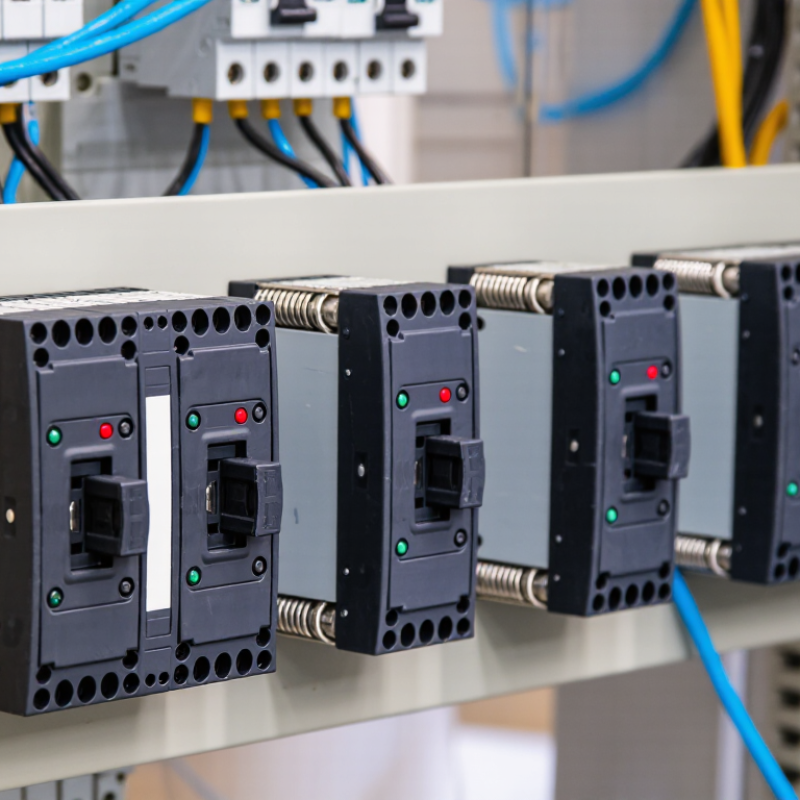
A safety contactor is an electromechanical device used to disconnect hazardous power when a safety circuit detects a problem. For example, opening a machine guard or pressing an emergency stop can trigger the contactor to interrupt power to a motor. This helps reduce risk, but it does not make a machine safe by itself. That distinction matters. A complete safety function may also require suitable sensors, control logic, wiring, and risk assessment.
Many safety contactors provide mechanically linked auxiliary contacts for feedback monitoring. A safety relay or controller can check whether the main contacts opened as expected before allowing a restart. In practice, selection involves more than matching the motor’s rated current. Engineers should check the load type, switching frequency, coil voltage, electrical life, and coordination with short-circuit protection. Small details count. A contactor chosen for a motor may behave differently when switching frequent starts or an unusual load.
Installation also affects performance. Loose terminals can overheat, while poor wiring may prevent the feedback circuit from detecting a fault. Maintenance teams should inspect connections and test the safety function according to the machine’s documented procedures. It is easy to assume that a familiar component will fit every panel. That assumption deserves a second look, especially when operating conditions or control designs change.

China’s safety contactor manufacturing landscape draws on established electrical equipment supply chains, including coil winding, contact production, plastic molding, and final assembly. This concentration can support varied specifications and steady production, but capabilities differ from factory to factory. Some manufacturers focus on standard models, while others handle custom coil voltages, terminal layouts, or auxiliary contacts. Details matter. Buyers should check how a supplier verifies mechanically linked contacts, switching endurance, and performance under the stated operating conditions. A polished catalogue alone cannot answer those questions.
For global buyers, useful evaluation starts with the application: motor size, control voltage, switching frequency, and the required safety circuit design. Ask for clear technical drawings, test records, traceable product identification, and samples that match the proposed production model. A factory visit can reveal practical details, such as whether inspection stations record results or rely mainly on visual checks. Paperwork helps. It is also worth asking how design changes are communicated between engineering and production. Manufacturing quality is not uniform, and even a capable supplier may have gaps in documentation or process control. That deserves honest discussion before orders are scaled.
Estimated three-phase motor output power at 400 V, calculated using a power factor of 0.85 and motor efficiency of 90%. These figures are technical reference estimates, not manufacturer product ratings. Buyers should verify contactor selection against the motor nameplate and the applicable IEC utilization category.
When evaluating Chinese safety contactor manufacturers, start with the application, not the catalogue. Confirm coil voltage, rated current, auxiliary contact configuration, and expected switching frequency. These details affect whether a unit fits a real control panel. Ask how the manufacturer distinguishes safety contactors from standard switching products. Clear answers matter.
Request technical datasheets, dimensional drawings, and test records for the exact model under review. Check that stated electrical and mechanical endurance figures include test conditions. A sample can reveal practical details, such as terminal access, label clarity, and contact response. Small things count. A polished brochure is not proof.
Review quality controls and traceability. Ask how incoming materials are checked, how production batches are identified, and what happens when a test result falls outside specification. If possible, observe a factory audit or request a documented inspection plan. Also assess engineering communication: Can staff explain design limits and document approved changes? Response speed is useful, but not enough. I would still verify samples independently, since supplier records alone may leave gaps. Compare lead times, after-sales support, and change-notification practices before choosing a long-term partner.
China’s safety contactor manufacturers generally fall into three profiles. Established low-voltage control specialists often offer broad product ranges, from compact units for control cabinets to larger contactors for industrial machinery. Export-focused manufacturers tend to emphasize multilingual documentation, customization, and support for overseas buyers. Smaller engineering-led suppliers may respond quickly to special coil voltages or mounting requirements, but their testing records deserve closer review.
The market context is substantial. IFR’s World Robotics 2024 report states that China installed 276,288 industrial robots in 2023, about 51% of global installations. This figure does not measure safety-contactor sales, but it signals the scale of China’s automation ecosystem. When comparing suppliers, request rated operational current, utilization category, mechanical and electrical endurance, and short-circuit coordination data. Ask for test reports linked to the exact model, not just a product-family brochure. A clear answer matters.
Tips: Check whether the contactor’s mirror contacts suit your monitoring circuit. Confirm dimensions, terminal access, and coil compatibility before ordering samples. A polished catalogue is useful, but it cannot replace traceable test evidence. One practical gap remains: public supplier information may not reveal how consistently each production batch is inspected.
The profiles below describe common supplier capability categories, not named or independently audited companies. Product ratings and safety features vary by model; confirm them against the manufacturer’s current datasheets, certificates, and test reports.
| Supplier Profile | Typical Product Focus | Relevant Buyer Checks | Safety and Standards Evidence | Export and Customization Considerations | Best-Fit Applications |
|---|---|---|---|---|---|
| Industrial control specialist | Electromagnetic contactors, auxiliary contacts, overload relays, and motor-control assemblies. | Check rated operational current, utilization category, coil voltage and frequency, electrical endurance, and compatible accessories. | Request the exact model’s IEC 60947-4-1 documentation and evidence for any claimed mirror-contact function. A contactor alone does not establish a safety-rated system. | Confirm availability of 24 V AC/DC and other required coil options, multilingual instructions, traceable model markings, and export packaging. | General machine control and motor switching where the system designer specifies the required safety architecture. |
| Safety-system component supplier | Contactors intended for integration into emergency-stop, guard-interlock, or safety-controller circuits. | Verify mechanically linked or mirror contacts where required, contact configuration, operating limits, and compatibility with the selected safety relay or controller. | Ask for test reports and certificates tied to the precise model and configuration. Verify the applicable standard and certification scope directly with the issuing body. | Request clear terminal diagrams, installation instructions, change-notification procedures, and consistent production-lot identification. | Machine safety circuits designed and validated by a qualified system integrator. |
| Compact control-device producer | Space-saving contactors and auxiliary-contact assemblies for control panels and smaller machines. | Compare mounting dimensions, terminal capacity, heat dissipation, switching frequency, and derating requirements inside the enclosure. | Check declared ratings against the relevant IEC product standard and confirm that safety-related contact behavior is documented rather than inferred from product naming. | Confirm availability of dimensional drawings, CAD files, installation guides, and samples for panel-fit evaluation. | Compact control cabinets, packaging equipment, and small-to-medium machine panels. |
| High-current switching supplier | Contactors for higher-current motor circuits and demanding switching duties. | Evaluate utilization category, thermal limits, short-circuit coordination, switching duty, and the specified protective-device combination. | Request model-specific test evidence and coordination tables. Do not treat a contactor as a short-circuit protective device. | Check lead times, replacement-part availability, technical support for application selection, and consistency between samples and production units. | Industrial motor applications where current, duty cycle, and protection coordination are defined by the project. |
| OEM and private-label supplier | Configured or customized contactors, including private-label options and project-specific accessory combinations. | Assess change control, component traceability, incoming inspection procedures, quality records, and repeat-order consistency. | Ensure certificates and reports identify the actual manufacturer and exact product variant; confirm that branding or label changes do not alter certified scope. | Agree on artwork approval, minimum order quantities, packaging language, warranty terms, and responsibility for regulatory documentation. | Equipment makers and distributors seeking repeatable, project-specific supply. |
Global buyers sourcing safety contactors from China should verify the product, factory, and paperwork together. IEC 60947-4-1 covers electromechanical contactors and motor starters; IEC 60947-5-1 addresses control-circuit devices. Ask suppliers for current test reports identifying the exact model, rated voltage, and operating conditions. Then compare those details with the nameplate and technical drawing. A certificate alone is not proof that every supplied unit matches the tested design.
Supplier checks need more than a polished audit file. The ISO Survey 2022 recorded 1,265,216 valid ISO 9001 certificates worldwide, but certification indicates a quality-management system, not product safety. Check the issuing body and certificate scope, and request traceability records for contact materials and production batches. Ask for an inspection sample, then verify dimensions, terminal markings, and coil operation against the approved specification. Keep it practical. The World Bank’s Logistics Performance Index 2023 evaluates factors including tracking and tracing; buyers can apply the same discipline by requesting shipment-level batch records and clear delivery documentation. One uncomfortable point: remote checks can miss shop-floor changes. Recheck critical specifications before repeat orders, and record any unresolved mismatch rather than assuming it is harmless.

Cepex is the brand for the fluid handling market belonging to the Fluidra group. One of the leading european manufacturer of valves and fittings in thermoplastic materials.
Dedicated to the swimming pool, irrigation and industrial markets, we distribute our products worldwide with the Fluidra commercial network and presence in 46 countries with 136 sales branches.


