
China Top LiFePO4 Battery Manufacturers for Global Buyers
FLUID HANDLING EXPERTS

Blog, all our news

China Top LiFePO4 Battery Manufacturers for Global Buyers

Choosing a LiFePO4 Battery manufacturer is not just a price comparison. Global buyers need to examine cell consistency, production capacity, documented testing, warranty terms, and after-sales support. A polished product page helps, but it cannot replace clear technical records.

LiFePO4 chemistry is valued for its thermal stability and long cycle life, yet performance varies between products and operating conditions. Battery scientist Dr. Jeff Dahn’s research offers a useful reminder, expressed here as a paraphrase: long-term durability deserves attention alongside initial performance. That matters. Buyers should ask how cycle-life figures were measured, at what temperature, and under which charging conditions. A number without its test conditions tells only part of the story.

This guide introduces China’s leading LiFePO4 Battery manufacturers for international buyers. It considers product range, manufacturing experience, quality controls, communication, and export support. These details can help narrow a supplier shortlist, especially when a project needs specific voltage, capacity, or packaging. Still, no ranking can guarantee a perfect fit. A large factory may not suit a small pilot order, and an attractive quotation may leave important service terms unclear. Careful verification remains essential. The strongest choice is usually the supplier that can explain its specifications plainly, provide relevant evidence, and respond consistently after the sample stage.
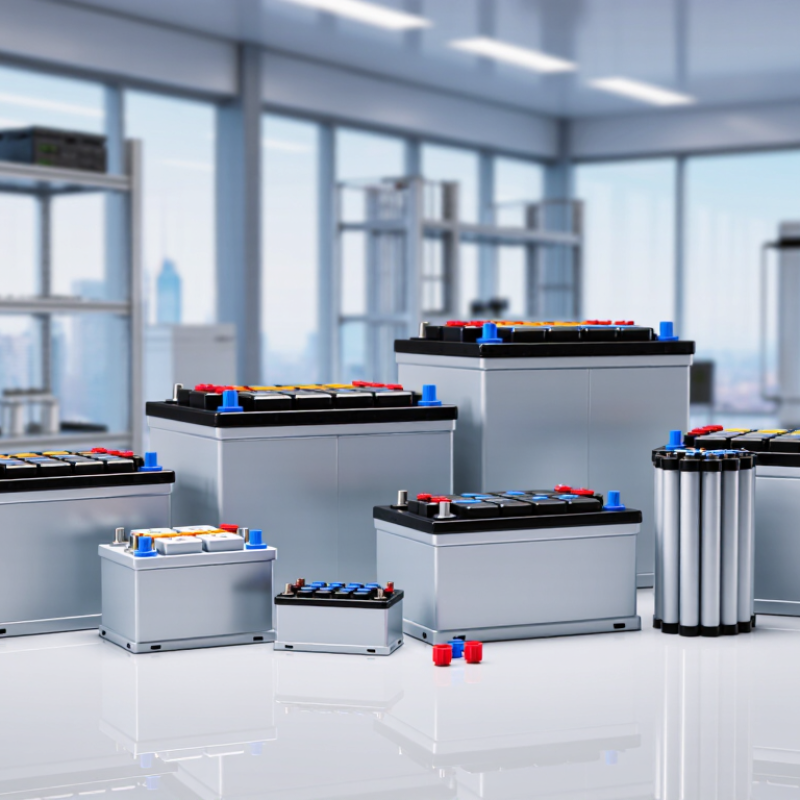
China Top LiFePO4 Battery Manufacturers for Global Buyers

LiFePO₄ Cell Fundamentals: 3.2 V Nominal Voltage and 170 mAh/g Capacity

LiFePO₄ cells are commonly rated at 3.2 V nominal voltage. Their voltage stays relatively flat through much of discharge, then drops near empty. Padhi, Nanjundaswamy, and Goodenough’s 1997 Journal of the Electrochemical Society paper identifies about 170 mAh/g as the material’s theoretical specific capacity. That figure describes active cathode material, not the whole cell. Casing, electrolyte, current collectors, and other components add mass. The International Energy Agency’s Global EV Outlook 2024 documents LFP’s expanding role in electric vehicles, making these fundamentals relevant to cell selection.

A simple estimate helps: a 100 Ah cell at 3.2 V stores about 320 Wh nominally. Real usable energy varies with temperature, discharge rate, aging, and operating limits. One detail is easy to overlook. A published 170 mAh/g value does not guarantee a commercial cell will perform identically under every test condition. Buyers should compare test methods, cycle-life conditions, and capacity-retention data, not just headline specifications.

Tips: Check whether capacity refers to cathode material or the complete cell. Ask for test conditions.

China’s Manufacturer Landscape: Compare Cell Formats, Pack Integration, and GWh Scale

China’s LiFePO4 suppliers differ in more than quoted price. Some specialize in prismatic cells; others focus on pouch or cylindrical formats and finished packs. Each format changes enclosure design, cooling needs, and service access. Ask for cell-level test data, pack drawings, and traceability records—not only a headline capacity figure.

Scale matters, but nameplate capacity can mislead. The IEA’s Global Supply Chains of EV Batteries report found that China produced about three-quarters of global lithium-ion batteries in 2021. The IEA’s Global EV Outlook 2024 also reported that EV battery demand exceeded 750 GWh in 2023. These figures show the depth of the manufacturing base, not the usable output of any single supplier. Check actual annual shipments, production yields, and whether cell and pack facilities share quality controls. Big numbers need context.

For global buyers, compare cell consistency and pack integration alongside GWh scale. Request capacity data by product and year, plus evidence from repeat production lots. A factory tour can reveal practical details: line changeovers, aging rooms, and how rejected cells are isolated. Still, paperwork has limits. A polished sample pack may not represent routine production. Verify claims with independent testing and a pilot order before committing to large volumes.

Production and Quality Checks: Assess 2,000+ Cycle-Life Claims at 80% DoD

For global buyers, a LiFePO4 battery’s cycle-life figure needs more than a bold number on a datasheet. A claim of 2,000+ cycles at 80% depth of discharge (DoD) should be tied to documented test conditions. Ask how cells were charged and discharged, what temperature was maintained, and when capacity was measured. Small differences matter. A warm test room can produce different results from a cooler installation.

Reliable production checks connect test records to actual batches. Review capacity-test data, cell matching tolerances, and final inspection procedures. Request the pass criteria, not only a certificate. A cycle test may use a steady laboratory load; real systems face changing temperatures and usage. The number is useful, but it is not a service-life guarantee. I would also compare results across multiple samples, since one strong sample can hide variation.

Tips: Ask for the test protocol and capacity-retention threshold. Confirm whether 80% DoD means each cycle uses 80% of rated capacity. Check that the report identifies sample size, temperature, and charge rate. Keep the answers in writing. If a supplier cannot explain a test detail clearly, pause and investigate. That is not proof of poor quality, but it is a gap worth noting.

China Top LiFePO4 Battery Manufacturers for Global Buyers — Production and Quality Checks: Assess 2,000+ Cycle-Life Claims at 80% DoD

Quality Check What to Verify Comparable Assessment Reference Evidence to Request
Cycle-life claim Confirm that “2,000+ cycles” specifies an 80% depth of discharge (DoD), rather than a partial-cycle or low-throughput test. Request a complete test report stating the cycle count, DoD, end-of-life criterion, charge/discharge rates, temperature, and rest periods. Do not compare cycle counts unless test conditions are comparable. Cell- or battery-level cycle-test report, test procedure, raw capacity data, and the definition of end of life.
Capacity retention Check the usable capacity measured at the start and at the claimed cycle endpoint. Ask the supplier to report capacity retention as a percentage of initial measured capacity and to identify the stated end-of-life threshold. A cycle count alone does not establish remaining capacity. Beginning-of-test and periodic capacity measurements, discharge curves, and final capacity results.
Test conditions Establish whether the test temperature, current rate, voltage limits, and charge profile reflect the intended application. For a like-for-like comparison, agree on one written protocol before testing. A controlled room-temperature test, such as 25°C, can be used as a comparison condition, but it is not a substitute for the buyer’s operating-temperature requirements. Chamber records, test-rig settings, voltage limits, current logs, and the approved test protocol.
Cycle-count definition Find out how partial discharge cycles are counted and whether reported cycles represent full or partial capacity use. Request both the number of test cycles and cumulative discharged energy or capacity. Equivalent full cycles can be calculated from cumulative discharged capacity divided by rated capacity, provided the calculation basis is disclosed. Time-stamped charge/discharge logs and the cycle-counting formula.
Cell consistency Check capacity spread, voltage behavior, and resistance variation among cells used in a battery or production lot. Review the supplier’s stated acceptance limits and the actual sampled results. Compare cells measured under the same conditions; do not assume that a single-cell result represents every production lot. Cell grading records, lot-level inspection results, and the sampling plan.
Production traceability Confirm that cells and finished batteries can be traced to production dates, lots, and inspection records. Check that serial or lot identifiers link the delivered units to manufacturing and final-test records. Example traceability record, production-lot record, and final inspection report with sensitive information appropriately redacted.
Battery management system (BMS) Verify cell-voltage and temperature monitoring, balancing, and protective responses appropriate to the battery design. Review the documented operating limits and confirm that protections are tested on the actual battery configuration. Protection settings should be consistent with the cell supplier’s specifications. BMS specification, protection-test results, wiring diagram, and fault-response records.
Safety and compliance Check that documents apply to the exact cell or battery model, configuration, and intended market. Verify the applicable standards and transport requirements with the buyer’s compliance team. A certificate or test summary for a different model should not be treated as evidence for the offered product. Model-matched test reports, declarations, and applicable transport documentation, such as a UN 38.3 test summary where required.
Incoming and final inspection Review the checks performed on incoming materials, assembled batteries, and finished units. Request the inspection criteria and recorded results, including electrical checks and visual inspection. Confirm how nonconforming units are identified and controlled. Inspection plan, sample records, nonconformance procedure, and shipment-release report.
Warranty and operating limits Compare the cycle-life test claim with warranty coverage and the stated operating conditions. Check whether the warranty specifies capacity retention, time period, throughput, temperature, DoD, and exclusions. Test results and warranty terms are different forms of evidence. Written warranty, product datasheet, recommended operating limits, and claim conditions.

Note: This is a supplier-evaluation checklist, not a ranking or a statement of performance by any specific manufacturer. The assessment references are comparison guidance; actual acceptance criteria should be agreed in writing for the exact product and application.

Global Buyer Due Diligence: Verify UN 38.3 and IEC 62619 Compliance

For global buyers, a LiFePO4 battery’s chemistry is only part of the review. Ask for the UN 38.3 test summary and the full report where available. Check that the tested battery model, cell configuration, and manufacturer match the product being quoted. A report for a similar pack is not proof that your exact configuration was tested. Small changes matter.

UN 38.3 addresses transport testing, while IEC 62619 covers safety requirements for industrial lithium cells and batteries. Confirm the IEC document’s scope, edition, issuing laboratory, and model list. Ask whether the evidence applies to the complete battery system or only its cells. Then compare labels, datasheets, and test documents line by line. Look for mismatched model codes, ratings, or dates. Details can be revealing.

A neat certificate folder can still leave gaps. Request traceable reports, not just a logo or a one-page declaration, and verify documents with the issuing body when practical. During a factory review, ask how production units are checked against tested designs. For example, compare the pack label and protection-system settings with the approved specifications. This step is easy to overlook. It should not be.

If a supplier cannot explain a discrepancy clearly, pause and seek independent technical review before placing an order. A document may be genuine yet irrelevant to the exact battery you plan to buy.

From Factory to Market: Match Battery Voltage, Capacity, and Application Needs

Choosing a LiFePO4 battery starts with the load, not the factory’s largest capacity figure. A 12.8-volt pack may suit a small mobile system, while a 51.2-volt pack can reduce current in larger installations. Check that the inverter or equipment supports the battery’s voltage range, not just its nominal voltage. Then estimate daily energy use in kilowatt-hours and allow for conversion losses and reserve capacity.

Application changes the specification. A backup system needs enough usable energy for its expected outage, while a motor or inverter may demand high short bursts of current. Confirm continuous and peak discharge ratings, BMS limits, operating temperature, and charging requirements. A spreadsheet alone is not enough. I would still question a perfect-looking runtime estimate: cold conditions and inverter losses can shorten it.

Market demand makes careful matching more important. The IEA’s Global EV Outlook 2024 estimates that electric-vehicle battery demand reached about 750 GWh in 2023, roughly 40% above 2022. Its Batteries and Secure Energy Transitions report says battery storage additions reached 42 GW in 2023, a 130% increase. These figures describe different applications, but both point to varied system needs. Ask suppliers for test conditions behind cycle-life and capacity claims; published numbers can be hard to compare. A sample datasheet is useful, but real load profiles are better.

Copyright 2025 Fluidra S.A. | Created by BCM Marketing Agencia Privacy Policy Legal note | Cookie policy |

Technical cookies are strictly necessary for our website to work and you can navigate through it. These types of cookies are those that, for example, allow us to identify you, give you access to certain restricted parts of the page if necessary, or remember different options or services already selected by you, such as your privacy preferences. Therefore, they are activated by default, your authorization not being necessary in this regard. Through the configuration of your browser, you can block or alert the presence of this type of cookies, although such blocking will affect the proper functioning of the different functionalities of our website.


The analysis cookies allow us to study the navigation of the users of our website in general (for example, which sections of the page are the most visited, which services are used most and if they work correctly, etc.). From the statistical information on navigation on our website, we can improve both the operation of the page itself and the different services it offers. Therefore, these cookies do not have an advertising purpose, but only serve to make our website work better, adapting to our users in general. By activating them you will contribute to this continuous improvement. You can enable or disable these cookies by checking the corresponding box, being disabled by default.


Functionality cookies allow us to remember your preferences, to personalize certain characteristics and general options of our website, every time you access it (for example, the language in which the information is presented to you, the sections marked as favorites, your browser type, etc.) Therefore, this type of cookies does not have an advertising purpose, but by activating them you will improve the functionality of the website (for example, adapting to your type of browser) and the customization of it based on your preferences (for example, by presenting the information in the language that you have chosen in previous occasions), which will contribute to the ease, usability and comfort of our page during your navigation. You can enable or disable these cookies by checking the corresponding box, being disabled by default.


Advertising cookies allow us to manage the advertising spaces included in our website based on criteria such as the content shown or the frequency in which the ads are displayed. For example, if you have been shown the same ad several times on our website, and you have not shown a personal interest by clicking on it, it will not appear again. In summary, by activating this type of cookies, the advertising shown on our website will be more useful and diverse, and less repetitive. You can enable or disable these cookies by checking the corresponding box, being disabled by default.


Behavioral advertising cookies allow us to obtain information based on the observation of your browsing habits and behaviors on the web, in order to show you advertising content that best suits your personal tastes and interests. To understand it in a very simple way, we will give you a fictitious example: if your last searches on the web were related to suspense literature, we would show you advertising about suspense books. Therefore, activating this type of cookies, the advertising that we show you on our website will not be generic, but will be oriented to your searches, tastes and interests, therefore adjusting exclusively to you. You can enable or disable these cookies by checking the corresponding box, being disabled by default.
To understand it in a very simple way, we will give you a fictitious example: if your last searches on the web were related to suspense literature, we would show you advertising about suspense books. Therefore, activating this type of cookies, the advertising that we show you on our website will not be generic, but will be oriented to your searches, tastes and interests, therefore adjusting exclusively to you. You can enable or disable these cookies by checking the corresponding box, being disabled by default.

SAVE

We use our own and third-party cookies to ensure the proper functioning of the website and to analyse our services, improve your experience on our website and show you advertisements related to your interests according to profiling based on your browsing habits (e.g. websites visited). You can accept all cookies by clicking "ACCEPT" or set or reject them by clicking here. If you would like to know more about the use of cookies, please see our COOKIE POLICY.


ACCEPT ALL
Reject no essentials


