
China Top Hot Runner Mold Machining Companies for Global Buyers
FLUID HANDLING EXPERTS

Blog, all our news

China Top Hot Runner Mold Machining Companies for Global Buyers

Global demand for molded plastic parts makes hot runner tooling a practical sourcing concern, not a niche detail. The OECD’s Global Plastics Outlook reports that worldwide plastics production reached 460 million tonnes in 2019. That figure describes the broader plastics economy, not the hot runner market. It still shows the scale behind demand for consistent, efficient molding.

For global buyers, machining quality affects more than appearance. A poorly finished gate, an uneven manifold surface, or a misplaced cooling channel can complicate mold assembly and production. This guide compares China-based suppliers through capabilities buyers can assess: machining equipment, material control, dimensional inspection, engineering support, and delivery communication. The phrase “Machining Hot Mold Closed” is not a standard technical category, so it is treated here as a search term rather than an accepted industry definition.

John Bozzelli is a recognized injection molding educator, but no verified quotation from him on “Machining Hot Mold Closed” is available in the source material for this introduction. A fabricated quote would weaken buyer trust. Instead, the comparison focuses on verifiable evidence and questions worth asking before an order: Can the supplier share inspection records? How are critical fits checked? What happens when a trial reveals an issue? Small details matter. A polished brochure is not proof. Real machining evidence is.
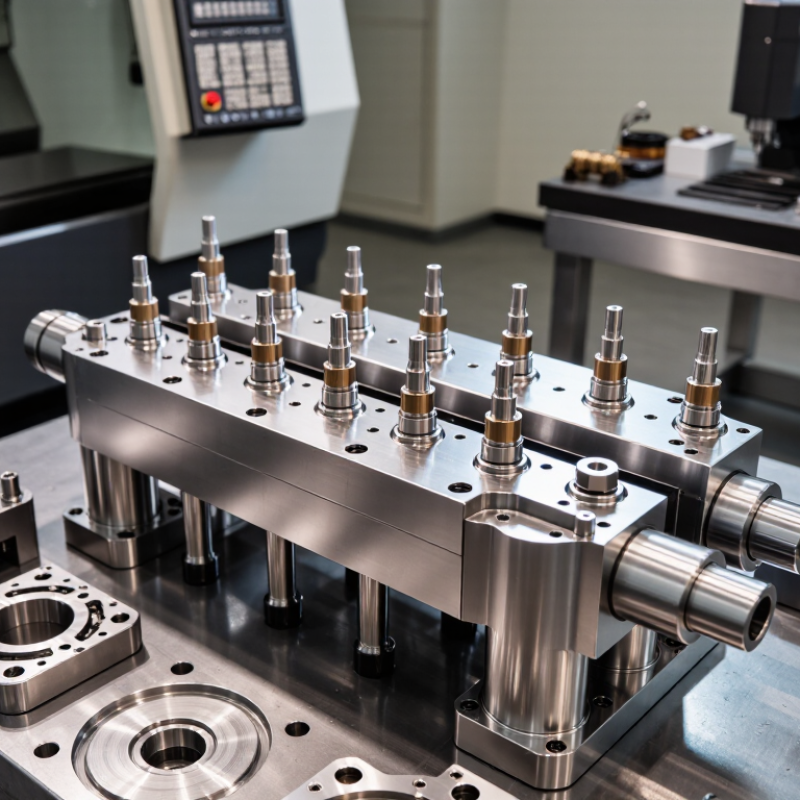
China Top Hot Runner Mold Machining Companies for Global Buyers

What Hot Runner Mold Machining Involves

Hot runner mold machining creates the channels and components that carry molten plastic directly to the mold cavities. Unlike a cold runner, this system keeps material hot between injection cycles. The work involves precise machining of the manifold, nozzles, gates, and mounting surfaces. Small errors matter.

Engineers convert part geometry and resin requirements into tool paths and component drawings. CNC milling shapes the manifold and mold plates, while electrical discharge machining can produce narrow features or sharp internal corners. Nozzle seats and gate openings need careful alignment. A slight mismatch may cause uneven filling or visible marks on molded parts. Finished surfaces are measured, deburred, and checked against drawings.

Machining is only part of the job. Components must also fit together under operating heat, when metal expands. Technicians may inspect critical dimensions with gauges or coordinate-measuring equipment, then assemble the system for temperature and leak checks. A clean, cool assembly can still behave differently after heating. That detail is easy to underestimate. Cutting a tighter tolerance everywhere is not always the answer; it can add cost without solving the real flow or maintenance issue. The design, material, and intended production conditions need to be considered together.

China Top Hot Runner Mold Machining Companies for Global Buyers - What Hot Runner Mold Machining Involves

Machining Stage Typical Components Common Operations Key Technical Considerations Typical Inspection or Verification
Design review and process planning Mold base, cavity and core inserts, manifold, nozzles, gates, heaters, and temperature sensors Review 3D models and drawings; check component interfaces, material requirements, and machining sequence Confirm alignment between the hot runner layout and the mold’s parting line, cavities, and cooling layout before cutting material Drawing and model review; documented interface and tolerance checks
Mold base and plate machining Clamping plates, support plates, cavity plates, and core plates CNC milling, drilling, boring, tapping, and precision grinding where specified Maintain plate flatness, pocket locations, guide features, and alignment between mating plates Coordinate measurement, dimensional inspection, and flatness checks against the drawing
Cavity and core machining Cavity inserts, core inserts, and replaceable mold details CNC milling, drilling, EDM for suitable features, and surface finishing Part geometry, shut-off surfaces, draft, surface finish, and insert fit influence part quality and mold assembly Dimensional inspection; surface-finish checks where specified; trial-fit verification
Manifold machining Hot runner manifold blocks and connecting flow passages Machining of mounting faces, locating features, fastener holes, and designed melt-channel features Passage layout and sealing faces must match the hot runner design; avoid unintended restrictions or misalignment in the melt path Dimensional and positional checks; passage and sealing-surface review against the approved design
Nozzle and gate-seat machining Nozzle pockets, nozzle seats, gate inserts, and tip locations Precision milling, boring, drilling, and finishing of locating and seating features Nozzle-to-gate alignment and the specified fit are important for consistent filling and to reduce leakage risk Location and fit checks; verification of nozzle and gate alignment during assembly
Heater and sensor features Heater bores, thermocouple bores, and cable-routing features Drilling, boring, and machining of approved access and routing features Feature locations and clearances must follow the hot runner design so heaters and sensors can be installed and serviced correctly Bore size and position checks; installation and routing checks during assembly
Cooling and auxiliary features Cooling channels, water connections, and service passages in mold plates and inserts Drilling, deep-hole drilling where required, tapping, and port machining Keep cooling features clear of cavities, hot runner components, fasteners, and other passages; confirm circuit connections Passage-location checks and water-circuit leak or flow checks as specified
Heat treatment and finishing Specified mold plates, inserts, and other heat-treated components Heat treatment when required by the material and design, followed by finish machining or grinding as needed Heat treatment can affect dimensions; machining allowances and final finishing should be planned accordingly Material and heat-treatment records where specified; final dimensional checks after finishing
Assembly and hot runner verification Completed mold and hot runner components Clean, assemble, install heaters and sensors, connect circuits, and verify component fit Check sealing interfaces, electrical connections, sensor positions, and clearances before mold trials Assembly inspection; electrical continuity and insulation checks as applicable; documented trial and leak checks
Trial, correction, and final documentation Assembled mold and molded test parts Conduct molding trials, assess part and process results, and make approved corrections Filling balance, gate performance, temperature control, and part appearance depend on the complete mold and process—not machining alone Trial records, agreed part inspection results, final inspection report, and as-built documentation

How China’s Hot Runner Mold Industry Is Structured

China’s hot runner mold industry is not a single production line. It is a network of mold makers, precision machining shops, component suppliers, and system integrators. Each group handles a different part of the work. Details matter.

Mold makers typically coordinate cavity design, cooling layout, and final assembly. Specialized workshops may machine plates, cores, or manifold components using CNC equipment and electrical discharge machining. Suppliers provide heaters, thermocouples, and temperature controllers, while integrators connect these parts and test the complete system. The boundaries are not always clear. Some manufacturers manage most processes in-house; others rely on long-term subcontractors.

For global buyers, this structure makes process verification important. Ask who machines critical surfaces, who checks manifold balance, and where assembly trials occur. A clear inspection record should identify dimensions, materials, and test conditions. During a factory visit, look for calibrated measuring tools and clean heater wiring, not only polished samples. A supplier may show impressive parts, yet provide limited evidence of repeatability. That deserves a second look. China’s broad supplier base can support varied project needs, but coordination quality still depends on the people managing each handoff.

Core Capabilities of Chinese Hot Runner Mold Machining Companies

Chinese hot runner mold machining companies often combine mold design, precision milling, EDM, grinding, and assembly. Their core capability is more than shaping a cavity. It means keeping the manifold, gates, heater bores, and cooling channels aligned. Small errors can affect filling and temperature stability. CNC equipment helps, but machine lists alone prove little; inspection methods and operator experience matter too.

Engineering teams need to review resin type, part geometry, gate position, and expected cycle time before cutting steel. They may use flow analysis to assess runner balance and nozzle placement. Strong process control includes traceable steel grades, heat-treatment records, and dimensional reports for critical interfaces. Ask to see real inspection data. Some shops still depend heavily on individual know-how. That can work, until a shift changes or tolerances stack up.

For global buyers, communication is part of technical capability. Confirm how design changes, trial results, and corrective actions are recorded. A mold trial should check filling consistency, leakage, temperature control, and cycle time—not just whether parts come out. Request clear maintenance guidance and access to replaceable components. One detail is often overlooked: a tool that is difficult to service can create avoidable production delays. Testing and documentation take time, but skipping them is rarely a sound shortcut.

Profiles of Leading Chinese Suppliers for Global Buyers

China’s hot-runner suppliers are best compared by capability, not headline capacity. Plastics Europe’s Plastics – the Fast Facts 2024 reports global plastics production of 413.8 million tonnes in 2023. This scale supports demand for stable cycle times and repeatable thermal control, but it does not prove any supplier’s quality.

Three supplier profiles

Precision-machining specialists focus on manifold drilling, nozzle alignment, and gate fit.
Integrated mold shops combine hot-runner design with cavity machining and mold trials, reducing handoff risk.
Export-oriented suppliers may provide English documentation, spare-part lists, and remote commissioning.

Request measurement reports, steel traceability, wiring diagrams, and trial-shot data.

On a factory visit, inspect heater seating, connector labels, and the finish around each nozzle. Small details matter. Ask for temperature-uniformity records under a real cycle, not only a bench test. Compare quoted tolerances with measured results, and ask how rework is documented.

One limitation: plastics production data describes market scale, not hot-runner performance. Verify that with sample parts and a witnessed mold trial.

How to Evaluate Suppliers, Quality, and Export Readiness

Choosing a hot runner mold machining supplier requires more than comparing quotations. Ask which machining operations are completed in-house and which are subcontracted. Request recent inspection records for manifold channels, nozzle seats, and critical mounting surfaces. Ask for evidence. A capable supplier should explain its measurement methods, equipment calibration, and tolerance control in plain language. If answers stay vague, treat that as a practical risk.

Quality is easier to judge through real process records than polished photographs. Request material certificates, dimensional reports, and documented checks for assembly fit. For complex work, review how the supplier handles design changes and nonconforming parts. Details matter. A sample report can reveal whether measurements are tied to clear drawings and revision numbers. Still, paperwork alone does not prove consistent production; a remote review or independent inspection may expose gaps. That takes time, and sometimes the buyer’s own specifications are unclear.

Export readiness includes more than arranging freight. Confirm the supplier can prepare accurate packing lists, commercial documents, and protective packaging for precision components. Ask how parts are labeled and whether spare heaters, thermocouples, or seals can be identified for future orders. Discuss crate dimensions, delivery terms, and progress updates before production begins. Small misunderstandings happen. A written schedule, named contact, and agreed inspection points make delays easier to manage across time zones.

Copyright 2025 Fluidra S.A. | Created by BCM Marketing Agencia Privacy Policy Legal note | Cookie policy |

Technical cookies are strictly necessary for our website to work and you can navigate through it. These types of cookies are those that, for example, allow us to identify you, give you access to certain restricted parts of the page if necessary, or remember different options or services already selected by you, such as your privacy preferences. Therefore, they are activated by default, your authorization not being necessary in this regard. Through the configuration of your browser, you can block or alert the presence of this type of cookies, although such blocking will affect the proper functioning of the different functionalities of our website.


The analysis cookies allow us to study the navigation of the users of our website in general (for example, which sections of the page are the most visited, which services are used most and if they work correctly, etc.). From the statistical information on navigation on our website, we can improve both the operation of the page itself and the different services it offers. Therefore, these cookies do not have an advertising purpose, but only serve to make our website work better, adapting to our users in general. By activating them you will contribute to this continuous improvement. You can enable or disable these cookies by checking the corresponding box, being disabled by default.


Functionality cookies allow us to remember your preferences, to personalize certain characteristics and general options of our website, every time you access it (for example, the language in which the information is presented to you, the sections marked as favorites, your browser type, etc.) Therefore, this type of cookies does not have an advertising purpose, but by activating them you will improve the functionality of the website (for example, adapting to your type of browser) and the customization of it based on your preferences (for example, by presenting the information in the language that you have chosen in previous occasions), which will contribute to the ease, usability and comfort of our page during your navigation. You can enable or disable these cookies by checking the corresponding box, being disabled by default.


Advertising cookies allow us to manage the advertising spaces included in our website based on criteria such as the content shown or the frequency in which the ads are displayed. For example, if you have been shown the same ad several times on our website, and you have not shown a personal interest by clicking on it, it will not appear again. In summary, by activating this type of cookies, the advertising shown on our website will be more useful and diverse, and less repetitive. You can enable or disable these cookies by checking the corresponding box, being disabled by default.


Behavioral advertising cookies allow us to obtain information based on the observation of your browsing habits and behaviors on the web, in order to show you advertising content that best suits your personal tastes and interests. To understand it in a very simple way, we will give you a fictitious example: if your last searches on the web were related to suspense literature, we would show you advertising about suspense books. Therefore, activating this type of cookies, the advertising that we show you on our website will not be generic, but will be oriented to your searches, tastes and interests, therefore adjusting exclusively to you. You can enable or disable these cookies by checking the corresponding box, being disabled by default.
To understand it in a very simple way, we will give you a fictitious example: if your last searches on the web were related to suspense literature, we would show you advertising about suspense books. Therefore, activating this type of cookies, the advertising that we show you on our website will not be generic, but will be oriented to your searches, tastes and interests, therefore adjusting exclusively to you. You can enable or disable these cookies by checking the corresponding box, being disabled by default.

SAVE

We use our own and third-party cookies to ensure the proper functioning of the website and to analyse our services, improve your experience on our website and show you advertisements related to your interests according to profiling based on your browsing habits (e.g. websites visited). You can accept all cookies by clicking "ACCEPT" or set or reject them by clicking here. If you would like to know more about the use of cookies, please see our COOKIE POLICY.


ACCEPT ALL
Reject no essentials



