
China Top Die Casting Mold Manufacturers for Global Buyers
FLUID HANDLING EXPERTS

Blog, all our news

China Top Die Casting Mold Manufacturers for Global Buyers

Choosing a China-based Die Casting Mold manufacturer involves more than comparing quotations. A mold must match the part design, alloy, machine capacity, and expected production volume. The right supplier should explain those connections clearly, not simply promise a low price. Even a small detail, such as cooling-channel placement, can affect cycle time and part consistency. Details matter. Product photos alone cannot prove performance.

This guide introduces manufacturers serving global buyers and outlines practical ways to assess their capabilities. Look for evidence of design support, machining equipment, mold trials, inspection methods, and documented quality controls. Ask for relevant project examples, sample parts, and clear information about revisions, maintenance, and lead times. When possible, review inspection records or arrange a facility visit. These checks make comparisons more grounded, though they cannot remove every production risk. A polished presentation is useful, but it is not the same as verified process control.

Supplier selection is rarely perfectly straightforward. A capable factory may have limited experience with a particular part, while an impressive portfolio may leave important questions unanswered. Communication also deserves close attention: technical drawings, tolerance expectations, and change requests must be understood on both sides. The following overview offers a starting point, not a guarantee. Careful evaluation remains essential.
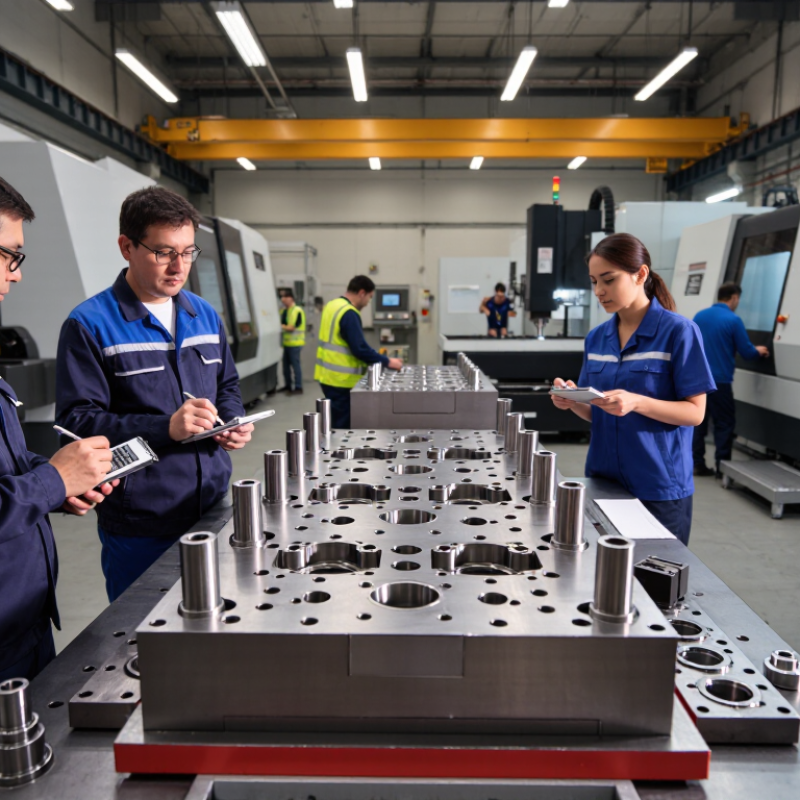
China Top Die Casting Mold Manufacturers for Global Buyers

Understanding Die Casting Molds and Their Industrial Applications

A die casting mold shapes molten metal under pressure, usually into repeatable parts with close dimensions. It is built from two main halves that meet around a cavity. Runners guide the metal inward, while vents let trapped air escape. Cooling channels control heat, and ejector pins release the solid part. Small details matter.

Mold design affects more than shape. It influences cycle time, surface finish, dimensional consistency, and tool life. For an aluminum equipment housing, for example, wall thickness and cooling layout can help limit warping. In a vehicle component, locating features may need to align precisely with neighboring parts. Heat changes everything. Even a carefully designed mold may need adjustment after trial runs reveal uneven filling or sticking.

These molds serve automotive, appliance, lighting, and industrial equipment applications. Their value is especially clear when production requires many similar parts and stable dimensions. Engineers typically review alloy choice, part geometry, expected volume, and maintenance access before tooling begins. A mold is not simply a block of steel; it is a working system exposed to pressure, heat, and repeated cycles. Some compromises remain. A design optimized for fast production may be harder to maintain, so practical trade-offs deserve attention early.

China’s Die Casting Mold Manufacturing Landscape

China Top Die Casting Mold Manufacturers for Global Buyers

China’s Die Casting Mold Manufacturing Landscape

China’s die casting mold sector benefits from dense networks of toolmakers, material suppliers, and machining shops. This concentration can shorten sourcing cycles, especially when buyers need mold design, CNC machining, heat treatment, and trial casting coordinated locally. A polished sample helps, but it cannot replace process records.

Grand View Research estimated the global die casting market at USD 80.4 billion in 2023, with a projected 6.4% compound annual growth rate from 2024 to 2030. This figure covers cast components, not mold sales. It signals demand for production capacity, while offering no direct measure of Chinese moldmakers’ quality or market share.

In practice, buyers should review steel certificates, dimensional inspection results, and documented mold trials. Ask how the supplier manages cooling channels, venting, and repairs after repeated cycles. A mold can look precise on a drawing and still produce porosity or flash. That gap matters. Supplier comparisons can also be difficult because inspection methods and reporting detail vary. Requesting a sample inspection plan before ordering makes those differences easier to spot.

Key Capabilities of Leading Chinese Mold Manufacturers

Leading Chinese die-casting mold manufacturers combine design engineering with controlled production. The China Association of Automobile Manufacturers reported 30.16 million vehicles produced in China in 2023. The IEA’s Global EV Outlook 2024 says China accounted for about 60% of global electric-car sales that year. These figures show the scale of the manufacturing ecosystem, not the quality of any individual mold supplier.

Strong suppliers review part geometry, alloy choice, cooling channels, and ejection before cutting steel. Flow and solidification simulations can flag porosity risks early. CNC machining, EDM, and dimensional inspection then help hold critical tolerances. Ask for trial-shot records, measurement reports, and documented mold-maintenance intervals. A polished sample is useful, but repeatable results matter more. Not every supplier excels at both complex tooling and fast revisions; check the actual project team and equipment.

Tips: Share the expected production volume, alloy, and target cycle time before requesting a quote. Ask how the supplier handles design changes and spare inserts. Compare inspection evidence, not promises alone.

How to Evaluate Die Casting Mold Suppliers in China

When evaluating die casting mold suppliers in China, look beyond a polished catalog. Ask for examples of molds made for similar alloys, part sizes, and production volumes. Ask for evidence. A detailed design review should address draft angles, wall thickness, cooling channels, ejection, and likely hot spots. The supplier should explain how these choices affect cycle time and casting quality, not simply promise “high precision.”

Check whether the team can share steel specifications, machining inspection records, and trial reports. During a mold trial, useful observations include flash near the parting line, sticking around deep ribs, and uneven cooling across the cavity. Request clear acceptance criteria before production, including dimensional checks and agreed sampling methods.

That matters. Also review maintenance instructions, spare-part availability, and response times for design changes. A low initial quote may exclude repairs or later modifications, so compare the full tooling scope.

Not always. Video calls and factory audits can help verify equipment and workflow, but they cannot replace technical questions. Ask who approves design revisions and how trial problems are documented.

One missed detail can cost weeks. And a supplier’s confident answer is not enough; request drawings, measurements, or test records that support it.

Global Sourcing, Quality Standards, and Supplier Communication

China Top Die Casting Mold Manufacturers for Global Buyers

Global Sourcing, Quality Standards, and Supplier Communication

Global sourcing works best when buyers compare process control, not just quotation prices. Request mold-flow analysis, steel-grade certificates, heat-treatment records, and trial-shot results. Ask how the supplier checks cavity balance and cooling channels. Details matter. The World Foundry Organization’s 2022 census reported about 110.7 million tonnes of global casting production. This covers all casting methods, not die casting alone, but it illustrates the scale of the wider supply chain.

Quality claims need evidence. Request a control plan, dimensional inspection records, and traceability for key mold components. ISO’s 2022 Survey counted 1,265,216 valid ISO 9001 certificates worldwide. Certification indicates a quality management system; it does not guarantee mold performance. Agree on drawing revisions, tolerances, sample approval, and defect handling before production. Use a shared issue log and regular photo updates. Clarify who can approve design changes. Even good teams miss details.

Tips: Send a concise checklist with the first inquiry. Ask suppliers to mark risks on the 3D model and confirm decisions in writing. Calls are useful, but undocumented changes can cause delays. Some details may still be overlooked, so review the first trial carefully.

Copyright 2025 Fluidra S.A. | Created by BCM Marketing Agencia Privacy Policy Legal note | Cookie policy |

Technical cookies are strictly necessary for our website to work and you can navigate through it. These types of cookies are those that, for example, allow us to identify you, give you access to certain restricted parts of the page if necessary, or remember different options or services already selected by you, such as your privacy preferences. Therefore, they are activated by default, your authorization not being necessary in this regard. Through the configuration of your browser, you can block or alert the presence of this type of cookies, although such blocking will affect the proper functioning of the different functionalities of our website.


The analysis cookies allow us to study the navigation of the users of our website in general (for example, which sections of the page are the most visited, which services are used most and if they work correctly, etc.). From the statistical information on navigation on our website, we can improve both the operation of the page itself and the different services it offers. Therefore, these cookies do not have an advertising purpose, but only serve to make our website work better, adapting to our users in general. By activating them you will contribute to this continuous improvement. You can enable or disable these cookies by checking the corresponding box, being disabled by default.


Functionality cookies allow us to remember your preferences, to personalize certain characteristics and general options of our website, every time you access it (for example, the language in which the information is presented to you, the sections marked as favorites, your browser type, etc.) Therefore, this type of cookies does not have an advertising purpose, but by activating them you will improve the functionality of the website (for example, adapting to your type of browser) and the customization of it based on your preferences (for example, by presenting the information in the language that you have chosen in previous occasions), which will contribute to the ease, usability and comfort of our page during your navigation. You can enable or disable these cookies by checking the corresponding box, being disabled by default.


Advertising cookies allow us to manage the advertising spaces included in our website based on criteria such as the content shown or the frequency in which the ads are displayed. For example, if you have been shown the same ad several times on our website, and you have not shown a personal interest by clicking on it, it will not appear again. In summary, by activating this type of cookies, the advertising shown on our website will be more useful and diverse, and less repetitive. You can enable or disable these cookies by checking the corresponding box, being disabled by default.


Behavioral advertising cookies allow us to obtain information based on the observation of your browsing habits and behaviors on the web, in order to show you advertising content that best suits your personal tastes and interests. To understand it in a very simple way, we will give you a fictitious example: if your last searches on the web were related to suspense literature, we would show you advertising about suspense books. Therefore, activating this type of cookies, the advertising that we show you on our website will not be generic, but will be oriented to your searches, tastes and interests, therefore adjusting exclusively to you. You can enable or disable these cookies by checking the corresponding box, being disabled by default.
To understand it in a very simple way, we will give you a fictitious example: if your last searches on the web were related to suspense literature, we would show you advertising about suspense books. Therefore, activating this type of cookies, the advertising that we show you on our website will not be generic, but will be oriented to your searches, tastes and interests, therefore adjusting exclusively to you. You can enable or disable these cookies by checking the corresponding box, being disabled by default.

SAVE

We use our own and third-party cookies to ensure the proper functioning of the website and to analyse our services, improve your experience on our website and show you advertisements related to your interests according to profiling based on your browsing habits (e.g. websites visited). You can accept all cookies by clicking "ACCEPT" or set or reject them by clicking here. If you would like to know more about the use of cookies, please see our COOKIE POLICY.


ACCEPT ALL
Reject no essentials


