
What Are China Top 10 Vertical Lift Conveyor Types?
FLUID HANDLING EXPERTS

Blog, all our news

What Are China Top 10 Vertical Lift Conveyor Types?

Choosing the right vertical conveyor can reshape how a warehouse uses every meter of floor space. This guide examines China’s top 10 vertical lift conveyor types, including continuous bucket lifts, reciprocating platforms, spiral conveyors, and vertical belt systems. Each design serves a different movement pattern. Some handle cartons between mezzanines. Others transport pallets, totes, or packaged goods through controlled production zones. The term “Verctical Lift Conveyor” appears in many searches, although “Vertical Lift Conveyor” is the standard spelling used by engineers and manufacturers.

The comparison focuses on practical performance, not attractive catalog claims. We consider load capacity, lifting height, speed, footprint, noise, guarding, maintenance access, and integration with warehouse control systems. A platform lift may suit irregular pallets, while a continuous system can support steady carton flow. Stainless steel construction may be preferable in clean processing areas. Powder-coated frames often fit general industrial storage. Small details matter, such as transfer height, roller spacing, emergency stops, and access for replacing belts or chains. They save time.

Based on equipment evaluation principles and real operating conditions, this overview explains where each type works best and where it may disappoint. No conveyor is perfect. A high-speed design can increase maintenance demands. A compact model may limit product size. Actual results depend on layout, product weight, duty cycle, and installation quality. Readers should verify technical data with qualified suppliers, request drawings, and test representative loads before purchase. That step is easy to overlook. It should not be.
What Are China Top 10 Vertical Lift Conveyor Types?

What Is a Vertical Lift Conveyor and How Does It Work?

What Are China Top 10 Vertical Lift Conveyor Types?

A vertical lift conveyor moves goods between floor levels without using a long ramp. Its core cycle is simple: load enters, sensors confirm position, the lift platform rises, and an interlocked gate releases the product. In practice, the system needs accurate speed control, guarding, emergency stops, and stable load transfer.

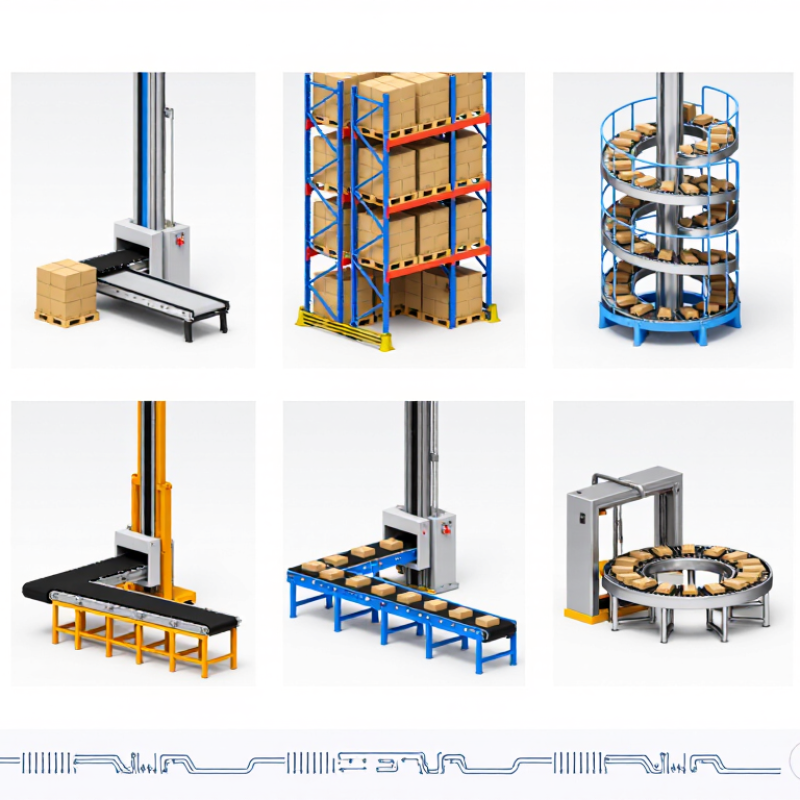
The ten common designs include vertical reciprocating conveyors, continuous vertical conveyors, spiral conveyors, bucket elevators, pallet lifts, carton lifts, platform lifts, Z-type conveyors, cleated-belt lifts, and vertical carousels. Each suits different loads, heights, and throughput requirements.

MHI’s 2024 Annual Industry Report states that 83% of supply-chain leaders expect higher technology investment within two years. That pressure makes vertical lifting attractive where floor space is expensive. Grand View Research’s automated material-handling analysis also forecasts strong market growth through 2030, supporting wider adoption of compact conveying systems. Yet growth does not guarantee a correct design. A small carton lift may need gentle acceleration, while a pallet lift requires rigid guides and stronger braking.

During commissioning, practical details matter. A 30-kilogram load can behave differently from its empty tray. Dust may reduce sensor reliability. Misaligned transfers can damage packaging. I would verify rated capacity, cycle frequency, clearance, noise, and maintenance access before selecting a type.

The cleanest layout is not always the safest one. Some specifications remain optimistic. Real operating data should challenge them.

What Are the Top 10 Types of Vertical Lift Conveyors?

When comparing the top 10 types of vertical lift conveyors, application details matter more than appearance. A continuous vertical conveyor moves products steadily between levels. A reciprocating vertical conveyor uses a platform that travels up and down. A vertical belt conveyor suits cartons, totes, and packaged goods. A vertical chain conveyor handles heavier loads with stable movement. A vertical bucket conveyor carries loose materials in individual buckets.

Other practical choices include the spiral conveyor, vertical screw conveyor, pallet lift, platform lift, and carton lift. Spiral conveyors save floor space and support continuous flow.

Vertical screw conveyors can lift powders or small bulk materials with controlled movement. Pallet lifts are built for heavy unit loads. Platform lifts serve larger products or operators under controlled conditions. Carton lifts work well where boxes need quick level changes.

In real projects, I check load weight, product dimensions, speed, discharge height, and cleaning access before selecting a design. A narrow belt may reduce costs, but it can struggle with unstable cartons. That detail is easy to miss. Noise also matters near workstations.

Safety guarding, sensors, emergency stops, and maintenance access should match the equipment’s operating environment and applicable standards. I have seen layouts revised after testing because the transfer gap was too wide. Small gaps create big problems. Engineers should test real products, not only drawings, because friction, packaging changes, and uneven loading can affect performance.

How Do Vertical Lift Conveyor Designs Differ in Performance?

What Are China Top 10 Vertical Lift Conveyor Types?

Vertical lift conveyor designs differ mainly in speed, load stability, height, and control precision. The common types include reciprocating lifts, continuous vertical conveyors, spiral conveyors, belt lifts, bucket elevators, chain lifts, pallet lifts, screw conveyors, Z-frame conveyors, and cart-based lifts.

A reciprocating lift suits mixed pallets and stops between levels. It usually offers strong load control but lower throughput. Continuous systems move cartons steadily and reduce waiting time. Spiral conveyors save floor space, although their curved path may limit package size.

Belt and cleated lifts handle cartons efficiently, while bucket elevators suit loose materials. Pallet lifts need stronger frames and safety interlocks.

MHI’s 2024 Annual Industry Report expects robotics and automation adoption to reach about 73% within five years. This trend supports demand for sensor-ready vertical equipment. Grand View Research’s 2024 market analysis also projects more than 6% annual growth for the vertical conveyor market through 2030. However, speed claims need careful testing. A lift rated at 30 cycles per minute may slow under uneven loading, frequent stops, or manual feeding. Real performance depends on motor sizing, guide alignment, transfer timing, and maintenance quality. That is where many comparisons become too simple. A compact spiral may win on space, but a reciprocating lift can offer better pallet stability and easier access.

Where Are Different Vertical Lift Conveyor Types Used?

What Are China Top 10 Vertical Lift Conveyor Types?

Vertical lift conveyors serve factories, warehouses, farms, and distribution centers. Their best application depends on load weight, floor height, speed, and hygiene requirements. Continuous bucket conveyors move grain, pellets, and small bulk materials between processing levels. Reciprocating platform lifts transfer pallets, bins, or heavy equipment through fixed floors. Vertical belt conveyors handle cartons and packaged products with steady movement. Chain lifts suit crates, drums, and other demanding loads. These systems need guarding, accurate sensors, and stable loading points. Small details matter.

Spiral conveyors connect different levels while using limited floor space. They work well for cartons, parcels, and packaged food. Cleated conveyors lift bags or loose products without sliding backward. Z-type conveyors move products from a lower level to an upper packing line. Pendulum systems carry containers between several discharge points. Carton lifts support distribution centers with frequent order movement. Pallet lifts serve warehouses where forklifts cannot safely access every level. Manual loading may still be suitable for low-volume operations.

In multilevel production, vertical conveyors reduce walking and forklift traffic. In cold storage, enclosed designs help limit heat exchange during transfers. Food lines often require washable surfaces and careful drainage. A dusty site can expose weak bearings and poorly protected motors. Practical inspections often reveal problems that drawings miss. A design may look efficient on paper yet feel awkward during cleaning. Selecting by capacity alone is a common mistake. The right system balances access, maintenance, noise, safety, and future expansion.

What Are China’s Top 10 Vertical Lift Conveyor Types?

Typical lift heights and common applications of widely used vertical conveyor systems

Continuous bucket elevators are commonly selected for tall vertical transport of bulk materials, while reciprocating, pallet, and carton lifts are widely used for unit loads in warehouses and manufacturing facilities. Spiral, belt, chain, screw, and vibrating conveyors are typically chosen according to product shape, orientation, throughput, and handling requirements. The lift heights shown are representative engineering values and can vary by system design, load, speed, and site conditions.

How Should You Choose the Right Vertical Lift Conveyor Type?

Choosing among China’s top vertical lift conveyor types starts with the load, not the catalog. A vertical reciprocating conveyor suits pallets moving between fixed levels. A continuous vertical conveyor handles steady cartons with limited stopping. Spiral conveyors save floor space while maintaining product flow. Bucket lifts fit loose goods, but they need careful control of dust, noise, and discharge accuracy.

Industry data supports a measured approach. MHI’s 2024 Annual Industry Report identifies automation as a continuing supply-chain investment priority, with 55% of surveyed leaders already using cloud computing. The report also stresses integration and workforce readiness. That matters here. A fast lift can still create bottlenecks if scanners, warehouse software, or loading stations respond slowly. I have seen projects over-specify speed and under-specify transfer accuracy. That mistake becomes expensive during peak shifts.

Tips: Measure the heaviest and most fragile load separately. Record elevation, throughput per hour, start-stop frequency, and available footprint. For example, 300 cartons per hour may favor a continuous unit, while 40 pallet moves may favor a reciprocating lift. Check guarding, emergency access, noise, and maintenance clearance against applicable safety requirements. Leave capacity headroom, but avoid excessive speed. Energy use and product stability can worsen. A useful pilot should run real cartons, real pallets, and realistic peak cycles. The perfect type rarely exists; the reliable fit usually comes from testing assumptions.

Copyright 2025 Fluidra S.A. | Created by BCM Marketing Agencia Privacy Policy Legal note | Cookie policy |

Technical cookies are strictly necessary for our website to work and you can navigate through it. These types of cookies are those that, for example, allow us to identify you, give you access to certain restricted parts of the page if necessary, or remember different options or services already selected by you, such as your privacy preferences. Therefore, they are activated by default, your authorization not being necessary in this regard. Through the configuration of your browser, you can block or alert the presence of this type of cookies, although such blocking will affect the proper functioning of the different functionalities of our website.


The analysis cookies allow us to study the navigation of the users of our website in general (for example, which sections of the page are the most visited, which services are used most and if they work correctly, etc.). From the statistical information on navigation on our website, we can improve both the operation of the page itself and the different services it offers. Therefore, these cookies do not have an advertising purpose, but only serve to make our website work better, adapting to our users in general. By activating them you will contribute to this continuous improvement. You can enable or disable these cookies by checking the corresponding box, being disabled by default.


Functionality cookies allow us to remember your preferences, to personalize certain characteristics and general options of our website, every time you access it (for example, the language in which the information is presented to you, the sections marked as favorites, your browser type, etc.) Therefore, this type of cookies does not have an advertising purpose, but by activating them you will improve the functionality of the website (for example, adapting to your type of browser) and the customization of it based on your preferences (for example, by presenting the information in the language that you have chosen in previous occasions), which will contribute to the ease, usability and comfort of our page during your navigation. You can enable or disable these cookies by checking the corresponding box, being disabled by default.


Advertising cookies allow us to manage the advertising spaces included in our website based on criteria such as the content shown or the frequency in which the ads are displayed. For example, if you have been shown the same ad several times on our website, and you have not shown a personal interest by clicking on it, it will not appear again. In summary, by activating this type of cookies, the advertising shown on our website will be more useful and diverse, and less repetitive. You can enable or disable these cookies by checking the corresponding box, being disabled by default.


Behavioral advertising cookies allow us to obtain information based on the observation of your browsing habits and behaviors on the web, in order to show you advertising content that best suits your personal tastes and interests. To understand it in a very simple way, we will give you a fictitious example: if your last searches on the web were related to suspense literature, we would show you advertising about suspense books. Therefore, activating this type of cookies, the advertising that we show you on our website will not be generic, but will be oriented to your searches, tastes and interests, therefore adjusting exclusively to you. You can enable or disable these cookies by checking the corresponding box, being disabled by default.
To understand it in a very simple way, we will give you a fictitious example: if your last searches on the web were related to suspense literature, we would show you advertising about suspense books. Therefore, activating this type of cookies, the advertising that we show you on our website will not be generic, but will be oriented to your searches, tastes and interests, therefore adjusting exclusively to you. You can enable or disable these cookies by checking the corresponding box, being disabled by default.

SAVE

We use our own and third-party cookies to ensure the proper functioning of the website and to analyse our services, improve your experience on our website and show you advertisements related to your interests according to profiling based on your browsing habits (e.g. websites visited). You can accept all cookies by clicking "ACCEPT" or set or reject them by clicking here. If you would like to know more about the use of cookies, please see our COOKIE POLICY.


ACCEPT ALL
Reject no essentials


