
China Top 10 Power Distribution Cabinet Manufacturers?
FLUID HANDLING EXPERTS

Blog, all our news

China Top 10 Power Distribution Cabinet Manufacturers?

A Power Distribution Cabinet is more than a steel enclosure with switches inside. It helps route electrical power, protect circuits, and keep equipment organized. For buyers comparing Chinese manufacturers, the challenge is finding a supplier whose design fits the project—not just the budget. China’s market includes large electrical groups and specialized cabinet makers, with different strengths in customization, production capacity, and service. Details matter. Busbar sizing, breaker selection, enclosure protection, and wiring access can all affect installation and maintenance.

This guide to China’s top 10 Power Distribution Cabinet manufacturers offers a starting point for evaluating potential suppliers. It considers product range, engineering support, quality controls, customization options, and experience with relevant applications. A ranking alone cannot confirm that a cabinet meets a particular site’s needs. Readers should compare drawings, technical data, and test documentation against project requirements. Ask for clear details on rated current, short-circuit withstand capacity, ingress protection, and component brands. Also check lead times, spare-parts support, and whether installation guidance is available. Factory visits or independent inspections may reveal practical details that brochures miss. No supplier is perfect. Some information may change, and public product claims deserve verification. Treat the list as a research tool, then confirm specifications directly before making a purchasing decision.
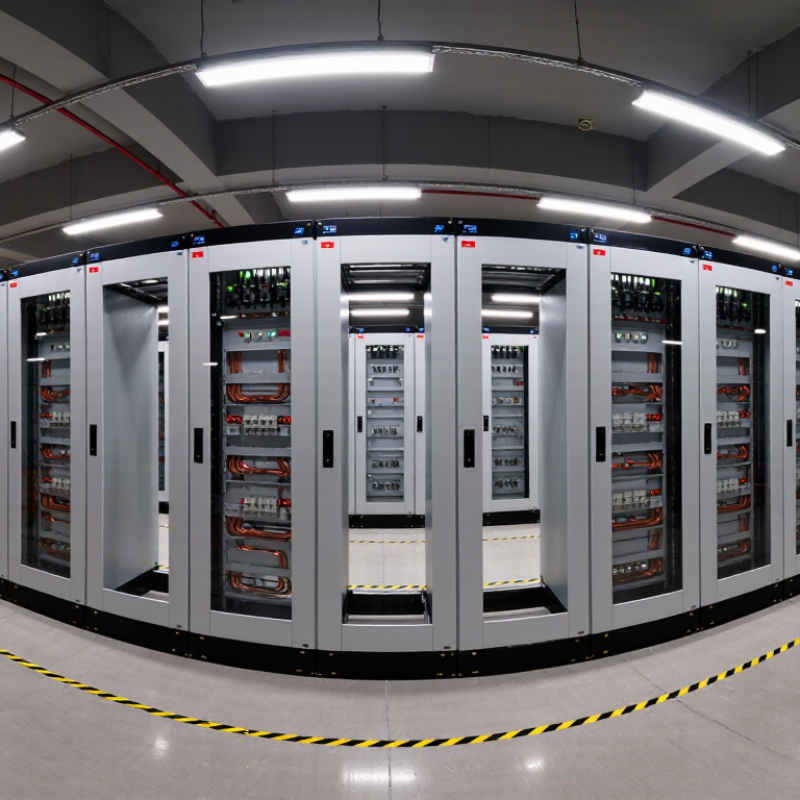
China Top 10 Power Distribution Cabinet Manufacturers?

What Power Distribution Cabinets Do in Electrical Systems

A power distribution cabinet receives electrical power from an incoming feeder and routes it to branch circuits. Inside, busbars carry current, while circuit breakers or fuses protect individual lines from overloads and short circuits. The cabinet also provides a practical point for isolation, inspection, and sometimes metering. During a fault, correctly selected protection can limit damage and help keep unaffected circuits operating. Details matter.

Tips: Check the cabinet’s rated voltage, current, and short-circuit capacity against the actual system. Confirm that cable entries are sealed for the installation environment. Keep circuit labels clear and accurate. A faded label can slow down maintenance. Leave enough working space around the cabinet, and arrange inspections by qualified personnel.

Selection should reflect the load, installation location, and expected future changes. For example, a workshop with motors may need different protection and starting considerations than an office lighting circuit. Heat, dust, moisture, and poor ventilation can also affect reliability. Do not treat enclosure size as a minor choice; crowded wiring makes inspection harder and can restrict heat dissipation. Even a well-designed cabinet cannot compensate for inaccurate load data, so verify assumptions before installation.

How China’s Power Distribution Cabinet Industry Is Structured

How China’s Power Distribution Cabinet Industry Is Structured

China’s power distribution cabinet industry is better understood as a layered supply chain than a list of factories. Component suppliers provide enclosures, busbars, breakers, meters, relays, and wiring accessories. Cabinet manufacturers combine these parts into low-voltage or medium-voltage assemblies. Details matter. Door seals, copper-bar spacing, and heat paths can affect service life.

Some producers focus on standard panels, while others engineer cabinets for buildings, factories, data rooms, or infrastructure projects. Contractors and electrical design firms may specify ratings, short-circuit capacity, protection logic, and cable entry. Manufacturers then coordinate drawings, assembly, inspection, and delivery. Some also support installation, but their scope varies. The boundaries are not always tidy.

Regional manufacturing clusters can shorten sourcing and production cycles, especially for common components. Yet a nearby supplier does not guarantee consistent quality. Buyers can review test records, component traceability, sample workmanship, and change-control practices. A useful factory visit looks inside the cabinet: tidy wiring, labeled conductors, secure terminals, and room for maintenance. These checks reveal more than a polished brochure. Documentation can still be incomplete, and that gap deserves attention.

China’s Power Distribution Cabinet Industry: Voltage-Class Structure

Common nominal voltage levels served by low- and medium-voltage distribution equipment

Low-voltage cabinets commonly serve 0.4 kV systems, while medium-voltage switchgear is used at distribution levels such as 10 kV and 35 kV. These are nominal voltage examples, not market-share figures or manufacturer rankings.

Criteria for Identifying Leading Chinese Manufacturers

A useful “top 10” comparison should begin with evidence, not polished catalog photos. Check whether each manufacturer can provide clear drawings, material specifications, and routine test records for its power distribution cabinets. Compare rated voltage, current capacity, short-circuit withstand performance, and enclosure protection against your project requirements. Small details matter: a loose door seal or poorly labeled terminal can complicate inspection and maintenance.

Look beyond the product sheet. Review factory inspection procedures, component traceability, production capacity, and the process for handling defects. Ask how the cabinet performs under expected heat, dust, and humidity conditions. Request relevant test reports and confirm that their scope matches the exact cabinet configuration; a report for a similar model is not enough. Assess communication, delivery planning, spare-part support, and the clarity of installation documents. These factors are less visible than price, but they affect the entire service life. No scoring method is perfect. A neat checklist can still miss real operating conditions.

Tips: Ask for a sample inspection checklist and a completed test record. Compare answers in writing, not just during a sales call. If a claim sounds vague, request measurable proof.

Profiles of Ten Chinese Power Distribution Cabinet Manufacturers

Profiles of ten Chinese power distribution cabinet manufacturers are most useful when they compare engineering evidence, not just product photos. Look for low-voltage and medium-voltage ranges, project customization, factory testing, and service coverage. A cabinet’s copper busbar layout, breaker coordination, enclosure rating, and heat management affect installation and maintenance. Ask whether assemblies are verified against applicable IEC 61439 requirements, and request test records for the exact product family. Details matter.

The International Energy Agency’s 2023 report, Electricity Grids and Secure Energy Transitions, says annual grid investment needs to exceed US$600 billion by 2030, up from about US$300 billion. This points to growing pressure for reliable distribution equipment, but it does not prove that every supplier is equally prepared.

A ten-company profile should distinguish documented capabilities from catalogue claims. Manufacturing scale can help, yet quality control and project references deserve closer scrutiny. Some public information may be incomplete; that limitation should remain visible.

Tips

Compare test reports, delivery lead times, warranty terms, and spare-parts support. Request drawings showing busbar dimensions and cable-entry space. Check that ratings match the site’s voltage, fault level, and environmental conditions. Ask for evidence. Don’t rely on a brochure alone.

How to Compare Suppliers and Choose the Right Manufacturer

China Top 10 Power Distribution Cabinet Manufacturers?

When comparing Chinese power distribution cabinet manufacturers, start with the duty, not the sales ranking. Confirm rated voltage, current, short-circuit withstand, ingress protection, and ambient temperature against the project specification. Ask for type-test evidence aligned with IEC 61439, drawings, component schedules, and routine-test records. Check that the proposed cabinet fits the site’s cable entry, maintenance clearance, and operating conditions. Small mismatches matter.

Demand is growing, but that does not make every supplier suitable. The IEA’s 2023 report, Electricity Grids and Secure Energy Transitions, says annual grid investment needs to exceed USD 600 billion by 2030. Its Electricity 2024 report forecasts average global electricity-demand growth of 3.4% annually from 2024 to 2026. Treat these figures as context, not proof of product quality. Compare factory inspection results, delivery history, spare-parts availability, and response times. Paperwork matters. A low quote may exclude testing, packing, or commissioning support, so request a clear scope and itemized price. Verify claims with sample records or a factory audit; a polished brochure is not enough. I would still check the same details twice, because even a capable supplier can misunderstand a project’s site conditions.

Copyright 2025 Fluidra S.A. | Created by BCM Marketing Agencia Privacy Policy Legal note | Cookie policy |

Technical cookies are strictly necessary for our website to work and you can navigate through it. These types of cookies are those that, for example, allow us to identify you, give you access to certain restricted parts of the page if necessary, or remember different options or services already selected by you, such as your privacy preferences. Therefore, they are activated by default, your authorization not being necessary in this regard. Through the configuration of your browser, you can block or alert the presence of this type of cookies, although such blocking will affect the proper functioning of the different functionalities of our website.


The analysis cookies allow us to study the navigation of the users of our website in general (for example, which sections of the page are the most visited, which services are used most and if they work correctly, etc.). From the statistical information on navigation on our website, we can improve both the operation of the page itself and the different services it offers. Therefore, these cookies do not have an advertising purpose, but only serve to make our website work better, adapting to our users in general. By activating them you will contribute to this continuous improvement. You can enable or disable these cookies by checking the corresponding box, being disabled by default.


Functionality cookies allow us to remember your preferences, to personalize certain characteristics and general options of our website, every time you access it (for example, the language in which the information is presented to you, the sections marked as favorites, your browser type, etc.) Therefore, this type of cookies does not have an advertising purpose, but by activating them you will improve the functionality of the website (for example, adapting to your type of browser) and the customization of it based on your preferences (for example, by presenting the information in the language that you have chosen in previous occasions), which will contribute to the ease, usability and comfort of our page during your navigation. You can enable or disable these cookies by checking the corresponding box, being disabled by default.


Advertising cookies allow us to manage the advertising spaces included in our website based on criteria such as the content shown or the frequency in which the ads are displayed. For example, if you have been shown the same ad several times on our website, and you have not shown a personal interest by clicking on it, it will not appear again. In summary, by activating this type of cookies, the advertising shown on our website will be more useful and diverse, and less repetitive. You can enable or disable these cookies by checking the corresponding box, being disabled by default.


Behavioral advertising cookies allow us to obtain information based on the observation of your browsing habits and behaviors on the web, in order to show you advertising content that best suits your personal tastes and interests. To understand it in a very simple way, we will give you a fictitious example: if your last searches on the web were related to suspense literature, we would show you advertising about suspense books. Therefore, activating this type of cookies, the advertising that we show you on our website will not be generic, but will be oriented to your searches, tastes and interests, therefore adjusting exclusively to you. You can enable or disable these cookies by checking the corresponding box, being disabled by default.
To understand it in a very simple way, we will give you a fictitious example: if your last searches on the web were related to suspense literature, we would show you advertising about suspense books. Therefore, activating this type of cookies, the advertising that we show you on our website will not be generic, but will be oriented to your searches, tastes and interests, therefore adjusting exclusively to you. You can enable or disable these cookies by checking the corresponding box, being disabled by default.

SAVE

We use our own and third-party cookies to ensure the proper functioning of the website and to analyse our services, improve your experience on our website and show you advertisements related to your interests according to profiling based on your browsing habits (e.g. websites visited). You can accept all cookies by clicking "ACCEPT" or set or reject them by clicking here. If you would like to know more about the use of cookies, please see our COOKIE POLICY.


ACCEPT ALL
Reject no essentials


