
China Top 10 Petroleum Coke Composition Types?
FLUID HANDLING EXPERTS

Blog, all our news

China Top 10 Petroleum Coke Composition Types?

China’s petroleum coke market includes several grades, and composition often determines where each grade performs best. This guide examines ten commonly discussed composition types used by Chinese refineries, traders, and downstream plants. “Top” does not mean universally superior. It reflects industrial relevance, availability, and measurable quality. Petroleum Coke Composition is assessed through sulfur, volatile matter, ash, moisture, fixed carbon, and trace metals. These values can change between batches. That matters.

A buyer may see dry, black granules, yet laboratory data can reveal major differences. Low-sulfur coke may suit carbon anode production, while higher-sulfur material may fit selected industrial applications. Calcined petroleum coke contains fewer volatile compounds after controlled heating and offers a more stable carbon structure. Green petroleum coke retains higher volatile matter and moisture. Needle coke requires closer attention to structure, thermal behavior, and expansion characteristics. Vanadium and nickel levels also deserve careful review, especially in fuel-related decisions. Small differences can affect furnace performance, electrode quality, emissions, and operating costs.

This outline compares ten composition types through practical indicators, including sulfur ranges, carbon content, ash, metals, and typical uses in China. Reliable evaluation should combine supplier certificates, representative sampling, and recognized laboratory methods. A single test report is not enough. No classification is perfect, because refinery feedstock and processing conditions vary. Some commercial descriptions also use overlapping terms, which can confuse buyers. Readers should verify current specifications, transport requirements, and environmental obligations before purchasing. The goal is not to promote one grade, but to explain how composition guides responsible selection. Careful comparison remains essential.
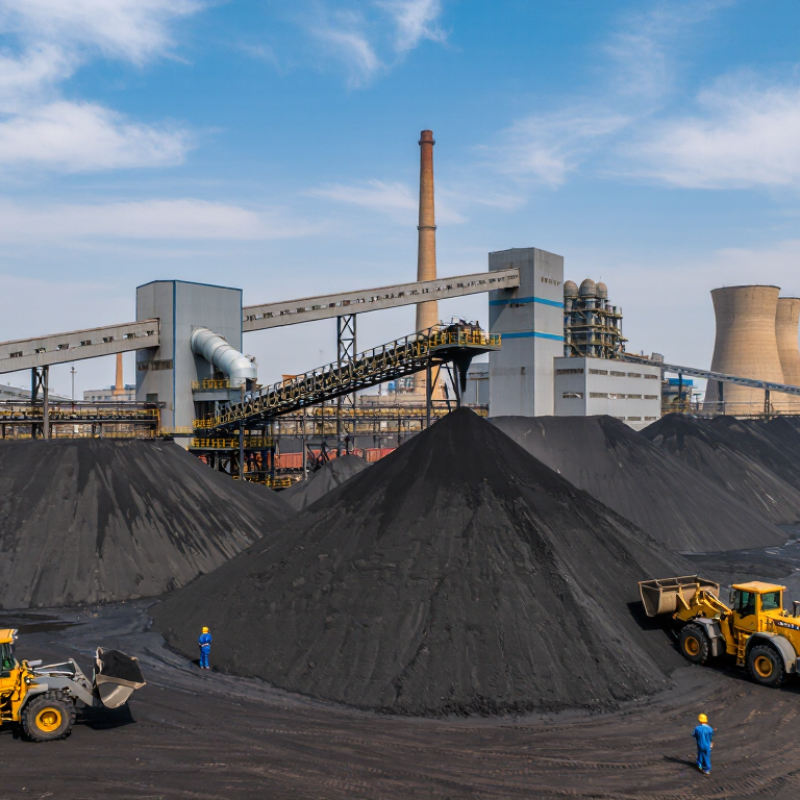
China Top 10 Petroleum Coke Composition Types?

Petroleum Coke: Definition, Formation, and Key Components

China Top 10 Petroleum Coke Composition Types

Petroleum coke is a solid carbon-rich material produced during delayed coking. Refineries heat heavy oil residues until lighter hydrocarbons vaporize. The remaining mass gradually hardens into porous, black coke. It is not a single, uniform substance.

Its main component is fixed carbon, commonly forming most of the dry mass. Volatile matter remains from incomplete removal of lighter compounds. Sulfur content varies widely with the original crude oil and refining conditions. Moisture usually comes from cooling, storage, or handling. Ash represents non-combustible mineral matter.

Small quantities of nickel, vanadium, iron, silicon, calcium, and sodium may also occur. These trace elements can affect combustion, corrosion, and processing performance. Chlorine may appear at low levels and requires careful monitoring. Pore structure influences density, reactivity, and grinding behavior. Particle size creates another practical composition category.

Ten useful composition types include:

  • low-sulfur
  • medium-sulfur
  • high-sulfur
  • low-ash
  • high-ash
  • low-metal
  • high-metal
  • low-volatile
  • high-volatile
  • calcined petroleum coke

These are working classifications, not universal standards. Green coke still contains more volatile matter and moisture. Calcined coke has reduced volatiles and improved carbon purity.

Laboratory testing should confirm every specification. A visual inspection can mislead. In field handling, two similar-looking samples may perform differently because their sulfur, ash, or metal levels differ.

Exact values depend on feedstock, coking temperature, residence time, and sampling quality.

Chemical Criteria for Classifying China’s Petroleum Coke Types

China Top 10 Petroleum Coke Composition Types

China’s petroleum coke types are better classified by chemistry than by appearance. A dark, dense sample can still behave differently in a calciner. The main indicators are sulfur, volatile matter, ash, fixed carbon, moisture, and trace metals. Nickel and vanadium deserve close attention because they can affect combustion, processing, and equipment fouling.

A practical classification may include low-sulfur, medium-sulfur, high-sulfur, low-vanadium, high-vanadium, low-ash, high-ash, low-volatile, high-fixed-carbon, and fuel-oriented grades. These ten profiles often overlap. For example, a low-sulfur coke may also contain elevated nickel. Therefore, one label rarely describes the complete material.

Laboratory results should state the testing basis clearly. Moisture can be reported as received, while sulfur and ash may use a dry basis. This difference can change purchasing decisions. Reliable evaluation requires representative sampling, controlled grinding, and repeated testing. A single drum or truckload is not enough evidence. In field inspections, uneven particle size and hidden fines can distort test results. Hardness and real combustion behavior also deserve attention, although they are not purely chemical criteria.

The classification is useful, but not perfect. Petroleum coke composition can vary between batches and production units. Buyers should compare certificates with independent laboratory data. That extra check may reveal a small mismatch before it becomes a costly operational problem.

China Top 10 Petroleum Coke Composition Types? - Chemical Criteria for Classifying China’s Petroleum Coke Types

No. Representative Petroleum Coke Type Total Sulfur
(wt%, typical)
Volatile Matter
(wt%, typical)
Ash
(wt%, typical)
Moisture
(wt%, as received)
Fixed Carbon
(wt%, typical)
Typical Trace-Metal Profile Chemical Classification and Typical Use
1 Low-Sulfur Fuel-Grade Sponge Coke <0.50 8–14 0.3–1.0 3–12 84–91 Low vanadium and nickel; generally low metallic impurities. Low-sulfur green coke with porous sponge morphology; used in industrial fuel, carbon products, and selected anode applications.
2 Low-Sulfur Anode-Grade Sponge Coke 0.50–1.00 8–12 0.2–0.8 3–10 86–92 Vanadium commonly below about 200–500 ppm; nickel controlled according to end use. Low sulfur, low ash, and suitable electrical resistivity; commonly selected for prebaked carbon anode production.
3 Medium-Sulfur Fuel-Grade Sponge Coke 1.00–3.00 8–14 0.5–1.5 4–12 82–90 Moderate vanadium and nickel; concentrations depend strongly on crude-oil origin. General-purpose green coke with intermediate sulfur; used in boilers, cement, lime, and other thermal processes.
4 High-Sulfur Fuel-Grade Sponge Coke >3.00 8–15 0.8–3.0 5–15 80–88 Vanadium and nickel may be high; sulfur-oxide control may be required during combustion. High-sulfur green coke used where combustion systems can meet emission limits or where desulfurization is available.
5 Low-Sulfur Needle Coke <0.50 6–10 0.1–0.6 1–8 88–94 Low sulfur and low ash; low thermal-expansion behavior is associated with anisotropic needle-like microstructure. Highly anisotropic coke with elongated texture; used mainly for graphite electrodes and other specialty carbon materials.
6 Medium-Sulfur Needle Coke 0.50–1.50 6–11 0.2–0.8 1–8 87–93 Moderate sulfur with controlled metals; structure and coefficient of thermal expansion remain key criteria. Needle-textured coke with intermediate sulfur; used in graphite electrode and high-performance carbon applications.
7 Calcined Petroleum Coke 0.50–3.00 0.2–1.5 0.2–1.5 <0.5 96–99 Sulfur and metals are inherited from the green coke; calcination removes most moisture and volatile hydrocarbons. Thermally treated coke with high fixed carbon and low volatile matter; used in carbon anodes, recarburizers, and specialty carbon products.
8 Shot Coke 1.00–6.00 8–14 0.5–2.5 4–15 80–90 Often associated with higher sulfur and metal content, depending on delayed-coking conditions and feedstock. Dense, rounded or pellet-like morphology; generally more difficult to grind and less preferred for high-quality anode manufacture.
9 Honeycomb Coke 0.50–3.00 7–13 0.3–1.5 3–12 83–91 Moderate sulfur and ash; porous, channel-like internal texture affects combustion and crushing behavior. Porous honeycomb morphology formed during coking; used mainly as industrial fuel and for selected carbon feedstock applications.
10 Fluid Coke 1.00–7.00 5–12 0.5–3.0 2–12 82–92 Sulfur, vanadium, nickel, and ash vary widely with feedstock and fluid-coking operation. Fine, granular coke produced in a fluidized process; commonly used as fuel or blended with other carbonaceous materials.

Note: The ranges are representative industry-level values rather than a ranking of individual producers. Actual specifications vary with crude-oil feedstock, coking technology, calcination conditions, sampling method, and applicable Chinese or international standards. Sulfur, ash, volatile matter, moisture, fixed carbon, vanadium, nickel, morphology, and electrical or thermal properties should be verified by laboratory analysis.

China’s Top 10 Petroleum Coke Composition Types

China’s Top 10 Petroleum Coke Composition Types

China’s petroleum coke market is better understood through composition than appearance. Refinery data commonly separates products by sulfur, volatile matter, ash, nickel, and vanadium. Based on 2024 Chinese trade statistics and refinery market assessments, ten practical composition types dominate discussion: low-sulfur fuel coke, medium-sulfur fuel coke, high-sulfur fuel coke, low-metal coke, high-metal coke, calcined-grade green coke, anode-grade coke, needle-like coke, low-ash coke, and high-volatile coke. These are market descriptions, not fully unified national categories.

Low-sulfur coke often contains below 1% sulfur. It is preferred for anode production and selected metallurgical applications. Medium-sulfur material commonly falls near 1–3%. High-sulfur grades may exceed 3%, requiring tighter emissions control. The 2024 China Customs trade dataset shows petroleum coke remains a significant bulk energy and industrial feedstock, while international refinery reports highlight rising attention to sulfur and metal penalties. Ash can remain below 1% in cleaner grades, but some fuel-oriented material reaches several percent.

The details matter. A shiny black cargo can still contain troublesome vanadium. Needle-like structure does not guarantee suitable quality. Testing should include sulfur, ash, volatile matter, moisture, nickel, vanadium, and real density. GB/T and ASTM laboratory methods improve comparability, although sampling errors remain common. This is the weak point. Composition labels may oversimplify changing refinery streams, so buyers should review batch certificates and independent test results before classification.

China's Top 10 Petroleum Coke Composition Types

Representative composition indicators for green petroleum coke on a dry-basis equivalent scale

The chart presents ten commonly reported petroleum coke composition indicators. Values are representative midpoints of typical industrial ranges and are intended for comparison rather than as a universal specification. Carbon and volatile matter are shown as mass percentages; trace metals are converted from typical ppm levels into percentage equivalents. Actual composition varies with crude oil source, refining process, and calcination conditions.

Industrial Uses Linked to Each Petroleum Coke Composition

China Top 10 Petroleum Coke Composition Types

Petroleum coke is classified by sulfur, ash, volatile matter, metals, and physical structure. Low-sulfur, low-ash coke commonly supports aluminum anode production after calcination. Calcined petroleum coke also serves carbon raisers in steelmaking and foundry operations. High-sulfur coke is often used in cement kilns and controlled industrial fuel systems. Its sulfur content requires careful emission management. Medium-sulfur coke can support cement, lime, and selected metallurgical processes. The boundary between these grades is not always clean.

Low-volatile coke offers stable handling and predictable furnace performance. High-volatile green coke needs calcination before demanding carbon applications. Needle coke, with low thermal expansion, is associated with graphite electrode production. Sponge coke has a porous texture and can suit anode feedstock or industrial combustion. Shot coke is denser and harder, so crushing and blending may be necessary. Honeycomb or porous structural coke can provide useful combustion characteristics, but its consistency needs testing. Vanadium-rich and nickel-rich coke may work in cement or utility fuel systems, subject to equipment limits and local emission rules. In practice, laboratories check sulfur, ash, metals, moisture, and real heat value before assigning a use. Small differences can change performance. I would not select a grade from sulfur data alone. Processing history and furnace design matter too.

Quality Standards and Selection Factors in China’s Petroleum Coke Market

China Top 10 Petroleum Coke Composition Types?

China’s petroleum coke market is commonly assessed through composition profiles rather than simple product names. Ten practical profiles include low-sulfur, medium-sulfur, high-sulfur, low-ash, high-ash, high-fixed-carbon, low-vanadium, high-vanadium, low-moisture, and calcined petroleum coke. These categories can overlap. That is important.

Quality evaluation usually begins with sulfur, ash, volatile matter, moisture, and fixed carbon. Sulfur affects emissions and process compatibility. Ash can reduce usable carbon and increase residue. Vanadium and nickel require close attention in sensitive industrial applications. Particle size also matters, especially when feeding furnaces or blending different materials. A laboratory certificate should show testing methods, sampling dates, and shipment-specific results.

Selection should match the end use, furnace design, emission controls, and local compliance requirements. Buyers often compare total cost, not only the quoted price. A lower-cost grade may create higher cleaning, handling, or treatment expenses. Calcined coke generally offers lower volatile content and greater stability, but its price and energy footprint can be higher. Storage conditions deserve equal care. Rain can raise moisture and distort delivery comparisons.

Experienced purchasers normally request representative samples and repeat tests before large contracts. However, test results may vary between batches. A single certificate is not enough. Some market labels also sound precise but hide broad composition ranges. That weakness should be questioned directly. Careful verification remains necessary, especially when sulfur, metals, or particle distribution approach operational limits.

Copyright 2025 Fluidra S.A. | Created by BCM Marketing Agencia Privacy Policy Legal note | Cookie policy |

Technical cookies are strictly necessary for our website to work and you can navigate through it. These types of cookies are those that, for example, allow us to identify you, give you access to certain restricted parts of the page if necessary, or remember different options or services already selected by you, such as your privacy preferences. Therefore, they are activated by default, your authorization not being necessary in this regard. Through the configuration of your browser, you can block or alert the presence of this type of cookies, although such blocking will affect the proper functioning of the different functionalities of our website.


The analysis cookies allow us to study the navigation of the users of our website in general (for example, which sections of the page are the most visited, which services are used most and if they work correctly, etc.). From the statistical information on navigation on our website, we can improve both the operation of the page itself and the different services it offers. Therefore, these cookies do not have an advertising purpose, but only serve to make our website work better, adapting to our users in general. By activating them you will contribute to this continuous improvement. You can enable or disable these cookies by checking the corresponding box, being disabled by default.


Functionality cookies allow us to remember your preferences, to personalize certain characteristics and general options of our website, every time you access it (for example, the language in which the information is presented to you, the sections marked as favorites, your browser type, etc.) Therefore, this type of cookies does not have an advertising purpose, but by activating them you will improve the functionality of the website (for example, adapting to your type of browser) and the customization of it based on your preferences (for example, by presenting the information in the language that you have chosen in previous occasions), which will contribute to the ease, usability and comfort of our page during your navigation. You can enable or disable these cookies by checking the corresponding box, being disabled by default.


Advertising cookies allow us to manage the advertising spaces included in our website based on criteria such as the content shown or the frequency in which the ads are displayed. For example, if you have been shown the same ad several times on our website, and you have not shown a personal interest by clicking on it, it will not appear again. In summary, by activating this type of cookies, the advertising shown on our website will be more useful and diverse, and less repetitive. You can enable or disable these cookies by checking the corresponding box, being disabled by default.


Behavioral advertising cookies allow us to obtain information based on the observation of your browsing habits and behaviors on the web, in order to show you advertising content that best suits your personal tastes and interests. To understand it in a very simple way, we will give you a fictitious example: if your last searches on the web were related to suspense literature, we would show you advertising about suspense books. Therefore, activating this type of cookies, the advertising that we show you on our website will not be generic, but will be oriented to your searches, tastes and interests, therefore adjusting exclusively to you. You can enable or disable these cookies by checking the corresponding box, being disabled by default.
To understand it in a very simple way, we will give you a fictitious example: if your last searches on the web were related to suspense literature, we would show you advertising about suspense books. Therefore, activating this type of cookies, the advertising that we show you on our website will not be generic, but will be oriented to your searches, tastes and interests, therefore adjusting exclusively to you. You can enable or disable these cookies by checking the corresponding box, being disabled by default.

SAVE

We use our own and third-party cookies to ensure the proper functioning of the website and to analyse our services, improve your experience on our website and show you advertisements related to your interests according to profiling based on your browsing habits (e.g. websites visited). You can accept all cookies by clicking "ACCEPT" or set or reject them by clicking here. If you would like to know more about the use of cookies, please see our COOKIE POLICY.


ACCEPT ALL
Reject no essentials


