
China’s electric steelmaking sector is expanding, and the Electric Furnace Transformer is becoming a critical equipment category. It controls power delivery, voltage stability, and furnace efficiency. Small design errors can create large production losses.
The World Steel Association reported approximately 1.89 billion tonnes of crude steel production in 2023. Electric arc furnaces produced about 28% of global crude steel, according to its 2024 World Steel in Figures report. The International Energy Agency also identifies steel as responsible for roughly 8% of global energy-related emissions. These figures explain the growing demand for efficient transformer systems. They also show why buyers must examine more than price.
Martin Pei, former Chief Technology Officer of SSAB, has said, “The transformation to fossil-free steel is not a sprint; it is a marathon.” His observation applies to transformer selection as well. A reliable unit must withstand repeated thermal stress, unstable loads, harmonics, and demanding operating cycles. Cooling design matters. So do short-circuit strength, impedance control, maintenance access, and after-sales support.
This introduction presents China’s top 10 Electric Furnace Transformer manufacturers. The comparison considers manufacturing experience, installed capacity, technical certification, customization ability, and international service coverage. Public company information and industry reports support the evaluation. Still, no ranking is perfectly neutral. Project conditions differ, and some manufacturers disclose limited data. Buyers should verify test records, reference plants, delivery performance, and compliance documents before making a final decision. That practical step is often overlooked. It should not be.
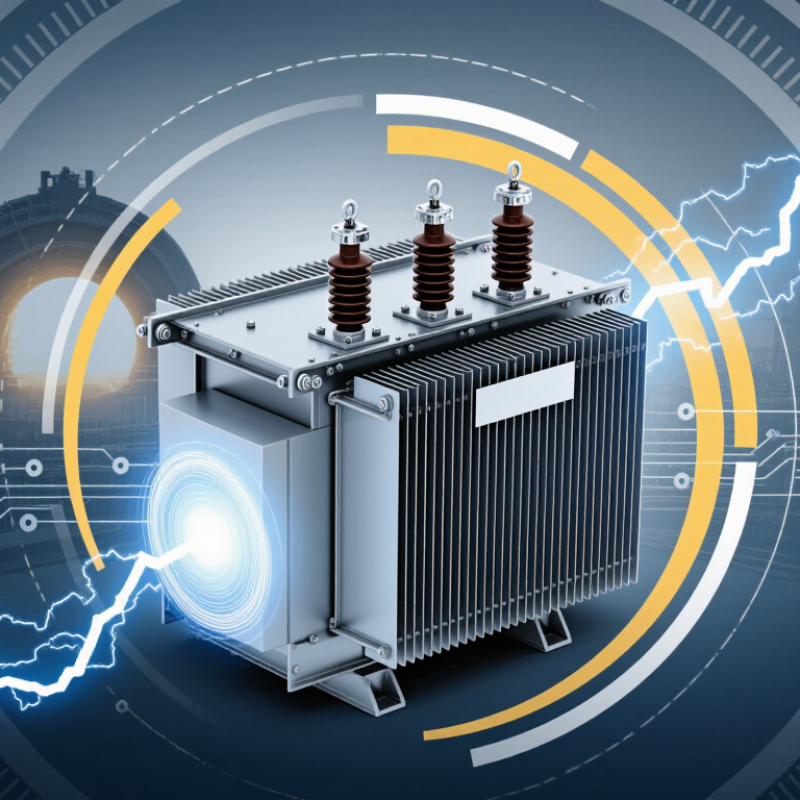
An electric furnace transformer converts high-voltage grid power into low-voltage, high-current energy for melting operations. Its output must remain stable during charging, melting, refining, and tapping. In China, these transformers commonly serve steel, foundry, ferroalloy, and non-ferrous metal plants.
The demand is substantial. The China Electricity Council reported national electricity consumption of 9.22 trillion kilowatt-hours in 2023. Industry used about 6.07 trillion kilowatt-hours, showing the scale of heavy electrical loads. The World Steel Association recorded China’s crude steel production at approximately 1.019 billion tonnes in 2023. Electric furnace transformers support this production by delivering controlled power to arc furnaces, where current can change sharply within seconds.
Their role is not limited to voltage conversion. Strong short-circuit resistance, effective cooling, adjustable secondary voltage, and reliable insulation help protect the furnace system. IEC 60076-1 provides the core requirements for power transformers, but actual furnace conditions demand additional engineering judgment. Harmonics, frequent tap changes, vibration, dust, and heat can shorten service life. A technically correct design may still perform poorly if maintenance access is ignored. That is often underestimated.
When comparing China’s leading manufacturers, buyers should examine tested efficiency, temperature-rise records, fault performance, delivery experience, and after-sales support. Factory inspection matters. So does the transformer’s behavior under real furnace cycles, not only its nameplate rating.

Evaluating Chinese furnace transformer manufacturers requires more than comparing prices. Check compliance with IEC 60076 and applicable GB/T 1094 requirements. These standards cover insulation, temperature rise, short-circuit strength, and testing procedures. Ask for complete type-test and routine-test records. Missing documents should raise concern. A reliable supplier can explain test methods, limits, and corrective actions in clear language.
Examine the transformer’s suitability for actual furnace duty. Review rated capacity, secondary voltage, impedance, cooling method, and duty cycle. Electric furnaces create repeated thermal and electrical stress. The manufacturer should provide evidence from similar installations, not only general brochures.
Inspect winding materials, tap-changer quality, tank welding, oil treatment, and bushing design. Photographs help, but an independent factory audit is stronger. Small details matter.
Traceability is another practical measure. Serial numbers should connect materials, production records, inspection results, and shipment documents. Engineers should witness factory acceptance tests, including insulation resistance, ratio, winding resistance, and temperature-related checks.
Service capability also deserves attention. Ask about spare parts, response times, installation support, and failure analysis. Good answers are specific. Vague promises are not enough.
No evaluation method is perfect. Supplier records may look complete while field performance remains uncertain. This is where references, site visits, and cautious technical reviews become valuable. I would also leave room for uncertainty, because operating conditions often differ from design assumptions.
China Top 10 Electric Furnace Transformer Manufacturers
China’s leading electric furnace transformer manufacturers support steel, alloy, and nonferrous metal production. Their equipment must tolerate repeated thermal shocks, harmonic currents, and severe load changes. The World Steel Association reported 1,019.1 million tonnes of Chinese crude steel production in 2023. Electric furnace capacity remains smaller than conventional production, but decarbonization is increasing its strategic value.
A credible top-ten evaluation should examine more than factory size. Key indicators include transformer efficiency, short-circuit strength, cooling performance, tap-changing accuracy, and documented service life. IEC 60076 provides the main international transformer framework, while China’s GB/T standards guide local design and testing. The International Energy Agency identifies electric-arc production as an important route for lowering steel-sector emissions, especially when electricity becomes cleaner.
Field experience also matters. A furnace transformer may face hundreds of current fluctuations during one production cycle. Poor thermal design can appear as oil temperature rise, noisy operation, or premature insulation aging. These details are easy to miss in a glossy catalogue. Honestly, published rankings often lack consistent delivery and failure-rate data. Buyers should request factory test records, operating references, maintenance response times, and independent inspection results. The China Electricity Council reported national electricity consumption of about 9.85 trillion kilowatt-hours in 2024, showing the scale of China’s industrial power system. Yet capacity figures alone cannot prove reliability. Real performance is found beside the furnace, under heat, vibration, and pressure.
| Rank | Anonymous Manufacturer Profile | Typical Capacity Range | Primary Voltage Range | Secondary Voltage Range | Cooling Configuration | Tap-Changing Method | Typical Applications | Common Standards | Market Position |
|---|---|---|---|---|---|---|---|---|---|
| 1 | Manufacturer A | 10–160 MVA | 35–220 kV | 100–1,200 V | Oil-immersed, ONAN/ONAF | On-load tap changer | Electric arc furnaces, steel mills, large metallurgical plants | IEC 60076; GB/T 6451 | Large-scale projects |
| 2 | Manufacturer B | 8–120 MVA | 35–132 kV | 100–1,000 V | Oil-immersed, ONAN/ONAF/OFAF | On-load or off-circuit tap changer | Steelmaking, ferroalloy and non-ferrous metal furnaces | IEC 60076; GB/T 1094 | High-capacity supply |
| 3 | Manufacturer C | 5–100 MVA | 35–110 kV | 150–900 V | Oil-immersed, ONAN/ONAF | Off-circuit tap changer | Arc furnaces, ladle furnaces and rolling-mill systems | IEC 60076; GB/T 6451 | Industrial customization |
| 4 | Manufacturer D | 3–80 MVA | 10–110 kV | 200–1,000 V | Oil-immersed, ONAN/ONAF | On-load tap changer | Medium-sized steel plants and electric melting facilities | IEC 60076; GB/T 1094 | Flexible configuration |
| 5 | Manufacturer E | 2–63 MVA | 10–66 kV | 200–800 V | Oil-immersed, ONAN/ONAF | Off-circuit tap changer | Induction furnaces, foundries and metal-processing plants | IEC 60076; GB/T 6451 | Mid-size installations |
| 6 | Manufacturer F | 1.6–50 MVA | 10–66 kV | 200–750 V | Oil-immersed, ONAN or ONAF | Off-circuit tap changer | Foundry furnaces, copper processing and aluminum production | IEC 60076; GB/T 1094 | Cost-effective solutions |
| 7 | Manufacturer G | 1–40 MVA | 6–35 kV | 200–690 V | Oil-immersed or dry-type | Off-circuit tap changer | Induction heating, small arc furnaces and industrial workshops | IEC 60076; GB/T 10228 | Compact systems |
| 8 | Manufacturer H | 630 kVA–31.5 MVA | 6–35 kV | 200–690 V | Dry-type or oil-immersed | Off-circuit tap changer | Factory furnaces, heat-treatment lines and indoor substations | IEC 60076; GB/T 10228 | Indoor applications |
| 9 | Manufacturer I | 500 kVA–25 MVA | 6–35 kV | 200–660 V | Dry-type, AN/AF | Off-circuit tap changer | Clean workshops, laboratories and low-emission industrial facilities | IEC 60076-11; GB/T 10228 | Low-maintenance design |
| 10 | Manufacturer J | 315 kVA–20 MVA | 6–35 kV | 200–660 V | Oil-immersed or dry-type | Off-circuit tap changer | Small and medium electric furnaces, workshops and replacement projects | IEC 60076; GB/T 6451 | Standardized products |
Note: The profiles above summarize typical technical ranges and application categories used in China’s electric furnace transformer market. Actual ratings, impedance, short-circuit withstand capability, harmonic performance, cooling method and testing requirements should be confirmed against the final project specification.
China Top 10 Electric Furnace Transformer Manufacturers
China’s leading electric furnace transformer manufacturers compete through engineering depth, testing discipline, and customized production. Their strongest products combine low-loss magnetic cores, reinforced windings, and controlled impedance. These features support stable power delivery during frequent furnace starts and sudden load changes.
Copper conductors usually receive strong insulation and mechanical bracing. This helps withstand vibration, thermal expansion, and short-circuit forces. Many manufacturers use oil circulation, radiators, or water-cooled systems to control winding temperature. Online monitoring can track oil temperature, winding heat, gas formation, and bushing condition. Small design choices matter. A reliable protection system must also coordinate with the furnace controller and plant substation.
Product capability extends beyond the transformer tank. Engineering teams often review electrode arrangements, furnace capacity, harmonic conditions, and installation space before selecting specifications. Factory testing may include ratio checks, insulation tests, resistance measurements, and temperature-related evaluations. Field experience shows that commissioning quality affects service life as much as factory workmanship. Maintenance access is important, especially around bushings, cooling equipment, and oil sampling points.
No design is perfect. Some projects still underestimate harmonic heating or cooling demand. Others focus on purchase price and overlook spare parts, monitoring, and response time. A more dependable evaluation compares efficiency, overload behavior, fault tolerance, documentation, and long-term technical support. These details reveal whether a manufacturer can deliver practical performance rather than only impressive ratings.
China’s top 10 electric furnace transformer manufacturers may differ in design strength, testing depth, and service response. Selection should begin with your furnace conditions, not a ranking list. Confirm furnace capacity, primary voltage, secondary voltage, frequency, impedance, and duty cycle. A transformer for arc furnaces may need stronger short-circuit resistance and better harmonic control. Ask the supplier to explain the design in practical terms.
Factory experience matters. Request drawings, routine test reports, temperature-rise data, and evidence of similar installations. Check whether the manufacturer can provide oil-immersed or dry-type solutions when required. Inspect their quality process, including winding insulation, leak testing, bushing checks, and final-load simulation. Visit the factory if possible. Seeing the test area can reveal more than polished brochures. I once trusted a detailed quotation too quickly. The missing cooling requirement later caused costly revisions.
Tips: Compare suppliers using the same technical specification sheet. Check response time, spare-parts availability, installation guidance, and warranty conditions. Ask who handles technical problems after delivery. Clarify packaging, export documents, delivery terms, and acceptance testing before signing. A low price is not always economical. Calculate losses, maintenance, downtime, and expected service life. Also review independent customer references, preferably from furnaces with similar capacity and operating cycles. Good communication is useful, but verified engineering evidence is stronger.
Recommended evaluation weighting for comparing suppliers without relying on company or brand data
Electrical performance and safety compliance should receive the highest priority because furnace transformers operate under demanding load conditions and frequent thermal stress. Delivery reliability, technical support, customization capability, and lifecycle cost should then be assessed according to the project's installation schedule, operating environment, and long-term maintenance requirements.

Cepex is the brand for the fluid handling market belonging to the Fluidra group. One of the leading european manufacturer of valves and fittings in thermoplastic materials.
Dedicated to the swimming pool, irrigation and industrial markets, we distribute our products worldwide with the Fluidra commercial network and presence in 46 countries with 136 sales branches.


