
China Top 10 Control Relay Manufacturers
FLUID HANDLING EXPERTS

Blog, all our news

China Top 10 Control Relay Manufacturers

A reliable Control Relay can make the difference between a stable control panel and repeated troubleshooting. This guide introduces ten manufacturers serving industrial automation, electrical equipment, and related applications. It offers a starting point for comparing suppliers, not a universal ranking. Needs vary.

When reviewing each manufacturer, look beyond product range. Check coil voltage, contact configuration, rated switching capacity, mounting style, and expected electrical and mechanical life. Confirm that the published specifications match the actual load and operating environment. A compact relay may fit a crowded panel, while a higher-capacity model may better suit frequent switching. Small details matter.

The overview also considers documentation, product consistency, technical support, and availability—factors that can shape maintenance long after purchase. Datasheets and certifications are useful evidence, but they do not replace application-specific engineering review. Manufacturer portfolios change, and regional supply can differ. That part is easy to overlook.

No single supplier is ideal for every project. A familiar brand may offer dependable documentation, while another may provide a better fit for a particular voltage or panel layout. The comparison is intended to help buyers ask sharper questions, verify current specifications, and shortlist suitable options. Treat it as a practical guide, then confirm critical details with the manufacturer before selecting a relay.
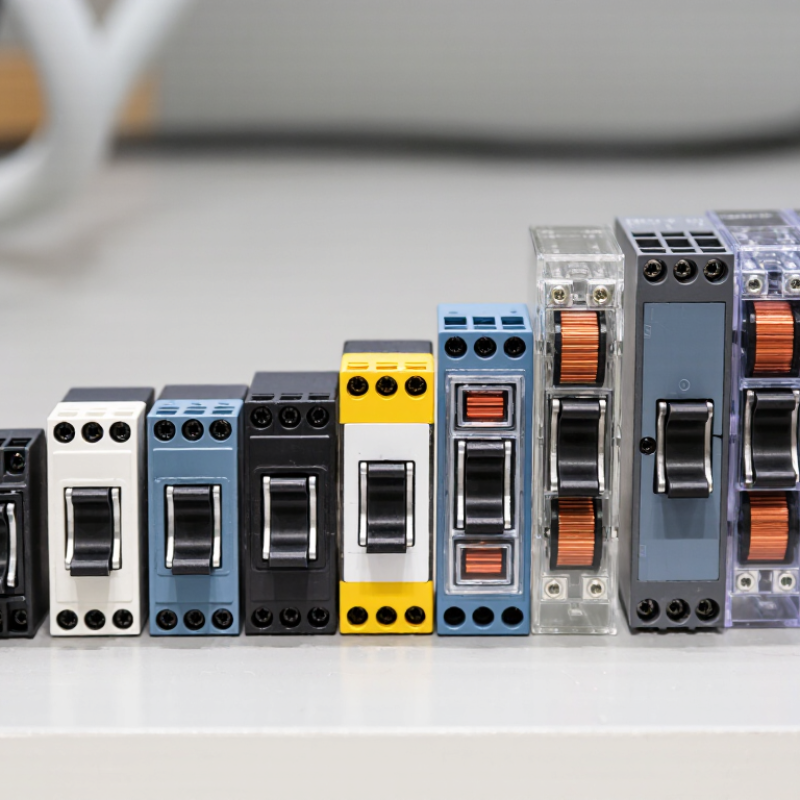
China Top 10 Control Relay Manufacturers

What Control Relays Are and Where They Are Used

A control relay is an electrically operated switch used to control another circuit. A small coil moves internal contacts when energized, allowing a low-power signal to start or stop equipment. Some models also provide electrical separation between control and load circuits. Simple in principle. Not always simple in a real panel.

You may find control relays in motor starters, pumps, conveyor systems, HVAC units, and building automation panels. A thermostat signal, for example, can energize a relay that switches a fan circuit. The U.S. Department of Energy’s 2014 industry sourcebook reports that motor-driven systems use about 69% of electricity consumed in U.S. manufacturing. That scale helps explain why reliable motor control matters. The IEA’s Global EV Outlook 2025 reports more than 17 million electric cars were sold worldwide in 2024, supporting growing use of control circuits in charging equipment. These figures describe broader applications, not relay sales. In practice, engineers must check coil voltage, contact ratings, switching frequency, and the load type. Inductive loads can wear contacts faster. A relay alone is not a substitute for a properly designed safety system.

China Top 10 Control Relay Manufacturers - What Control Relays Are and Where They Are Used
No. Application Area What a Control Relay Does Common Relay Type Typical Use
What is a control relay? A control relay is an electrically operated switching device. A control signal energizes its coil or electronic input, causing one or more contacts to change state. Relays are used to switch control circuits, isolate signals, and coordinate equipment; the appropriate type depends on the circuit, load, operating environment, and safety requirements.
1 Industrial machinery Switches control signals between sensors, push buttons, controllers, and machine actuators. Electromechanical or interface relay Interlocking machine sequences and switching solenoids or contactor coils.
2 Motor control systems Provides a control-circuit switching step for motor starters and related control logic. Auxiliary or interface relay Enabling, sequencing, and status signaling in pump, fan, and conveyor controls. Motor power is generally switched by a suitably rated contactor or motor starter.
3 Building automation Interfaces controller outputs with electrically operated building equipment. Interface relay Switching control signals for lighting circuits, dampers, and other building-control loads, subject to device ratings and local codes.
4 Heating, ventilation, and air conditioning Switches commands within equipment-control circuits. Electromechanical or solid-state relay Controlling fan stages, valve actuators, and heating elements where the relay is rated for the load and switching duty.
5 Water and wastewater systems Relays level, pressure, and equipment-status signals to control logic. Interface or auxiliary relay Coordinating pump start/stop commands, alarms, and control-panel signals.
6 Process automation Separates or repeats signals between control-system outputs and field circuits. Interface relay Signal switching in manufacturing and process-control panels, including for valves and indicator circuits.
7 Elevators and lifting equipment Supports equipment-control logic by switching designated control and status circuits. Auxiliary or safety relay Interlocking control signals. Safety-related designs must use components and architectures appropriate to the applicable safety standards.
8 Railway and transit systems Switches signals in specialized control circuits where reliability and defined operating behavior are important. Railway-rated or safety relay Use in approved signaling and control applications; selection and installation follow railway-specific requirements.
9 Renewable-energy systems Switches control or monitoring signals within power-conversion and auxiliary circuits. Electromechanical or solid-state relay Control and status functions in solar or energy-storage equipment. High-voltage power switching requires devices specifically designed and rated for that purpose.
10 Fire and security systems Provides an interface between a control panel and compatible auxiliary equipment. Interface relay Switching approved auxiliary signals, such as ventilation or access-control interfaces, in accordance with system design and applicable regulations.
Note: These are representative control-relay applications, not a ranking of manufacturers or products. Relay selection should account for coil or input requirements, contact ratings, load type, switching frequency, environmental conditions, and applicable safety standards.

How China's Control Relay Industry Is Organized

China Top 10 Control Relay Manufacturers

China’s control relay industry is organized around several connected layers. Component suppliers provide coils, contacts, housings, and insulating materials. Relay makers then assemble these parts, tune operating characteristics, and test finished units. Some factories focus on high-volume standard models; others handle smaller batches or custom specifications. Capabilities vary by product line, so a factory’s size alone says little.

Many manufacturers sell through distributors, export agents, or direct engineering teams. This structure gives buyers different levels of technical support and delivery flexibility. It can also make comparisons less straightforward. Two relays with similar ratings may differ in contact material, electrical life, or performance under vibration. Production and inspection practices can vary between facilities, too. That detail is easy to overlook.

Tips: Ask for the exact model’s datasheet, test conditions, and inspection records. Confirm coil voltage, contact configuration, mounting dimensions, and expected switching load before comparing quotations. Requesting a sample can reveal practical issues, such as terminal fit or audible operation. One caveat: published specifications do not always show how a relay performs in your actual application. Testing it in the intended control panel is more reliable.

Criteria for Evaluating Control Relay Manufacturers

Criteria for Evaluating Control Relay Manufacturers

A control relay may look simple on a drawing, yet a poor fit can cause intermittent faults inside a hot, crowded cabinet. Check rated voltage, contact configuration, switching capacity, electrical life, insulation, and operating temperature. Ask for test methods, not just headline ratings. Details matter. For relevant products, compare documentation against IEC 60947-5-1 requirements for control-circuit devices, and request traceable test records.

Production consistency deserves equal attention. The International Federation of Robotics reported 4,281,585 industrial robots operating worldwide in 2023, a 10% increase from 2022 in its World Robotics 2024 report. That expanding automation base makes dependable components and repeatable supply increasingly important. Evaluate incoming inspection, batch traceability, change-control procedures, and sample-to-production consistency. A sample that performs well is useful, but it is not proof of stable mass production.

Also examine practical support: clear wiring diagrams, accessible technical staff, realistic lead times, and a documented response process for failures. Ask how the manufacturer verifies contact resistance and coil performance after endurance testing. Compare quotations only after matching specifications; a cheaper relay may have a shorter electrical life or narrower temperature range. Datasheets can omit inconvenient details. That is worth questioning. No single certificate replaces application testing, and even a thorough checklist can miss a cabinet-specific issue.

Profiles of 10 Control Relay Manufacturers in China

China’s control relay manufacturers serve different needs, from compact switching to industrial control panels. A useful supplier profile looks beyond catalog size. One manufacturer may focus on general-purpose electromechanical relays; another may specialize in miniature units for crowded enclosures. Others concentrate on panel-mounted control relays, higher-current contact designs, or custom coil voltages and terminal layouts. These are practical categories, not rankings.

Further profiles include makers of interface relays for automation equipment, high-volume suppliers focused on consistent production, and engineering-led factories that adapt contact arrangements to customer drawings. Some offer extensive testing records and export documentation; others compete through short lead times or flexible order quantities. A tenth profile might prioritize application support, helping buyers check coil ratings, switching loads, and expected electrical life. Capabilities can overlap, and a polished catalog alone proves little. Ask for current datasheets and test conditions.

Tips: Compare samples using the same load and operating cycle. Check dimensions, coil voltage, contact material, and insulation ratings. Small differences matter. Request batch-level inspection details, and confirm that the quoted specifications match the delivered relay.

How to Compare Manufacturers and Choose a Supplier

Comparing the China top 10 control relay manufacturers requires more than ranking them by price or production capacity. Start with the relay’s actual duty: coil voltage, contact configuration, rated load, switching frequency, and expected service life. Check whether ratings apply to resistive or inductive loads; the difference can matter in a control cabinet. Compare temperature ranges, insulation data, mounting dimensions, and test methods on the same basis. A polished datasheet is useful, but it is not proof by itself. Small details matter.

Ask suppliers for current test reports, material specifications, and sample units that match the quoted model. Confirm production lead time, minimum order quantity, lot traceability, and how design changes are communicated. For a practical check, inspect terminal fit, markings, and relay operation under your intended load. Independent testing may be appropriate for critical applications. Supplier replies also reveal a lot: clear answers with supporting records are stronger than broad assurances. Still, one sample cannot predict every production batch; that is an imperfect part of comparison.

Tips: Send each manufacturer the same technical checklist and request written responses. Ask for the exact model number, applicable test conditions, warranty terms, and sample availability. Keep claims separate from verified evidence, and note unanswered questions before choosing a supplier.

Common Control Relay Coil Voltage Options

Compare the nominal coil voltage options commonly encountered when evaluating control relay suppliers.

These are nominal voltage options, not a ranking of manufacturers. AC and DC coil ratings are not interchangeable; confirm the exact coil voltage and AC/DC type against the application and supplier datasheet.

Copyright 2025 Fluidra S.A. | Created by BCM Marketing Agencia Privacy Policy Legal note | Cookie policy |

Technical cookies are strictly necessary for our website to work and you can navigate through it. These types of cookies are those that, for example, allow us to identify you, give you access to certain restricted parts of the page if necessary, or remember different options or services already selected by you, such as your privacy preferences. Therefore, they are activated by default, your authorization not being necessary in this regard. Through the configuration of your browser, you can block or alert the presence of this type of cookies, although such blocking will affect the proper functioning of the different functionalities of our website.


The analysis cookies allow us to study the navigation of the users of our website in general (for example, which sections of the page are the most visited, which services are used most and if they work correctly, etc.). From the statistical information on navigation on our website, we can improve both the operation of the page itself and the different services it offers. Therefore, these cookies do not have an advertising purpose, but only serve to make our website work better, adapting to our users in general. By activating them you will contribute to this continuous improvement. You can enable or disable these cookies by checking the corresponding box, being disabled by default.


Functionality cookies allow us to remember your preferences, to personalize certain characteristics and general options of our website, every time you access it (for example, the language in which the information is presented to you, the sections marked as favorites, your browser type, etc.) Therefore, this type of cookies does not have an advertising purpose, but by activating them you will improve the functionality of the website (for example, adapting to your type of browser) and the customization of it based on your preferences (for example, by presenting the information in the language that you have chosen in previous occasions), which will contribute to the ease, usability and comfort of our page during your navigation. You can enable or disable these cookies by checking the corresponding box, being disabled by default.


Advertising cookies allow us to manage the advertising spaces included in our website based on criteria such as the content shown or the frequency in which the ads are displayed. For example, if you have been shown the same ad several times on our website, and you have not shown a personal interest by clicking on it, it will not appear again. In summary, by activating this type of cookies, the advertising shown on our website will be more useful and diverse, and less repetitive. You can enable or disable these cookies by checking the corresponding box, being disabled by default.


Behavioral advertising cookies allow us to obtain information based on the observation of your browsing habits and behaviors on the web, in order to show you advertising content that best suits your personal tastes and interests. To understand it in a very simple way, we will give you a fictitious example: if your last searches on the web were related to suspense literature, we would show you advertising about suspense books. Therefore, activating this type of cookies, the advertising that we show you on our website will not be generic, but will be oriented to your searches, tastes and interests, therefore adjusting exclusively to you. You can enable or disable these cookies by checking the corresponding box, being disabled by default.
To understand it in a very simple way, we will give you a fictitious example: if your last searches on the web were related to suspense literature, we would show you advertising about suspense books. Therefore, activating this type of cookies, the advertising that we show you on our website will not be generic, but will be oriented to your searches, tastes and interests, therefore adjusting exclusively to you. You can enable or disable these cookies by checking the corresponding box, being disabled by default.

SAVE

We use our own and third-party cookies to ensure the proper functioning of the website and to analyse our services, improve your experience on our website and show you advertisements related to your interests according to profiling based on your browsing habits (e.g. websites visited). You can accept all cookies by clicking "ACCEPT" or set or reject them by clicking here. If you would like to know more about the use of cookies, please see our COOKIE POLICY.


ACCEPT ALL
Reject no essentials



