
What Are China’s Top 10 Cold Room Manufacturers?
FLUID HANDLING EXPERTS

Blog, all our news

What Are China’s Top 10 Cold Room Manufacturers?

A dependable Cold Room protects more than stored goods. It helps keep food, medicines, and other temperature-sensitive products within controlled conditions. Choosing a manufacturer, however, takes more than comparing room size or equipment prices. Insulation quality, refrigeration design, temperature controls, installation capability, and after-sales support all matter.

The scale of the challenge is clear. The FAO’s 2019 report, The State of Food and Agriculture, estimated that about 14% of food is lost between harvest and retail. UNEP’s Food Waste Index Report 2024 estimated 1.05 billion tonnes of food waste in 2022. These figures do not mean refrigeration alone can solve food loss. They do show why dependable temperature management deserves careful attention.

Professor Toby Peters, known for his work on cold-chain systems, emphasizes a systems-level view. A fair paraphrase of that principle is: “Cold-chain reliability is built across the journey, not inside one room alone.” That distinction matters. A well-built room can still underperform if its controls, installation, or maintenance are weak.

This guide examines ten Chinese manufacturers through practical questions: What products do they offer? Can they tailor room dimensions and temperature ranges? How clearly do they document performance and service support? Company claims should be checked against project references and technical specifications. A ranking can simplify a crowded market, but it cannot replace due diligence. The details matter. And sometimes, the available public evidence is incomplete.
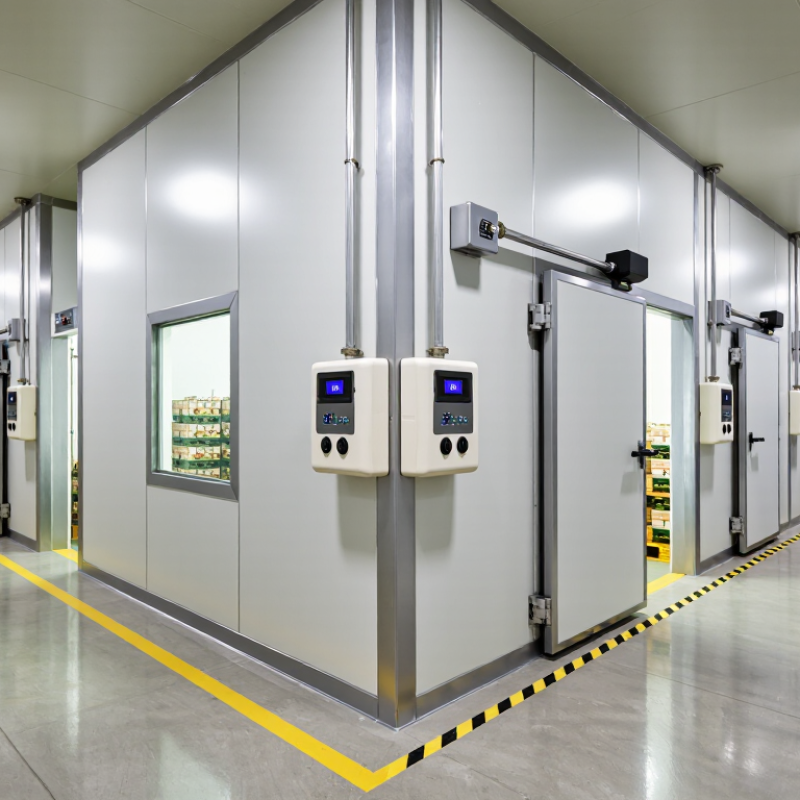
What Are China’s Top 10 Cold Room Manufacturers?

How Cold Room Manufacturers Support Commercial and Industrial Cooling

A cold room is more than an insulated box. Manufacturers support commercial and industrial cooling by translating a facility’s daily work into practical design choices. A restaurant may need quick access to chilled ingredients, while a food processor may require separate temperature zones. These differences affect room dimensions, panel thickness, door placement, and refrigeration capacity.

Good planning starts with the products and operating schedule. Engineers consider heat entering through walls, lighting, people, and frequent door openings. They can recommend insulated panels, correctly sized cooling equipment, and airflow layouts that reduce warm spots around stored goods. Details matter. A poorly placed evaporator may create uneven temperatures, while an oversized system can cycle inefficiently. Temperature sensors and alarms also help staff notice problems before stock is affected.

Support should continue after installation. Commissioning checks whether the room reaches its target temperature under real operating conditions, not just on a drawing. Manufacturers may also guide routine inspections, coil cleaning, seal replacement, and system adjustments as usage changes. Still, forecasts are imperfect; busy shifts and open doors can disrupt carefully planned conditions. Operators should share actual usage patterns with their service team, because even a sound design may need tuning. A cold room works best when equipment, building details, and daily habits are considered together.

What Criteria Define China’s Leading Cold Room Manufacturers?

China’s leading cold room manufacturers are defined by verifiable performance, not polished catalogs. Ask for panel specifications, insulation details, and temperature ranges suited to your products. A capable team should explain how door seals, floor insulation, and refrigeration capacity work together. Details matter. Request drawings and a clear equipment list before comparing quotations.

Quality control deserves close attention. Look for documented production checks, consistent panel joints, and evidence that equipment is tested before dispatch. Ask how the manufacturer handles installation guidance, spare parts, and technical support after delivery. A fast reply is useful, but a specific answer is better. References from projects with similar room sizes and operating conditions can help verify claims. Price still matters, though the lowest quote may omit important components or service. Compare like with like.

Communication is another practical test. Can the team clarify condensation risks, temperature fluctuations, and expected maintenance? Can it explain its assumptions without hiding behind jargon? No checklist catches everything. Even a well-qualified manufacturer may misunderstand a site constraint, so confirm power supply, access, drainage, and local operating conditions in writing. This extra step can feel tedious, but it often prevents costly changes later.

Who Are China’s Top 10 Cold Room Manufacturers?

Who are China’s top 10 cold room manufacturers? A reliable answer depends on what “top” means: production capacity, export experience, energy performance, or after-sales support. Without a consistent, independently audited market-share ranking, naming ten firms as definitive leaders would be misleading. Buyers can compare manufacturers by asking for project references, panel thickness and insulation data, refrigeration-system specifications, and documented temperature-uniformity tests. Inspect the details. A clean-looking room is not proof of stable operation.

Energy performance matters. The International Institute of Refrigeration’s 2022 report estimates that refrigeration uses about 20% of global electricity and contributes roughly 7.8% of greenhouse-gas emissions. Those figures make compressor efficiency, door sealing, defrost controls, and heat-load calculations practical selection criteria—not just brochure claims. Request measured energy use from a comparable installation, plus service response times and spare-parts availability. Check the site conditions, too: humid air, frequent door openings, and warm loading areas can undermine performance. Ten names may attract clicks; verified operating evidence is more useful. One limitation remains: published data rarely compare Chinese manufacturers on identical project specifications.

What Are China’s Top 10 Cold Room Manufacturers? - Who Are China’s Top 10 Cold Room Manufacturers?
No. Evaluation Dimension What to Check Why It Matters
1 Temperature range Confirm the designed room temperature, product pull-down requirements, and expected operating conditions. Chillers and freezers require different equipment and insulation designs. The correct specification depends on the stored product and operating process.
2 Insulated panel specification Review panel core material, thickness, surface material, joint design, and documented thermal-performance data. Panels help limit heat transfer. Required thickness varies with room temperature, climate, room size, and local energy requirements.
3 Refrigeration system selection Check equipment sizing, refrigerant, system layout, and whether the design matches the room’s heat load and usage pattern. An incorrectly sized or unsuitable system can affect temperature stability, energy use, and equipment life.
4 Temperature uniformity Ask for the proposed sensor locations, airflow plan, and method for checking temperature distribution. Good air circulation and suitable monitoring help reduce temperature variations within the room.
5 Door and access design Assess door dimensions, seals, opening frequency, safety release features, and any requirement for a vestibule or strip curtain. Door openings allow warm, humid air to enter and can increase refrigeration demand and frost formation.
6 Defrost and condensate management Confirm the defrost method, schedule, drainage arrangement, and protection against drain-line freezing where needed. Defrost and drainage need to suit the evaporator, room temperature, humidity, and operating conditions.
7 Controls and alarms Check temperature control, data logging, alarm thresholds, remote alerts, and backup procedures. Monitoring can help operators identify temperature excursions and respond promptly.
8 Energy performance Request the assumptions behind any energy estimate, including climate, usage, setpoint, door activity, and equipment selection. Cold-room energy consumption depends on operating conditions, insulation, refrigeration efficiency, and how the room is used.
9 Installation and commissioning Clarify site preparation, panel assembly, pipework, electrical work, system testing, and commissioning records. Correct installation and commissioning help the room operate according to its design specifications.
10 Warranty, service, and documentation Review warranty terms, service availability, spare-parts support, operating manuals, and maintenance requirements. Clear documentation and accessible service support are important throughout the equipment’s operating life.
Note: This table provides a manufacturer evaluation framework, not a verified ranking of specific companies. Request project-specific specifications and independently check certifications, references, and performance claims before making a purchasing decision.

How Do the Top Manufacturers Compare in Products and Capabilities?

A useful comparison of China’s leading cold room manufacturers starts with system capability, not catalogue size. Look for modular panels, refrigeration units, doors, controls, and installation support offered as a coordinated package. Panel thickness and joint design affect heat gain and air leakage. Ask for documented insulation values, operating temperature ranges, and test conditions; numbers without test details are hard to compare. Small details matter. A poorly sealed door can undermine an otherwise capable system.

Manufacturing capacity is only one measure of performance. The Global Cold Chain Alliance’s 2020 Global Cold Chain Capacity Report estimated worldwide refrigerated warehouse capacity at 719 million cubic metres, up 16.7% from 2018. That growth highlights the need for dependable systems, but it does not prove any supplier’s quality. Compare commissioning procedures, spare-parts availability, remote monitoring, and response times for service. Request reference projects with similar temperatures and usage patterns, then check energy data from actual operation where possible.

Here is the imperfect part: published efficiency figures may use different climates, loads, and measurement periods. A side-by-side comparison should state those assumptions clearly.

How Can Buyers Choose the Right Cold Room Manufacturer?

Choosing a cold room manufacturer starts with your operating needs, not a catalogue. Define the room’s dimensions, target temperature, stored products, and daily door-opening frequency. A room holding chilled produce has different requirements from one storing frozen goods. Details matter.

Ask for a written heat-load calculation and a clear equipment schedule. The proposal should specify panel thickness, insulation type, floor construction, refrigeration capacity, and defrost method. Check whether the stated capacity reflects your local climate and expected delivery patterns. A system sized only for ideal conditions may struggle during hot afternoons or busy loading periods. Ask who handles installation, commissioning, and staff guidance. Vague answers deserve follow-up.

Request references for projects with similar temperatures and usage, then ask how service calls are handled. What happens if a compressor fails overnight? Are common replacement parts available nearby? Compare warranty coverage and maintenance costs, not just the purchase price. Review drawings for door swing, drains, lighting, and space around equipment. Small omissions can become daily annoyances. A polished proposal can still miss a practical detail; that is worth admitting, and checking before signing. Keep written records of agreed specifications and response times.

Copyright 2025 Fluidra S.A. | Created by BCM Marketing Agencia Privacy Policy Legal note | Cookie policy |

Technical cookies are strictly necessary for our website to work and you can navigate through it. These types of cookies are those that, for example, allow us to identify you, give you access to certain restricted parts of the page if necessary, or remember different options or services already selected by you, such as your privacy preferences. Therefore, they are activated by default, your authorization not being necessary in this regard. Through the configuration of your browser, you can block or alert the presence of this type of cookies, although such blocking will affect the proper functioning of the different functionalities of our website.


The analysis cookies allow us to study the navigation of the users of our website in general (for example, which sections of the page are the most visited, which services are used most and if they work correctly, etc.). From the statistical information on navigation on our website, we can improve both the operation of the page itself and the different services it offers. Therefore, these cookies do not have an advertising purpose, but only serve to make our website work better, adapting to our users in general. By activating them you will contribute to this continuous improvement. You can enable or disable these cookies by checking the corresponding box, being disabled by default.


Functionality cookies allow us to remember your preferences, to personalize certain characteristics and general options of our website, every time you access it (for example, the language in which the information is presented to you, the sections marked as favorites, your browser type, etc.) Therefore, this type of cookies does not have an advertising purpose, but by activating them you will improve the functionality of the website (for example, adapting to your type of browser) and the customization of it based on your preferences (for example, by presenting the information in the language that you have chosen in previous occasions), which will contribute to the ease, usability and comfort of our page during your navigation. You can enable or disable these cookies by checking the corresponding box, being disabled by default.


Advertising cookies allow us to manage the advertising spaces included in our website based on criteria such as the content shown or the frequency in which the ads are displayed. For example, if you have been shown the same ad several times on our website, and you have not shown a personal interest by clicking on it, it will not appear again. In summary, by activating this type of cookies, the advertising shown on our website will be more useful and diverse, and less repetitive. You can enable or disable these cookies by checking the corresponding box, being disabled by default.


Behavioral advertising cookies allow us to obtain information based on the observation of your browsing habits and behaviors on the web, in order to show you advertising content that best suits your personal tastes and interests. To understand it in a very simple way, we will give you a fictitious example: if your last searches on the web were related to suspense literature, we would show you advertising about suspense books. Therefore, activating this type of cookies, the advertising that we show you on our website will not be generic, but will be oriented to your searches, tastes and interests, therefore adjusting exclusively to you. You can enable or disable these cookies by checking the corresponding box, being disabled by default.
To understand it in a very simple way, we will give you a fictitious example: if your last searches on the web were related to suspense literature, we would show you advertising about suspense books. Therefore, activating this type of cookies, the advertising that we show you on our website will not be generic, but will be oriented to your searches, tastes and interests, therefore adjusting exclusively to you. You can enable or disable these cookies by checking the corresponding box, being disabled by default.

SAVE

We use our own and third-party cookies to ensure the proper functioning of the website and to analyse our services, improve your experience on our website and show you advertisements related to your interests according to profiling based on your browsing habits (e.g. websites visited). You can accept all cookies by clicking "ACCEPT" or set or reject them by clicking here. If you would like to know more about the use of cookies, please see our COOKIE POLICY.


ACCEPT ALL
Reject no essentials


