
China Best Vacuum Furnace Heat Treatment Manufacturer?
FLUID HANDLING EXPERTS

Blog, all our news

China Best Vacuum Furnace Heat Treatment Manufacturer?

Choosing the China Best Vacuum Furnace Heat Treatment Manufacturer requires more than comparing purchase prices. Buyers must examine temperature uniformity, vacuum stability, cooling speed, loading capacity, and process documentation. These details affect hardness, distortion, surface cleanliness, and production repeatability.

The International Energy Agency reports that industry consumed about 37% of global final energy in 2022. This highlights the value of efficient heating, insulation, heat recovery, and controlled cooling systems. The World Steel Association recorded approximately 1.89 billion tonnes of crude steel production in 2023. Such scale shows why reliable thermal processing equipment matters across steel, aerospace, automotive, toolmaking, and medical manufacturing. Vacuum Furnace Heat Treatment can reduce oxidation and limit surface contamination, but results depend heavily on furnace design and operating discipline.

Look beyond brochures. Ask for temperature uniformity surveys, vacuum leakage records, calibration certificates, and sample-treatment data. ISO 9001 certification supports quality management, while traceable calibration should follow recognized measurement practices. Aerospace buyers may also require Nadcap-related process controls and detailed maintenance records. A strong manufacturer should explain pump selection, graphite or metal hot-zone options, PLC traceability, and spare-parts support in practical terms. No ranking is perfect. Public market reports often use different definitions and incomplete regional data. Even impressive specifications may not guarantee stable production. The better question is whether the supplier can prove performance with your actual alloy, cycle, load pattern, and acceptance criteria. That evidence separates a dependable partner from an attractive catalog.
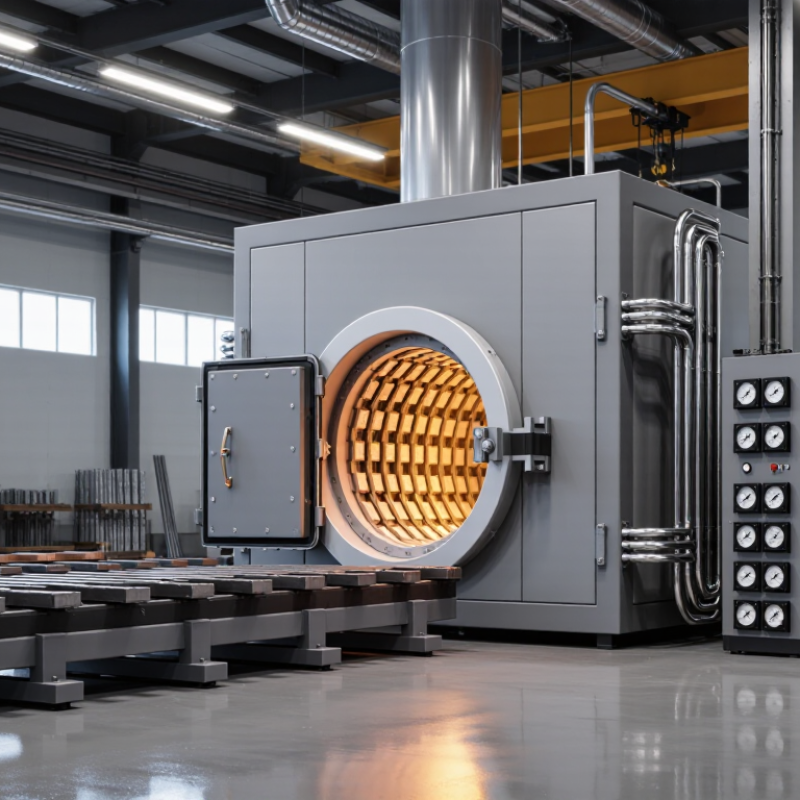
China Best Vacuum Furnace Heat Treatment Manufacturer?

Vacuum Furnace Heat Treatment: Definition, Purpose, and Core Processes

China Best Vacuum Furnace Heat Treatment Manufacturer?

Vacuum Furnace Heat Treatment: Definition, Purpose, and Core Processes

Vacuum furnace heat treatment is a controlled method for changing metal properties without exposing surfaces to air. The furnace removes oxygen, moisture, and other gases before heating begins. This reduces oxidation, discoloration, and unwanted surface reactions. In practical production, cleaner surfaces can reduce polishing and rework.

The core process includes loading, evacuation, heating, soaking, cooling, and inspection. Technicians select the temperature according to the alloy and required hardness. A controlled soaking period allows heat to reach the component evenly. Cooling may use vacuum, inert gas, or staged pressure control. Each choice affects hardness, toughness, distortion, and dimensional stability.

The purpose is not simply to make metal harder. Proper treatment can improve wear resistance, fatigue performance, and service reliability. Tool steels, stainless steels, aerospace parts, and precision components often require this process. Experienced operators monitor thermocouple readings, chamber pressure, gas purity, and cooling rates. Small loading errors can create uneven results. That detail is easy to underestimate.

No cycle is perfect.

Component thickness, geometry, and surface condition can change the outcome. I have found that a successful recipe still needs verification on real parts. Hardness testing, dimensional checks, and metallographic review provide stronger evidence than furnace settings alone.

Records should include the batch number, temperature curve, vacuum level, and inspection results. This discipline supports repeatability and makes process problems easier to trace.

Key Technologies Used in Modern Vacuum Heat Treatment Furnaces

Modern vacuum heat treatment furnaces combine controlled atmosphere technology with precise thermal management. A sealed chamber removes oxygen, moisture, and other contaminants before heating begins. This reduces oxidation and protects bright metal surfaces.

Multi-zone heating systems improve temperature uniformity across the work area.
Independent control zones adjust heat around complex loads and reduce uneven hardness. Calibrated thermocouples provide real-time feedback near critical parts. The controller then modifies power output within narrow temperature limits.

Vacuum pumps create stable low-pressure conditions during heating.
Partial-pressure gas control can also prevent excessive evaporation from certain alloys. After soaking, high-pressure inert gas quenching cools components quickly and evenly. Nozzle design matters here. Poor gas circulation may create soft spots or distortion.

Modern furnaces also use programmable recipes, alarm systems, and digital process records. These records help engineers compare batches and investigate unexpected results. Leak testing remains essential, because a small seal failure can affect surface quality. In practice, no furnace performs perfectly every time. Fixture placement, load size, and cleaning quality can change results. A carefully written recipe may still need adjustment after production trials. Experienced technicians inspect these details before approving repeat processing.

How to Evaluate China’s Best Vacuum Furnace Manufacturer

Choosing China’s best vacuum furnace manufacturer requires more than comparing prices or polished product photos. Evaluate proven engineering experience, process knowledge, and production discipline. Ask for chamber uniformity reports, vacuum leakage test results, temperature calibration records, and details about heating elements. A reliable manufacturer should explain how the furnace handles your alloy, load size, temperature range, and cooling requirements.

Visit the factory if possible. Look at welding quality, insulation assembly, control cabinets, and final inspection procedures. Request customer references from similar industries, not unrelated applications. Check whether engineers can discuss atmosphere control, thermal expansion, maintenance access, and spare-part availability in practical terms. Third-party certifications help, but they do not replace factory evidence. A certificate can be current while daily workmanship varies.

Tips: Send a sample loading diagram before requesting a quotation. Ask for guaranteed uniformity under actual loading conditions. Confirm acceptance testing, installation support, operator training, warranty limits, and response times in writing. During technical discussions, notice how the team handles difficult questions. Honest engineers may admit a limitation and suggest a design change. That is often more valuable than confident promises. I have seen buyers focus too heavily on maximum temperature, then overlook cooling speed and usable chamber space. That mistake becomes expensive later. Evaluate the complete operating cycle, energy consumption, data records, and long-term service—not only the furnace’s purchase price.

China Best Vacuum Furnace Heat Treatment Manufacturer? - How to Evaluate China’s Best Vacuum Furnace Manufacturer

Evaluation Dimension Key Data or Technical Benchmark Evidence to Request Suggested Weight Evaluation Guidance
Furnace Temperature Capability Common vacuum heat-treatment designs operate around 1,000–1,350 °C, depending on the heating element, insulation, chamber design, and process. Technical specification, temperature uniformity test, thermocouple calibration records, and sample production data. 15% Select a temperature range that matches the actual material and process rather than choosing the highest rated temperature.
Vacuum Performance Many heat-treatment furnaces specify ultimate vacuum levels in the approximate range of 1 × 10⁻³ to 5 × 10⁻⁴ Pa, subject to chamber size and system configuration. Ultimate-vacuum test report, leak-rate test, pump configuration, vacuum gauge details, and recorded pump-down curve. 15% Compare measured performance under defined test conditions; do not compare vacuum figures without the same chamber and testing method.
Temperature Uniformity High-quality systems commonly specify working-zone uniformity around ±5 °C to ±10 °C, depending on furnace size, temperature, load, and acceptance criteria. Temperature uniformity survey, load configuration, test temperature, sensor layout, and calibration certificates. 15% Require uniformity data from a loaded working zone, not only an empty-furnace test.
Heating and Cooling Control The system should provide programmable heating ramps, soaking stages, gas backfilling, and controlled cooling suitable for the specified alloy and treatment cycle. Process recipe examples, control-system functions, cooling-rate data, gas-flow specifications, and interlock list. 12% Confirm that the furnace can reproduce the required cycle, not just reach the target temperature.
Working Capacity and Load Design Chamber dimensions, maximum load mass, tray design, and usable hot-zone size should be defined separately; nominal chamber volume is not the same as usable capacity. Dimension drawing, load diagram, maximum load calculation, fixture material, and sample loading plan. 10% Check production throughput, part spacing, fixture compatibility, and access for maintenance.
Process Cleanliness and Atmosphere Vacuum processing reduces oxidation and contamination compared with open-atmosphere heating when the chamber, fixtures, pumps, and gas system are properly maintained. Chamber material details, outgassing procedure, gas purity requirements, contamination-control plan, and treated-part inspection results. 10% Evaluate the complete process system, because cleanliness depends on more than the vacuum pump alone.
Control, Monitoring, and Traceability A suitable system should record temperature, pressure, gas flow, alarms, recipe steps, and cycle history for process review. Controller screenshots, data-export format, alarm matrix, user-access levels, and sample batch records. 8% Prioritize systems that provide secure data storage and clear records for quality audits.
Safety and Compliance Essential safeguards include door or chamber interlocks, over-temperature protection, emergency shutdown, cooling-water monitoring, and electrical protection. Risk assessment, electrical schematics, safety-function test records, manuals, and applicable conformity documentation. 8% Verify compliance with the safety and electrical requirements of the destination country before purchase.
Quality Management and Manufacturing Control A documented quality system should control design changes, incoming materials, welding, assembly, calibration, testing, and final inspection. Quality-management certificate, inspection plan, welding records, calibration list, nonconformance procedure, and factory-audit access. 7% Treat certificates as supporting evidence and confirm that the documented system is used in actual production.
Testing, Acceptance, and After-Sales Support A complete supply scope should define factory acceptance testing, site acceptance testing, installation, operator training, spare parts, warranty, and response times. FAT/SAT protocol, warranty terms, service-level agreement, spare-parts list, training plan, and commissioning schedule. 10% Choose the supplier with the clearest measurable obligations, not only the lowest initial quotation.
Total Suggested Evaluation Weight 100% Use a weighted score together with technical verification and a documented acceptance test.

Note: Performance ranges are indicative industry benchmarks. Final requirements should be confirmed against the material, heat-treatment standard, load configuration, and applicable local safety regulations.

Quality Standards, Customization, and After-Sales Support

Choosing the best vacuum furnace heat treatment manufacturer in China requires more than comparing prices or maximum temperatures. Quality begins with measurable performance: vacuum leak-rate testing, temperature uniformity checks, calibrated thermocouples, and documented pressure stability. Ask for factory acceptance records, not only polished specifications. A furnace rated for 1,300°C may perform differently under a full load.

Customization should match the process, not merely the workshop layout. Chamber size, loading method, heating zones, gas-quenching speed, and recipe control all affect treatment results. Experienced manufacturers can review alloy type, batch weight, surface requirements, and production rhythm before proposing a design. Small details matter. Door seals, fixture materials, and sensor placement can influence distortion and discoloration. No standard model fits every application perfectly.

After-sales support often reveals the real manufacturing capability. Reliable service should include installation guidance, commissioning, operator training, maintenance schedules, spare-part access, and practical remote diagnosis. Response times should be written clearly, with responsibilities defined for both sides. Ask whether engineers can interpret temperature curves and vacuum logs, rather than simply replacing components. Some suppliers focus heavily on delivery and underprepare training; this is a weakness worth discussing openly. A careful manufacturer will also admit operating limits and recommend improvements after reviewing actual production data.

A Practical Checklist for Choosing the Right Chinese Supplier

China Best Vacuum Furnace Heat Treatment Manufacturer?

A Practical Checklist for Choosing the Right Chinese Supplier

Choosing a Chinese vacuum furnace supplier requires more than comparing prices. Start with your actual process requirements. Record the working temperature, chamber size, vacuum level, material type, and heating uniformity target. Ask for test data from a furnace with similar dimensions. A polished brochure is not proof.

Check the supplier’s engineering experience through drawings, control logic, and previous applications. Request details about heating elements, insulation, pumps, thermocouples, cooling systems, and leak testing. The supplier should explain how temperature accuracy is verified. Ask whether factory acceptance testing includes an empty-chamber test and a loaded test. Small details matter.

Review quality records and production controls. Confirm material certificates, wiring standards, inspection reports, and calibration documents. Ask for references from users processing comparable alloys or components. Speak with the technical team, not only the sales contact. Their answers often reveal real experience. Also examine installation support, operator training, spare-parts availability, and response times.

A reliable quotation should list every major item. Hidden exclusions can damage your budget later. Confirm delivery milestones, packaging, commissioning, and warranty conditions in writing. Do not rely on promises made during a video call. No checklist is perfect. I would still inspect the workshop, because clean offices cannot prove assembly quality. Look for active testing, labeled cables, organized parts, and technicians who can explain problems honestly.

China Best Vacuum Furnace Heat Treatment Manufacturer? A Practical Supplier Checklist

This 100-point framework helps buyers compare Chinese vacuum furnace suppliers without relying on company or brand names. Give the highest scores to measurable quality controls, process performance, documentation, and long-term service capability. Verify each item through technical records, factory audits, sample testing, and a formal factory acceptance test.

Copyright 2025 Fluidra S.A. | Created by BCM Marketing Agencia Privacy Policy Legal note | Cookie policy |

Technical cookies are strictly necessary for our website to work and you can navigate through it. These types of cookies are those that, for example, allow us to identify you, give you access to certain restricted parts of the page if necessary, or remember different options or services already selected by you, such as your privacy preferences. Therefore, they are activated by default, your authorization not being necessary in this regard. Through the configuration of your browser, you can block or alert the presence of this type of cookies, although such blocking will affect the proper functioning of the different functionalities of our website.


The analysis cookies allow us to study the navigation of the users of our website in general (for example, which sections of the page are the most visited, which services are used most and if they work correctly, etc.). From the statistical information on navigation on our website, we can improve both the operation of the page itself and the different services it offers. Therefore, these cookies do not have an advertising purpose, but only serve to make our website work better, adapting to our users in general. By activating them you will contribute to this continuous improvement. You can enable or disable these cookies by checking the corresponding box, being disabled by default.


Functionality cookies allow us to remember your preferences, to personalize certain characteristics and general options of our website, every time you access it (for example, the language in which the information is presented to you, the sections marked as favorites, your browser type, etc.) Therefore, this type of cookies does not have an advertising purpose, but by activating them you will improve the functionality of the website (for example, adapting to your type of browser) and the customization of it based on your preferences (for example, by presenting the information in the language that you have chosen in previous occasions), which will contribute to the ease, usability and comfort of our page during your navigation. You can enable or disable these cookies by checking the corresponding box, being disabled by default.


Advertising cookies allow us to manage the advertising spaces included in our website based on criteria such as the content shown or the frequency in which the ads are displayed. For example, if you have been shown the same ad several times on our website, and you have not shown a personal interest by clicking on it, it will not appear again. In summary, by activating this type of cookies, the advertising shown on our website will be more useful and diverse, and less repetitive. You can enable or disable these cookies by checking the corresponding box, being disabled by default.


Behavioral advertising cookies allow us to obtain information based on the observation of your browsing habits and behaviors on the web, in order to show you advertising content that best suits your personal tastes and interests. To understand it in a very simple way, we will give you a fictitious example: if your last searches on the web were related to suspense literature, we would show you advertising about suspense books. Therefore, activating this type of cookies, the advertising that we show you on our website will not be generic, but will be oriented to your searches, tastes and interests, therefore adjusting exclusively to you. You can enable or disable these cookies by checking the corresponding box, being disabled by default.
To understand it in a very simple way, we will give you a fictitious example: if your last searches on the web were related to suspense literature, we would show you advertising about suspense books. Therefore, activating this type of cookies, the advertising that we show you on our website will not be generic, but will be oriented to your searches, tastes and interests, therefore adjusting exclusively to you. You can enable or disable these cookies by checking the corresponding box, being disabled by default.

SAVE

We use our own and third-party cookies to ensure the proper functioning of the website and to analyse our services, improve your experience on our website and show you advertisements related to your interests according to profiling based on your browsing habits (e.g. websites visited). You can accept all cookies by clicking "ACCEPT" or set or reject them by clicking here. If you would like to know more about the use of cookies, please see our COOKIE POLICY.


ACCEPT ALL
Reject no essentials


