
China Best Inverter Output What Should Buyers Know?
FLUID HANDLING EXPERTS

Blog, all our news

China Best Inverter Output What Should Buyers Know?

Inverter Output is more than the wattage printed on a product label. It describes the usable AC power an inverter can deliver, under specified operating conditions. For buyers comparing China-made models, the important details include rated output, peak output, efficiency, voltage range, and behavior in high temperatures. A bright showroom test is not enough. Heat changes everything.

The market is growing quickly. The IEA Photovoltaic Power Systems Programme’s Trends in Photovoltaic Applications 2024 reports more than 400 GW of new solar capacity installed worldwide in 2023, bringing cumulative capacity to around 1.6 TW. These figures describe solar capacity, not inverter shipments, but they show why clear output specifications matter. Gaëtan Masson, a co-author of the IEA PVPS report, offers a useful market-level lesson: as solar deployment expands, dependable performance comparisons become increasingly important. This is a paraphrase of the report’s context, not a verbatim quotation.

Buyers should check whether output figures refer to continuous AC power, short-duration peak power, or laboratory conditions. They should also look for test methods, temperature limits, and warranty terms. Numbers can mislead. A unit rated for a certain output may deliver less under sustained heat or an unsuitable electrical setup. Ask suppliers for the relevant datasheets and independent test documentation, then compare like with like. Small details matter. Specifications do not answer every question, either; installation conditions and system design can change real-world performance. That part deserves a closer look.
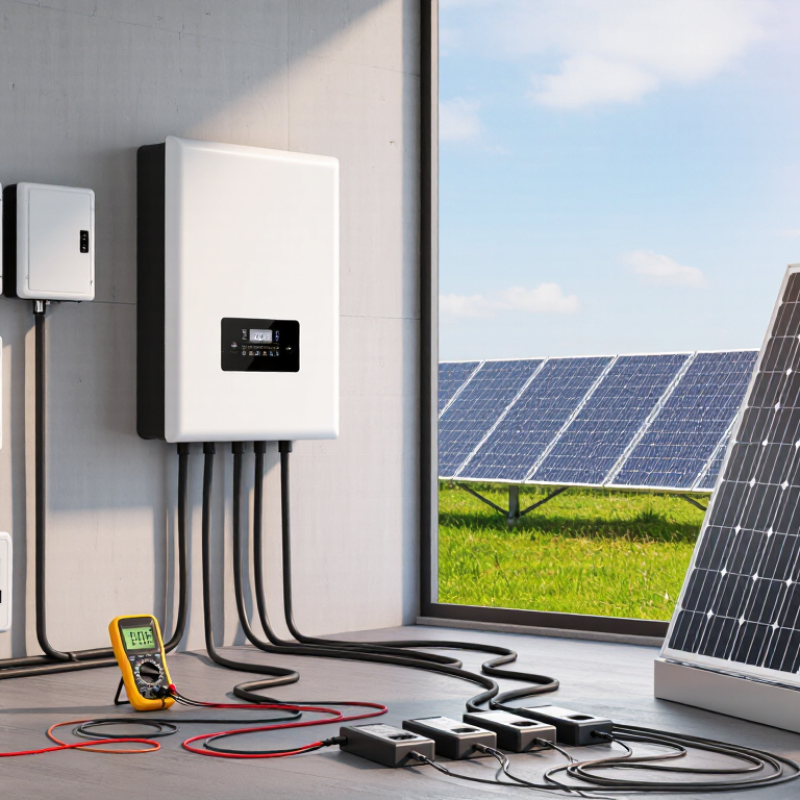
China Best Inverter Output What Should Buyers Know?

Understanding Inverter Output and Its Key Performance Measures

Inverter output describes the usable electrical power delivered to connected equipment. Check continuous output, measured in watts, rather than relying only on a brief peak rating. A refrigerator, for example, may draw extra power when its compressor starts. That short surge can trip an undersized inverter, even when its running demand looks modest. Confirm the output voltage and frequency match the equipment. For sensitive electronics, a stable waveform can also matter.

Tips: List each device’s running watts and startup needs. Add the likely simultaneous loads, then leave a practical margin. Do not treat a peak rating as power available all day.

Efficiency tells you how much input energy becomes usable output. It changes with load, temperature, and installation conditions. An inverter may perform less efficiently when lightly loaded, while heat can reduce its available output. Check the performance data at loads similar to your real use, not just one headline figure. If possible, compare stated ratings with measurements from a properly rated power meter. I would not assume every setup behaves exactly like a chart; cable length and ventilation can make a difference. Keep clear records of the load and operating conditions.

How Chinese Inverters Specify Continuous and Peak Output

Chinese inverter datasheets usually list continuous AC output separately from peak output. Continuous output is the power an inverter can sustain under specified operating conditions. Peak output may last only seconds or minutes, depending on the model. Ask for its duration, temperature limit, and whether the rating is expressed in watts or volt-amperes. That gap matters. A large peak figure does not guarantee that several appliances can run together for long.

NREL’s PVWatts technical documentation uses 96% default inverter efficiency and a 1.2 DC-to-AC ratio in its standard modeling assumptions. These are modeling inputs, not guarantees for a particular unit. The ratio describes the relationship between the solar array’s DC capacity and the inverter’s AC rating; it does not mean the inverter can continuously deliver 120% of its rated output. Check the continuous rating against your expected simultaneous loads, such as a pump starting while a refrigerator runs. Also review the datasheet’s operating-temperature range: heat can reduce available output. A specification table alone can be incomplete, so request test conditions and peak-output duration in writing.

Comparing Output Types Across Leading Chinese Inverter Models

Chinese inverter models commonly offer single-phase and three-phase AC output. Single-phase systems suit many homes, while three-phase units serve larger buildings and heavier loads. In China, typical nominal voltages are 220 V and 380 V, respectively. Grid-tied output follows the utility supply; it usually shuts down during an outage. Hybrid models may provide a separate backup output, but buyers should check its continuous power, surge rating, and transfer time. Check the load.

Efficiency figures need context. NREL’s 2024 Annual Technology Baseline uses about 98.5% inverter efficiency in utility-scale solar modeling; that’s a modeling assumption, not a guarantee for every unit. IEA PVPS reported roughly 447 GW of new solar capacity worldwide in 2023, increasing the importance of matching inverter output to real operating conditions. A high peak rating can look attractive, yet heat, partial shading, and low-load operation affect performance. A neat number can mislead. Compare the rated AC output, phase, voltage, and backup capability against the site’s actual appliances, not just the product headline.

Factors That Affect Inverter Output in Real-World Use

An inverter’s rated output is only a starting point. In real use, heat, wiring, battery condition, and connected equipment all affect how much power reaches a load. A unit rated for 3,000 watts may deliver less continuously if it sits in a hot, poorly ventilated cabinet. Check both continuous output and surge capacity; refrigerators and pumps can briefly draw several times their running power when starting.

Temperature matters. Internal components may reduce output as the enclosure heats up, so leave clear space around vents and avoid direct sun. DC-side losses matter too. Long, thin battery cables can cause voltage drop, especially under heavy loads. Keep cable runs short and appropriately sized, and confirm the inverter’s input voltage matches the battery system. Small details add up.

The load itself changes the result. Motors and some power supplies have a lower power factor, meaning their apparent demand can exceed the wattage printed on the label. Modified waveforms may also perform poorly with certain sensitive equipment. A neat spreadsheet can still mislead. Test the expected combination of appliances, and allow headroom rather than planning to run at the limit. Output also varies as the battery discharges; low-voltage protection may shut the inverter down before the battery is fully empty. Ask for test conditions behind published ratings, including ambient temperature and duration. Then compare those conditions with the installation you actually have.

How Buyers Can Match Inverter Output to Their Power Needs

Matching inverter output to your actual power needs starts with a simple load list. Check the wattage labels on devices you expect to run at the same time, then add those figures. A 700-watt microwave, 100-watt router, and 60-watt lights need about 860 watts together. Allow extra capacity rather than operating continuously at the inverter’s limit. The precise margin depends on the equipment and operating conditions.

Pay special attention to startup demand. Refrigerators, pumps, and some power tools can briefly draw much more than their running wattage. Check both the inverter’s continuous output and its surge rating, and confirm how long it can support a surge. For example, a pump rated at 500 watts may need substantially more power when its motor starts. Battery voltage, wiring, and temperature can also affect performance. A calculation is useful, but it is still an estimate.

Tips: List simultaneous loads, not every appliance in the building. Check manufacturer specifications for running and startup watts. Leave reasonable headroom, and review the setup if an inverter frequently shuts down or feels unusually hot.

China Best Inverter Output: What Should Buyers Know?

Match an inverter’s continuous output to the running loads you expect to use, and check that its surge rating can handle motor start-up. The figures below are illustrative typical appliance wattages; actual requirements vary by model.

For appliances that may run at the same time, add their running watts to estimate the continuous output needed. Also allow for the start-up surge of motors such as refrigerators, pumps, and air conditioners. Check appliance nameplates and inverter specifications before choosing.

Copyright 2025 Fluidra S.A. | Created by BCM Marketing Agencia Privacy Policy Legal note | Cookie policy |

Technical cookies are strictly necessary for our website to work and you can navigate through it. These types of cookies are those that, for example, allow us to identify you, give you access to certain restricted parts of the page if necessary, or remember different options or services already selected by you, such as your privacy preferences. Therefore, they are activated by default, your authorization not being necessary in this regard. Through the configuration of your browser, you can block or alert the presence of this type of cookies, although such blocking will affect the proper functioning of the different functionalities of our website.


The analysis cookies allow us to study the navigation of the users of our website in general (for example, which sections of the page are the most visited, which services are used most and if they work correctly, etc.). From the statistical information on navigation on our website, we can improve both the operation of the page itself and the different services it offers. Therefore, these cookies do not have an advertising purpose, but only serve to make our website work better, adapting to our users in general. By activating them you will contribute to this continuous improvement. You can enable or disable these cookies by checking the corresponding box, being disabled by default.


Functionality cookies allow us to remember your preferences, to personalize certain characteristics and general options of our website, every time you access it (for example, the language in which the information is presented to you, the sections marked as favorites, your browser type, etc.) Therefore, this type of cookies does not have an advertising purpose, but by activating them you will improve the functionality of the website (for example, adapting to your type of browser) and the customization of it based on your preferences (for example, by presenting the information in the language that you have chosen in previous occasions), which will contribute to the ease, usability and comfort of our page during your navigation. You can enable or disable these cookies by checking the corresponding box, being disabled by default.


Advertising cookies allow us to manage the advertising spaces included in our website based on criteria such as the content shown or the frequency in which the ads are displayed. For example, if you have been shown the same ad several times on our website, and you have not shown a personal interest by clicking on it, it will not appear again. In summary, by activating this type of cookies, the advertising shown on our website will be more useful and diverse, and less repetitive. You can enable or disable these cookies by checking the corresponding box, being disabled by default.


Behavioral advertising cookies allow us to obtain information based on the observation of your browsing habits and behaviors on the web, in order to show you advertising content that best suits your personal tastes and interests. To understand it in a very simple way, we will give you a fictitious example: if your last searches on the web were related to suspense literature, we would show you advertising about suspense books. Therefore, activating this type of cookies, the advertising that we show you on our website will not be generic, but will be oriented to your searches, tastes and interests, therefore adjusting exclusively to you. You can enable or disable these cookies by checking the corresponding box, being disabled by default.
To understand it in a very simple way, we will give you a fictitious example: if your last searches on the web were related to suspense literature, we would show you advertising about suspense books. Therefore, activating this type of cookies, the advertising that we show you on our website will not be generic, but will be oriented to your searches, tastes and interests, therefore adjusting exclusively to you. You can enable or disable these cookies by checking the corresponding box, being disabled by default.

SAVE

We use our own and third-party cookies to ensure the proper functioning of the website and to analyse our services, improve your experience on our website and show you advertisements related to your interests according to profiling based on your browsing habits (e.g. websites visited). You can accept all cookies by clicking "ACCEPT" or set or reject them by clicking here. If you would like to know more about the use of cookies, please see our COOKIE POLICY.


ACCEPT ALL
Reject no essentials


