
China Best Automotive Motor Tester Manufacturer?
FLUID HANDLING EXPERTS

Blog, all our news

China Best Automotive Motor Tester Manufacturer?

Choosing the right Automotive Motor Tester manufacturer in China takes more than comparing prices or reading a polished catalog. The real test is whether equipment performs consistently on the workshop floor, where a motor warms up, vibration changes, and a technician needs clear results. Henry Ford, an influential automotive manufacturing pioneer, is often credited with saying, “Quality means doing it right when no one is looking.” That principle still matters. A reliable tester should deliver repeatable measurements, protect sensitive components, and make faults easier to diagnose.

Buyers should examine measurement range, test modes, calibration procedures, software usability, and after-sales support. Ask how the manufacturer validates accuracy, handles custom requirements, and provides documentation. Request a live demonstration using a motor similar to yours. Watch the readings, not just the presentation. Small details count: stable connections, legible screens, and results technicians can explain. Shortcuts show up later.

China has suppliers with different strengths, from standard production models to tailored test systems. Still, no brochure proves suitability. A factory visit or sample evaluation may reveal gaps that sales materials miss. That is worth admitting. A technically strong unit can still disappoint if training or service is weak. This guide explores how to assess manufacturers, compare capabilities, and identify an Automotive Motor Tester that fits real operating needs—not just a spreadsheet.
China Best Automotive Motor Tester Manufacturer?

What Is an Automotive Motor Tester and How Does It Work?

China Best Automotive Motor Tester Manufacturer?

What Is an Automotive Motor Tester and How Does It Work?

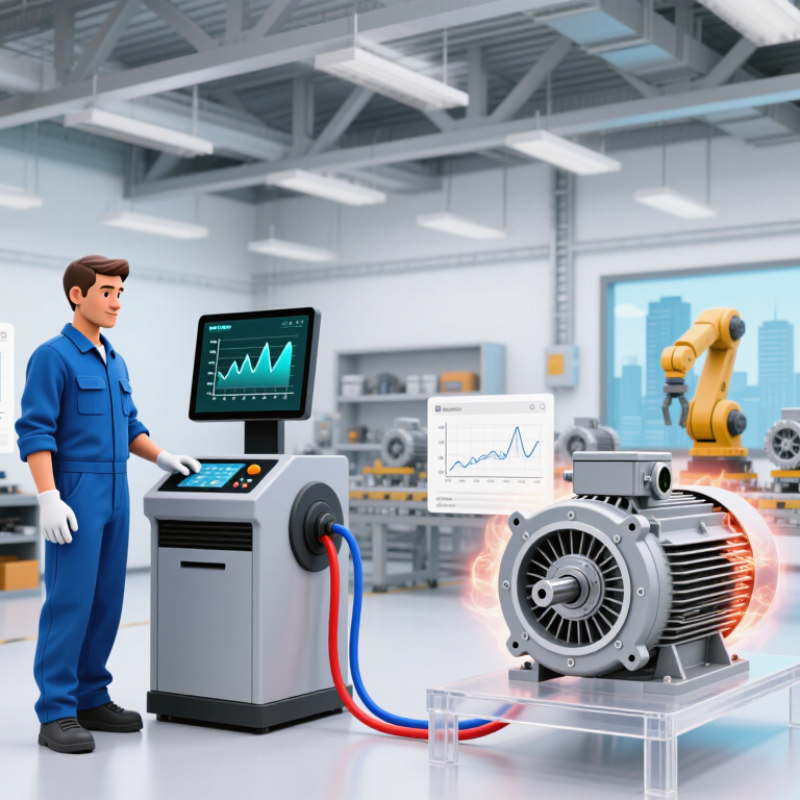
An automotive motor tester checks whether an electric motor performs within expected electrical and operating ranges. Depending on its design, it may test starter motors, cooling fans, window motors, or fuel-pump motors. The technician connects leads or sensors, then measures values such as voltage, current, resistance, speed, or temperature. Some tests use a controlled power supply; others monitor the motor while it runs in the vehicle. A sharp current spike, slow rotation, or unusual heat can point to wear, a poor connection, or mechanical drag. Small clues matter.

Tips: Check the tester’s range before connecting it, and follow the motor’s service procedure. Secure loose leads away from moving parts. Record the readings and test conditions; a number without context can mislead.

Results are most useful when compared with the vehicle maker’s specifications or a known-good motor tested under similar conditions. A low reading does not automatically mean the motor has failed. Battery condition, wiring resistance, load, and temperature can all affect measurements. I have seen a setup issue look like a motor fault, so repeat doubtful tests and inspect the connections. Testers help narrow the cause; they do not replace careful diagnosis.

Which Motor Types and Vehicle Systems Can It Test?

An automotive motor tester can cover several motor types, but its fixtures and software must match the unit under test. Common options include brushed DC motors, brushless DC motors, stepper motors, and AC induction motors. Some test setups also support servo motors. Typical checks include winding resistance, current draw, speed, back EMF, and phase balance. The exact measurements depend on the tester’s design.

On a vehicle, testing may include the starter motor and alternator, as well as traction motors in electric or hybrid systems. Smaller motors are easy to overlook: cooling fans, HVAC blowers, fuel pumps, wipers, and window or seat actuators can also be evaluated. A useful test compares results with the motor’s specifications and checks for uneven current, unusual noise, or excess heat. One limitation is easy to miss: a bench result may not reproduce the load or wiring conditions inside the vehicle.

Tips: Confirm the motor type, rated voltage, and test fixture before connecting it. For high-voltage systems, use equipment rated for the application and follow the vehicle’s service procedure. Record readings; trends can reveal faults that one test misses.

What Features Define a High-Quality Automotive Motor Tester?

A high-quality automotive motor tester should make readings trustworthy, not merely impressive. For technicians checking a starter or alternator, stable voltage, current, resistance, and speed measurements help distinguish a weak motor from a poor connection. A clear display should show units, range, and polarity at a glance. Waveform capture can reveal irregular commutation or voltage dips that one reading may miss. Small details matter. Leads need firm clips, flexible insulation, and enough length to reach cramped engine bays. Overload protection and suitable electrical isolation also support safer workshop checks.

Repeatability is essential. Take the same measurement twice, and the result should stay close when conditions have not changed. Documented accuracy, a sensible calibration process, and replaceable probes make a tester easier to trust over time. Data storage or USB export can help compare service results, provided timestamps and units remain clear. No tester is perfect; even a bright screen cannot fix a loose probe or incorrect setup. That is worth remembering. A practical unit should explain its limits, respond quickly, and withstand routine handling without making each task feel complicated.

How to Evaluate Automotive Motor Tester Manufacturers in China?

China Best Automotive Motor Tester Manufacturer?

How to Evaluate Automotive Motor Tester Manufacturers in China?

Choosing a Chinese automotive motor tester manufacturer starts with the test, not the sales brochure. Define motor type, voltage, speed, torque, and production takt time before requesting quotations. A supplier should explain measurement accuracy across the full range, not only at one convenient point.

Ask for sample reports showing repeatability, limits, and failure records. Small details matter. Check whether fixtures hold the motor shaft securely and whether adapters cover your actual variants.

For end-of-line use, ask how the tester handles a noisy signal, a stalled rotor, or changing ambient temperature. Request an acceptance test using your own motor when feasible.

Evaluate engineering depth through questions about calibration intervals, traceable instruments, data export, and software updates. Confirm that operators can understand alarms without opening a manual each time. Safety guards and emergency stops should suit the equipment’s operating sequence.

Ask what support includes: response hours, spare sensors, remote diagnosis, and maintenance training. Compare total operating cost, not just purchase price. A low quote can hide fixture fees or long delivery times.

One limitation deserves honesty: factory demonstrations may use ideal samples, so they cannot prove performance on every production variation. A pilot run can expose gaps, sometimes inconvenient ones. That is useful. Choose a manufacturer that documents open issues and agrees on measurable acceptance criteria before shipment.

How to Choose the Best Manufacturer for Your Testing Needs?

Choosing an automotive motor tester manufacturer starts with your actual test conditions, not a catalog headline. List the motor types, speed range, torque limits, and duty cycle you need to measure. A bench for small traction motors may require different fixtures and load capacity than one for auxiliary motors. Small details matter.

Ask how the tester handles temperature, vibration, and measurement repeatability. Request a sample report showing units, test steps, and recorded values. Check whether the software can export data in a format your engineers already use. Ask for evidence. Calibration records and clear acceptance criteria help you judge results, not just equipment appearance.

A reliable manufacturer should discuss installation, operator training, spare parts, and response times before you place an order. If possible, run a representative motor through a demonstration test. Watch how the team mounts it, sets limits, and explains unusual readings. A polished demo is useful, but it cannot answer every question. I would also ask what the system does when a sensor drifts or a test is interrupted. No supplier or tester is perfect; vague answers about these situations deserve a second look.

Copyright 2025 Fluidra S.A. | Created by BCM Marketing Agencia Privacy Policy Legal note | Cookie policy |

Technical cookies are strictly necessary for our website to work and you can navigate through it. These types of cookies are those that, for example, allow us to identify you, give you access to certain restricted parts of the page if necessary, or remember different options or services already selected by you, such as your privacy preferences. Therefore, they are activated by default, your authorization not being necessary in this regard. Through the configuration of your browser, you can block or alert the presence of this type of cookies, although such blocking will affect the proper functioning of the different functionalities of our website.


The analysis cookies allow us to study the navigation of the users of our website in general (for example, which sections of the page are the most visited, which services are used most and if they work correctly, etc.). From the statistical information on navigation on our website, we can improve both the operation of the page itself and the different services it offers. Therefore, these cookies do not have an advertising purpose, but only serve to make our website work better, adapting to our users in general. By activating them you will contribute to this continuous improvement. You can enable or disable these cookies by checking the corresponding box, being disabled by default.


Functionality cookies allow us to remember your preferences, to personalize certain characteristics and general options of our website, every time you access it (for example, the language in which the information is presented to you, the sections marked as favorites, your browser type, etc.) Therefore, this type of cookies does not have an advertising purpose, but by activating them you will improve the functionality of the website (for example, adapting to your type of browser) and the customization of it based on your preferences (for example, by presenting the information in the language that you have chosen in previous occasions), which will contribute to the ease, usability and comfort of our page during your navigation. You can enable or disable these cookies by checking the corresponding box, being disabled by default.


Advertising cookies allow us to manage the advertising spaces included in our website based on criteria such as the content shown or the frequency in which the ads are displayed. For example, if you have been shown the same ad several times on our website, and you have not shown a personal interest by clicking on it, it will not appear again. In summary, by activating this type of cookies, the advertising shown on our website will be more useful and diverse, and less repetitive. You can enable or disable these cookies by checking the corresponding box, being disabled by default.


Behavioral advertising cookies allow us to obtain information based on the observation of your browsing habits and behaviors on the web, in order to show you advertising content that best suits your personal tastes and interests. To understand it in a very simple way, we will give you a fictitious example: if your last searches on the web were related to suspense literature, we would show you advertising about suspense books. Therefore, activating this type of cookies, the advertising that we show you on our website will not be generic, but will be oriented to your searches, tastes and interests, therefore adjusting exclusively to you. You can enable or disable these cookies by checking the corresponding box, being disabled by default.
To understand it in a very simple way, we will give you a fictitious example: if your last searches on the web were related to suspense literature, we would show you advertising about suspense books. Therefore, activating this type of cookies, the advertising that we show you on our website will not be generic, but will be oriented to your searches, tastes and interests, therefore adjusting exclusively to you. You can enable or disable these cookies by checking the corresponding box, being disabled by default.

SAVE

We use our own and third-party cookies to ensure the proper functioning of the website and to analyse our services, improve your experience on our website and show you advertisements related to your interests according to profiling based on your browsing habits (e.g. websites visited). You can accept all cookies by clicking "ACCEPT" or set or reject them by clicking here. If you would like to know more about the use of cookies, please see our COOKIE POLICY.


ACCEPT ALL
Reject no essentials


