
China Best Fuse Terminal Block Manufacturer and Supplier
FLUID HANDLING EXPERTS

Blog, all our news

China Best Fuse Terminal Block Manufacturer and Supplier

Choosing the right Fuse Terminal Block manufacturer in China involves more than comparing prices. Buyers should examine current ratings, wire ranges, fault protection, and the conditions inside the electrical enclosure. A compact block may save rail space, while an unclear marking can slow installation and inspection. Small details matter. Look for designs that match the intended circuit and allow secure, repeatable connections. Ask suppliers how they verify clamping performance, insulation, and consistency between production batches. Fit matters.

A capable supplier should provide clear drawings, material information, sample options, and responsive technical support. These details help engineers assess whether a product suits control panels, power distribution systems, or other specified applications. Before placing a larger order, compare samples against the stated specifications and check terminal access with the actual wire size. Paper specifications can appear complete, yet practical assembly may reveal a tight screwdriver angle or cramped spacing. That is worth questioning. Buyers can also discuss customization, lead times, packaging, and quality checks before finalizing a project. No catalog replaces careful evaluation. China offers many manufacturers and suppliers, but the “best” choice depends on the application, documentation, and dependable communication—not a broad claim alone. A considered selection process helps reduce avoidable delays and supports safer, more consistent panel assembly.
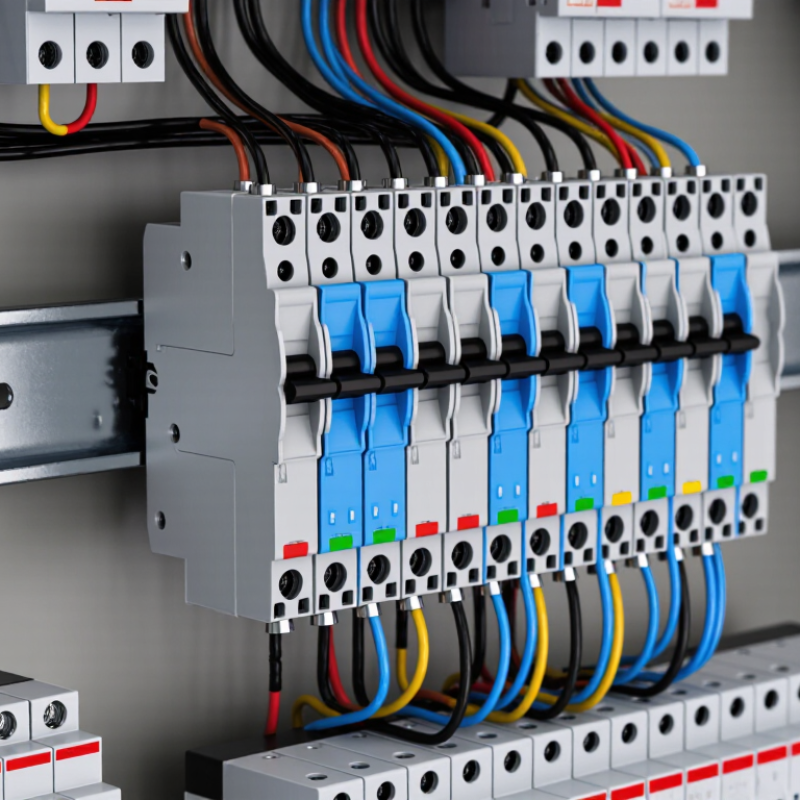
China Best Fuse Terminal Block Manufacturer and Supplier

What Is a Fuse Terminal Block?

A fuse terminal block combines a wire connection point with a fuse holder in one compact component. It mounts on a DIN rail in many control panels. One side receives the incoming supply; the other connects to a protected branch circuit. If current exceeds the fuse’s rated limit for long enough, the fuse element opens and interrupts that branch. The rest of the panel may continue operating, depending on the circuit design. Some blocks include a small indicator that makes a blown fuse easier to spot. A useful detail, but not a substitute for testing.

Selection takes more than matching the fuse’s amp rating. Check the block’s rated voltage, current, conductor range, fuse size, and permitted fault-current conditions. Then verify that the chosen fuse suits the connected equipment and wiring. A fuse that is too large may not protect the conductor adequately; one that is too small may interrupt normal operation. That matters. Also consider heat inside a crowded enclosure, where nearby components can affect performance. I would not assume that two blocks with similar dimensions share the same ratings. Consult the product datasheet and applicable panel design requirements before installation. An overlooked terminal detail can turn routine maintenance into unnecessary troubleshooting.

How a Fuse Terminal Block Protects Electrical Circuits

A fuse terminal block places a replaceable fuse directly in the circuit path. Conductors enter the block and are clamped under metal terminals, while the fuse element carries normal current. If current rises beyond the fuse’s rated limit for long enough, the element heats and melts. The circuit opens, stopping current from reaching downstream equipment. A small part. But its location matters.

Protection depends on choosing a fuse that matches the circuit’s current and voltage requirements. A fuse rated too high may not open soon enough to protect wiring; one rated too low may interrupt ordinary operation. For example, a control panel may use separate fused branches for sensors and actuators, so a fault in one branch does not automatically disable every connected device. Check the ratings and the equipment instructions.

Installation details count, too. Loose terminal screws can create heat, while damaged insulation may expose conductors. During maintenance, a technician should isolate the supply and confirm the circuit is de-energized before replacing a fuse. The block does not correct poor wiring, and it cannot prevent every failure. Still, clear markings and secure connections make inspection easier. I would not treat a fuse rating as a guess; verify it against the design and the connected load.

Types, Components, and Key Specifications

Fuse terminal blocks combine a fuse holder with a connection point, helping protect individual control circuits inside electrical panels. Common types include screw-clamp, spring-clamp, and disconnect versions. Some models include a small indicator that lights when a fuse opens, but the indicator may depend on circuit voltage and wiring. Check its operation in the product specifications.

Key components include the insulating housing, conductive terminals, fuse clips, and mounting foot. The housing separates live parts, while the terminals hold conductors securely. Spring-clamp connections can speed installation; screw clamps allow familiar, adjustable tightening. A DIN-rail foot makes panel mounting straightforward. Small details matter. A block that looks compact on a drawing may leave little room for wiring or fuse replacement in a real enclosure.

Compare rated voltage and current with the circuit requirements, and confirm the permitted fuse size and type. Check the conductor range, terminal method, and short-circuit rating where specified. Also consider ambient temperature and the number of circuits packed side by side, since heat can affect performance. One easy-to-miss point: a fuse’s rating does not automatically match the terminal block’s rating. Verify both, then check the assembled panel for clear access and secure connections.

Common Cylindrical Fuse Sizes for Fuse Terminal Blocks

The chart compares the nominal length and diameter of three common cylindrical cartridge fuse sizes. Check that the fuse terminal block accepts the selected fuse size; voltage, current, and wire-size ratings should always be verified against the product datasheet.

Common Applications of Fuse Terminal Blocks

Common Applications of Fuse Terminal Blocks

Fuse terminal blocks are used in control cabinets to protect individual branches of a circuit. In a packaging machine, for example, separate fused terminals can serve sensors, indicator lamps, and small actuators. If one branch develops a fault, its fuse can open without necessarily interrupting every other branch. This makes troubleshooting more manageable. Small details matter.

They also appear in HVAC equipment, lighting panels, and process machinery, where compact wiring and clear circuit separation are useful. A technician can identify a branch, check its fuse, and replace it without disturbing nearby connections. Selection still requires care: verify the voltage and current ratings, compatible fuse type, conductor size, and available fault current. A terminal block is not a substitute for checking the circuit’s protection requirements.

Tips: Label each fused circuit at both the terminal and the wiring diagram. Keep replacement fuses accessible, and use only the specified type and rating. Leave enough working space for inspection. In crowded cabinets, access is easy to underestimate.

Common Applications of Fuse Terminal Blocks

Application Typical Circuits Protected How the Fuse Terminal Block Is Used Common Design Considerations
Industrial control panels Control transformers, relays, contactors, and auxiliary control circuits Provides a convenient point to connect and protect individual control-circuit conductors. Check the circuit voltage, required current rating, conductor size, and applicable panel standards.
Programmable logic controller (PLC) systems Digital input and output circuits, sensor supplies, and interface devices Helps isolate and protect selected field circuits, making troubleshooting and fuse replacement more accessible. Use protection appropriate to the connected device and consider whether fused or unfused common connections are required.
Machine and equipment wiring Solenoid valves, proximity sensors, limit switches, and small actuators Groups a conductor termination and overcurrent-protection point in a compact terminal-strip layout. Allow for vibration, available enclosure space, maintenance access, and the equipment’s wiring documentation.
HVAC and building-control panels Thermostat circuits, control relays, dampers, and auxiliary low-voltage loads Protects selected control branches while keeping connections organized within the control enclosure. Confirm the supply type and voltage, load current, fuse characteristics, and local electrical requirements.
Instrumentation and process control Transmitters, signal-conditioning devices, and instrument power branches Can provide branch-circuit protection and a convenient disconnection point where the terminal-block design supports it. For sensitive or low-current devices, select a compatible fuse and verify that the protection will not interrupt normal operation.
Power distribution and auxiliary circuits Control-power branches and other appropriately rated auxiliary loads Distributes a protected supply to individual circuits from a terminal assembly. Verify the block’s rated voltage, current, short-circuit conditions, wire range, and any required upstream protection.

How to Evaluate Fuse Terminal Block Manufacturers and Suppliers in China

Evaluating a fuse terminal block manufacturer in China starts with the application, not the catalog. Share the fuse format, rated current and voltage, conductor range, and expected ambient temperature. Ask how the design manages heat around the fuse clip and terminal screw. A compact sample can look solid. It may still run hot under continuous load. Not enough.

Request current drawings, material specifications, and test records tied to the exact model. Check whether ratings cover the assembled terminal block, rather than a component alone. During sample review, inspect screw seating, wire entry, markings, and plastic condition after tightening. If possible, compare temperature rise under a defined load with the supplier’s stated limits. Ask how production lots are checked and how design changes are communicated.

Supplier evaluation also depends on answers after the first quotation. A technically capable team should clarify installation details and explain test limits without vague promises. Check lead times, sample availability, change control, and traceability for clips, housings, and screws. I would not treat a quick reply as proof of quality; that is an easy mistake. Factory audits and independent test reports can add confidence, but neither replaces checking the product in its intended panel.

Copyright 2025 Fluidra S.A. | Created by BCM Marketing Agencia Privacy Policy Legal note | Cookie policy |

Technical cookies are strictly necessary for our website to work and you can navigate through it. These types of cookies are those that, for example, allow us to identify you, give you access to certain restricted parts of the page if necessary, or remember different options or services already selected by you, such as your privacy preferences. Therefore, they are activated by default, your authorization not being necessary in this regard. Through the configuration of your browser, you can block or alert the presence of this type of cookies, although such blocking will affect the proper functioning of the different functionalities of our website.


The analysis cookies allow us to study the navigation of the users of our website in general (for example, which sections of the page are the most visited, which services are used most and if they work correctly, etc.). From the statistical information on navigation on our website, we can improve both the operation of the page itself and the different services it offers. Therefore, these cookies do not have an advertising purpose, but only serve to make our website work better, adapting to our users in general. By activating them you will contribute to this continuous improvement. You can enable or disable these cookies by checking the corresponding box, being disabled by default.


Functionality cookies allow us to remember your preferences, to personalize certain characteristics and general options of our website, every time you access it (for example, the language in which the information is presented to you, the sections marked as favorites, your browser type, etc.) Therefore, this type of cookies does not have an advertising purpose, but by activating them you will improve the functionality of the website (for example, adapting to your type of browser) and the customization of it based on your preferences (for example, by presenting the information in the language that you have chosen in previous occasions), which will contribute to the ease, usability and comfort of our page during your navigation. You can enable or disable these cookies by checking the corresponding box, being disabled by default.


Advertising cookies allow us to manage the advertising spaces included in our website based on criteria such as the content shown or the frequency in which the ads are displayed. For example, if you have been shown the same ad several times on our website, and you have not shown a personal interest by clicking on it, it will not appear again. In summary, by activating this type of cookies, the advertising shown on our website will be more useful and diverse, and less repetitive. You can enable or disable these cookies by checking the corresponding box, being disabled by default.


Behavioral advertising cookies allow us to obtain information based on the observation of your browsing habits and behaviors on the web, in order to show you advertising content that best suits your personal tastes and interests. To understand it in a very simple way, we will give you a fictitious example: if your last searches on the web were related to suspense literature, we would show you advertising about suspense books. Therefore, activating this type of cookies, the advertising that we show you on our website will not be generic, but will be oriented to your searches, tastes and interests, therefore adjusting exclusively to you. You can enable or disable these cookies by checking the corresponding box, being disabled by default.
To understand it in a very simple way, we will give you a fictitious example: if your last searches on the web were related to suspense literature, we would show you advertising about suspense books. Therefore, activating this type of cookies, the advertising that we show you on our website will not be generic, but will be oriented to your searches, tastes and interests, therefore adjusting exclusively to you. You can enable or disable these cookies by checking the corresponding box, being disabled by default.

SAVE

We use our own and third-party cookies to ensure the proper functioning of the website and to analyse our services, improve your experience on our website and show you advertisements related to your interests according to profiling based on your browsing habits (e.g. websites visited). You can accept all cookies by clicking "ACCEPT" or set or reject them by clicking here. If you would like to know more about the use of cookies, please see our COOKIE POLICY.


ACCEPT ALL
Reject no essentials


