
China Top Chicken Layer Cage Manufacturer and Supplier
FLUID HANDLING EXPERTS

Blog, all our news

China Top Chicken Layer Cage Manufacturer and Supplier

China’s egg sector operates at a scale that makes reliable housing equipment a practical concern. The National Bureau of Statistics of China reported 35.63 million tonnes of poultry eggs in 2023, up 3.1% from 2022. That figure signals sustained production, but it does not guarantee profit for every farm. Equipment choices still affect daily labor, bird access, hygiene routines, and maintenance costs.

A Chicken Layer Cage system should be assessed through measurable details: wire thickness and finish, cage dimensions, feeder access, drinker placement, manure-belt performance, and compatibility with ventilation and egg collection. Small failures matter. A blocked nipple or loose belt can disrupt routine work. Buyers comparing a China Top Chicken Layer Cage Manufacturer and Supplier should request drawings, material specifications, installation guidance, spare-parts availability, and references from farms using similar layouts. Photos help, but operating records are better.

Animal-welfare scientist Donald Broom offers a useful lens for evaluating housing: “The welfare of an individual is its state as regards its attempts to cope with its environment.” This definition comes from his work on animal welfare and should not be mistaken for a cage specification. It does remind producers to consider bird behavior alongside output and labor efficiency. No design solves every farm’s constraints. Climate, management skill, and production requirements can change what works. A careful supplier should explain those limits, not just promise capacity. The sections ahead examine manufacturing quality, system options, and questions buyers should ask before ordering.
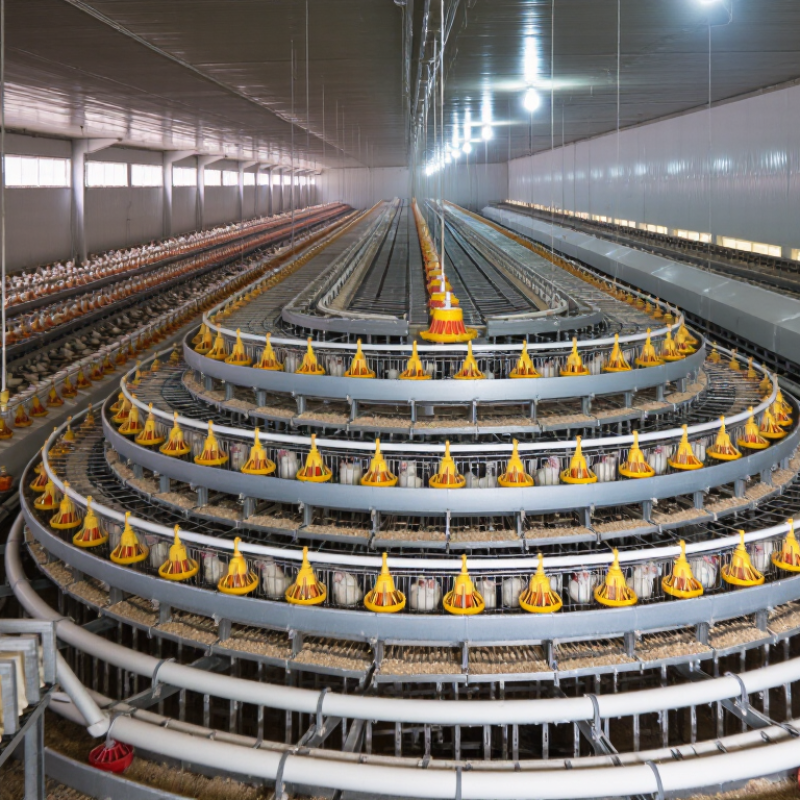
China Top Chicken Layer Cage Manufacturer and Supplier

Understanding Chicken Layer Cage Systems

Understanding Chicken Layer Cage Systems

A layer cage system is more than a row of enclosures. It combines housing, feeders, drinkers, ventilation, manure handling, and egg collection. Conventional and enriched designs differ in their available features and space. FAOSTAT records roughly 91 million tonnes of hen eggs produced worldwide in 2022, showing the scale of production these systems support. That figure describes output, not cage performance. Small design details matter: a poorly adjusted drinker can leave birds competing at the line.

EFSA’s 2023 scientific opinion on laying-hen welfare identifies restricted movement and limited opportunities for natural behavior as important concerns in cage housing. For farm planning, compare usable floor area, access to feed and water, air quality, and ease of inspection. A tidy layout is not proof of good welfare. Daily checks reveal more.

Tip: Walk the system at bird level. Check for wet litter beneath drinkers, uneven feed distribution, blocked egg belts, and hens that cannot reach resources easily. Keep maintenance and mortality records, then review patterns rather than isolated incidents. Even experienced teams miss things.

China Top Chicken Layer Cage Manufacturer and Supplier - Understanding Chicken Layer Cage Systems

System or Component Typical Configuration or Measurement Purpose Key Planning Consideration
Conventional battery cage Small groups of hens housed in adjacent wire enclosures; stocking allowances and permitted use vary by jurisdiction. Provides a compact housing layout with integrated feeding and watering. Check local animal-welfare requirements. Conventional cages are prohibited in some jurisdictions.
Enriched colony cage Group housing with features such as perches, nests, and scratching areas. Under EU rules, the minimum space is 750 cm² per hen, including at least 600 cm² of usable area. Adds behavioral features while retaining a caged housing format. Confirm applicable standards, usable-area definitions, group size, and required fittings before specifying equipment.
Non-cage aviary system Multi-level indoor housing with floor space, perches, nests, and litter areas. Allows hens to move between levels and use different areas of the house. Plan for bird movement, litter management, access to resources, and manure handling.
Cage tier arrangement Single-tier or multi-tier layouts; the number of tiers depends on building height, equipment design, and access requirements. Uses the available building footprint to organize housing rows. Allow sufficient clearance for inspection, maintenance, ventilation, and manure removal.
Feeding system Commonly a feed trough supplied by a chain or other distribution mechanism. Delivers feed along the housing row. Match trough access and feed delivery capacity to flock size and the selected housing design.
Drinking system Nipple drinkers, often fitted with drip cups, are commonly used in modern poultry housing. Provides controlled access to drinking water. Check water pressure, drinker placement, flow rate, and routine maintenance needs.
Egg collection Egg belts can transfer eggs from nest or cage areas to a collection point. Reduces manual handling and supports organized egg movement. Consider belt alignment, transfer points, cleaning access, and the planned collection capacity.
Manure removal Manure belts or other removal arrangements may be installed beneath or behind housing rows. Moves manure out of the housing area for handling or storage. Choose a removal schedule and storage plan suitable for the flock, building, and local rules.
Ventilation and climate control Typically combines air inlets, fans, and environmental controls designed for the poultry house. Helps manage temperature, humidity, and air quality. System capacity must be designed for house dimensions, climate, bird numbers, and operating conditions.
Installation and capacity planning Based on house dimensions, usable floor area, system layout, and the applicable stocking standard. Ensures that equipment and building services work together as a complete system. Have the final layout reviewed against local regulations and the equipment specifications before installation.

Note: Figures and configurations are general planning information, not a universal specification. Housing requirements and permitted systems differ by country and may change; verify current local regulations and project-specific design requirements.

China’s Role in Layer Cage Manufacturing and Supply

China’s role in layer-cage manufacturing is closely tied to its large egg sector. FAOSTAT recorded China as producing roughly 40% of the world’s hen eggs in 2022. The National Bureau of Statistics of China reported 35.63 million tonnes of poultry eggs in 2023; this measure includes eggs from poultry beyond chickens. That is substantial. It supports a broad domestic market for housing equipment, replacement parts, and production-line upgrades.

Manufacturers supply wire-mesh panels, galvanized frames, feeding lines, drinkers, and manure-removal systems. These components must fit building dimensions and local operating routines. OECD-FAO’s Agricultural Outlook 2024–2033 discusses continued growth in global egg consumption, but demand alone does not determine which cage designs farms choose. Ventilation, bird access, cleaning, and maintenance matter on site. A cage that looks efficient in a catalogue may be awkward to service. A practical caution: national egg-output figures do not measure cage production or exports, so they should not be used as proof of supplier capacity. Buyers still need clear material specifications, sample inspection, and realistic delivery schedules.

Common Cage Designs and Production Features

Layer cage systems commonly use A-frame or H-frame layouts, with several tiers arranged to fit the poultry house. A-frame units have sloping sides and are often easier to inspect from the aisle. H-frame systems use vertical rows and can make efficient use of floor space in taller buildings. Tier numbers, cage dimensions, and row spacing should match the house plan and flock size. Small details matter.

Production features affect daily work. Galvanized wire helps resist corrosion, while smooth edges reduce the chance of injury during handling. Feed troughs should sit at a practical height, and nipple drinkers need consistent water pressure. Egg belts and manure belts can reduce manual collection, but their alignment and tension require regular checks. A belt that tracks poorly can cause jams or damage eggs.

A careful supplier should document material thickness, weld quality, and operating tests rather than rely on appearance alone. Ask how parts are packed, labeled, and checked before shipment. Even a well-built system can be frustrating if installation instructions are unclear. That part is sometimes overlooked. Review ventilation, cleaning access, and maintenance space before settling on a layout; a small design compromise may become obvious only after the house is occupied.

How Layer Cage Manufacturers Manage Quality and Compliance

China Top Chicken Layer Cage Manufacturer and Supplier

How Layer Cage Manufacturers Manage Quality and Compliance

For layer cage manufacturers, quality starts with clear drawings and traceable materials. ISO’s 2022 Survey reported 1,265,216 valid ISO 9001 certificates across 189 economies. This figure covers all industries, not poultry equipment alone. It shows how widely documented quality systems are used, but certification cannot prove every cage meets a buyer’s specifications.

A careful supplier checks wire diameter, weld strength, coating coverage, and key dimensions at defined production stages. Inspectors can measure welds and coating thickness, then compare samples with approved drawings. Batch numbers link material certificates, inspection records, and finished goods. Compliance checks should also consider the destination’s applicable standards and customer requirements. Small gaps matter. A signed checklist may still miss a poorly coated corner, so independent sampling can add useful scrutiny.

Tips: Ask for recent inspection records, material traceability, and clear acceptance criteria before ordering. Request photos of actual production checks, not only polished product images. Then confirm how defects are recorded and corrected. No process is perfect; transparent records make problems easier to find.

Key Factors for Choosing a Chinese Cage Supplier

Choosing a Chinese layer-cage supplier starts with the farm, not the catalogue. Share flock size, house dimensions, bird age, and local climate before requesting a quote. A reliable supplier should explain cage tiers, aisle width, drinker placement, and manure-belt capacity in measurable terms. Ask for drawings and a sample layout. Numbers matter.

Materials deserve close inspection. Request steel thickness, galvanizing details, weld standards, and corrosion-test information, then compare them with the quoted service conditions. Photos can help, but they do not prove consistent workmanship. If possible, inspect a finished section or request a live video walkthrough of production and quality checks. Check whether motors, nipples, belts, and fasteners use standard sizes, and confirm how replacement parts are packed and shipped.

Experience shows up in the questions a supplier asks. They should discuss ventilation, bird movement, cleaning access, and installation tolerances, not only price per bird. Ask for references from farms with similar climates and house designs, plus a clear installation schedule and after-sales response times. One detail is easy to miss: written specifications should match the final invoice and packing list. No quote is perfect. A checklist still cannot predict every fit issue, so clarify uncertain dimensions before ordering. A cheaper system can cost more if belts misalign or support arrives late.

Copyright 2025 Fluidra S.A. | Created by BCM Marketing Agencia Privacy Policy Legal note | Cookie policy |

Technical cookies are strictly necessary for our website to work and you can navigate through it. These types of cookies are those that, for example, allow us to identify you, give you access to certain restricted parts of the page if necessary, or remember different options or services already selected by you, such as your privacy preferences. Therefore, they are activated by default, your authorization not being necessary in this regard. Through the configuration of your browser, you can block or alert the presence of this type of cookies, although such blocking will affect the proper functioning of the different functionalities of our website.


The analysis cookies allow us to study the navigation of the users of our website in general (for example, which sections of the page are the most visited, which services are used most and if they work correctly, etc.). From the statistical information on navigation on our website, we can improve both the operation of the page itself and the different services it offers. Therefore, these cookies do not have an advertising purpose, but only serve to make our website work better, adapting to our users in general. By activating them you will contribute to this continuous improvement. You can enable or disable these cookies by checking the corresponding box, being disabled by default.


Functionality cookies allow us to remember your preferences, to personalize certain characteristics and general options of our website, every time you access it (for example, the language in which the information is presented to you, the sections marked as favorites, your browser type, etc.) Therefore, this type of cookies does not have an advertising purpose, but by activating them you will improve the functionality of the website (for example, adapting to your type of browser) and the customization of it based on your preferences (for example, by presenting the information in the language that you have chosen in previous occasions), which will contribute to the ease, usability and comfort of our page during your navigation. You can enable or disable these cookies by checking the corresponding box, being disabled by default.


Advertising cookies allow us to manage the advertising spaces included in our website based on criteria such as the content shown or the frequency in which the ads are displayed. For example, if you have been shown the same ad several times on our website, and you have not shown a personal interest by clicking on it, it will not appear again. In summary, by activating this type of cookies, the advertising shown on our website will be more useful and diverse, and less repetitive. You can enable or disable these cookies by checking the corresponding box, being disabled by default.


Behavioral advertising cookies allow us to obtain information based on the observation of your browsing habits and behaviors on the web, in order to show you advertising content that best suits your personal tastes and interests. To understand it in a very simple way, we will give you a fictitious example: if your last searches on the web were related to suspense literature, we would show you advertising about suspense books. Therefore, activating this type of cookies, the advertising that we show you on our website will not be generic, but will be oriented to your searches, tastes and interests, therefore adjusting exclusively to you. You can enable or disable these cookies by checking the corresponding box, being disabled by default.
To understand it in a very simple way, we will give you a fictitious example: if your last searches on the web were related to suspense literature, we would show you advertising about suspense books. Therefore, activating this type of cookies, the advertising that we show you on our website will not be generic, but will be oriented to your searches, tastes and interests, therefore adjusting exclusively to you. You can enable or disable these cookies by checking the corresponding box, being disabled by default.

SAVE

We use our own and third-party cookies to ensure the proper functioning of the website and to analyse our services, improve your experience on our website and show you advertisements related to your interests according to profiling based on your browsing habits (e.g. websites visited). You can accept all cookies by clicking "ACCEPT" or set or reject them by clicking here. If you would like to know more about the use of cookies, please see our COOKIE POLICY.


ACCEPT ALL
Reject no essentials


