
China Best Ball End Mill Manufacturer for CNC Machining
FLUID HANDLING EXPERTS

Blog, all our news

China Best Ball End Mill Manufacturer for CNC Machining

CNC machining depends on predictable toolpaths, stable cutting, and accurate surface finishing. The global CNC machine market reached an estimated USD 101.22 billion in 2023, according to Grand View Research’s CNC Machine Market report. That scale reflects a broad manufacturing base, not a guarantee of results from any single tool. Tool choice still matters.

A Ball End End Mill is designed for curved surfaces, sculpted details, and three-dimensional profiles. Its rounded tip can leave a smooth finish on molds and complex components, especially when paired with suitable feeds, speeds, and toolpaths. Small details count. A worn edge, poor runout, or unsuitable coating can quickly mark a finished surface.

Automation adds pressure for consistency. The International Federation of Robotics reported 541,302 industrial robot installations worldwide in 2023, the second-highest annual total on record. This figure does not measure end-mill demand directly, but it shows how widely automated production is used. For buyers comparing China-based manufacturers, examine material grades, dimensional tolerances, coating options, inspection records, and sample-cut performance. Ask for evidence. A polished catalog is not enough. Even strong specifications cannot replace a real machining trial, and that is an imperfect truth worth remembering.
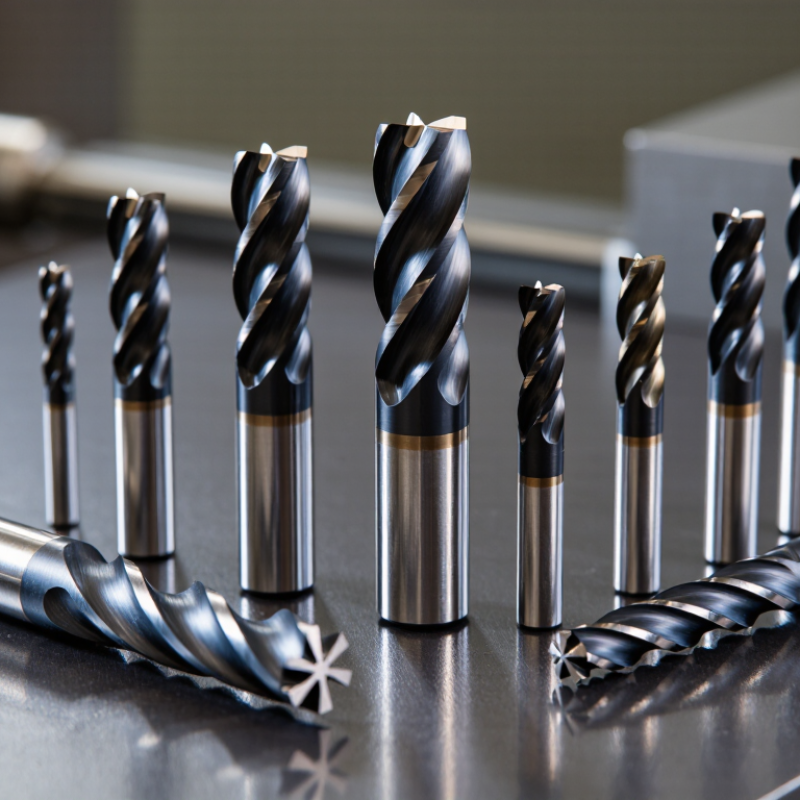
China Best Ball End Mill Manufacturer for CNC Machining

Understanding Ball End Mills and Their Role in CNC Machining

China Best Ball End Mill Manufacturer for CNC Machining

Understanding Ball End Mills and Their Role in CNC Machining

A ball end mill has a rounded cutting tip that creates curved surfaces and flowing transitions. In CNC machining, it is commonly used for molds, dies, turbine features, and other three-dimensional contours. A flat end mill leaves sharper corners. The ball nose follows complex shapes more naturally.

Its cutting speed changes across the rounded tip. Near the center, surface speed approaches zero, which can encourage rubbing and heat. Tilting the tool or adjusting the toolpath can keep more of the cutting edge engaged. Small stepovers help reduce visible scallops, though they also increase machining time. It is a trade-off.

The details matter. On a mold cavity, excessive runout may leave faint, repeated marks across the surface. Deep pockets can also trap chips, so tool reach and coolant access deserve attention. Grand View Research estimated the global CNC machine market at USD 101.22 billion in 2023, with a projected 5.8% compound annual growth rate from 2024 to 2030. This reflects wider CNC investment, not ball-end-mill sales. A good surface finish is not guaranteed by tool shape alone; workholding and toolpath choices can still disappoint.

Materials and Coatings Used in Ball End Mill Manufacturing

The performance of a ball end mill starts with its substrate. Cemented carbide is widely used for CNC machining because it combines high hardness with useful wear resistance. Fine carbide grains can support a sharp cutting edge and help reduce chipping during detailed work. The cobalt binder adds toughness, but too much can soften the tool. That balance matters.

High-speed steel is another option, particularly where impact resistance and lower tool cost are priorities. It generally cannot match carbide’s hardness at elevated cutting temperatures, so the best choice depends on the workpiece, tool diameter, and cutting conditions. A small ball end mill machining hardened steel faces different demands from one cutting aluminum. There is no universal substrate.

Coatings add another layer of protection. Physical vapor deposition coatings such as TiAlN or AlCrN can improve heat and wear resistance in many steel-cutting applications. TiB2 is often considered for aluminum because it can help limit material sticking to the cutting edge. Coating thickness and edge preparation also matter; an overly rounded edge may affect fine finishing. Small details count. In practice, coating choice should match the material and coolant strategy, not just a catalog claim. Even a well-made tool can disappoint when chip evacuation or feed settings are poor, and that is easy to overlook.

How Ball End Mills Are Made and Quality-Tested in China

Ball end mills for CNC machining begin with carefully selected carbide rods. In Chinese manufacturing workshops, incoming rods are checked for diameter, straightness, and visible defects. The blanks are cut to length, then ground on CNC tool grinders. Grinding forms the rounded tip, flutes, and cutting edges. Small errors matter. Uneven flute geometry can affect chip flow and surface finish.

After grinding, technicians inspect key dimensions with optical measuring equipment. They may check ball radius, flute spacing, edge condition, and tool runout. A microscope can reveal tiny chips that are hard to spot by eye. Some tools also receive a wear-resistant coating, applied in a controlled chamber. Coating thickness and adhesion influence performance, but coating alone cannot fix poor geometry.

Quality testing often includes hardness checks, balance or runout measurement, and sample cutting trials. A trial cut in steel or aluminum can expose chatter, rough surfaces, or unexpected wear. Results should be recorded by tool batch, not just judged from one sample. Still, even careful testing cannot predict every machine setup or toolpath. A polished surface alone proves little; process records and repeatable measurements offer stronger evidence. Export buyers should ask how inspection results are documented and what tolerances the factory actually verifies.

Choosing a Ball End Mill for Different CNC Machining Tasks

Choosing a ball end mill starts with the surface, not the tool catalog. For 3D contours and sculpted molds, a smaller ball radius reaches tight valleys, but it increases cutting load and machining time. Larger radii suit broad curves and allow wider stepovers. For finishing, begin with a light radial step-over—often around 5–10% of cutter diameter—then inspect the scallop height under good lighting. Small detail matters. Keep the tool center away from the workpiece whenever possible; at the ball tip, cutting speed approaches zero, which can encourage rubbing and poor surface finish.

Material and toolpath matter too. Aluminum usually tolerates higher cutting speeds than stainless steel, while hardened steel needs conservative engagement and stable fixturing. In deep cavities, a long-reach cutter may seem necessary, but its extra flexibility can leave chatter marks. Shorter reach is safer when the setup allows it. ISO 8688-2, the milling tool-life testing standard, uses controlled wear criteria; average flank wear near 0.3 mm is a common test endpoint, not a universal replacement rule. Check wear, chips, and finish together. I still recheck the first part: a calculated setting can miss a local corner or a weak fixture.

Choosing a Ball End Mill for Different CNC Machining Tasks

Typical stepover ranges are 20–50% of the tool diameter for roughing, 10–20% for semi-finishing, and 5–10% for finishing. Bars show the midpoint of each range. Treat these as starting points: suitable values depend on the workpiece material, cutter, machine rigidity, toolpath, and required surface finish.

How to Evaluate Ball End Mill Manufacturers in China

China Best Ball End Mill Manufacturer for CNC Machining

How to Evaluate Ball End Mill Manufacturers in China

China’s expanding CNC sector makes supplier evaluation more important, not simpler. Grand View Research’s CNC machine market report valued the global market at USD 101.22 billion in 2023 and projected 9.3% annual growth through 2030. That is market context, not proof of cutter quality. Ask for measurable evidence: carbide grade, flute geometry, coating details, and dimensional inspection records.

Small details matter.

For a ball end mill, request runout readings and diameter tolerances, then compare them with your drawing and machining needs. A supplier should explain how it checks the tool’s radius and flute symmetry, not just provide a polished catalogue. ISO 13399 offers a common framework for cutting-tool data, which can make specifications easier to compare.

Request a sample and test it on your actual material. Check the machined surface under consistent lighting, and record tool wear, cutting conditions, and finish. A sample cut is useful, but it cannot predict every production run. I would also ask how batches are identified and inspection results are retained.

One uncomfortable question: what happens when a batch misses specification? A clear answer, supported by records, is more convincing than a broad quality promise.

Copyright 2025 Fluidra S.A. | Created by BCM Marketing Agencia Privacy Policy Legal note | Cookie policy |

Technical cookies are strictly necessary for our website to work and you can navigate through it. These types of cookies are those that, for example, allow us to identify you, give you access to certain restricted parts of the page if necessary, or remember different options or services already selected by you, such as your privacy preferences. Therefore, they are activated by default, your authorization not being necessary in this regard. Through the configuration of your browser, you can block or alert the presence of this type of cookies, although such blocking will affect the proper functioning of the different functionalities of our website.


The analysis cookies allow us to study the navigation of the users of our website in general (for example, which sections of the page are the most visited, which services are used most and if they work correctly, etc.). From the statistical information on navigation on our website, we can improve both the operation of the page itself and the different services it offers. Therefore, these cookies do not have an advertising purpose, but only serve to make our website work better, adapting to our users in general. By activating them you will contribute to this continuous improvement. You can enable or disable these cookies by checking the corresponding box, being disabled by default.


Functionality cookies allow us to remember your preferences, to personalize certain characteristics and general options of our website, every time you access it (for example, the language in which the information is presented to you, the sections marked as favorites, your browser type, etc.) Therefore, this type of cookies does not have an advertising purpose, but by activating them you will improve the functionality of the website (for example, adapting to your type of browser) and the customization of it based on your preferences (for example, by presenting the information in the language that you have chosen in previous occasions), which will contribute to the ease, usability and comfort of our page during your navigation. You can enable or disable these cookies by checking the corresponding box, being disabled by default.


Advertising cookies allow us to manage the advertising spaces included in our website based on criteria such as the content shown or the frequency in which the ads are displayed. For example, if you have been shown the same ad several times on our website, and you have not shown a personal interest by clicking on it, it will not appear again. In summary, by activating this type of cookies, the advertising shown on our website will be more useful and diverse, and less repetitive. You can enable or disable these cookies by checking the corresponding box, being disabled by default.


Behavioral advertising cookies allow us to obtain information based on the observation of your browsing habits and behaviors on the web, in order to show you advertising content that best suits your personal tastes and interests. To understand it in a very simple way, we will give you a fictitious example: if your last searches on the web were related to suspense literature, we would show you advertising about suspense books. Therefore, activating this type of cookies, the advertising that we show you on our website will not be generic, but will be oriented to your searches, tastes and interests, therefore adjusting exclusively to you. You can enable or disable these cookies by checking the corresponding box, being disabled by default.
To understand it in a very simple way, we will give you a fictitious example: if your last searches on the web were related to suspense literature, we would show you advertising about suspense books. Therefore, activating this type of cookies, the advertising that we show you on our website will not be generic, but will be oriented to your searches, tastes and interests, therefore adjusting exclusively to you. You can enable or disable these cookies by checking the corresponding box, being disabled by default.

SAVE

We use our own and third-party cookies to ensure the proper functioning of the website and to analyse our services, improve your experience on our website and show you advertisements related to your interests according to profiling based on your browsing habits (e.g. websites visited). You can accept all cookies by clicking "ACCEPT" or set or reject them by clicking here. If you would like to know more about the use of cookies, please see our COOKIE POLICY.


ACCEPT ALL
Reject no essentials


