
China Top Alloy Steel vs Stainless Steel Which is Better?
FLUID HANDLING EXPERTS

Blog, all our news

China Top Alloy Steel vs Stainless Steel Which is Better?

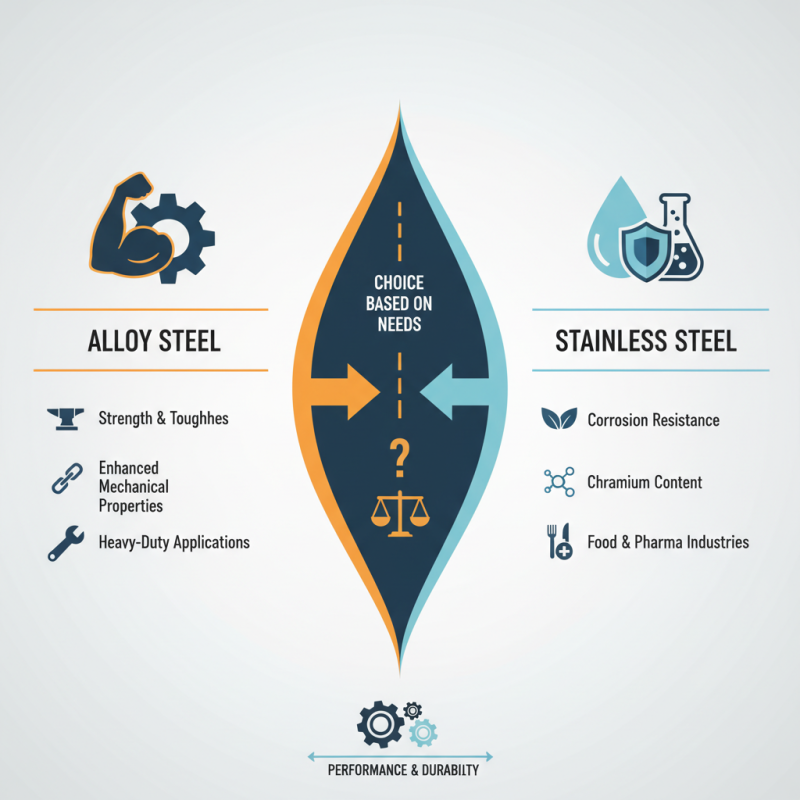
The debate between alloy steel and stainless steel is crucial for many industries. Both materials have unique properties and applications that impact performance and durability. Alloy steel is known for its strength and toughness. It contains other elements, enhancing its mechanical properties, making it suitable for heavy-duty applications.

On the other hand, stainless steel is famous for its corrosion resistance. Its chromium content allows it to withstand harsh environments without rusting. This characteristic is vital in industries like food processing and pharmaceuticals. Users often face the challenge of choosing between these two types of steel based on specific needs.

Understanding the differences in their composition and properties is essential. Each material has its strengths and weaknesses. While alloy steel offers superior strength, it might not perform well in corrosive environments. Conversely, stainless steel’s resilience may come at the cost of lower strength. Analyzing these factors is critical for making an informed decision.
China Top Alloy Steel vs Stainless Steel Which is Better?

China's Alloy Steel: Definition and Key Characteristics

Alloy steel is a vital material in various industries. It is composed of iron and other elements, enhancing its mechanical properties. This combination includes elements like manganese, nickel, and chromium. These additions improve strength, ductility, and wear resistance.

One key characteristic of alloy steel is its adaptability. Different compositions can create specific properties, catering to diverse applications. For instance, high-strength low-alloy (HSLA) steel is renowned for its strength, making it ideal for construction and automotive components. However, the versatility of alloy steel can lead to challenges in selection, requiring careful consideration of environmental and load conditions.

Alloy steel also has limitations. It may not resist corrosion as well as stainless steel. Some grades are more susceptible to wear in harsh conditions. Understanding these aspects is crucial for engineers and manufacturers. Balancing the benefits with potential downsides requires expertise. Selecting the right type involves more than just strength; it includes durability, cost-effectiveness, and specific performance needs in real-world applications.

Understanding Stainless Steel: Composition and Properties

Stainless steel is an alloy primarily made of iron, chromium, and nickel. The addition of chromium creates a protective layer that prevents rust and corrosion. This unique property makes stainless steel ideal for various applications, from kitchen utensils to medical instruments.

Its composition gives it distinct properties. Stainless steel is durable yet malleable. It can withstand high temperatures, making it suitable for both cooking and industrial uses. This metal is often favored for its aesthetic appeal as well. However, the cost can be higher than other materials.

Not all stainless steels are the same. Different grades offer unique benefits. Some are more resistant to corrosion, while others provide improved strength. Understanding these variations is crucial for making informed choices. Balancing these properties with cost-effectiveness can lead to better decisions in product selection.

Comparison of Alloy Steel and Stainless Steel Properties

Comparative Strength and Durability of Alloy Steel vs Stainless Steel

When comparing alloy steel and stainless steel, strength and durability are key factors. Alloy steel combines different elements to enhance its properties. This material often exhibits higher tensile strength. It performs well under extreme conditions. Its unique structure allows for better wear resistance. However, it may not be as resistant to corrosion as stainless steel.

On the other hand, stainless steel is known for its impressive corrosion resistance. This makes it ideal for environments exposed to moisture and chemicals. While it may not match the tensile strength of high-alloy steel, stainless steel is still quite durable. It maintains integrity over time, especially in harsh conditions. Some applications may require a trade-off between strength and corrosion resistance.

Choosing between these materials depends on specific needs. Each has its strengths and weaknesses. Alloy steel might outperform in structural applications. Stainless steel shines in environments where corrosion is a constant threat. It's essential to assess the application requirements closely. This ensures selecting the right material for optimum performance.

Applications and Uses of Alloy Steel in Various Industries

Alloy steel is widely used across various industries due to its versatility and adaptability. It contains various elements like chromium, nickel, and manganese, enhancing its properties. This makes alloy steel suitable for construction, automotive, and manufacturing applications. For instance, in the automotive sector, it is often employed in gears and shafts due to its strength and wear resistance. These components benefit from alloy steel’s inherent toughness.

In the construction industry, alloy steel is vital for structural applications. Its ability to withstand heavy loads contributes to the safety and longevity of buildings and bridges. The incorporation of specific alloying elements allows for tailored properties, enhancing performance under various environmental conditions. Despite its advantages, selecting the right type of alloy steel can be challenging. Factors such as intended use and environmental exposure must be carefully evaluated.

Interestingly, while alloy steel offers many advantages, it is not without limitations. Certain alloy steels can corrode in extreme environments, requiring additional protective measures. This inconsistency forces engineers to assess the specific needs of their projects thoroughly. Understanding the nuances of alloy steel applications ensures better outcomes in engineering and manufacturing processes.

Cost Analysis: Alloy Steel vs Stainless Steel in the Market

The cost of choosing between alloy steel and stainless steel is crucial. Alloy steel typically costs less. In contrast, stainless steel is often more expensive due to its corrosion resistance. This quality makes it highly sought after in industries like food processing and medical manufacturing. The initial investment can be higher for stainless steel, but its longevity often balances that.

When analyzing the market, it's important to consider the specific application. Certain projects may benefit more from steel's unique properties. For example, while alloy steel provides high strength, stainless steel offers durability in harsh environments. This difference impacts not only the material cost but also long-term maintenance expenses.

It’s easy to overlook factors like maintenance. Even if alloy steel is cheaper, it may require more frequent repairs. Decision-makers should weigh the initial cost against potential service needs. Proper evaluations could reveal surprising outcomes. After all, short-term savings don’t always lead to better overall value.

Copyright 2025 Fluidra S.A. | Created by BCM Marketing Agencia Privacy Policy Legal note | Cookie policy |

Technical cookies are strictly necessary for our website to work and you can navigate through it. These types of cookies are those that, for example, allow us to identify you, give you access to certain restricted parts of the page if necessary, or remember different options or services already selected by you, such as your privacy preferences. Therefore, they are activated by default, your authorization not being necessary in this regard. Through the configuration of your browser, you can block or alert the presence of this type of cookies, although such blocking will affect the proper functioning of the different functionalities of our website.


The analysis cookies allow us to study the navigation of the users of our website in general (for example, which sections of the page are the most visited, which services are used most and if they work correctly, etc.). From the statistical information on navigation on our website, we can improve both the operation of the page itself and the different services it offers. Therefore, these cookies do not have an advertising purpose, but only serve to make our website work better, adapting to our users in general. By activating them you will contribute to this continuous improvement. You can enable or disable these cookies by checking the corresponding box, being disabled by default.


Functionality cookies allow us to remember your preferences, to personalize certain characteristics and general options of our website, every time you access it (for example, the language in which the information is presented to you, the sections marked as favorites, your browser type, etc.) Therefore, this type of cookies does not have an advertising purpose, but by activating them you will improve the functionality of the website (for example, adapting to your type of browser) and the customization of it based on your preferences (for example, by presenting the information in the language that you have chosen in previous occasions), which will contribute to the ease, usability and comfort of our page during your navigation. You can enable or disable these cookies by checking the corresponding box, being disabled by default.


Advertising cookies allow us to manage the advertising spaces included in our website based on criteria such as the content shown or the frequency in which the ads are displayed. For example, if you have been shown the same ad several times on our website, and you have not shown a personal interest by clicking on it, it will not appear again. In summary, by activating this type of cookies, the advertising shown on our website will be more useful and diverse, and less repetitive. You can enable or disable these cookies by checking the corresponding box, being disabled by default.


Behavioral advertising cookies allow us to obtain information based on the observation of your browsing habits and behaviors on the web, in order to show you advertising content that best suits your personal tastes and interests. To understand it in a very simple way, we will give you a fictitious example: if your last searches on the web were related to suspense literature, we would show you advertising about suspense books. Therefore, activating this type of cookies, the advertising that we show you on our website will not be generic, but will be oriented to your searches, tastes and interests, therefore adjusting exclusively to you. You can enable or disable these cookies by checking the corresponding box, being disabled by default.
To understand it in a very simple way, we will give you a fictitious example: if your last searches on the web were related to suspense literature, we would show you advertising about suspense books. Therefore, activating this type of cookies, the advertising that we show you on our website will not be generic, but will be oriented to your searches, tastes and interests, therefore adjusting exclusively to you. You can enable or disable these cookies by checking the corresponding box, being disabled by default.

SAVE

We use our own and third-party cookies to ensure the proper functioning of the website and to analyse our services, improve your experience on our website and show you advertisements related to your interests according to profiling based on your browsing habits (e.g. websites visited). You can accept all cookies by clicking "ACCEPT" or set or reject them by clicking here. If you would like to know more about the use of cookies, please see our COOKIE POLICY.


ACCEPT ALL
Reject no essentials


