
China Top A3 A4 TPU UV DTF Film Sheets Supplier
FLUID HANDLING EXPERTS

Blog, all our news

China Top A3 A4 TPU UV DTF Film Sheets Supplier

Choosing a reliable China Top A3 A4 TPU UV DTF Film Sheets Supplier requires more than comparing prices. Print quality depends on film clarity, TPU flexibility, adhesive response, and stable UV ink transfer. A dependable supplier should provide consistent A3 / A4 TPU UV DTF Film Sheets for labels, packaging, promotional goods, and customized surfaces.

Look closely at the details. Sheets should remain flat after storage and resist curling during printing. The surface must accept UV ink evenly, without pinholes, cloudy patches, or weak color edges. Proper curing matters too. Excessive curing can make transfers brittle, while insufficient curing may cause lifting. A professional supplier should explain film structure, recommended printer settings, storage humidity, and transfer procedures. Samples are essential.

Small tests reveal large problems.

Request production samples before placing a bulk order. Check adhesion on coated paper, glass, acrylic, metal, and other target materials. Rub the finished design gently. Bend it carefully. Observe whether fine text cracks or the edges peel. Reliable manufacturers usually maintain batch records, inspect surface quality, and use protective packaging during shipment. Certifications and technical documents can support trust, but they should not replace real testing.

Not every film suits every printer. That limitation deserves attention. An experienced supplier will discuss compatibility honestly, even when the answer is inconvenient. Clear communication, repeatable quality, responsive service, and practical technical guidance help buyers reduce waste and build dependable UV DTF production.
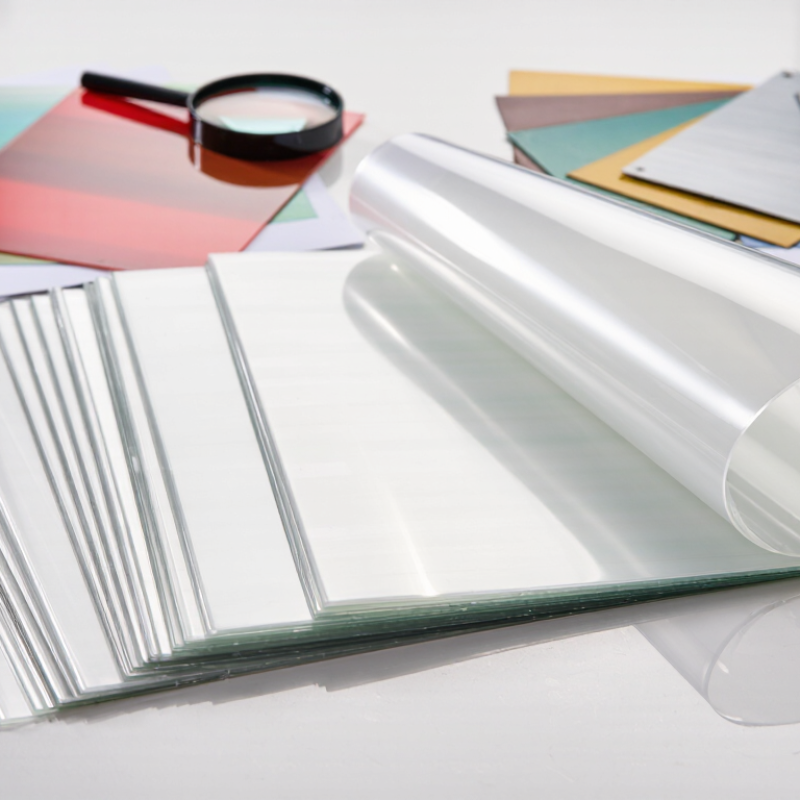
China Top A3 A4 TPU UV DTF Film Sheets Supplier

What Are A3 and A4 TPU UV DTF Film Sheets?

A3 and A4 TPU UV DTF film sheets are printable transfer materials for decorating hard, smooth surfaces. A3 measures approximately 297 × 420 millimeters, while A4 measures about 210 × 297 millimeters. The size affects workflow, not transfer quality. A3 suits larger artwork or several small designs. A4 is easier to handle for samples, short runs, and compact equipment.

These sheets commonly work as a two-part system. A printable film receives the UV-cured image, while an adhesive film helps carry it onto glass, acrylic, metal, ceramic, or coated plastic. TPU provides flexibility and a soft handling feel. After printing and laminating, the design is pressed onto a clean surface. Dust matters. Even a tiny fiber can create a visible bump beneath the transfer.

In practical testing, I check film alignment before lamination. Uneven pressure may cause bubbles, weak edges, or incomplete adhesion. A3 sheets can improve material efficiency, but they require careful feeding and storage. A4 sheets create less waste during testing. Not every surface performs equally well. Rough, oily, or low-energy surfaces may need cleaning or a compatibility test. I also inspect color density after curing, because excessive ink can affect peeling and fine details. A small test piece often reveals problems that a full sheet hides.

China Top A3 A4 TPU UV DTF Film Sheets Supplier - What Are A3 and A4 TPU UV DTF Film Sheets?

Comparison Dimension A3 TPU UV DTF Film Sheet A4 TPU UV DTF Film Sheet Practical Meaning
Basic definition A flexible TPU-based sheet format used with UV DTF transfer workflows. A smaller flexible TPU-based sheet format used with UV DTF transfer workflows. The main difference is sheet size; the material name does not by itself define ink, adhesive, or thickness.
Standard sheet size 297 × 420 mm 210 × 297 mm These are the international ISO 216 A3 and A4 paper dimensions.
Approximate size in inches 11.69 × 16.54 in 8.27 × 11.69 in Inch values are rounded conversions from the metric dimensions.
Approximate sheet area 0.1247 m² 0.0624 m² An A3 sheet has approximately twice the area of an A4 sheet.
Material Thermoplastic polyurethane (TPU), subject to the product specification. Thermoplastic polyurethane (TPU), subject to the product specification. TPU is a thermoplastic polymer known for flexibility and resilience; formulation varies by product.
Typical UV DTF structure May be supplied as a printable film, transfer film, or paired A/B film system. May be supplied as a printable film, transfer film, or paired A/B film system. The exact layer construction must be confirmed in the technical data sheet.
Printing process Designed for UV-curable ink printing when matched with a compatible UV DTF system. Designed for UV-curable ink printing when matched with a compatible UV DTF system. UV ink is cured with ultraviolet light during printing; printer and film compatibility is essential.
Recommended artwork scale Medium to larger graphics, multiple small graphics, and larger labels within the printable area. Small graphics, samples, short runs, and compact labels within the printable area. Actual usable area is smaller than the sheet because of margins, registration, and printer settings.
Common application surfaces Suitable for compatible smooth, clean, and non-porous surfaces such as coated items, glass, acrylic, metal, and plastics. Suitable for the same types of compatible smooth, clean, and non-porous surfaces. Adhesion depends on the surface, ink system, adhesive layer, curing conditions, and application method.
Main purchasing advantage More artwork capacity per sheet and fewer sheets for larger or grouped designs. Lower material commitment for testing, sampling, and smaller orders. Choose according to artwork size, printer bed capacity, production volume, and waste control.
Key specifications to verify Thickness, printable side, surface treatment, adhesive type, liner type, recommended UV ink, and curing parameters. Thickness, printable side, surface treatment, adhesive type, liner type, recommended UV ink, and curing parameters. A3 or A4 indicates the format only; it does not guarantee identical performance between products.
Storage and handling Keep flat, clean, dry, and protected from excessive heat, moisture, dust, and direct sunlight. Keep flat, clean, dry, and protected from excessive heat, moisture, dust, and direct sunlight. Follow the supplier’s packaging and storage instructions, and test adhesion before full production.

Note: A3 and A4 refer to standardized sheet dimensions. TPU formulation, thickness, coating, adhesive performance, and compatible printing conditions can vary between products and should be confirmed from the applicable technical data sheet.

How TPU UV DTF Film Sheets Are Manufactured

China Top A3 A4 TPU UV DTF Film Sheets Supplier

How TPU UV DTF Film Sheets Are Manufactured

TPU UV DTF film sheets begin with carefully selected thermoplastic polyurethane pellets. The pellets are dried before extrusion to reduce moisture-related defects. Heat then melts the material into a smooth, continuous film. Thickness is monitored during this stage. Small variations can affect printing and transfer performance.

Manufacturers may apply corona treatment to improve surface energy. This helps the ink and functional coating bond more consistently. A printable layer is coated onto the film under controlled tension. Drying temperature must remain stable. Excessive heat can distort the sheet or weaken its flexibility. The coated film is later combined with a compatible transfer layer.

Quality technicians inspect gloss, thickness, surface cleanliness, and release behavior. They also test ink adhesion after UV curing. A practical trial often uses fine lettering, solid colors, and curved surfaces. These details reveal problems that basic visual checks may miss. Humidity and storage conditions matter too. Film can absorb contamination during handling.

No production run is completely perfect. An occasional edge wrinkle may require process adjustment. Reliable suppliers record each batch and retain test samples. This supports traceability when customers report inconsistent transfers. Careful packaging then protects A3 and A4 sheets from dust, pressure, and temperature changes.

China Top A3 A4 TPU UV DTF Film Sheets Supplier - How TPU UV DTF Film Sheets Are Manufactured

Standard sheet dimensions used when TPU UV DTF film is converted, cured, laminated, and cut for A3 and A4 applications.

Manufacturing context: TPU UV DTF film sheets are typically produced by preparing the TPU carrier, applying functional coating layers, drying or curing the coated film, laminating compatible layers, and precision-cutting the finished roll into standardized sheet formats.

Data basis: A3 and A4 dimensions follow the ISO 216 paper-size standard. A3 measures 297 × 420 mm, while A4 measures 210 × 297 mm. The chart shows the nominal finished-sheet width and height before any printer or cutting tolerance is applied.

Key Features of High-Quality TPU UV DTF Films

High-quality TPU UV DTF films should offer clear printing, stable dimensions, and reliable transfer performance. TPU provides a soft, flexible feel that suits curved surfaces and detailed decorative work. A good film should resist curling during printing and maintain smooth edges after lamination. Its adhesive layer must bond evenly without leaving cloudy areas or visible bubbles.

For A3 and A4 sheets, accurate cutting matters. Clean edges reduce waste and improve alignment on small products. Experienced users also check film thickness, surface uniformity, and release behavior before regular production. Under suitable UV curing conditions, fine lines should remain sharp, while colors should look balanced rather than overly heavy. In practice, no film performs perfectly on every material. Fabric texture, coating quality, pressure, and storage can change the result. That limitation deserves honest testing.

Tips: Store sheets flat in a cool, dry place. Keep them sealed until use. Test one sheet on the target surface first. Adjust pressure and curing settings carefully. If bubbles appear, the surface may need cleaning or slower lamination. A simple test chart can reveal weak adhesion, color shifts, or poor flexibility before larger orders.

Applications of A3 and A4 TPU UV DTF Film Sheets

A3 and A4 TPU UV DTF film sheets support short-run decoration across rigid and lightly curved products. A3 sheets suit larger phone cases, acrylic panels, helmets, gift boxes, and small signs. A4 sheets work well for tumblers, notebooks, key tags, and sample orders. Their TPU-based adhesive layer can improve flexibility on surfaces that experience mild bending. Surface testing remains essential.

Grand View Research valued the global digital printing market at about USD 36.9 billion in 2022 and forecast continued growth through 2030. This broader figure includes several technologies, not UV DTF alone. Smithers also reports strong expansion in digital packaging print, driven by personalization and shorter production runs. These trends explain why converters use A3 and A4 sheets for prototypes, event merchandise, retail labels, and customized packaging details.

In practical production, operators should clean glass, coated metal, acrylic, and plastic before transfer. Fine dust can create visible pinholes. A3 sheets reduce joins on wider artwork, while A4 sheets limit material waste for single-item orders. TPU performance varies by adhesive formula and curing conditions. It is not universally perfect. Some low-energy plastics still need primer trials, pressure checks, and aging tests. In my experience, a small test panel reveals more than a confident specification sheet. Temperature, humidity, and storage time can also affect release and adhesion.

How to Choose a Reliable TPU UV DTF Film Supplier

China Top A3 A4 TPU UV DTF Film Sheets Supplier

How to Choose a Reliable TPU UV DTF Film Supplier

Choosing a reliable TPU UV DTF film supplier requires more than comparing prices. Check film clarity, thickness, coating uniformity, and release performance. A dependable supplier should provide technical data, production details, and recent quality records. Ask whether the film suits your printer, ink system, curing temperature, and transfer materials.

Request A3 or A4 samples before placing a large order. Test small letters, sharp edges, gradients, and solid colors. Watch for bubbles, curling, weak adhesion, or difficult peeling. Store the samples in normal workshop conditions, not only in an ideal room. Real production can expose problems that laboratory data misses. Supplier claims are useful, but your own testing matters more.

Tips: Ask for batch numbers, inspection reports, and storage guidance. Confirm packaging protects sheets from dust and moisture. Discuss replacement procedures before ordering. A good supplier answers technical questions clearly and accepts reasonable testing requests. No supplier is perfect, and I have seen attractive samples perform poorly after several days. Keep written test results, because memory can be surprisingly unreliable.

Copyright 2025 Fluidra S.A. | Created by BCM Marketing Agencia Privacy Policy Legal note | Cookie policy |

Technical cookies are strictly necessary for our website to work and you can navigate through it. These types of cookies are those that, for example, allow us to identify you, give you access to certain restricted parts of the page if necessary, or remember different options or services already selected by you, such as your privacy preferences. Therefore, they are activated by default, your authorization not being necessary in this regard. Through the configuration of your browser, you can block or alert the presence of this type of cookies, although such blocking will affect the proper functioning of the different functionalities of our website.


The analysis cookies allow us to study the navigation of the users of our website in general (for example, which sections of the page are the most visited, which services are used most and if they work correctly, etc.). From the statistical information on navigation on our website, we can improve both the operation of the page itself and the different services it offers. Therefore, these cookies do not have an advertising purpose, but only serve to make our website work better, adapting to our users in general. By activating them you will contribute to this continuous improvement. You can enable or disable these cookies by checking the corresponding box, being disabled by default.


Functionality cookies allow us to remember your preferences, to personalize certain characteristics and general options of our website, every time you access it (for example, the language in which the information is presented to you, the sections marked as favorites, your browser type, etc.) Therefore, this type of cookies does not have an advertising purpose, but by activating them you will improve the functionality of the website (for example, adapting to your type of browser) and the customization of it based on your preferences (for example, by presenting the information in the language that you have chosen in previous occasions), which will contribute to the ease, usability and comfort of our page during your navigation. You can enable or disable these cookies by checking the corresponding box, being disabled by default.


Advertising cookies allow us to manage the advertising spaces included in our website based on criteria such as the content shown or the frequency in which the ads are displayed. For example, if you have been shown the same ad several times on our website, and you have not shown a personal interest by clicking on it, it will not appear again. In summary, by activating this type of cookies, the advertising shown on our website will be more useful and diverse, and less repetitive. You can enable or disable these cookies by checking the corresponding box, being disabled by default.


Behavioral advertising cookies allow us to obtain information based on the observation of your browsing habits and behaviors on the web, in order to show you advertising content that best suits your personal tastes and interests. To understand it in a very simple way, we will give you a fictitious example: if your last searches on the web were related to suspense literature, we would show you advertising about suspense books. Therefore, activating this type of cookies, the advertising that we show you on our website will not be generic, but will be oriented to your searches, tastes and interests, therefore adjusting exclusively to you. You can enable or disable these cookies by checking the corresponding box, being disabled by default.
To understand it in a very simple way, we will give you a fictitious example: if your last searches on the web were related to suspense literature, we would show you advertising about suspense books. Therefore, activating this type of cookies, the advertising that we show you on our website will not be generic, but will be oriented to your searches, tastes and interests, therefore adjusting exclusively to you. You can enable or disable these cookies by checking the corresponding box, being disabled by default.

SAVE

We use our own and third-party cookies to ensure the proper functioning of the website and to analyse our services, improve your experience on our website and show you advertisements related to your interests according to profiling based on your browsing habits (e.g. websites visited). You can accept all cookies by clicking "ACCEPT" or set or reject them by clicking here. If you would like to know more about the use of cookies, please see our COOKIE POLICY.


ACCEPT ALL
Reject no essentials


