
7 Cantilever Rack Buying Tips for Global Buyers
FLUID HANDLING EXPERTS

Blog, all our news

7 Cantilever Rack Buying Tips for Global Buyers

A Cantilever Rack can look simple in a warehouse photo: upright columns, projecting arms, and long materials resting in neat rows. Buying the right system takes more judgment. Pipe, timber, steel sections, and sheet goods all place different demands on arm length, load capacity, and aisle space. A rack that fits the floor plan may still be wrong for the products.

Cantilever-rack specialist Alex Morgan puts the buying principle this way: “Specify the rack around the load, the handling method, and the space—not the other way around.” Buyers should verify product dimensions, weight, load distribution, and forklift access before comparing quotes. Small details matter. A bundle that overhangs an arm can change how safely and efficiently staff handle it. So can uneven floors or changing inventory.

This guide presents seven practical buying tips for global buyers. It covers capacity checks, rack configuration, materials and finishes, site measurements, supplier documentation, shipping considerations, and after-sales support. Requirements vary by facility and region, so confirm design assumptions with qualified professionals and the supplier. Ask for drawings and written specifications. Compare the details, not just the price. A lower quote can leave important questions unanswered. The goal is a storage system that suits real loads, daily workflows, and planned growth. Some decisions may need revisiting as operations change. That is worth acknowledging before purchase.
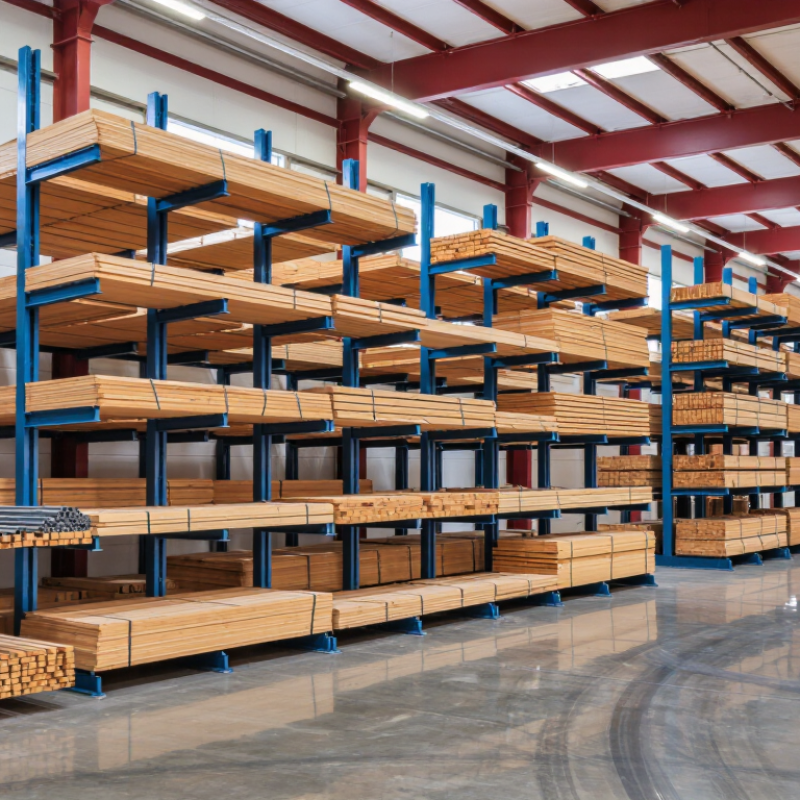
7 Cantilever Rack Buying Tips for Global Buyers

Define Load Requirements and Cantilever Rack Capacity

Define the load before comparing cantilever rack capacity. List the weight, length, width, and shape of each item. A bundle of steel pipe loads the arms differently from a single timber pack, even at the same weight. Note whether goods rest evenly across the arms or concentrate near one end. That detail matters.

Check the rated capacity for each arm and upright, not just the rack row. Ratings depend on arm spacing, column height, and load placement. A 2,000-kilogram bundle split across four arms may not load each arm equally. Forklift handling can also cause brief impacts, so include realistic operating conditions in your specification. Ask the supplier for written capacity data that matches your planned layout. Small details count.

Allow for the loads you may store later, but avoid guessing at a large safety margin. Extra capacity can change the rack design and cost without solving a poor layout. Check the longest and heaviest items, the number of arms supporting them, and the floor conditions. The first estimate may be wrong; revise it after measuring actual stock and equipment. Capacity figures are useful only when they reflect the way your team will load and unload the rack.

Match Rack Configuration to Product Length and Handling Needs

Cantilever rack configuration should follow the stock, not a standard drawing. Start by measuring the longest and heaviest items, including any uneven ends or protective packaging. A 12-foot pipe needs more than 12 feet of clear support space; allow room for safe placement and removal. Check the arm length against the load’s center of gravity, and confirm the rated capacity for each arm and column. Do not assume evenly spaced arms share weight evenly.

Handling matters just as much as dimensions. Forklifts need enough aisle width to approach long loads without striking adjacent arms. If workers use carts or cranes, their turning paths and lifting points may call for a different layout. Consider whether stock is stored singly, in bundles, or on pallets, since each arrangement changes access and load distribution. Easy to miss. Also review how often each item moves; fast-moving lengths may need clearer access than reserve stock.

Before ordering, compare the proposed configuration with actual site measurements, floor conditions, and equipment specifications. Ask the supplier to document the intended load limits and installation requirements, then have a qualified professional verify the design where needed. Our first layout is rarely perfect. Recheck it against a real picking task, because a drawing can hide awkward handling that becomes obvious on the warehouse floor.

Measure the Site and Plan Layout, Access, and Expansion

Before selecting cantilever racks, measure the storage area in three dimensions. Record wall-to-wall width, ceiling height, column positions, door openings, and any sprinklers or lights. Then measure the longest loads, including their overhang and packaging. A bundle of pipe may need more clearance than its product length suggests. Small errors matter.

Tips: Mark rack rows and travel paths on the floor with tape. Check the forklift’s turning radius with a loaded unit, not just an empty truck. Keep access to exits and equipment clear, and confirm floor capacity with a qualified professional.

Plan for the way materials move, not only where they sit. Leave enough aisle space for the handling equipment and load type used on site. If daily access is tight, a dense layout may slow picking or create awkward turns. Measure twice. It is easy to overlook a column. Reserve space for likely growth, such as an extra rack row or longer arms, but verify that future loads and rack changes remain within the system’s rated limits. Allow room for maintenance, too. A layout that fits on paper may feel cramped once stock arrives.

Check Materials, Safety Features, and Regional Compliance

Cantilever racks carry long, awkward loads, so material choice matters. Ask whether the arms and columns use structural steel suited to the stated load and environment. In humid or washdown areas, confirm the finish resists corrosion; chipped coating around a base plate deserves attention. Check load ratings for each arm and upright, not just the rack row. Those figures depend on spacing, configuration, and how evenly goods are stored. Get the assumptions in writing.

Safety details should be visible and practical. Look for secure arm connections, suitable base plates, column bracing, and clear load labels. A rack can be correctly rated and still become unsafe if forklifts strike its uprights or bundles overhang the arms. Plan aisle width and vehicle clearance using actual load lengths. Small details matter. Ask whether a qualified person will review the layout and anchoring for your floor conditions. I would not treat a supplier’s standard drawing as a site-specific approval; that shortcut is tempting, but it can leave gaps.

Regional compliance needs the same careful check. Requirements for seismic design, anchoring, fire access, and inspections can differ by location and building type. Request the applicable design standard, calculation documents, installation guidance, and inspection records before ordering. Have a local engineer or safety professional verify them against site rules. Paperwork helps, but it does not replace a walk-through with the proposed loads and handling equipment.

7 Cantilever Rack Buying Tips for Global Buyers

Checklist coverage by buying tip

Each bar counts the verification points in this practical buyer checklist; the counts are not market statistics. Confirm rack capacity and applicable requirements with qualified suppliers and local authorities.

Compare Suppliers, Shipping Costs, Installation, and After-Sales Support

Compare cantilever rack suppliers by more than the quoted price. Ask for drawings that show arm length, column spacing, base dimensions, and rated capacity per arm. Confirm whether capacity assumes evenly distributed loads; long timber bundles may place extra weight near the ends. Paper specifications can mislead. Request references for projects with similar products and storage conditions.

For shipping, request an itemized estimate covering packing, freight, insurance, port handling, and delivery to your site. Check package dimensions and weights before comparing quotes. A low ocean-freight figure may exclude inland transport or oversized-cargo charges. Compare the full delivered cost, and confirm who handles customs documents and shipment updates. Leave room in the schedule for delays; even careful estimates can miss a transfer or inspection hold.

Installation support matters when racks arrive as many separate parts. Ask for assembly drawings, anchor requirements, and clear guidance on floor conditions. Have a qualified local professional check the slab and anchoring plan before installation. Also confirm whether remote or on-site support is available. Get spare-part availability, warranty limits, and response times in writing. I would still keep a small budget for unexpected adjustments; site floors are rarely as level as drawings suggest.

Copyright 2025 Fluidra S.A. | Created by BCM Marketing Agencia Privacy Policy Legal note | Cookie policy |

Technical cookies are strictly necessary for our website to work and you can navigate through it. These types of cookies are those that, for example, allow us to identify you, give you access to certain restricted parts of the page if necessary, or remember different options or services already selected by you, such as your privacy preferences. Therefore, they are activated by default, your authorization not being necessary in this regard. Through the configuration of your browser, you can block or alert the presence of this type of cookies, although such blocking will affect the proper functioning of the different functionalities of our website.


The analysis cookies allow us to study the navigation of the users of our website in general (for example, which sections of the page are the most visited, which services are used most and if they work correctly, etc.). From the statistical information on navigation on our website, we can improve both the operation of the page itself and the different services it offers. Therefore, these cookies do not have an advertising purpose, but only serve to make our website work better, adapting to our users in general. By activating them you will contribute to this continuous improvement. You can enable or disable these cookies by checking the corresponding box, being disabled by default.


Functionality cookies allow us to remember your preferences, to personalize certain characteristics and general options of our website, every time you access it (for example, the language in which the information is presented to you, the sections marked as favorites, your browser type, etc.) Therefore, this type of cookies does not have an advertising purpose, but by activating them you will improve the functionality of the website (for example, adapting to your type of browser) and the customization of it based on your preferences (for example, by presenting the information in the language that you have chosen in previous occasions), which will contribute to the ease, usability and comfort of our page during your navigation. You can enable or disable these cookies by checking the corresponding box, being disabled by default.


Advertising cookies allow us to manage the advertising spaces included in our website based on criteria such as the content shown or the frequency in which the ads are displayed. For example, if you have been shown the same ad several times on our website, and you have not shown a personal interest by clicking on it, it will not appear again. In summary, by activating this type of cookies, the advertising shown on our website will be more useful and diverse, and less repetitive. You can enable or disable these cookies by checking the corresponding box, being disabled by default.


Behavioral advertising cookies allow us to obtain information based on the observation of your browsing habits and behaviors on the web, in order to show you advertising content that best suits your personal tastes and interests. To understand it in a very simple way, we will give you a fictitious example: if your last searches on the web were related to suspense literature, we would show you advertising about suspense books. Therefore, activating this type of cookies, the advertising that we show you on our website will not be generic, but will be oriented to your searches, tastes and interests, therefore adjusting exclusively to you. You can enable or disable these cookies by checking the corresponding box, being disabled by default.
To understand it in a very simple way, we will give you a fictitious example: if your last searches on the web were related to suspense literature, we would show you advertising about suspense books. Therefore, activating this type of cookies, the advertising that we show you on our website will not be generic, but will be oriented to your searches, tastes and interests, therefore adjusting exclusively to you. You can enable or disable these cookies by checking the corresponding box, being disabled by default.

SAVE

We use our own and third-party cookies to ensure the proper functioning of the website and to analyse our services, improve your experience on our website and show you advertisements related to your interests according to profiling based on your browsing habits (e.g. websites visited). You can accept all cookies by clicking "ACCEPT" or set or reject them by clicking here. If you would like to know more about the use of cookies, please see our COOKIE POLICY.


ACCEPT ALL
Reject no essentials


