
What Are Canadian Ultra Light Cigarettes?
FLUID HANDLING EXPERTS

Blog, all our news

What Are Canadian Ultra Light Cigarettes?

Canadian ultra-light cigarettes are often understood as cigarettes once marketed with terms such as “ultra light” or “low tar.” These labels described machine-measured smoke yields, not a dependable measure of what a person inhales. Health Canada warns that light and mild cigarettes do not reduce the health risks of smoking. The label can mislead.

The evidence is important. The World Health Organization’s 2023 Tobacco fact sheet estimates that tobacco causes more than eight million deaths each year worldwide, including deaths among people exposed to second-hand smoke. A cigarette’s appearance, filter design, or historic tar rating does not make it safe. Smokers may also change how they puff, making machine-test figures a poor guide to individual exposure. Real use is not a lab test.

People searching “where to buy canadian ultra light cigarettes” should know that “ultra light” is a legacy marketing description, not a health category. Canadian tobacco rules restrict misleading descriptors, and product availability and age requirements depend on current local regulations. This introduction does not direct readers to sellers. It explains what the term means and why it deserves caution. Health Canada’s tobacco information and the WHO report are stronger references than product claims or retail descriptions. I should add one caveat: historical names still appear online, and that can make their meaning seem clearer than it is. A familiar label is not proof of lower risk.
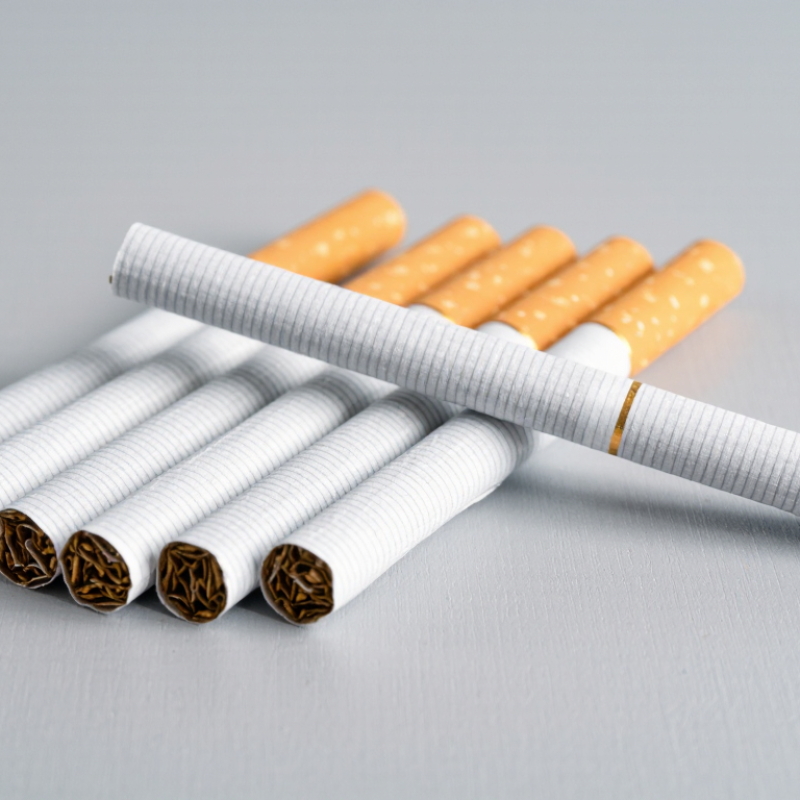
What Are Canadian Ultra Light Cigarettes?

Definition: “Ultra-Light” Was a Marketing Label, Not a Canadian Legal Category

In Canada, “ultra-light” was a marketing label, not a legal cigarette category. It did not certify a product as safer or place it in a special government-defined class. Canadian rules restrict misleading package descriptions, so the phrase is best understood as marketing language, not an official classification. That distinction matters. A pale pack or a “lighter” description could suggest reduced harm without proving it.

The term was often associated with lower machine-measured tar and nicotine yields. Those figures came from testing machines, not from measuring what an individual smoker actually absorbed. People may take deeper puffs, smoke more often, or block tiny ventilation holes with their fingers. Human behavior is messy. So a lower test result does not reliably mean lower exposure or lower health risk. The label can still sound reassuring, which is part of why it deserves careful scrutiny. When reading older packaging or descriptions, treat “ultra-light” as a sales claim from its time, not as evidence of a safer cigarette. The distinction is easy to miss.

Canadian Rules: “Light” and “Mild” Descriptors Were Banned in 2007

What Are Canadian Ultra Light Cigarettes?

In Canada, “ultra light” is best understood as a historical marketing term, not a reliable measure of safety. For years, cigarette packages used words such as “light” and “mild” to suggest a gentler product. That impression could be misleading. A pale package or a softer-sounding label did not mean a smoker faced little risk.

Canadian rules changed in 2007. The words “light” and “mild” were banned from tobacco packaging and promotion because they could imply reduced harm. The change affected how cigarettes could be described, not the underlying health risks. A cigarette did not become safer simply because its label changed. That distinction is easy to miss.

People sometimes used “ultra light” to describe cigarettes associated with lower machine-measured tar or nicotine yields. But those test results do not reliably predict what a person absorbs. Smoking habits matter: someone may take deeper puffs, inhale more often, or cover ventilation holes with their fingers. Small details. Big difference. It is also worth questioning old assumptions; familiar wording can sound factual even when it mainly shaped expectations. Today, Canadian packaging rules restrict misleading impressions, so “ultra light” should not be treated as an official safety category.

Canadian Ultra-Light Cigarettes: The “Light” and “Mild” Descriptor Ban

“Ultra-light” was a marketing term, not a reliable indicator of lower health risk. Canada prohibited “light” and “mild” descriptors on tobacco packaging in 2007; the chart shows the descriptor status, not cigarette strength or health effects.

Machine Testing: ISO 3308 Uses 35-mL Puffs Every 60 Seconds

What Are Canadian Ultra Light Cigarettes?

Machine testing offers a controlled way to compare cigarette emissions. Under ISO 3308, a smoking machine draws a 35-millilitre puff every 60 seconds. Each puff lasts two seconds. The cigarette is held in a fixed position, while the machine follows the same pattern for each test. Consistent conditions matter. They make laboratory results easier to compare.

But a machine is not a person. It does not change puff size, pause, or respond to taste. Its results describe emissions under a specific test method, not the amount an individual will inhale. That distinction is easy to miss. Small ventilation holes in a filter can also affect machine readings; fingers or lips may partly cover them during ordinary use.

“Ultra light” is not a dependable measure of personal exposure. A lower machine-measured yield does not establish that a cigarette is safer or that someone will take in less smoke. Real smoking patterns vary, and testing cannot capture every variation. The numbers are useful, but limited. That limitation deserves attention.

What Are Canadian Ultra Light Cigarettes? - Machine Testing: ISO 3308 Uses 35-mL Puffs Every 60 Seconds

Dimension Accurate information How to interpret it
Meaning of “ultra light” “Ultra light” is a historical marketing-style description, not a separate scientific cigarette category with a universal definition. The term alone does not establish a product’s emissions, nicotine delivery, or health risk.
Canadian labelling context Canadian tobacco rules restrict misleading representations about a tobacco product’s effects on health. “Light” and “mild” descriptors have been prohibited on cigarette packages and in advertising. “Ultra light” should not be treated as an official Canadian safety rating or a reliable measure of lower exposure.
ISO 3308 puff volume The standard machine-smoking regime uses a puff volume of 35 mL per puff. This is a controlled laboratory setting, not a measurement of how much a person actually inhales.
ISO 3308 puff timing The standard regime uses a 2-second puff once every 60 seconds. Changing puff volume, duration, or frequency can change measured machine yields.
Ventilation during ISO testing Under the ISO routine method, filter ventilation holes are not deliberately blocked as they are in some more intensive machine-testing protocols. Ventilation can dilute smoke drawn by the machine and affect reported yields; it does not mean a smoker will inhale the same amounts.
What machine yields represent Machine tests can measure emissions such as nicotine, tar (nicotine-free dry particulate matter), and carbon monoxide under the specified conditions. Results describe emissions under that test method; they are not a direct prediction of an individual’s exposure or disease risk.
Canadian Intense testing Health Canada’s Canadian Intense smoking regime uses 55-mL puffs every 30 seconds and blocks filter ventilation holes. Its conditions are more intensive than ISO 3308’s routine regime, so results from the two methods should not be compared as if they were produced identically.
Health interpretation Machine-measured yields and “light” or “ultra light” descriptions do not establish that a cigarette is safe or that switching reduces health risk. All combustible cigarettes expose users to harmful substances; no machine-test result makes smoking safe.

Method note: ISO 3308 describes a standard laboratory smoking-machine regimen. Actual smoking behaviour varies, so machine yields should not be read as personal intake figures. Canadian regulatory and testing information is provided for context; no company or brand data are included.

Why Machine Yields Do Not Predict Individual Smoke Exposure

What Are Canadian Ultra Light Cigarettes?

“Ultra light” has historically referred to cigarettes with lower tar and nicotine yields in standardized machine tests. Those figures describe a test setup, not a person. A machine takes controlled puffs at set intervals. Real smoking is less predictable.

That difference matters. A person may take larger or more frequent puffs, inhale more deeply, or smoke closer to the filter. Small ventilation holes in some filters can also be partly covered by fingers or lips, changing the air drawn through the cigarette. Habit, stress, and smoking patterns vary too. The test cannot capture all of that. Not even close.

A lower machine yield does not reliably predict lower exposure for an individual. It is easy to read a number as a personal forecast; it is not. Researchers assess exposure using methods such as measuring chemicals or their breakdown products in the body, though these measures have limits as well. The details can feel unsatisfying, because one simple number would be easier to compare. Still, machine results should not be treated as proof that a cigarette is safer. Public health guidance is clear that no cigarette is risk-free, and a label cannot tell someone exactly how much smoke their body receives.

Health Context: Tobacco Use Causes Over 8 Million Deaths Each Year Worldwide

What Are Canadian Ultra Light Cigarettes?

Health Context: Tobacco Use Causes Over 8 Million Deaths Each Year Worldwide

“Ultra light” describes cigarettes once associated with lower machine-measured smoke yields. Tiny ventilation holes in filters can dilute smoke during testing. A person may inhale more deeply, take extra puffs, or block those holes without noticing. The label sounds reassuring. It does not mean the product is safe or that exposure is reliably lower.

The World Health Organization reports that tobacco use causes more than 8 million deaths each year worldwide, including deaths linked to secondhand smoke. Tobacco smoke contains toxic substances that can damage the lungs, heart, and blood vessels. Risk is not always visible: smoke may linger in a room after the cigarette is gone. Even so, people often underestimate exposure when a product seems mild. That perception deserves a closer look.

Tips: Check trusted public-health sources rather than relying on packaging language. Keep indoor spaces smoke-free, and ask a healthcare professional about support for quitting. If you already smoke, changing to a lighter-sounding product does not remove the health risks.

Copyright 2025 Fluidra S.A. | Created by BCM Marketing Agencia Privacy Policy Legal note | Cookie policy |

Technical cookies are strictly necessary for our website to work and you can navigate through it. These types of cookies are those that, for example, allow us to identify you, give you access to certain restricted parts of the page if necessary, or remember different options or services already selected by you, such as your privacy preferences. Therefore, they are activated by default, your authorization not being necessary in this regard. Through the configuration of your browser, you can block or alert the presence of this type of cookies, although such blocking will affect the proper functioning of the different functionalities of our website.


The analysis cookies allow us to study the navigation of the users of our website in general (for example, which sections of the page are the most visited, which services are used most and if they work correctly, etc.). From the statistical information on navigation on our website, we can improve both the operation of the page itself and the different services it offers. Therefore, these cookies do not have an advertising purpose, but only serve to make our website work better, adapting to our users in general. By activating them you will contribute to this continuous improvement. You can enable or disable these cookies by checking the corresponding box, being disabled by default.


Functionality cookies allow us to remember your preferences, to personalize certain characteristics and general options of our website, every time you access it (for example, the language in which the information is presented to you, the sections marked as favorites, your browser type, etc.) Therefore, this type of cookies does not have an advertising purpose, but by activating them you will improve the functionality of the website (for example, adapting to your type of browser) and the customization of it based on your preferences (for example, by presenting the information in the language that you have chosen in previous occasions), which will contribute to the ease, usability and comfort of our page during your navigation. You can enable or disable these cookies by checking the corresponding box, being disabled by default.


Advertising cookies allow us to manage the advertising spaces included in our website based on criteria such as the content shown or the frequency in which the ads are displayed. For example, if you have been shown the same ad several times on our website, and you have not shown a personal interest by clicking on it, it will not appear again. In summary, by activating this type of cookies, the advertising shown on our website will be more useful and diverse, and less repetitive. You can enable or disable these cookies by checking the corresponding box, being disabled by default.


Behavioral advertising cookies allow us to obtain information based on the observation of your browsing habits and behaviors on the web, in order to show you advertising content that best suits your personal tastes and interests. To understand it in a very simple way, we will give you a fictitious example: if your last searches on the web were related to suspense literature, we would show you advertising about suspense books. Therefore, activating this type of cookies, the advertising that we show you on our website will not be generic, but will be oriented to your searches, tastes and interests, therefore adjusting exclusively to you. You can enable or disable these cookies by checking the corresponding box, being disabled by default.
To understand it in a very simple way, we will give you a fictitious example: if your last searches on the web were related to suspense literature, we would show you advertising about suspense books. Therefore, activating this type of cookies, the advertising that we show you on our website will not be generic, but will be oriented to your searches, tastes and interests, therefore adjusting exclusively to you. You can enable or disable these cookies by checking the corresponding box, being disabled by default.

SAVE

We use our own and third-party cookies to ensure the proper functioning of the website and to analyse our services, improve your experience on our website and show you advertisements related to your interests according to profiling based on your browsing habits (e.g. websites visited). You can accept all cookies by clicking "ACCEPT" or set or reject them by clicking here. If you would like to know more about the use of cookies, please see our COOKIE POLICY.


ACCEPT ALL
Reject no essentials


