
10 Blister Retail Packaging Tips for Global Buyers
FLUID HANDLING EXPERTS

Blog, all our news

10 Blister Retail Packaging Tips for Global Buyers

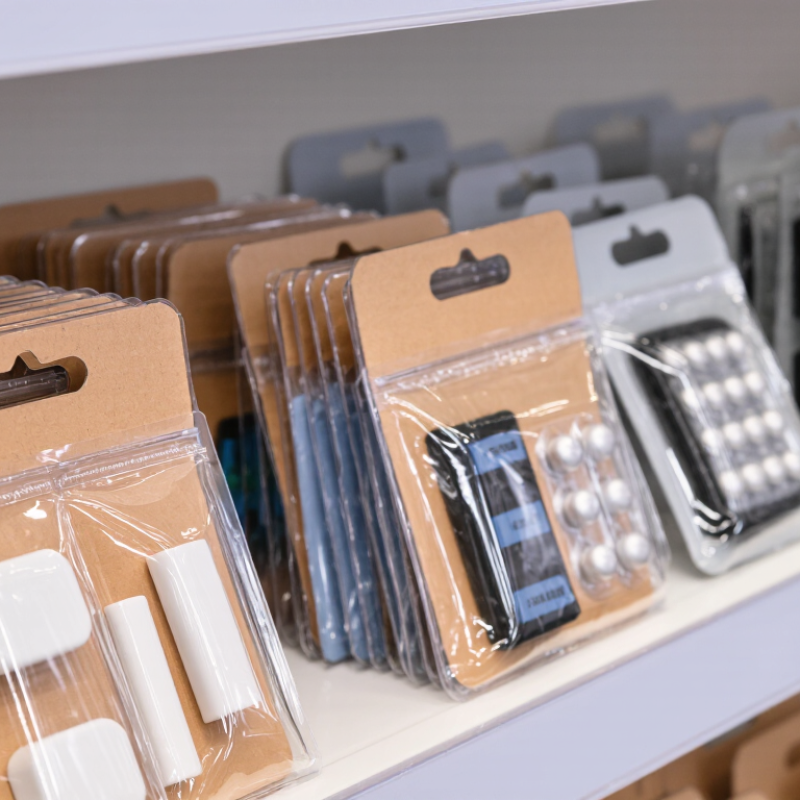
Blister Retail Packaging is more than a clear plastic shell around a product. It is a compact sales tool, protection system, and communication surface. Global buyers must examine each detail, from cavity size and card stiffness to opening effort and shelf visibility. A small design weakness can create crushed corners, trapped moisture, or confusing product information during international distribution.

Walter Soroka, a respected packaging educator, described packaging as “the science, art and technology of enclosing products for protection, distribution, storage, sale and use.” His definition remains practical for today’s retail blister projects. Good packaging should protect a product through handling, support efficient merchandising, and help customers understand what they are buying. It should also suit local recycling expectations, production capabilities, and consumer habits.

Details matter.

These ten tips focus on real purchasing decisions. They address material selection, sealing quality, artwork consistency, tamper visibility, shipping tests, and supplier communication. Buyers should request samples before approving large production runs. A package that looks excellent on a computer screen may feel awkward in a customer’s hands. It may also require more material than necessary.

There is no universal blister solution. A design that performs well in a dry warehouse may struggle in humid transport conditions. Some assumptions will be wrong. That is why measurable testing, supplier experience, and thoughtful revision remain essential. Reliable Blister Retail Packaging is not created by appearance alone. It is refined through evidence, practical feedback, and careful attention to the final retail environment.
10 Blister Retail Packaging Tips for Global Buyers

Define Product Requirements and Target Market Standards

Define Product Requirements and Target Market Standards

A reliable blister specification starts with the product, not the packaging machine. Record tablet dimensions, breakability, moisture sensitivity, light sensitivity, dosage instructions, and shelf-life targets. A 0.25-millimeter size change can affect cavity fit and sealing pressure. Small details matter.

Target-market standards must be mapped before sampling. For pharmaceutical products, ISO 15378 supports quality management for primary packaging materials. ISO 11607 addresses sterile barrier packaging where applicable. Distribution testing may follow ASTM D4169 or ISTA procedures. Requirements also differ by climate. A humid coastal market may need stronger moisture protection than a dry inland region. Add local language, required warnings, recycling marks, and accessibility expectations to the artwork brief. Check every translation.

The World Health Organization estimates that one in ten medical products in low- and middle-income countries is substandard or falsified. Packaging cannot solve every supply-chain risk, but clear identifiers, tamper evidence, and consistent seal inspection can reduce avoidable failures.

Use measurable limits for seal strength, leak rates, cavity depth, and print contrast. Smithers’ global packaging research also places sustainability and material efficiency among major market priorities. That pressure is real.

However, reducing plastic without testing barrier performance is a weak decision. I have seen attractive packs fail after humid storage. Test samples under actual transport and storage conditions.

Some specifications will need revision. That is better than discovering the weakness after launch.

Choose Blister Materials for Protection, Visibility, and Sustainability

10 Blister Retail Packaging Tips for Global Buyers

Choose Blister Materials for Protection, Visibility, and Sustainability

Start with the product’s real risks. A rigid PET blister can protect small items from dust, impact, and handling damage. Match the forming material with product weight, sharp edges, temperature, and humidity exposure.

Test before ordering at scale. Drop samples from realistic heights. Press the sealed cavity by hand. Inspect cracks, seal failure, and movement inside the pack. Keep enough clearance, but avoid wasted space. Clear plastic improves visibility. However, excessive transparency can expose sensitive product details during transport.

Use a barrier layer when moisture or oxygen may cause damage. Select recyclable structures where local systems can process them. Recycling claims need evidence. They are not automatically valid everywhere. Reduce plastic thickness carefully, because thinner walls may weaken protection. Paperboard backing can improve shelf presentation and reduce plastic use, but its coating may complicate recovery.

Choose seals that open without scissors. Ask users to test the pack with wet or tired hands. Small details matter. Confirm that printed instructions remain readable after rubbing and humidity exposure. Review transportation conditions across regions, including heat, cold, vibration, and long storage. Request material specifications, migration data, and quality records from suppliers. Then compare samples from different production runs. The first sample can look perfect. It may still hide a production weakness.

Design Packaging for Manufacturing, Display, and User Accessibility

10 Blister Retail Packaging Tips for Global Buyers

Design blister packaging as a production tool, a shelf communicator, and a human interface. In pilot reviews, I have seen attractive packs fail because small tabs tear unevenly or product cavities collapse during transport. Use consistent cavity depth, controlled sealing temperature, and clear forming tolerances. Keep critical graphics away from heat-seal zones. Add batch coding space. It prevents costly rework.

2.2
billion people

The WHO World Report on Vision states that at least 2.2 billion people have near or distance vision impairment. Therefore, use high-contrast text, readable type, and tactile opening cues. Keep instructions close to the opening point. A short sentence helps. Test peel force with older users, limited dexterity, and reduced vision. Do not assume one language or one reading direction works globally. Consumer testing often exposes this mistake.

UN DESA’s World Population Prospects 2022 reports that people aged 65 and above represented about 10% of the global population in 2022. Plan for accessibility from the tooling stage, not after approval. Consider rounded edges, stable backing cards, and a visible start corner. Use recyclable material choices where local infrastructure supports them. Smithers’ packaging forecasts also emphasize automation, material efficiency, and regional production flexibility. That means artwork, tooling, and assembly instructions should be modular. A perfect package is unrealistic. Recheck it. Shelf visibility still matters, but easy handling should win when the two conflict.

Verify Global Compliance, Labeling, and Safety Requirements

10 Blister Retail Packaging Tips for Global Buyers

Global buyers should treat blister packaging as a compliance project, not merely a purchasing decision. Requirements can vary by country, product category, and sales channel. Before approving samples, confirm the destination market’s packaging, labeling, and safety rules. Do not guess. Ask qualified compliance professionals or local authorities for current guidance.

Check whether the blister material suits the product and storage conditions. Heat, moisture, light, and pressure can affect protection. Request material specifications, migration data, and safety test reports from the supplier. The package should resist opening during transport but remain practical for the intended user. Child-safety and accessibility requirements may also differ across markets. Small details matter.

Labels usually need accurate product identification, quantity, batch or lot information, expiry dates, warnings, and responsible-party details. Language rules deserve close attention. A translated label may sound correct but still fail a local review. I recommend comparing the final artwork with an approved compliance checklist and a physical sample. Keep test reports, declarations, artwork versions, and inspection records together. One missed symbol can delay customs clearance. A checklist can still miss something. Review it with an independent specialist before production, especially when several countries share one package design.

EU Packaging Recycling Targets Relevant to Blister Packaging

Global buyers should verify the material composition, labeling, and recycling obligations for each destination market. The chart shows EU packaging-waste recycling targets by material under Directive 94/62/EC.

The percentages apply to packaging waste streams at EU level, not to an individual blister pack. For purchasing decisions, confirm the destination country’s current rules, accepted material codes, recycling symbols, language requirements, safety statements, and product-specific regulations.

Source: EU Directive 94/62/EC on packaging and packaging waste

Control Costs, Quality, Logistics, and Supplier Performance

10 Blister Retail Packaging Tips for Global Buyers

Control costs at the tooling stage. Request a cavity layout, material breakdown, and annual-volume quote. Compare unit price, mold cost, and changeover fees together. Use standard blister dimensions where possible. They usually reduce trimming waste and replacement tooling. Ask suppliers to show actual sample measurements, not only drawings. A 0.2-millimeter seal variation can create visible defects. Require approved samples, seal-strength tests, and lot-based inspection records. ISO 2859-1 sampling can support consistent acceptance decisions, but it cannot replace process control.

Quality also depends on transport. UNCTAD’s Review of Maritime Transport reports that over 80% of global merchandise trade moves by sea. Therefore, specify carton compression, moisture protection, pallet patterns, and maximum stacking height. Add corner protection for long ocean routes. Request drop-test photos from pilot shipments. They reveal weak points quickly. The World Bank’s What a Waste 2.0 estimates 2.01 billion tonnes of municipal solid waste annually worldwide. Reduce unnecessary plastic, but do not remove protective features that prevent product damage and returns.

Supplier performance needs measurable evidence. Set targets for on-time delivery, defect rates, response time, and corrective-action closure. Audit production capacity before peak seasons. Keep a backup source for critical components. I would also review packaging drawings every quarter; small revisions are often overlooked. This is not perfect. Forecasts change, and inspection costs can rise unexpectedly. A practical scorecard, shared monthly, still creates clearer accountability than promises alone.

10 Blister Retail Packaging Tips for Global Buyers - Control Costs, Quality, Logistics, and Supplier Performance

No. Buying Priority Recommended Control Point Practical Data Dimension Verification Method Logistics or Cost Effect Buyer Action
1 Define the product and market requirements first Confirm product dimensions, weight, fragility, retail presentation, target countries, language requirements, and applicable packaging rules before requesting quotations. Required input set:
Product length × width × height
Product weight
Annual forecast volume
Destination markets
Use a signed packaging specification and drawing revision. Record all dimensions in millimetres and mass in grams. Reduces quotation changes, tooling revisions, and late artwork corrections. Issue one controlled specification with revision number, date, and approval status.
2 Select the material for function and end-market compliance Choose the blister substrate and lidding material according to barrier, clarity, rigidity, heat-sealing, recyclability, and regulatory needs. Common material options:
PVC, PET, PP, PVC/PVdC, or aluminium-based structures
Specify thickness in micrometres
Request material declarations, technical data sheets, migration or compliance documents where required, and confirmation of the exact material structure. Material choice affects unit price, forming performance, package weight, recyclability, and shipping volume. Compare at least two technically acceptable material structures instead of selecting only by lowest price.
3 Control cavity fit and product protection Design sufficient clearance for insertion while preventing movement, abrasion, crushing, and accidental release during handling. Key measurements:
Cavity length, width, and depth
Product-to-cavity clearance
Seal land width
Product retention result
Approve a dimensional sample and conduct insertion, removal, vibration, compression, and drop checks using the final product. Correct fit reduces product damage, returns, and rework caused by poor forming or sealing conditions. Approve the formed cavity with the actual product, not with a simplified dummy alone.
4 Set clear sealing and peel-performance requirements Define the sealing window, seal appearance, opening force, and acceptable failure modes for the selected lidding structure. Recommended records:
Sealing temperature
Dwell time
Pressure
Seal strength or peel-force result
Leak or channel-leak result
Validate the process across low, nominal, and high settings. Inspect for wrinkles, incomplete seals, contamination, and delamination. Stable sealing reduces rejected packs, line stoppages, product exposure, and replacement shipments. Place sealing parameters and test frequency in the approved process-control plan.
5 Use risk-based inspection rather than visual inspection alone Combine incoming-material checks, in-process checks, final inspection, and functional testing. Inspection dimensions:
Critical defects: safety or seal failure
Major defects: fit, print, or function failure
Minor defects: cosmetic variation
Sampling plan: ISO 2859-1 or an agreed equivalent
Define defect classifications, sample size, acceptance criteria, inspection equipment, and approval responsibilities in writing. Consistent acceptance criteria prevent disputes and reduce the risk of paying for non-conforming finished goods. Agree on the inspection standard before production, not after shipment.
6 Lock artwork and regulatory information by market Control text, symbols, barcodes, recycling marks, warnings, units, translations, and country-specific information through approved artwork versions. Artwork checks:
Correct revision code
Barcode readability
Print contrast
Text legibility
Required language and symbols
Use a signed proof, barcode verification, colour reference, and first-article approval before mass production. Prevents obsolete stock, relabelling, customs delays, and destruction of incorrectly printed packaging. Separate artwork approval from purchase-order approval and keep one master file per market.
7 Measure packaging efficiency before confirming the order Optimise the blister footprint, card size, nesting arrangement, carton dimensions, and pallet pattern without compromising protection. Useful calculations:
Carton volume = length × width × height
Packaging utilisation = product volume ÷ outer-carton volume
Shipping weight = net product weight + packaging weight
Review a packing diagram showing units per inner carton, cartons per master carton, and cartons per pallet. Better cube utilisation can reduce freight cost, storage space, handling, and carbon emissions per sellable unit. Request packed dimensions and gross weights before comparing delivered-cost quotations.
8 Validate distribution strength for the intended route Test the complete selling unit and shipping configuration against the expected handling environment. Distribution factors:
Transport mode
Route length
Temperature and humidity exposure
Vibration, compression, and drop hazards
Pallet stacking height
Use a documented distribution test plan, such as ASTM D4169 or an equivalent agreed protocol, and inspect product and package after testing. Improves resistance to transport damage and reduces claims, replacements, and emergency repacking. Test the final materials, closure method, carton, and pallet pattern together.
9 Build total cost from measurable cost drivers Compare more than the quoted piece price by including tooling, setup, artwork plates, inspection, packing, freight, duties, and expected waste. Total-cost formula:
Landed cost per unit = product price + packaging cost + tooling allocation + inspection + freight + duty + handling
Tooling allocation = tooling cost ÷ expected lifetime quantity
Request a costed bill of materials, tooling quotation, minimum order quantity, lead time, and validity period for each offer. Reveals whether a low unit price is offset by high minimum quantities, freight volume, tooling, or quality risk. Evaluate at forecast volume, minimum order quantity, and realistic reorder frequency.
10 Manage supplier performance with measurable service levels Track delivery, quality, responsiveness, corrective action, change control, and document accuracy throughout the supply relationship. Suggested monthly indicators:
On-time delivery rate
Accepted-lot rate
Defect rate per million units
Corrective-action closure time
Order-confirmation accuracy
Use a supplier scorecard with agreed definitions, evidence requirements, escalation levels, and quarterly performance reviews. Early visibility supports corrective action before defects affect retail availability or customer service. Link improvement plans to deadlines and require formal approval for material, tooling, process, or artwork changes.
Planning note: Material choices, testing protocols, sampling levels, labelling rules, and recycling requirements should be confirmed for the specific product and destination market before production approval.
Copyright 2025 Fluidra S.A. | Created by BCM Marketing Agencia Privacy Policy Legal note | Cookie policy |

Technical cookies are strictly necessary for our website to work and you can navigate through it. These types of cookies are those that, for example, allow us to identify you, give you access to certain restricted parts of the page if necessary, or remember different options or services already selected by you, such as your privacy preferences. Therefore, they are activated by default, your authorization not being necessary in this regard. Through the configuration of your browser, you can block or alert the presence of this type of cookies, although such blocking will affect the proper functioning of the different functionalities of our website.


The analysis cookies allow us to study the navigation of the users of our website in general (for example, which sections of the page are the most visited, which services are used most and if they work correctly, etc.). From the statistical information on navigation on our website, we can improve both the operation of the page itself and the different services it offers. Therefore, these cookies do not have an advertising purpose, but only serve to make our website work better, adapting to our users in general. By activating them you will contribute to this continuous improvement. You can enable or disable these cookies by checking the corresponding box, being disabled by default.


Functionality cookies allow us to remember your preferences, to personalize certain characteristics and general options of our website, every time you access it (for example, the language in which the information is presented to you, the sections marked as favorites, your browser type, etc.) Therefore, this type of cookies does not have an advertising purpose, but by activating them you will improve the functionality of the website (for example, adapting to your type of browser) and the customization of it based on your preferences (for example, by presenting the information in the language that you have chosen in previous occasions), which will contribute to the ease, usability and comfort of our page during your navigation. You can enable or disable these cookies by checking the corresponding box, being disabled by default.


Advertising cookies allow us to manage the advertising spaces included in our website based on criteria such as the content shown or the frequency in which the ads are displayed. For example, if you have been shown the same ad several times on our website, and you have not shown a personal interest by clicking on it, it will not appear again. In summary, by activating this type of cookies, the advertising shown on our website will be more useful and diverse, and less repetitive. You can enable or disable these cookies by checking the corresponding box, being disabled by default.


Behavioral advertising cookies allow us to obtain information based on the observation of your browsing habits and behaviors on the web, in order to show you advertising content that best suits your personal tastes and interests. To understand it in a very simple way, we will give you a fictitious example: if your last searches on the web were related to suspense literature, we would show you advertising about suspense books. Therefore, activating this type of cookies, the advertising that we show you on our website will not be generic, but will be oriented to your searches, tastes and interests, therefore adjusting exclusively to you. You can enable or disable these cookies by checking the corresponding box, being disabled by default.
To understand it in a very simple way, we will give you a fictitious example: if your last searches on the web were related to suspense literature, we would show you advertising about suspense books. Therefore, activating this type of cookies, the advertising that we show you on our website will not be generic, but will be oriented to your searches, tastes and interests, therefore adjusting exclusively to you. You can enable or disable these cookies by checking the corresponding box, being disabled by default.

SAVE

We use our own and third-party cookies to ensure the proper functioning of the website and to analyse our services, improve your experience on our website and show you advertisements related to your interests according to profiling based on your browsing habits (e.g. websites visited). You can accept all cookies by clicking "ACCEPT" or set or reject them by clicking here. If you would like to know more about the use of cookies, please see our COOKIE POLICY.


ACCEPT ALL
Reject no essentials


