
What Are Bio Sanitizer Tablets and How Do They Work?
FLUID HANDLING EXPERTS

Blog, all our news

What Are Bio Sanitizer Tablets and How Do They Work?

Bio Sanitizer Tablets are compact products designed to release an active sanitizing ingredient when dissolved or used as directed. Their formulas differ. Some are intended for water, while others are made for specific surfaces or equipment, so the label matters. A tablet is not automatically suitable for every setting.

In practical terms, the active ingredient must reach the target at the correct concentration and remain there for the stated contact time. Environmental microbiologist Dr. Charles Gerba has studied how microbes persist and spread in everyday environments. A careful paraphrase of the practical lesson from this field—not a verbatim quotation—is: “Sanitizing works only when the active ingredient reaches its target and has enough contact time.” That detail is easy to overlook.

A tablet may look simple, but results depend on how it is prepared, where it is used, and whether instructions are followed. Clear water, measured dilution, and a timed wait can matter. So can storage: moisture may damage some tablets before use. These products reduce certain microorganisms when used correctly; they do not make every surface sterile or replace cleaning when dirt is visible. It is also worth checking which organisms and uses the product label actually covers. This guide explains what Bio Sanitizer Tablets are, how their active ingredients work, and what practical limits to keep in mind. The chemistry can be useful. It is not magic.
What Are Bio Sanitizer Tablets and How Do They Work?

What Bio Sanitizer Tablets Are

Bio sanitizer tablets are compact treatment products designed to support the breakdown of organic waste in places such as septic systems, portable toilets, and drains. Their formulas may contain selected microorganisms, enzymes, or both. The tablet dissolves in water and releases these ingredients, which act on organic material such as food residue and waste. Some products also contain other additives, so the word “bio” alone does not tell you exactly what is inside.

They are not automatically disinfectants. A tablet that helps digest waste should not be assumed to kill disease-causing germs or make water safe to drink. Check the product’s stated use and active ingredients. In a septic tank, for example, biological activity depends on conditions such as temperature, water flow, and the existing microbial community. Results can vary. The context matters: WHO/UNICEF’s Joint Monitoring Programme reported that 3.5 billion people lacked safely managed sanitation in 2022, underscoring the need for reliable sanitation systems. Tablets may support some systems, but they cannot replace proper containment, maintenance, or treatment. And the label can be confusing. A practical first step is to compare the tablet’s intended use with the system’s operating instructions.

What Are Bio Sanitizer Tablets and How Do They Work? — What Bio Sanitizer Tablets Are
Aspect Description Practical note
What they are Solid tablets intended to support biological treatment of organic waste. Depending on the product, they may contain selected microorganisms, enzymes, or both. “Bio sanitizer” is not a single standardized product category; check the product label for its actual ingredients and intended use.
How they work In a suitable, moist environment, microorganisms can break down some biodegradable material. Enzymes can help split particular organic compounds into smaller components that microbes may further process. Performance depends on factors such as temperature, pH, oxygen availability, contact time, and the waste being treated.
Common applications Some formulations are designed for septic systems, portable toilets, drains, or other waste-treatment settings. Use a tablet only in the system and application specified by its manufacturer; products for one setting may not suit another.
What they may help with When appropriately formulated and used, biological treatment products may support the breakdown of certain organic residues or help manage waste-system odors. Results vary, and tablets are not a substitute for proper maintenance, cleaning, or professional servicing.
Not the same as a disinfectant A biological waste-treatment tablet should not be assumed to kill bacteria, viruses, or other disease-causing organisms on surfaces or in water. For disinfection or drinking-water treatment, use a product specifically labeled and approved for that purpose, following its directions.
Use and dosage The required amount, placement, and treatment schedule differ by formulation and system size. Follow the package directions. Do not infer a dose from another product or exceed the stated amount.
Compatibility and precautions Some disinfectants, cleaning chemicals, or extreme environmental conditions may inhibit microbial activity, depending on the product and system. Check label warnings before combining treatments. Keep tablets in their original packaging and follow the safety instructions.
Expected timing Biological processes generally take time; any noticeable effect depends on the formulation, conditions, and the problem being addressed. Do not expect instant sterilization, immediate odor removal, or a guaranteed repair of a blocked or failing system.

Key Ingredients and Their Functions

Bio sanitizer tablets can contain very different ingredients, so “bio” alone does not identify how a tablet works. In biological formulas, selected microorganisms and enzymes help break down organic residue that can cause odors. The microbes consume suitable waste; enzymes help split larger organic materials into smaller compounds. Some tablets also include nutrients that support microbial activity.

These products may help manage buildup, but they should not automatically be treated as disinfectants. That distinction is easy to miss.

Other tablets use chemical sanitizers, such as sodium dichloroisocyanurate, which releases chlorine in water and can inactivate many microorganisms. Effervescent ingredients, often an acid and a carbonate, help the tablet disperse; binders hold its shape during storage. Ingredients and performance vary by product.

I would check the label before assuming a tablet is safe for a particular surface, plumbing system, or septic tank. Never mix products unless the instructions explicitly allow it.

The WHO/UNICEF Joint Monitoring Programme’s 2023 report estimated that 3.5 billion people lacked safely managed sanitation in 2022. That figure describes a broad public-health need, not proof that any single tablet can solve it.

Read the label.

How the Tablets Activate in Water

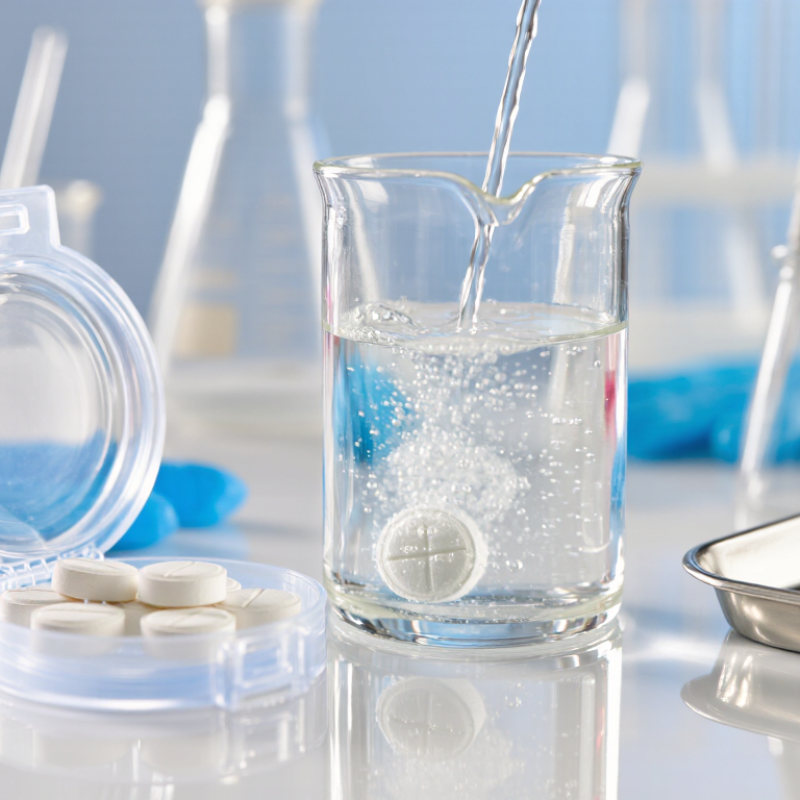
A bio sanitizer tablet begins working when water reaches its surface. The outer layer softens, and soluble ingredients gradually move into the surrounding water. Some tablets break apart quickly; others are designed to dissolve slowly. Water movement helps spread the released ingredients beyond the spot where the tablet sits. Not instant.

The active ingredient depends on the tablet’s formulation. It may interfere with microorganisms by damaging their outer structures or disrupting essential processes. Contact time matters: water needs to circulate long enough for the treatment to reach the areas being sanitized. Cooler water can slow dissolution, while pH and other water conditions may affect performance. The details vary, so “bio sanitizer” alone does not reveal exactly how a tablet works.

In practice, follow the product’s stated dose and placement instructions, and use a suitable test method to check the water when one is specified. A tablet dissolving does not prove that the water has reached an effective treatment level. Keep an eye on cloudy patches or residue, too; they can signal poor circulation or incomplete dissolving, though they do not identify the cause by themselves. It is easy to assume that a natural-sounding label means gentle or harmless. That assumption deserves a second look.

How They Control Microbes and Odors

Bio sanitizer tablets are designed to manage microbial growth and odors in places such as drains, waste containers, or treatment systems. Their ingredients vary. Some release selected microorganisms; others rely on enzymes or sanitizing agents. Check the product label, because “bio” does not guarantee a particular mechanism.

In microbial formulas, useful microbes can compete with odor-producing organisms and consume organic residue, such as food scraps or soap film. Enzymes may help break that residue into smaller compounds. Less leftover material can mean fewer sources of sour or sulfur-like smells. The change is often gradual. Not magic.

A tablet may control odors without disinfecting a surface or eliminating disease-causing microbes. These are different claims, and the label should say which one applies. Water temperature, contact time, and the amount of organic buildup can all affect results. A heavily soiled drain, for example, may need physical cleaning before a tablet can work well. It is easy to expect one tablet to solve everything; that expectation deserves a second look. Follow the stated dose, avoid mixing products, and allow the recommended treatment time. If odors persist, inspect for a blockage or another source rather than simply adding more tablets.

Common Uses and Safe Handling

Bio sanitizer tablets are used where odor and organic waste need routine control. Common examples include portable toilets, holding tanks, and some wastewater systems. Not all tablets work alike. Depending on the formulation, they may release selected microbes or enzymes that help break down waste and reduce odors. This process takes time; a tablet is not an instant sterilizer. A clean-looking tank can still contain harmful organisms. Use tablets only for purposes listed on the label, especially around drains or water systems. Do not assume they make water safe to drink.

Safe handling starts with reading the directions before opening the package. Wear gloves if recommended, and avoid breathing dust or touching your eyes. Keep tablets dry, sealed, and away from children, pets, food, and medicines. Never mix them with bleach, acids, or other cleaners unless the label explicitly permits it. Mixing can create hazards or reduce effectiveness. Use the stated dose; extra tablets may not work faster. If a tablet breaks, follow its cleanup instructions rather than sweeping residue into a drain. Compatibility with tank materials is easy to overlook, so check before use. For skin or eye contact, follow the label’s first-aid guidance and seek medical advice if symptoms persist.

Copyright 2025 Fluidra S.A. | Created by BCM Marketing Agencia Privacy Policy Legal note | Cookie policy |

Technical cookies are strictly necessary for our website to work and you can navigate through it. These types of cookies are those that, for example, allow us to identify you, give you access to certain restricted parts of the page if necessary, or remember different options or services already selected by you, such as your privacy preferences. Therefore, they are activated by default, your authorization not being necessary in this regard. Through the configuration of your browser, you can block or alert the presence of this type of cookies, although such blocking will affect the proper functioning of the different functionalities of our website.


The analysis cookies allow us to study the navigation of the users of our website in general (for example, which sections of the page are the most visited, which services are used most and if they work correctly, etc.). From the statistical information on navigation on our website, we can improve both the operation of the page itself and the different services it offers. Therefore, these cookies do not have an advertising purpose, but only serve to make our website work better, adapting to our users in general. By activating them you will contribute to this continuous improvement. You can enable or disable these cookies by checking the corresponding box, being disabled by default.


Functionality cookies allow us to remember your preferences, to personalize certain characteristics and general options of our website, every time you access it (for example, the language in which the information is presented to you, the sections marked as favorites, your browser type, etc.) Therefore, this type of cookies does not have an advertising purpose, but by activating them you will improve the functionality of the website (for example, adapting to your type of browser) and the customization of it based on your preferences (for example, by presenting the information in the language that you have chosen in previous occasions), which will contribute to the ease, usability and comfort of our page during your navigation. You can enable or disable these cookies by checking the corresponding box, being disabled by default.


Advertising cookies allow us to manage the advertising spaces included in our website based on criteria such as the content shown or the frequency in which the ads are displayed. For example, if you have been shown the same ad several times on our website, and you have not shown a personal interest by clicking on it, it will not appear again. In summary, by activating this type of cookies, the advertising shown on our website will be more useful and diverse, and less repetitive. You can enable or disable these cookies by checking the corresponding box, being disabled by default.


Behavioral advertising cookies allow us to obtain information based on the observation of your browsing habits and behaviors on the web, in order to show you advertising content that best suits your personal tastes and interests. To understand it in a very simple way, we will give you a fictitious example: if your last searches on the web were related to suspense literature, we would show you advertising about suspense books. Therefore, activating this type of cookies, the advertising that we show you on our website will not be generic, but will be oriented to your searches, tastes and interests, therefore adjusting exclusively to you. You can enable or disable these cookies by checking the corresponding box, being disabled by default.
To understand it in a very simple way, we will give you a fictitious example: if your last searches on the web were related to suspense literature, we would show you advertising about suspense books. Therefore, activating this type of cookies, the advertising that we show you on our website will not be generic, but will be oriented to your searches, tastes and interests, therefore adjusting exclusively to you. You can enable or disable these cookies by checking the corresponding box, being disabled by default.

SAVE

We use our own and third-party cookies to ensure the proper functioning of the website and to analyse our services, improve your experience on our website and show you advertisements related to your interests according to profiling based on your browsing habits (e.g. websites visited). You can accept all cookies by clicking "ACCEPT" or set or reject them by clicking here. If you would like to know more about the use of cookies, please see our COOKIE POLICY.


ACCEPT ALL
Reject no essentials



