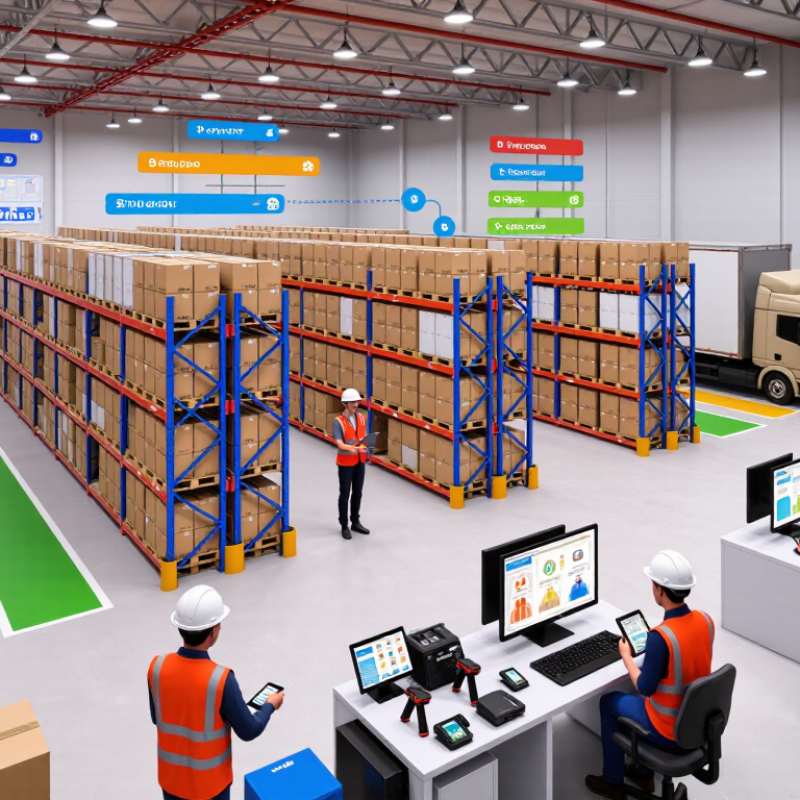
Choosing a Wms Warehouse System is rarely a simple software decision. For global buyers, it affects receiving docks, inventory accuracy, labor planning, order speed, and customer trust. A polished demo can look impressive, yet fail when barcode scans drop, language settings conflict, or integrations slow down during peak season.
Dwight Klappich, a respected Gartner supply chain analyst, has described the warehouse as “the heart of the supply chain.” That view remains practical. A warehouse system connects purchasing, storage, picking, shipping, transportation, and business reporting. When one link breaks, the entire operation feels it. This guide examines seven leading WMS Warehouse System options for international companies. It considers implementation experience, scalability, real-time visibility, automation support, integration quality, security, and vendor service. It also looks beyond feature lists. Total ownership cost matters. So does training.
Details matter.
A global buyer may need multi-site control, local tax workflows, multiple currencies, and reliable support across time zones. Some systems handle these demands elegantly. Others require expensive customization. That distinction is easy to miss in a sales presentation. Our evaluation therefore focuses on practical warehouse conditions, including crowded aisles, cycle counts, handheld devices, returns, and seasonal volume spikes. No platform is perfect. Even strong systems can create friction when data quality is weak or staff adoption is overlooked. Readers should treat this comparison as a decision framework, not a universal ranking. The best choice depends on facility size, product complexity, growth plans, and internal technical capability. A careful trial is still necessary.
What Is a Warehouse Management System and Why Global Buyers Need One
A warehouse management system, or WMS, is the operational control layer inside a warehouse. It records stock locations, receiving, picking, packing, and dispatch. It can also connect warehouse activity with purchasing and transport planning. For global buyers, this visibility matters across time zones, suppliers, currencies, and delivery routes. A carton should not disappear between the loading dock and the export handover.
The 2024 Annual Industry Report from the Material Handling Institute found that 55% of respondents planned to increase investment in supply chain technology. It also reported that 83% considered innovation important for future competitiveness. These figures reflect practical pressure, not fashion. A capable WMS can reduce manual counting, flag low inventory, and show whether an order is genuinely ready. It may even expose a quiet problem: stock exists, but it is stored in the wrong zone.
However, a WMS is not magic. Poor product data will still create poor decisions. A 2023 World Bank Logistics Performance Index report highlighted continuing differences in tracking, infrastructure, and shipment reliability between economies. Global buyers should therefore examine integration, user permissions, data accuracy, and local support before choosing a system. Test a real workflow, including a damaged carton and a partial shipment. The uncomfortable truth is simple: many warehouses buy software before fixing their processes. That mistake can be expensive.
7 Best WMS Warehouse Systems for Global Buyers - What Is a Warehouse Management System and Why Global Buyers Need One
WMS System Type
Best Fit
Core Warehouse Capabilities
Global Operations Support
Typical Deployment
Scalability
Implementation Profile
1. Enterprise Cloud WMS
Large international companies operating multiple warehouses and distribution centers.
Advanced receivingWave planningLabor managementSlottingAutomation control
Multi-site inventory visibility, multiple languages and currencies, configurable workflows, and integration with enterprise resource planning systems.
Cloud subscription with centralized administration and browser-based access.
Very high
Usually requires process standardization, data migration, integration work, user training, and phased deployment.
2. Multi-Site Distribution WMS
Importers, wholesalers, and distributors managing regional or international warehouse networks.
Supports standard barcode workflows, commonly used carrier connections, multiple users, and additional warehouse locations as the business grows.
Usually cloud-based with configurable modules.
Moderate to high
Generally simpler to implement; success depends on clean item data, barcode discipline, and staff adoption.
Note: A warehouse management system (WMS) controls and records warehouse activities such as receiving, put-away, storage, replenishment, picking, packing, shipping, counting, and returns. Suitability, implementation effort, and total cost vary according to warehouse size, order volume, automation level, regulatory requirements, integrations, and the quality of operational data.
Key Features to Compare in Modern WMS Warehouse Systems
Selecting a modern WMS warehouse system starts with inventory accuracy, not attractive dashboards. In daily warehouse operations, teams need real-time stock visibility across sites, zones, and storage bins. The system should support barcode scanning, RFID, serial numbers, batch tracking, and expiry dates. Small errors matter. A misplaced pallet can delay an entire shipment. Look for clear timestamps, stock movement history, and alerts for unusual adjustments. Shortcuts can create blind spots.
Integration is equally important. A capable WMS should connect reliably with enterprise resource planning, transport, procurement, and sales systems. Open APIs help global buyers adapt workflows without rebuilding the platform. Check support for multiple warehouses, currencies, languages, time zones, and local measurement units. Mobile functions should work on common handheld devices. Offline capability helps when signals fail inside a steel storage area. Test it there.
Automation features deserve practical testing. Compare wave picking, batch picking, replenishment rules, slotting suggestions, labor planning, and returns handling. User permissions and audit trails protect operational accountability. Security should include encryption, access controls, backups, and tested recovery procedures. However, advanced analytics cannot repair poor scanning habits or incomplete master data. During evaluation, ask suppliers to demonstrate receiving, cycle counting, order exceptions, and a damaged-goods process using realistic volumes. A polished demonstration may hide difficult implementation work. Review training time, configuration limits, support response standards, and the full cost of ownership before approval.
Seven Leading WMS Options for International Warehouse Operations
Seven Leading WMS Options for International Warehouse Operations
Global warehouse teams usually compare seven practical WMS options. Cloud-native systems support rapid deployment across multiple countries. Enterprise platforms manage complex networks, advanced reporting, and strict approval workflows. Modular systems suit growing companies that need inventory, receiving, and shipping tools first. Multi-client systems help logistics providers separate stock, billing, and service rules. Omnichannel systems connect retail, wholesale, and online orders in one operation. Manufacturing-integrated systems link warehouse movements with production schedules. Regional systems may offer stronger language, tax, and carrier support.
From warehouse implementation experience, international buyers should test real workflows before signing. Scan a mixed pallet, split an order, and process a return. Then review stock accuracy and response times. A system can look impressive during a sales demonstration. It may struggle with poor connectivity or unusual packaging. That matters. Reliable vendors explain migration limits, training needs, security controls, and support coverage. Independent references from similar warehouses are valuable evidence.
Tips: Build a short scorecard around inventory accuracy, integration, scalability, user training, and total cost. Ask each provider to demonstrate cross-border receiving with realistic data. Keep one manual fallback during the pilot. It may feel inefficient, but it reveals where automation is still fragile. Local warehouse staff should approve the final workflow because practical knowledge often exposes gaps that documents miss.
How to Evaluate WMS Integration, Scalability, and Regional Support
A strong WMS should connect cleanly with ERP, transport, labor, and marketplace systems. Test real workflows, not only polished demonstrations. Send an advance shipping notice, receive a pallet, split cartons, and return inventory. Record error messages and synchronization delays. REST APIs, webhooks, configurable mappings, and sandbox access reveal integration maturity.
Scalability needs evidence. Request performance results for peak receiving, wave picking, and cycle counting across multiple sites. MHI’s 2024 Annual Industry Report found that 88% of supply chain leaders plan to increase technology investment. That spending still needs discipline. A platform may scale technically but fail operationally when supervisors manage different processes across countries.
Regional support is more than translated screens. Check local implementation coverage, time-zone response, tax settings, labor rules, currencies, and data-residency options. Ask for reference customers with similar volumes and warehouse layouts. The World Bank’s 2023 Logistics Performance Index shows meaningful differences in customs efficiency and shipment reliability between economies, so one global template may create friction. Test offline scanning in a weak-signal aisle. Small details matter. I would also challenge vendor case studies: selected success stories rarely show migration delays, retraining costs, or failed interfaces. Those gaps deserve written answers before a global rollout.
How to Select the Best WMS for Your Global Supply Chain Needs
Selecting the best WMS for a global supply chain requires more than comparing feature lists. Global buyers should test each of the seven systems against actual lanes, labor patterns, and service promises. A polished demo is not evidence. Begin with multi-site inventory visibility, multilingual workflows, local units, time zones, and flexible tax documentation. The system should connect cleanly with enterprise planning, transport, commerce, and automation tools through stable APIs. MHI’s 2024 Annual Industry Report identifies cloud computing as a rapidly expanding supply-chain technology, with expected adoption reaching 55% within two years. That trend supports scalable deployment, but cloud access alone does not guarantee useful operations.
Use measurable trials before signing. Import several weeks of real orders, including split shipments, returns, damaged cartons, and stock discrepancies. Measure pick accuracy, receiving time, cycle-count variance, and recovery after network interruption. The World Bank’s 2023 Logistics Performance Index assessed 139 economies and highlighted tracking, timeliness, and customs efficiency as critical logistics dimensions. A suitable WMS should expose these gaps by location, not hide them inside attractive dashboards. Security roles, audit trails, data residency, and supplier support also deserve practical testing. I would request references from warehouses with similar volumes and cross-border complexity. Do not trust a single success story. A perfect scorecard is unrealistic; implementation effort, training quality, and weak master data can still undermine a strong platform. Pilot it. Let warehouse operators challenge every assumption.
7 Best WMS Warehouse Systems for Global Buyers
Global buyers should prioritize scalability, integration, inventory visibility, localization, automation, analytics, and implementation support when evaluating a warehouse management system.
The chart uses a 100-point screening model for comparing WMS options. The percentages represent recommended buyer-priority weights rather than vendor performance claims. Integration, scalability, and real-time inventory visibility receive the highest weights because they directly affect multi-country warehouse operations.
Cepex is the brand for the fluid handling market belonging to the Fluidra group. One of the leading european manufacturer of valves and fittings in thermoplastic materials.
Dedicated to the swimming pool, irrigation and industrial markets, we distribute our products worldwide with the Fluidra commercial network and presence in 46 countries with 136 sales branches.
Your data will be processed by CEPEX S.A., with address at C. Lluís Companys, 51-53, 08400, Granollers (Barcelona), and C.I.F. nº A-08928707, to send you communications about our products based on your interests. You can consult more information about the processing of your data and how to exercise your rights as described in the Privacy Policy.
Technical cookies are strictly necessary for our website to work and you can navigate through it. These types of cookies are those that, for example, allow us to identify you, give you access to certain restricted parts of the page if necessary, or remember different options or services already selected by you, such as your privacy preferences. Therefore, they are activated by default, your authorization not being necessary in this regard. Through the configuration of your browser, you can block or alert the presence of this type of cookies, although such blocking will affect the proper functioning of the different functionalities of our website.
The analysis cookies allow us to study the navigation of the users of our website in general (for example, which sections of the page are the most visited, which services are used most and if they work correctly, etc.). From the statistical information on navigation on our website, we can improve both the operation of the page itself and the different services it offers. Therefore, these cookies do not have an advertising purpose, but only serve to make our website work better, adapting to our users in general. By activating them you will contribute to this continuous improvement. You can enable or disable these cookies by checking the corresponding box, being disabled by default.
Functionality cookies allow us to remember your preferences, to personalize certain characteristics and general options of our website, every time you access it (for example, the language in which the information is presented to you, the sections marked as favorites, your browser type, etc.) Therefore, this type of cookies does not have an advertising purpose, but by activating them you will improve the functionality of the website (for example, adapting to your type of browser) and the customization of it based on your preferences (for example, by presenting the information in the language that you have chosen in previous occasions), which will contribute to the ease, usability and comfort of our page during your navigation. You can enable or disable these cookies by checking the corresponding box, being disabled by default.
Advertising cookies allow us to manage the advertising spaces included in our website based on criteria such as the content shown or the frequency in which the ads are displayed. For example, if you have been shown the same ad several times on our website, and you have not shown a personal interest by clicking on it, it will not appear again. In summary, by activating this type of cookies, the advertising shown on our website will be more useful and diverse, and less repetitive. You can enable or disable these cookies by checking the corresponding box, being disabled by default.
Behavioral advertising cookies allow us to obtain information based on the observation of your browsing habits and behaviors on the web, in order to show you advertising content that best suits your personal tastes and interests. To understand it in a very simple way, we will give you a fictitious example: if your last searches on the web were related to suspense literature, we would show you advertising about suspense books. Therefore, activating this type of cookies, the advertising that we show you on our website will not be generic, but will be oriented to your searches, tastes and interests, therefore adjusting exclusively to you. You can enable or disable these cookies by checking the corresponding box, being disabled by default. To understand it in a very simple way, we will give you a fictitious example: if your last searches on the web were related to suspense literature, we would show you advertising about suspense books. Therefore, activating this type of cookies, the advertising that we show you on our website will not be generic, but will be oriented to your searches, tastes and interests, therefore adjusting exclusively to you. You can enable or disable these cookies by checking the corresponding box, being disabled by default.
We use our own and third-party cookies to ensure the proper functioning of the website and to analyse our services, improve your experience on our website and show you advertisements related to your interests according to profiling based on your browsing habits (e.g. websites visited). You can accept all cookies by clicking "ACCEPT" or set or reject them by clicking here. If you would like to know more about the use of cookies, please see our COOKIE POLICY.