
7 Best Volkswagen Fuel Injectors for Global Buyers?
FLUID HANDLING EXPERTS

Blog, all our news

7 Best Volkswagen Fuel Injectors for Global Buyers?

Choosing among the 7 Best Volkswagen Fuel Injectors for Global Buyers requires more than comparing prices. Compatibility depends on the engine code, model year, fuel system, and injector calibration. A unit designed for a 1.8T petrol engine may not suit a 2.0 TDI diesel engine. Small differences matter.

“An injector is a precision metering valve, not a universal cure,” explains Bosch Mobility executive Dr. Markus Heyn. This practical view should guide every purchase. A reliable injector must deliver the correct fuel volume, maintain a consistent spray pattern, and respond accurately to electronic commands. It should also include durable seals, a suitable electrical connector, and documented flow specifications.

Real workshop experience often reveals details that product pages omit. Mechanics inspect cold-start behavior, idle stability, exhaust smoke, fuel consumption, and cylinder balance. A damaged O-ring can create trouble. So can contamination inside the fuel rail. Buyers should confirm the exact Volkswagen part number before ordering, especially when purchasing across regions with different catalogs and fuel standards.

No ranking is perfect. A premium injector may offer stronger testing, while a lower-cost option may perform well in a carefully maintained engine. That judgment can feel uncertain. Still, transparent specifications and traceable manufacturing provide stronger confidence than attractive packaging. This guide compares seven practical choices for global buyers, focusing on fitment, construction, testing evidence, installation concerns, and long-term value. Some recommendations may change after deeper inspection. That is worth admitting.
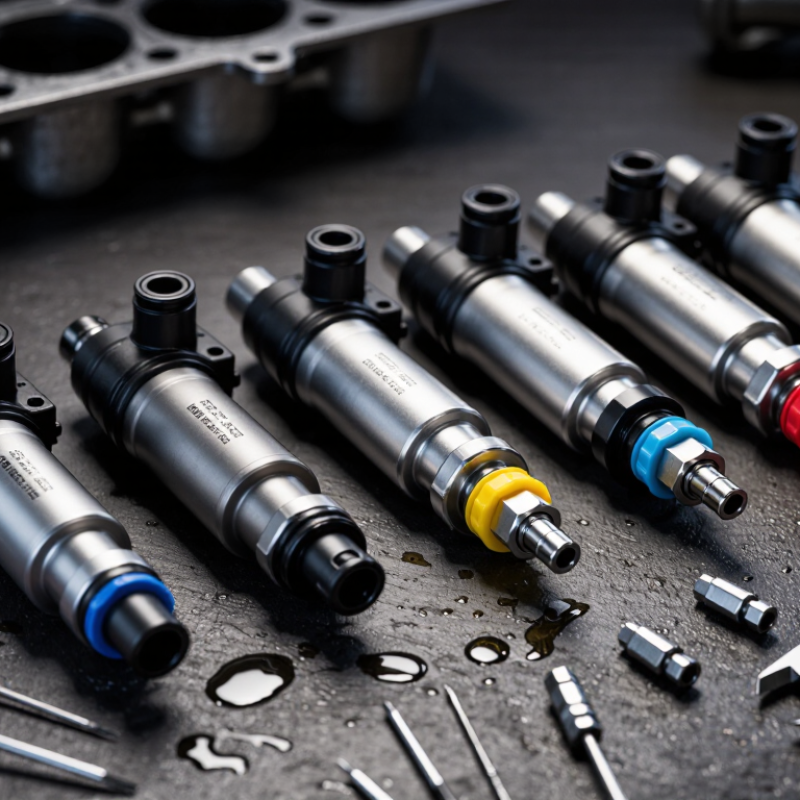
7 Best Volkswagen Fuel Injectors for Global Buyers?

Volkswagen Fuel Injector Basics and Compatibility Factors

Choosing a fuel injector for a Volkswagen vehicle requires more than matching the model year. The engine code, fuel system type, and original injector number matter. Port-injection units sit in the intake port, while direct-injection units spray fuel inside the cylinder. They are not interchangeable. A compatible injector should match flow rate, operating pressure, electrical impedance, connector shape, and spray pattern. Small differences can affect starting, fuel economy, and emissions.

A reliable check begins with the vehicle identification number and the engine code. Compare these details with the supplier’s technical data, not only product photographs. Measure the injector length, upper and lower seal diameters, and rail connection. The seals should be replaced when disturbed. A damaged seal may create a leak or an unstable mixture. It is a small part with serious consequences.

Regional specifications also deserve attention. The same engine family may use different calibration settings across markets. Fuel quality and local ethanol content can influence material compatibility. I once treated a similar-looking connector as acceptable; it fitted loosely and needed correction. That was avoidable. Ask for flow-test results, resistance readings, warranty terms, and storage guidance. New does not always mean correct. A professional supplier should explain testing conditions and provide traceable part information. After installation, inspect for leaks, check fault codes, and confirm stable fuel trims during a cold start. A short road test cannot replace proper diagnostic data.

Volkswagen Fuel Injector Basics and Compatibility Factors

This sizing reference estimates the minimum injector flow required for gasoline engines using four injectors, an 80% maximum duty cycle, and a 0.50 lb/hp·hr brake-specific fuel consumption value. Actual compatibility also depends on fuel type, fuel pressure, electrical impedance, connector style, spray pattern, physical dimensions, ECU calibration, and rail fitment. The flow conversion uses approximately 10.5 cc/min per lb/hr.

How to Compare Injector Flow Rate, Spray Pattern, and Fuel Pressure

Choosing fuel injectors for an engine starts with verified specifications, not attractive packaging. Compare the required flow rate at the engine’s working fuel pressure. A higher number is not automatically better. Excess flow can create a rich mixture, poor idle, and difficult tuning. Use injector calculators cautiously; they depend on horsepower, fuel type, duty cycle, and engine efficiency. I have seen flow charts measured at different pressures, making similar injectors appear incompatible. Check the test pressure, connector style, impedance, and seal dimensions. Record every figure. Small errors matter.

Spray pattern deserves practical attention. A fine, even cone usually supports cleaner mixing, but port angle and intake design also control results. Inspect test data, then confirm fitment with the fuel rail and manifold. Fuel pressure must remain stable under load. A weak pump, blocked filter, or unsuitable regulator can distort an otherwise good injector’s behavior. Measure pressure with a calibrated gauge at idle and during a loaded test. Do not rely on sound or a quick visual check. A bench test provides stronger evidence. Published data may not reflect your fuel temperature or wiring voltage. Leave room for verification, and recheck after installation.

Seven Recommended Volkswagen Fuel Injectors for Global Buyers

Choosing the right fuel injector requires more than matching a vehicle name. Engine code, production year, fuel system, connector shape, and injector calibration must agree. Based on practical workshop checks, these seven choices are worth considering for global buyers: an OEM-equivalent port injector, a direct-injection unit, a common-rail diesel injector, a high-flow performance injector, a low-emission injector, a remanufactured injector, and a tested replacement set.

The OEM-equivalent option suits standard engines and usually offers predictable flow. Direct-injection engines require precise spray control and correct pressure ratings. Common-rail diesel injectors need careful coding and bench calibration after installation. High-flow units may support modified engines, but oversized injectors can create poor idle quality. Not always better. Low-emission injectors are useful where fuel economy and exhaust standards matter. Remanufactured units can reduce cost, provided their test reports are available.

Check flow rate, coil resistance, spray pattern, sealing rings, and connector design before ordering. Ask for measurement data, not only attractive photographs. Regional fuel quality also affects deposits and service life. A clean filter and fresh seals remain essential. I have seen buyers replace injectors when the real fault was wiring corrosion or weak fuel pressure. That mistake is expensive. For uncertain fitment, compare the original part number with the engine code and verify the injector’s calibration requirements with a qualified technician.

Installation, Calibration, and Engine Performance Considerations

Choosing fuel injectors for a global-market vehicle requires more than matching engine size. Confirm connector shape, rail fitment, spray pattern, impedance, and rated flow at the correct fuel pressure. A small mismatch can cause rough starting, fuel trim errors, or catalyst damage. During installation, work on a cool engine and disconnect the battery. Relieve pressure safely, keep capped components clean, and replace brittle O-rings. A thin film of approved lubricant helps prevent pinched seals. Do not force the injector into the rail. That mistake is common.

After installation, inspect for leaks before starting. Cycle the ignition several times, then check the rail, injector bases, and nearby hoses with a dry cloth. Calibration depends on the control unit, injector data, and fuel pressure. Some systems need coding or learned-value resets through a scan tool. Others adjust automatically, but that assumption can waste diagnostic time. Record the injector flow rating and correction data. Compare short- and long-term fuel trims at idle and under load. Stable readings matter more than a perfect number.

Engine performance should be judged across cold start, warm idle, acceleration, and steady cruising. Watch for misfire counts, hesitation, smoke, and unusual fuel consumption. A road test should follow the service manual and local safety rules. I once blamed an injector for poor power, then found a restricted filter and weak wiring. Recheck the basics. If trims remain abnormal, test fuel pressure, compression, ignition, and vacuum leaks before replacing more parts. One overlooked connector can imitate a calibration fault.

7 Best Volkswagen Fuel Injectors for Global Buyers? - Installation, Calibration, and Engine Performance Considerations

Rank Injector Category Typical Engine Application Fuel Compatibility Typical Electrical Specification Representative Capacity Installation Considerations Calibration Requirements Engine Performance Benefit
1 High-Impedance Port-Fuel Injector Naturally aspirated or lightly turbocharged gasoline engines using multi-point injection Unleaded gasoline; ethanol blends only when injector seals and materials are approved Typically 12–16 Ω; saturated ECU driver Approximately 180–300 cc/min at 3 bar, depending on engine output requirements Match connector, O-ring dimensions, rail height, spray angle, and fuel-pressure specification. Replace upper and lower seals during installation. Enter injector flow rate and battery-voltage offset data where supported. Confirm fuel trims after installation. Reliable cold starting, stable idle, and improved mixture control when the original injectors are worn or restricted
2 Precision Low-Flow Port Injector Small-displacement gasoline engines prioritizing fuel economy and emissions control Unleaded gasoline; verify chemical compatibility before using high-ethanol fuel Typically 12–16 Ω; saturated driver Approximately 100–180 cc/min at 3 bar Prioritize accurate short-pulse behavior, correct spray targeting, and clean electrical connections. Do not oversize the injector. Short-pulse adder and dead-time data are important for idle quality. Reset adaptations only after confirming there are no air or fuel leaks. Better idle stability, smoother transient response, and potentially lower fuel consumption
3 High-Flow Turbocharged Port Injector Modified gasoline engines with increased boost, airflow, or displacement Gasoline; ethanol-blend compatibility depends on seals, filter media, and injector construction Usually 12–16 Ω; confirm ECU driver compatibility before purchase Approximately 400–1,000 cc/min at 3 bar Check injector length, rail spacing, connector type, coil clearance, and fuel-pump capacity. Maintain adequate duty-cycle headroom. Requires accurate flow characterization, dead time, fuel-pressure compensation, and load-based fuel-map adjustment. Supports higher power while maintaining safer air-fuel ratios when correctly sized and calibrated
4 Gasoline Direct-Injection Solenoid Injector Spark-ignition engines with high-pressure direct fuel injection Unleaded gasoline; fuel-system material compatibility must be confirmed Often low impedance, approximately 1.5–3 Ω; requires the correct peak-and-hold driver Designed for high-pressure operation, commonly about 100–200 bar depending on system design Use new combustion-chamber sealing components, follow torque procedures, and protect the nozzle from contamination. Never interchange with port injectors. Requires injector coding or calibration data, quantity correction, rail-pressure adaptation, and leak testing. Restores injection timing, combustion stability, starting performance, and high-load power in direct-injection systems
5 High-Pressure Direct-Injection Injector for Boosted Applications Turbocharged gasoline direct-injection engines requiring additional fuel delivery Unleaded gasoline; verify compatibility with the intended ethanol concentration Low-impedance solenoid design; exact current profile must match the ECU and injector driver High-pressure operation commonly within the 100–200 bar range; actual flow is pressure-dependent Confirm piston clearance, spray pattern, nozzle projection, rail fitment, and high-pressure pump capacity. Professional calibration is recommended for injection duration, rail pressure, start of injection, and enrichment control. Improves fuel supply at high load and can reduce lean-out risk in properly engineered performance applications
6 Common-Rail Diesel Solenoid Injector Turbocharged diesel engines using electronically controlled common-rail injection Ultra-low-sulfur diesel meeting the required regional fuel standard Coil resistance and current profile vary by system; ECU driver matching is essential Common-rail pressure may range from approximately 300 to 2,500 bar, depending on operating condition and system generation Keep the fuel system exceptionally clean, replace the combustion seal, and follow high-pressure safety procedures. Do not loosen lines while running. Enter the injector correction code or calibration value where required. Perform leak-off, rail-pressure, and cylinder-balance checks. Restores cold starting, combustion balance, fuel economy, and emissions performance when wear is present
7 Flex-Fuel-Compatible Port Injector Gasoline port-injection engines operated on varying ethanol concentrations Gasoline and approved ethanol blends, including high-ethanol fuel when specifically rated Typically 12–16 Ω; saturated driver for most applications Approximately 300–800 cc/min at 3 bar; ethanol generally requires greater fuel volume Use ethanol-resistant seals and filters. Inspect the fuel pump, hoses, rail, and tank for compatible materials. Tune stoichiometric air-fuel targets, cold-start enrichment, dead time, and ethanol-content compensation. Provides adequate fuel volume and corrosion resistance for vehicles using variable ethanol blends
Technical note: The specifications above are representative engineering ranges rather than universal fitment data. Before purchasing, verify the engine code, fuel system type, rated fuel pressure, injector characterization data, electrical driver requirements, connector, dimensions, seal material, and local fuel compatibility. Injector flow values must always be compared at the same test pressure.

Maintenance, Troubleshooting, and Replacement Guidance

Choosing among seven fuel injectors requires more than matching an engine code. Confirm connector shape, flow rating, fuel type, and control strategy. A workshop inspection should include a scan for misfire codes, fuel-trim readings, rail-pressure testing, and an injector balance test. Do not rely on resistance alone. A healthy electrical reading can hide a poor spray pattern.

The U.S. EPA’s 2023 Automotive Trends Report recorded average new-vehicle fuel economy of 27.1 mpg and carbon dioxide emissions of 346 grams per mile for the 2022 model year. These figures show why accurate metering matters. A leaking injector may create hard starting, a fuel smell, rough idling, or rising oil level. A restricted injector often causes hesitation under load. Remove spark plugs carefully. One unusually wet or pale plug can provide useful evidence, but it is not proof by itself.

Tips: Replace sealing rings during installation. Keep dirt away from the rail. Compare the old and replacement part numbers. After fitting, check for leaks with the system pressurized. Clear stored codes, then review short- and long-term fuel trims during a cold start and a road test. The U.S. Department of Energy recommends following vehicle-specific maintenance guidance rather than universal service intervals. That caution matters. I have seen “compatible” parts fit physically but deliver the wrong flow. Sometimes the injector is not the real fault; wiring, pressure control, or carbon deposits may be responsible.

Copyright 2025 Fluidra S.A. | Created by BCM Marketing Agencia Privacy Policy Legal note | Cookie policy |

Technical cookies are strictly necessary for our website to work and you can navigate through it. These types of cookies are those that, for example, allow us to identify you, give you access to certain restricted parts of the page if necessary, or remember different options or services already selected by you, such as your privacy preferences. Therefore, they are activated by default, your authorization not being necessary in this regard. Through the configuration of your browser, you can block or alert the presence of this type of cookies, although such blocking will affect the proper functioning of the different functionalities of our website.


The analysis cookies allow us to study the navigation of the users of our website in general (for example, which sections of the page are the most visited, which services are used most and if they work correctly, etc.). From the statistical information on navigation on our website, we can improve both the operation of the page itself and the different services it offers. Therefore, these cookies do not have an advertising purpose, but only serve to make our website work better, adapting to our users in general. By activating them you will contribute to this continuous improvement. You can enable or disable these cookies by checking the corresponding box, being disabled by default.


Functionality cookies allow us to remember your preferences, to personalize certain characteristics and general options of our website, every time you access it (for example, the language in which the information is presented to you, the sections marked as favorites, your browser type, etc.) Therefore, this type of cookies does not have an advertising purpose, but by activating them you will improve the functionality of the website (for example, adapting to your type of browser) and the customization of it based on your preferences (for example, by presenting the information in the language that you have chosen in previous occasions), which will contribute to the ease, usability and comfort of our page during your navigation. You can enable or disable these cookies by checking the corresponding box, being disabled by default.


Advertising cookies allow us to manage the advertising spaces included in our website based on criteria such as the content shown or the frequency in which the ads are displayed. For example, if you have been shown the same ad several times on our website, and you have not shown a personal interest by clicking on it, it will not appear again. In summary, by activating this type of cookies, the advertising shown on our website will be more useful and diverse, and less repetitive. You can enable or disable these cookies by checking the corresponding box, being disabled by default.


Behavioral advertising cookies allow us to obtain information based on the observation of your browsing habits and behaviors on the web, in order to show you advertising content that best suits your personal tastes and interests. To understand it in a very simple way, we will give you a fictitious example: if your last searches on the web were related to suspense literature, we would show you advertising about suspense books. Therefore, activating this type of cookies, the advertising that we show you on our website will not be generic, but will be oriented to your searches, tastes and interests, therefore adjusting exclusively to you. You can enable or disable these cookies by checking the corresponding box, being disabled by default.
To understand it in a very simple way, we will give you a fictitious example: if your last searches on the web were related to suspense literature, we would show you advertising about suspense books. Therefore, activating this type of cookies, the advertising that we show you on our website will not be generic, but will be oriented to your searches, tastes and interests, therefore adjusting exclusively to you. You can enable or disable these cookies by checking the corresponding box, being disabled by default.

SAVE

We use our own and third-party cookies to ensure the proper functioning of the website and to analyse our services, improve your experience on our website and show you advertisements related to your interests according to profiling based on your browsing habits (e.g. websites visited). You can accept all cookies by clicking "ACCEPT" or set or reject them by clicking here. If you would like to know more about the use of cookies, please see our COOKIE POLICY.


ACCEPT ALL
Reject no essentials


