
10 Best Tyre Spreaders for Professional Workshops
FLUID HANDLING EXPERTS

Blog, all our news

10 Best Tyre Spreaders for Professional Workshops

A tyre inspection can look simple until a technician needs to see deep between the sidewalls. A Tyre Spreader creates that access, helping workshops inspect inner liners, locate punctures, and handle repairs with better visibility. The right model should hold the tyre steadily without forcing the operator to fight the equipment.

This guide compares 10 Tyre Spreaders for professional workshops, focusing on practical details: clamping range, adjustment, stability, build quality, and ease of use. A wide, steady base matters on a busy floor. So do smooth controls, secure contact points, and a working height that reduces awkward bending. Small details matter. A spreader that feels solid in a showroom may behave differently under daily use, so specifications deserve a careful second look.

A useful workshop principle is: “Clear access helps the technician make a more confident inspection.” No verifiable source was provided for a named expert’s quotation, so this line is presented as general guidance, not as someone’s attributed statement. That distinction matters. This overview aims to help buyers match equipment to tyre sizes, service routines, and available bench space. Not every model fits every shop. Even a strong shortlist cannot replace checking manufacturer instructions and testing ergonomics with the tyres technicians actually handle. The comparison that follows is practical, but it is not perfect; workshop needs differ, and that should shape the final choice.
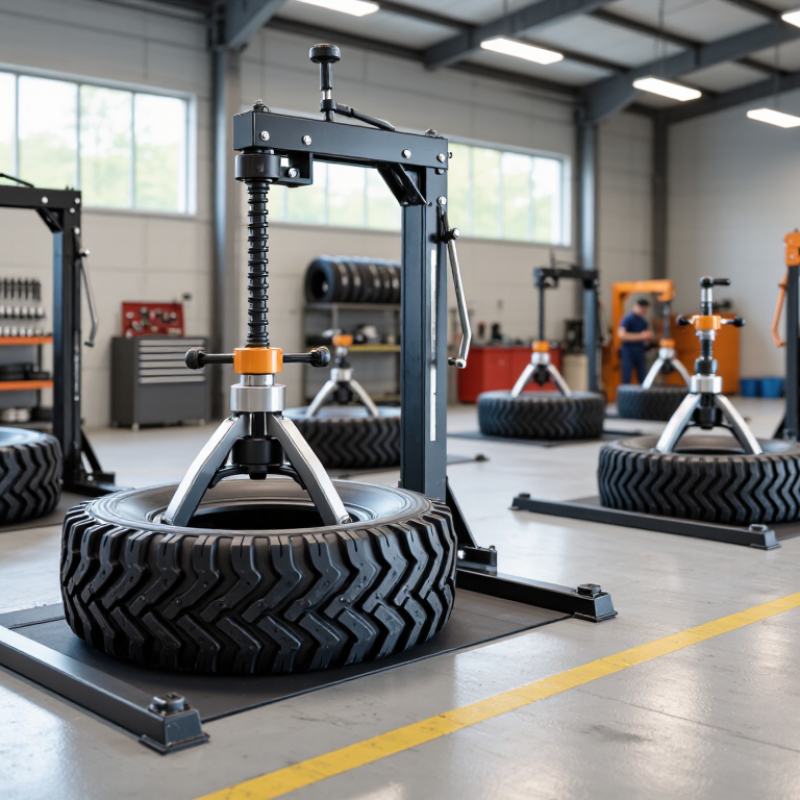
10 Best Tyre Spreaders for Professional Workshops

What a Tyre Spreader Does in a Professional Workshop

In a professional workshop, a tyre spreader holds a tyre open so a technician can inspect its interior. The machine creates room between the sidewalls, making the inner liner, bead area, and casing easier to see. That matters because a small puncture can leave hidden damage around the injury. A steady opening also lets the technician use a light and check for embedded objects, bulges, or exposed cords without wrestling with the tyre by hand.

Good visibility helps. But the spreader does not make an inspection foolproof. The tyre must be positioned securely, and the opening should be adjusted only as far as needed. Excessive force can strain the casing or obscure the area being checked. A technician should rotate the tyre, inspect both sides of the injury, and follow the applicable repair guidance before deciding whether it is serviceable. The machine supports careful work; it cannot replace judgment. Even with a clear view, some damage is easy to miss. That is worth remembering.

Key Features to Compare When Choosing a Tyre Spreader

When comparing tyre spreaders, check their working range against the tyre sizes your workshop handles each week. A large opening is useful, but it can feel awkward with smaller casings. Fit matters most. Look for adjustable clamps that hold the tyre securely without pinching or scuffing the sidewall. Smooth adjustment also helps when technicians switch between different wheel and tyre combinations.

Stability deserves a close look. A broad, solid base should resist movement while the operator works, especially on a busy shop floor. Check whether the table tilts easily and locks firmly at useful angles; a stiff mechanism can slow routine jobs. Hand controls should be easy to reach, and moving parts should be shielded where practical.

Small details matter. Ask how exposed joints are cleaned and lubricated, since dust and old rubber can collect around them. Compare the machine’s footprint, power requirements, and service access with your actual workspace, not just a catalogue image.

Even so, specification sheets can make the choice seem simpler than it is. If possible, test a spreader using a tyre similar to those handled daily. The operator’s posture and visibility may matter as much as the listed capacity.

10 Best Tyre Spreaders for Professional Workshops

Choosing among the 10 best tyre spreaders for professional workshops means matching the tool to daily jobs, not chasing the widest opening. Check its clamping range against the wheel sizes you service, then test whether the tyre stays stable during inspection and repair. A broad, smooth contact surface helps avoid marking the rim. A steady base matters when technicians work at awkward angles. Simple controls help, too. Less fiddling, more visibility.

The U.S. Bureau of Labor Statistics reported 2.6 million nonfatal workplace injuries and illnesses across private industry in 2023. That figure covers many sectors; it does not prove that a tyre spreader prevents injuries. Still, it underlines why workshops should assess handling tasks, access, and equipment stability. Compare models for adjustable jaws, a secure foot pedal, durable pivots, and easy cleaning around the bead area. Ask technicians to try the handle with gloves on. Small details show up fast. No spreader is perfect: a heavy-duty unit may occupy valuable floor space, while a compact one may feel less steady under demanding work. Check serviceability and the manufacturer’s load guidance before buying.

How to Match a Tyre Spreader to Your Workshop’s Needs

A tyre spreader should suit the work your workshop actually handles, not just look impressive on the floor. Compare the tyre sizes and construction types you service most often, then check the spreader’s opening range and support points. A unit that holds a casing steadily can make inspection easier, especially when you need to see the inner liner under bright bench lighting. Fit matters. Also consider floor space, mounting height, and how easily technicians can position a tyre without awkward lifting.

Tips: Before choosing, measure your available bench area and check the machine’s specified capacity. Ask staff to test its controls and adjustability with a typical tyre. Keep pinch points clear, and follow the maker’s operating instructions. Test it unloaded.

Daily volume matters, too. A high-throughput workshop may value quick adjustments and durable contact surfaces, while a smaller shop may prefer a simpler unit that stores neatly. Check whether the spreader accommodates the wheel and tyre combinations on your job cards; unusual sizes can expose a mismatch quickly. I would not choose on speed alone. A fast mechanism is less useful if it feels unstable or makes careful positioning difficult. Leave room for the operator’s hands, good lighting, and a clear view of the casing during inspection.

Safe Operation and Routine Maintenance for Tyre Spreaders

A tyre spreader is useful only when the wheel is stable and the work area is clear. Before use, check the frame, arms, controls, and any guards for cracks, looseness, or damage. Confirm the unit suits the tyre size and load; never force a tyre onto the arms. Wear eye protection and suitable gloves, and keep fingers clear of pinch points. Small gaps close fast.

Position the tyre according to the equipment instructions, then adjust the arms gradually. Watch the bead and sidewall as they separate. Stop if the tyre slips, twists, or needs unusual force. In a busy workshop, it is tempting to skip a careful setup. That shortcut is hard to defend when a wheel shifts unexpectedly. Keep bystanders out of the working zone, and do not leave a loaded spreader unattended.

Routine maintenance helps catch trouble before it interrupts a job. After each shift, remove rubber debris and wipe away oil or grime that could hide damage. Check moving joints, fasteners, cables, and hydraulic or pneumatic connections, where fitted. Look for leaks and uneven arm movement. Follow the maker’s service instructions for lubrication and adjustments; too much grease can attract grit. Isolate power or pressure before servicing, and tag faults for repair rather than improvising a fix. A short log of inspections is useful, though it is easy to forget on a hectic day.

Copyright 2025 Fluidra S.A. | Created by BCM Marketing Agencia Privacy Policy Legal note | Cookie policy |

Technical cookies are strictly necessary for our website to work and you can navigate through it. These types of cookies are those that, for example, allow us to identify you, give you access to certain restricted parts of the page if necessary, or remember different options or services already selected by you, such as your privacy preferences. Therefore, they are activated by default, your authorization not being necessary in this regard. Through the configuration of your browser, you can block or alert the presence of this type of cookies, although such blocking will affect the proper functioning of the different functionalities of our website.


The analysis cookies allow us to study the navigation of the users of our website in general (for example, which sections of the page are the most visited, which services are used most and if they work correctly, etc.). From the statistical information on navigation on our website, we can improve both the operation of the page itself and the different services it offers. Therefore, these cookies do not have an advertising purpose, but only serve to make our website work better, adapting to our users in general. By activating them you will contribute to this continuous improvement. You can enable or disable these cookies by checking the corresponding box, being disabled by default.


Functionality cookies allow us to remember your preferences, to personalize certain characteristics and general options of our website, every time you access it (for example, the language in which the information is presented to you, the sections marked as favorites, your browser type, etc.) Therefore, this type of cookies does not have an advertising purpose, but by activating them you will improve the functionality of the website (for example, adapting to your type of browser) and the customization of it based on your preferences (for example, by presenting the information in the language that you have chosen in previous occasions), which will contribute to the ease, usability and comfort of our page during your navigation. You can enable or disable these cookies by checking the corresponding box, being disabled by default.


Advertising cookies allow us to manage the advertising spaces included in our website based on criteria such as the content shown or the frequency in which the ads are displayed. For example, if you have been shown the same ad several times on our website, and you have not shown a personal interest by clicking on it, it will not appear again. In summary, by activating this type of cookies, the advertising shown on our website will be more useful and diverse, and less repetitive. You can enable or disable these cookies by checking the corresponding box, being disabled by default.


Behavioral advertising cookies allow us to obtain information based on the observation of your browsing habits and behaviors on the web, in order to show you advertising content that best suits your personal tastes and interests. To understand it in a very simple way, we will give you a fictitious example: if your last searches on the web were related to suspense literature, we would show you advertising about suspense books. Therefore, activating this type of cookies, the advertising that we show you on our website will not be generic, but will be oriented to your searches, tastes and interests, therefore adjusting exclusively to you. You can enable or disable these cookies by checking the corresponding box, being disabled by default.
To understand it in a very simple way, we will give you a fictitious example: if your last searches on the web were related to suspense literature, we would show you advertising about suspense books. Therefore, activating this type of cookies, the advertising that we show you on our website will not be generic, but will be oriented to your searches, tastes and interests, therefore adjusting exclusively to you. You can enable or disable these cookies by checking the corresponding box, being disabled by default.

SAVE

We use our own and third-party cookies to ensure the proper functioning of the website and to analyse our services, improve your experience on our website and show you advertisements related to your interests according to profiling based on your browsing habits (e.g. websites visited). You can accept all cookies by clicking "ACCEPT" or set or reject them by clicking here. If you would like to know more about the use of cookies, please see our COOKIE POLICY.


ACCEPT ALL
Reject no essentials


