
10 Best Telemecanique Sensors for Global Buyers?
FLUID HANDLING EXPERTS

Blog, all our news

10 Best Telemecanique Sensors for Global Buyers?

Global buyers do not choose a sensor by catalog range alone. They need dependable detection, suitable mounting, clear documentation, and parts they can source when production stops. Telemecanique Sensors offers options across applications, but the right model depends on the target, environment, response time, and control system. A sensor that works beside a clean conveyor may struggle near oil, vibration, or bright sunlight. Small details matter.

The International Federation of Robotics’ World Robotics 2024 report recorded 4,281,585 industrial robots operating worldwide in 2023, up 10% year over year. That figure describes robotics, not sensor sales, but it shows how much automated production depends on reliable detection and feedback. Quality pioneer W. Edwards Deming is often quoted: “Without data, you’re just another person with an opinion.” It is a useful reminder, though sensor selection also needs hands-on testing. A datasheet cannot reproduce every factory condition.

This guide compares 10 Telemecanique Sensors options for global buyers, with attention to application fit, installation, and practical selection trade-offs. It is not a universal ranking: availability and specifications can vary by region and product generation. Check current manufacturer documentation before ordering. A little caution helps. The aim is to make the shortlist clearer, while admitting that no single “best” sensor suits every line.
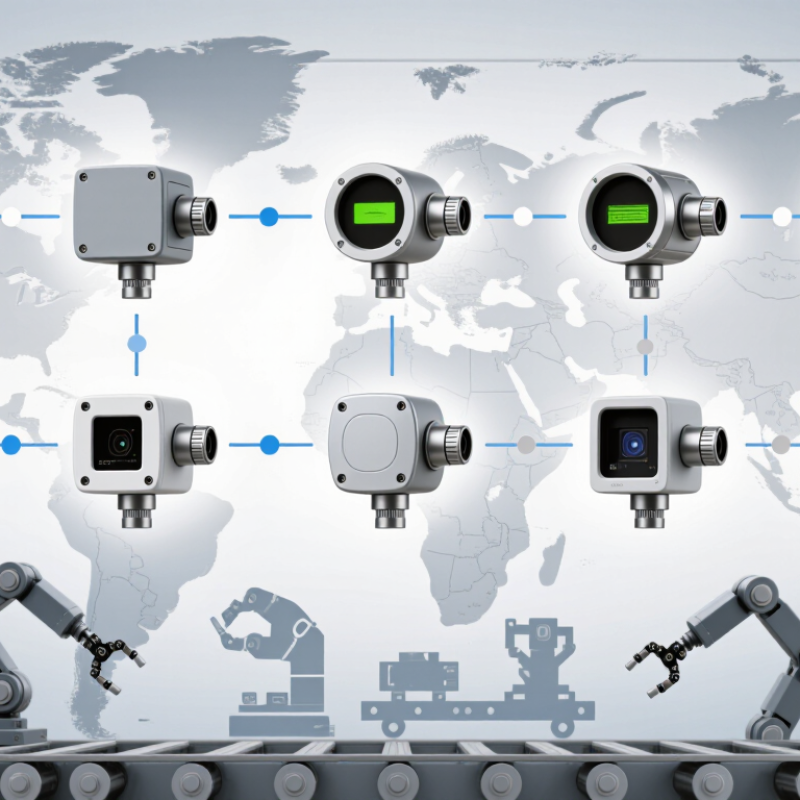
10 Best Telemecanique Sensors for Global Buyers?

Understanding Telemecanique Sensors and Their Industrial Role

Industrial sensors turn physical changes into signals that control systems can use. A proximity sensor can detect a metal bracket without touching it, while a photoelectric unit can count cartons crossing a conveyor. Limit switches confirm that a guard or moving arm has reached a set position.

Small details matter. Mounting distance, target material, vibration, and oil residue can all affect detection.

In a real installation, the sensor is only one part of the decision. A technician must match its output and electrical connection to the controller, then check response time and environmental protection. A sensor that works well on a clean test bench may behave differently beside a warm motor or a washdown area.

That gap is easy to underestimate. It is also worth questioning whether every detection point is necessary; extra devices can add wiring and maintenance without improving the process.

Clear labels, stable brackets, and a practical test routine often matter as much as the sensing principle. During commissioning, record the target position and verify detection under normal machine movement.

Key Criteria for Choosing Sensors for Global Applications

Choosing sensors for global applications starts with the installation, not the catalogue. Record the target’s material, sensing distance, switching frequency, and operating temperature. A metal housing near a washdown line faces different demands from a compact sensor inside a dry control cabinet. Check the required ingress protection against IEC 60529, then confirm that the sensor’s output and supply voltage match the controller. Small mismatches can mean extra wiring or unreliable readings.

Regional compatibility matters. Confirm connector types, wiring diagrams, language support, and required approvals for each destination market; one certificate may not satisfy every installation. For inductive proximity sensors, IEC 60947-5-2 provides relevant requirements. Also compare lead times and spare-part availability across regions. A technically excellent sensor is less useful if a replacement takes weeks to arrive. That detail is easy to miss.

Reliability depends on testing real conditions. Check for vibration, electrical noise, condensation, and nearby moving equipment, then trial the sensor on the actual target. Deloitte’s 2024 Smart Manufacturing Survey, based on 600 manufacturing leaders, found that 86% expected smart manufacturing solutions to drive competitiveness within five years. That raises the value of dependable sensing, but does not make every site ready for complex connectivity. A basic output may be the better choice. I would still verify performance after installation; specifications alone rarely reveal every mounting or alignment issue.

Ten Telemecanique Sensor Options for Common Industrial Needs

A practical sensor list starts with the target and environment, not the catalog. Inductive proximity sensors detect metal parts on a conveyor; capacitive models sense nonmetal materials, including plastic or powder. Photoelectric sensors count cartons, though clear packaging may need careful alignment. Ultrasonic units measure distance or tank level without contact, but foam can confuse readings. Magnetic sensors confirm cylinder position. Mechanical limit switches mark a physical travel endpoint. Small details matter.

For utilities and machine feedback, pressure sensors monitor air or hydraulic lines, while temperature sensors track bearings, ovens, or coolant. Level sensors suit bins and tanks; rotary encoders measure shaft speed or position. These ten options address common industrial needs, but no type fits every installation. The International Federation of Robotics reported 4.28 million industrial robots operating worldwide in 2023, up 10% from 2022, in World Robotics 2024. The International Energy Agency’s Energy Efficiency 2023 report puts industry’s share of global energy use at about 37%. Reliable sensing supports automation and process monitoring, but poor mounting or unchecked calibration can still spoil good data. That part is easy to underestimate. When selecting a device, check target material, washdown exposure, temperature range, output type, and replacement availability.

10 Sensor Options for Common Industrial Needs

Typical technologies and ranges are indicative; confirm the sensing distance, environment, electrical interface, and safety requirements against the application.

Sensor Type Detection Principle Typical Range or Measurement Common Output Common Industrial Use Selection Consideration
Inductive proximity Detects metal targets without contact using an electromagnetic field. Typically a few millimeters to a few centimeters, depending on sensor size and target metal. Discrete PNP or NPN transistor; normally open or normally closed variants are common. Metal-part presence, machine-position detection, and conveyor counting. Sensing distance varies with target material and size; check flush-mounting requirements.
Capacitive proximity Responds to changes in capacitance, allowing detection of conductive and some nonconductive materials. Usually a few millimeters to a few centimeters; setup and material affect the usable distance. Discrete transistor or relay output, depending on design. Liquid or powder level detection through nonmetallic container walls, and detection of plastic or grain. Moisture, buildup, and nearby materials can affect switching; sensitivity adjustment may be useful.
Photoelectric, through-beam Detects interruption of a light beam between a separate emitter and receiver. Often several meters or more, depending on the model and conditions. Discrete transistor or relay output. Object counting, package detection, and presence sensing across wider gaps. Requires mounting and alignment of both units; opaque targets provide the most dependable interruption.
Photoelectric, retroreflective Uses a reflector to return light to the sensor; a target is detected when it interrupts the beam. Commonly from a few centimeters to several meters, depending on the sensor and reflector. Discrete transistor or relay output. Conveyor object detection where wiring both sides of the detection point is inconvenient. Highly reflective targets may need a polarization filter; keep the reflector clean and aligned.
Photoelectric, diffuse-reflective Detects light reflected directly from the target to the sensor. Typically a few centimeters to around a meter; target color, surface, and angle affect performance. Discrete transistor or relay output. Part presence, short-range conveyor detection, and basic position confirmation. Test against the actual target because dark, shiny, or angled surfaces can change the sensing distance.
Ultrasonic distance sensor Measures the time taken for an emitted sound pulse to return from a target. Ranges vary widely, from a few centimeters to several meters. Discrete switching, analog voltage/current, or digital communication, depending on model. Distance measurement and level detection for many solid or liquid targets. Foam, soft materials, narrow targets, airflow, and temperature can affect readings; observe the dead zone.
Mechanical limit switch A moving object actuates a lever, plunger, or roller to change electrical contacts. Contact-based; actuation travel and force depend on the switch design. Mechanical contacts, commonly configured as normally open or normally closed. End-of-travel detection, guarding interlocks, and machine-position confirmation. Check contact rating, mechanical life, actuator style, and suitability for the required safety function.
Magnetic cylinder sensor Detects a magnet in a pneumatic cylinder piston through the cylinder wall. Detects piston position at the sensor’s mounting point; it does not typically measure full travel continuously. Reed-switch contact or solid-state transistor output. Confirmation of cylinder extended or retracted position. Match the sensor and mounting hardware to the cylinder profile and output circuit.
Pressure transmitter Converts applied fluid or gas pressure into an electrical signal. Available ranges include vacuum, low pressure, and high pressure; select a range suited to the process. Common industrial signals include 4–20 mA and 0–10 V; switching versions are also available. Hydraulic and pneumatic monitoring, pump systems, and process pressure measurement. Check pressure type, media compatibility, connection, overpressure rating, and required accuracy.
Temperature sensor Measures temperature using a resistance element, thermocouple, or other sensing element. Range depends on the sensing element, sheath, and transmitter; Pt100 RTDs are common for industrial temperature measurement. Resistance or millivolt signal from the element; transmitters commonly provide 4–20 mA. Monitoring motors, tanks, pipes, ovens, and process equipment. Choose the element, probe construction, response time, insertion depth, and temperature range for the process.

Comparing Sensor Technologies, Specifications, and Use Cases

Choosing an industrial sensor starts with the target, distance, speed, and environment—not the catalog headline.

Inductive sensors detect metal reliably near oily machine tools, but they cannot verify plastic parts. Capacitive models can sense powders or liquids through nonmetallic walls, though moisture may cause false triggers. Photoelectric sensors suit fast counting on conveyors; dust, glare, and dark surfaces can complicate detection. Ultrasonic units handle varied colors and transparent objects, but narrow spaces can create blind spots. No sensor is perfect.

Compare sensing range, repeatability, response time, output type, and enclosure rating against the actual installation. A 4 mm inductive range may work for a steel gear tooth, while a longer-range photoelectric sensor may suit carton counting. Limit switches provide physical confirmation at a fixed endpoint; safety light curtains protect access points and require careful alignment.

The International Federation of Robotics reported 4,281,585 industrial robots in operation worldwide in 2023, in its World Robotics 2024 report. That scale makes dependable sensing important, but the figure does not prove one technology fits every line. Test samples under real vibration, temperature, and contamination. A neat bench result can mislead. Recheck wiring and switching frequency before specifying replacements.

Evaluating Installation, Compliance, and International Sourcing Factors

For global buyers comparing ten sensor options, installation details can matter as much as sensing range. Check connector orientation, mounting clearance, cable length, and access for replacement. A sensor that fits the drawing may still be awkward beside a guard or coolant line. Test detection against the actual target material and distance. Small alignment errors can cause intermittent stops. That is costly. The International Federation of Robotics reported 4.28 million industrial robots operating worldwide in 2023, with 541,000 installed that year. This scale makes consistent wiring, documented setup, and maintainable designs practical priorities, not minor preferences.

Compliance needs careful checking. IEC 60947-5-2 covers proximity switches, while ISO 13849-1 addresses safety-related control system parts; a sensor alone does not establish machine safety. Verify the exact model’s ratings, environmental limits, and conformity documents for each destination market. Do not assume that similar product labels mean identical approvals. For international sourcing, compare lead times, regional stock, replacement availability, and written change-notification policies. Ask suppliers to confirm operating voltage and connector pinout before ordering. A spreadsheet can miss this. A real cabinet check may reveal that the cable bends too tightly or the connector faces a wall. That detail is easy to overlook, and worth revisiting.

Copyright 2025 Fluidra S.A. | Created by BCM Marketing Agencia Privacy Policy Legal note | Cookie policy |

Technical cookies are strictly necessary for our website to work and you can navigate through it. These types of cookies are those that, for example, allow us to identify you, give you access to certain restricted parts of the page if necessary, or remember different options or services already selected by you, such as your privacy preferences. Therefore, they are activated by default, your authorization not being necessary in this regard. Through the configuration of your browser, you can block or alert the presence of this type of cookies, although such blocking will affect the proper functioning of the different functionalities of our website.


The analysis cookies allow us to study the navigation of the users of our website in general (for example, which sections of the page are the most visited, which services are used most and if they work correctly, etc.). From the statistical information on navigation on our website, we can improve both the operation of the page itself and the different services it offers. Therefore, these cookies do not have an advertising purpose, but only serve to make our website work better, adapting to our users in general. By activating them you will contribute to this continuous improvement. You can enable or disable these cookies by checking the corresponding box, being disabled by default.


Functionality cookies allow us to remember your preferences, to personalize certain characteristics and general options of our website, every time you access it (for example, the language in which the information is presented to you, the sections marked as favorites, your browser type, etc.) Therefore, this type of cookies does not have an advertising purpose, but by activating them you will improve the functionality of the website (for example, adapting to your type of browser) and the customization of it based on your preferences (for example, by presenting the information in the language that you have chosen in previous occasions), which will contribute to the ease, usability and comfort of our page during your navigation. You can enable or disable these cookies by checking the corresponding box, being disabled by default.


Advertising cookies allow us to manage the advertising spaces included in our website based on criteria such as the content shown or the frequency in which the ads are displayed. For example, if you have been shown the same ad several times on our website, and you have not shown a personal interest by clicking on it, it will not appear again. In summary, by activating this type of cookies, the advertising shown on our website will be more useful and diverse, and less repetitive. You can enable or disable these cookies by checking the corresponding box, being disabled by default.


Behavioral advertising cookies allow us to obtain information based on the observation of your browsing habits and behaviors on the web, in order to show you advertising content that best suits your personal tastes and interests. To understand it in a very simple way, we will give you a fictitious example: if your last searches on the web were related to suspense literature, we would show you advertising about suspense books. Therefore, activating this type of cookies, the advertising that we show you on our website will not be generic, but will be oriented to your searches, tastes and interests, therefore adjusting exclusively to you. You can enable or disable these cookies by checking the corresponding box, being disabled by default.
To understand it in a very simple way, we will give you a fictitious example: if your last searches on the web were related to suspense literature, we would show you advertising about suspense books. Therefore, activating this type of cookies, the advertising that we show you on our website will not be generic, but will be oriented to your searches, tastes and interests, therefore adjusting exclusively to you. You can enable or disable these cookies by checking the corresponding box, being disabled by default.

SAVE

We use our own and third-party cookies to ensure the proper functioning of the website and to analyse our services, improve your experience on our website and show you advertisements related to your interests according to profiling based on your browsing habits (e.g. websites visited). You can accept all cookies by clicking "ACCEPT" or set or reject them by clicking here. If you would like to know more about the use of cookies, please see our COOKIE POLICY.


ACCEPT ALL
Reject no essentials


