
2026 Best Steel Framework Types for Global Buyers
FLUID HANDLING EXPERTS

Blog, all our news

2026 Best Steel Framework Types for Global Buyers

Choosing the right Steel Framework begins with understanding the building, not chasing the lowest price. Global buyers face different wind loads, seismic risks, fire requirements, labor conditions, and transport limits. A portal frame may suit a spacious warehouse. A modular steel frame may perform better for a rapidly assembled commercial facility. High-rise projects demand more complex systems, including braced frames, moment frames, or composite structures.

This 2026 guide compares leading Steel Framework types through practical buying criteria. It examines load capacity, corrosion protection, fabrication accuracy, installation speed, lifecycle cost, and supplier reliability. Details matter. A poorly protected connection can rust behind a wall panel. A small tolerance error can delay an entire erection sequence. These risks are easy to underestimate.

Fazlur Rahman Khan, one of the most influential structural engineers, said, “Technical skill is only one part of the process of creating a structure. The other parts are imagination and intuition.” His observation remains useful for modern procurement. Engineering calculations are essential, but they cannot replace site experience or careful judgment. Buyers should verify mill certificates, welding procedures, coating systems, inspection records, and project references. Independent structural review is also wise when local conditions are uncertain.

No single framework type wins every market. That is the uncomfortable truth. A cheaper frame may create higher maintenance costs later. A sophisticated system may exceed the project’s actual needs. This overview helps global buyers compare realistic options, question supplier claims, and select a Steel Framework that balances safety, performance, budget, and long-term value.
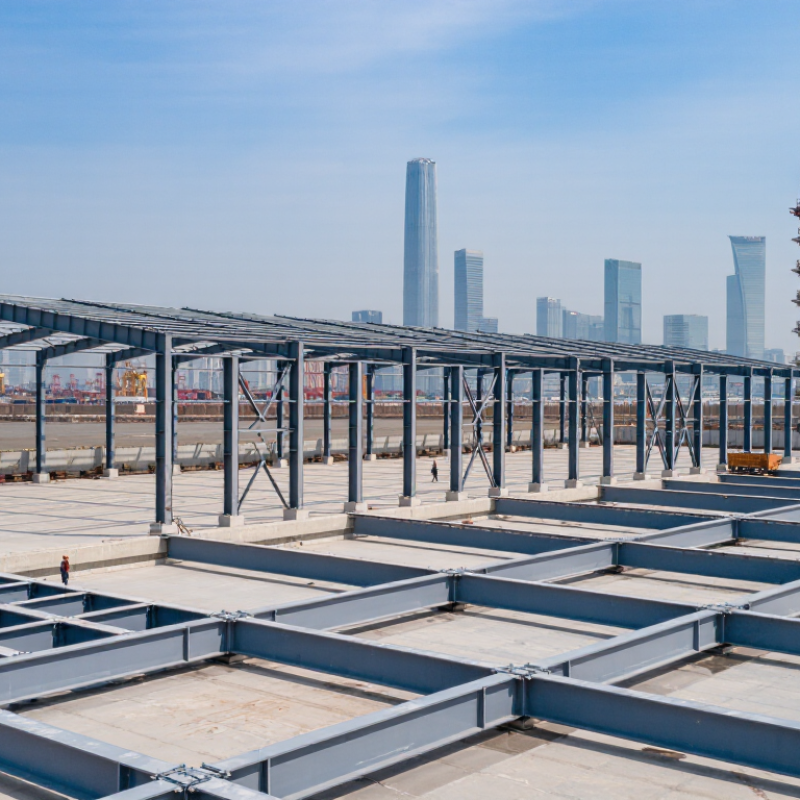
2026 Best Steel Framework Types for Global Buyers

Steel Framework Basics and Key Classification Criteria

2026 Best Steel Framework Types for Global Buyers

Steel framework basics begin with the load path. Columns carry vertical forces, beams distribute floor loads, and connections transfer forces between members. A frame is not simply a collection of steel sections. It is a coordinated structural system.

Common types include moment-resisting frames, braced frames, portal frames, and space frames. Moment frames depend on rigid connections and suit open floor plans. Braced frames use diagonal members for wind and seismic resistance. Portal frames often serve warehouses with wide, clear spans. Space frames distribute loads in three dimensions and can cover large roofs with limited internal columns. The right choice depends on span, building height, wind exposure, seismic demand, fire rating, corrosion risk, and erection access.

Classification also requires reviewing steel grade, member shape, connection method, and fabrication process. The World Steel Association reported approximately 1.84 billion tonnes of crude steel production in 2024, showing the scale of this global material system. Yet volume does not guarantee suitability. UNEP’s Global Status Report for Buildings and Construction identifies buildings as responsible for roughly one-third of global energy demand and energy-related emissions. Material efficiency matters. A lighter frame may reduce transport and foundation loads, but excessive optimization can increase vibration, deflection, or connection complexity. That shortcut can fail.

Global buyers should compare tested design assumptions, traceable material certificates, local structural codes, and realistic installation conditions. I would not classify a framework by appearance alone. A compact portal frame may outperform a heavier system in one warehouse, but not under severe seismic or fire requirements. The overlooked detail is often the decisive one.

Main Steel Framework Types for Different Building Applications

2026 Best Steel Framework Types for Global Buyers

Main Steel Framework Types for Different Building Applications

Portal frames suit warehouses, workshops, and agricultural buildings with wide, open interiors. Their rigid rafters reduce interior columns and simplify vehicle movement. A typical bay may use tapered sections, bolted joints, and insulated roof panels. This system works well when clear height and fast installation matter.

Moment frames provide open floor plans for offices, retail buildings, and public facilities. Their beam-column connections resist lateral movement without relying on diagonal braces. Braced frames are often more economical for factories and mid-rise structures. Cross-bracing or concentric braces transfer wind and seismic forces efficiently. For stadiums, aircraft hangars, and exhibition halls, steel trusses can span large distances with fewer supports. Cold-formed steel framing fits low-rise housing and interior partitions. It is light, precise, and easier to handle on smaller sites.

Application should guide the purchase, not appearance alone. I have seen buyers choose a light frame for a coastal building, then face avoidable corrosion concerns. Galvanizing, coating thickness, drainage details, and maintenance access deserve early review. Local wind, snow, fire, and seismic requirements also affect member sizes and connection design. Fabrication tolerances matter; a small mismatch can delay bolting on site. No framework is perfect. The cheapest option may create higher installation costs, and my initial preference is sometimes wrong after a site review. Reliable suppliers should provide calculations, material certificates, connection drawings, and traceable inspection records before shipment.

Structural Performance, Materials, and Design Considerations

Steel framework selection should begin with structural performance, not appearance. Portal frames suit clear-span warehouses and industrial halls. Trusses reduce weight across longer spans but require careful connection design. Space frames distribute loads efficiently, although fabrication and inspection become more demanding. Each system responds differently to wind, seismic action, vibration, and uneven settlement.

Material choice affects strength, durability, and cost. Common structural grades provide different yield strengths and welding requirements. Higher strength steel may reduce member sizes, but it can increase connection complexity. In coastal or humid environments, corrosion protection needs early planning. Galvanizing, protective coatings, drainage details, and regular inspections should work together. Fire exposure also requires verified protection and realistic evacuation design.

Design decisions must reflect local building codes, transport limits, fabrication capacity, and installation access. Engineers should review load combinations, bolt slip, weld quality, tolerances, and temporary bracing. Small errors matter. A two-millimeter mismatch can delay a major connection. Digital models improve coordination, but they do not replace site measurements or independent checks. The most efficient calculation is not always the most economical solution. Buyers should request material certificates, welding records, inspection plans, and clear maintenance guidance. Some projects still overvalue initial price. That mistake deserves reconsideration.

Global Standards, Manufacturing Quality, and Compliance Requirements

2026 Best Steel Framework Types for Global Buyers

Global buyers should assess steel frameworks through standards, traceability, and verified production controls. The World Steel Association reported approximately 1.89 billion tonnesof crude steel production in 2023. This scale makes supplier consistency more important than a low initial quotation. Carbon Steel Frames remain practical for warehouses, platforms, and industrial buildings. Weathering or galvanized systems may suit exposed locations, but climate data must guide the decision.

Standards must match the installation market. Structural design may reference Eurocode 3, AISC 360, or equivalent national requirements. Fabrication should include dimensional checks, welding qualification, coating inspection, and documented material heat numbers. ISO’s 2023 Survey recorded more than 1.26 million ISO 9001 certificates worldwide. Certification supports process control, but it does not replace project-specific inspection. That assumption fails.

Ask for mill test certificates, third-party inspection records, weld procedures, and nonconformance reports. EN 1090 execution classes can clarify fabrication expectations for European projects. Equivalent requirements may differ elsewhere. A framework can look precise on paper and still arrive with misaligned holes or excessive coating variation. Small errors become expensive during site assembly. Buyers should also verify load calculations, fire performance, corrosion protection, and recyclable content. The World Steel Association identifies steel as highly recyclable, yet recycling claims require clear material records. Perfect compliance is rarely achieved by documents alone. Factory evidence matters more.

Cost, Supply Chain, Sustainability, and Selection Guidelines

For global buyers in 2026, steel framework selection depends on cost, delivery risk, and project conditions.

Hot-rolled portal frames suit warehouses with wide spans and heavy loads. Cold-formed sections reduce weight and work well for smaller buildings. Modular frames can shorten site assembly, but transport planning becomes more demanding.

Compare more than the quoted steel price. Check material grades, fabrication tolerances, coating systems, packaging, and replacement-part availability. A cheaper frame may require thicker fire protection or expensive reinforcement later. Ask suppliers for mill certificates, welding procedures, inspection records, and realistic production schedules. Port congestion, customs delays, and currency changes can affect the final budget. Keep a contingency allowance.

Sustainability needs measurable evidence. Review recycled steel content, energy use, coating durability, and the distance from factory to site. Design connections for disassembly where practical. This can support future reuse instead of demolition. Yet carbon claims are not always complete. Product data may exclude transport or maintenance. Buyers should request comparable calculations. A practical mistake is choosing the lightest frame without checking local wind, snow, seismic, or corrosion conditions. It saves weight on paper. It may increase risk in service. Local engineers should verify loads and foundation requirements before purchase.

Article Source:

Copyright 2025 Fluidra S.A. | Created by BCM Marketing Agencia Privacy Policy Legal note | Cookie policy |

Technical cookies are strictly necessary for our website to work and you can navigate through it. These types of cookies are those that, for example, allow us to identify you, give you access to certain restricted parts of the page if necessary, or remember different options or services already selected by you, such as your privacy preferences. Therefore, they are activated by default, your authorization not being necessary in this regard. Through the configuration of your browser, you can block or alert the presence of this type of cookies, although such blocking will affect the proper functioning of the different functionalities of our website.


The analysis cookies allow us to study the navigation of the users of our website in general (for example, which sections of the page are the most visited, which services are used most and if they work correctly, etc.). From the statistical information on navigation on our website, we can improve both the operation of the page itself and the different services it offers. Therefore, these cookies do not have an advertising purpose, but only serve to make our website work better, adapting to our users in general. By activating them you will contribute to this continuous improvement. You can enable or disable these cookies by checking the corresponding box, being disabled by default.


Functionality cookies allow us to remember your preferences, to personalize certain characteristics and general options of our website, every time you access it (for example, the language in which the information is presented to you, the sections marked as favorites, your browser type, etc.) Therefore, this type of cookies does not have an advertising purpose, but by activating them you will improve the functionality of the website (for example, adapting to your type of browser) and the customization of it based on your preferences (for example, by presenting the information in the language that you have chosen in previous occasions), which will contribute to the ease, usability and comfort of our page during your navigation. You can enable or disable these cookies by checking the corresponding box, being disabled by default.


Advertising cookies allow us to manage the advertising spaces included in our website based on criteria such as the content shown or the frequency in which the ads are displayed. For example, if you have been shown the same ad several times on our website, and you have not shown a personal interest by clicking on it, it will not appear again. In summary, by activating this type of cookies, the advertising shown on our website will be more useful and diverse, and less repetitive. You can enable or disable these cookies by checking the corresponding box, being disabled by default.


Behavioral advertising cookies allow us to obtain information based on the observation of your browsing habits and behaviors on the web, in order to show you advertising content that best suits your personal tastes and interests. To understand it in a very simple way, we will give you a fictitious example: if your last searches on the web were related to suspense literature, we would show you advertising about suspense books. Therefore, activating this type of cookies, the advertising that we show you on our website will not be generic, but will be oriented to your searches, tastes and interests, therefore adjusting exclusively to you. You can enable or disable these cookies by checking the corresponding box, being disabled by default.
To understand it in a very simple way, we will give you a fictitious example: if your last searches on the web were related to suspense literature, we would show you advertising about suspense books. Therefore, activating this type of cookies, the advertising that we show you on our website will not be generic, but will be oriented to your searches, tastes and interests, therefore adjusting exclusively to you. You can enable or disable these cookies by checking the corresponding box, being disabled by default.

SAVE

We use our own and third-party cookies to ensure the proper functioning of the website and to analyse our services, improve your experience on our website and show you advertisements related to your interests according to profiling based on your browsing habits (e.g. websites visited). You can accept all cookies by clicking "ACCEPT" or set or reject them by clicking here. If you would like to know more about the use of cookies, please see our COOKIE POLICY.


ACCEPT ALL
Reject no essentials


