
Which Rubber Automatic Cutting Machine Is Best in 2026?
FLUID HANDLING EXPERTS

Blog, all our news

Which Rubber Automatic Cutting Machine Is Best in 2026?

In 2026, the best Rubber Automatic Cutting machine is not simply the fastest one. It is the machine that holds accuracy across real shifts, materials, and operators. The International Rubber Study Group’s World Rubber Industry Outlook 2024 projected global rubber demand to grow by 1.8% that year, reaching about 31.5 million tonnes. That figure describes the wider industry, not cutting-machine sales. Still, it signals why manufacturers should assess capacity, waste, and repeatability together.

A useful manufacturing perspective comes from industrial engineer Shigeo Shingo: “The most dangerous kind of waste is the waste we do not recognize.” Applied to Rubber Automatic Cutting, hidden waste can mean excess trim, slow changeovers, or cuts that drift across a long production run. Small details matter. Watch the blade path. Check how easily operators load a rubber sheet. Ask for documented test cuts using your own material, not just a polished factory demonstration. Specs can look impressive on paper.

This guide compares machine types by cutting method, material range, accuracy, throughput, maintenance, and support. It also separates verified specifications from claims that need a factory trial. No single model is best for every plant. A compact workshop may value flexible setups; a high-volume line may prioritize stable output and service response. The trade-off is real. Buyer reviews and vendor brochures can help, but neither replaces measured trials. The right choice should fit your products, daily volume, and tolerance for downtime.
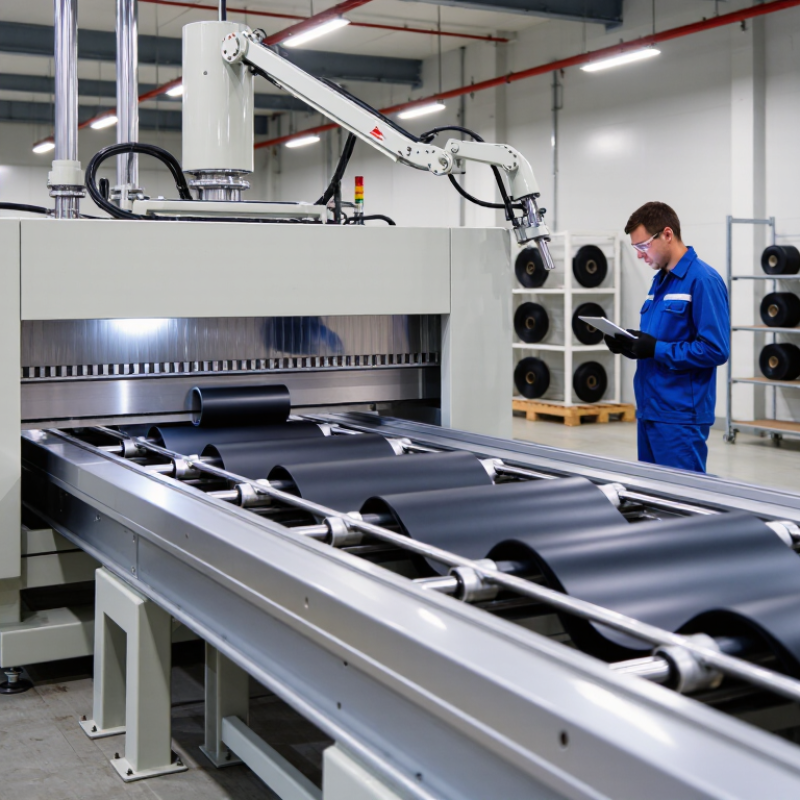
Which Rubber Automatic Cutting Machine Is Best in 2026?

What Is a Rubber Automatic Cutting Machine?

A rubber automatic cutting machine uses programmed controls to cut rubber sheets, gaskets, seals, or profiles into repeatable shapes. Depending on its design, it may use a moving knife, a press-mounted die, or another cutting tool. The operator sets dimensions and cutting paths, then feeds material across a work surface or conveyor. That matters. A 3-millimetre sheet and a thick, soft rubber block may need different blades, feed speeds, and holding pressure. Automatic cutting reduces repetitive hand work, but it does not remove the need to check settings or inspect edges.

Rubber can stretch, compress, or shift during cutting, especially near small holes and sharp corners. A clean-looking digital pattern does not guarantee a clean cut.

The International Rubber Study Group’s World Rubber Industry Outlook 2024 projected global rubber demand at about 31.9 million tonnes for 2024, underscoring the scale of material processing across industries. That figure describes rubber demand, not demand for cutting machines.

When comparing equipment, check supported material thickness, cutting accuracy, usable work area, and how quickly operators can change jobs. A machine may be fast on paper, yet awkward to load in a busy workshop. The right choice depends on the material and the parts being made.

How Does an Automatic Rubber Cutting Machine Work?

How Does an Automatic Rubber Cutting Machine Work?

An automatic rubber cutting machine turns a programmed size into repeated cuts. An operator loads a rubber sheet or strip and enters the required length, width, and batch quantity. Feed rollers move the material forward, while sensors check its position. A clamp holds it steady. Then a blade, guillotine, or rotary knife cuts through the rubber. A controller coordinates the feed and cutting cycle, but the exact setup varies by machine and material.

That difference matters. A soft, warm sheet may stretch; a thicker, harder compound may need slower feeding or a different blade setting. Operators should check sample pieces with a ruler or caliper before running a full batch. Not glamorous, but useful. Poorly aligned material can create angled edges and wasted stock.

The International Federation of Robotics reported 541,302 industrial robots installed worldwide in 2023 in its World Robotics 2024 report. That figure reflects wider factory automation, not rubber cutters specifically.

Automation can improve repeatability, yet it cannot correct every setup error. Keep guards in place, use the machine’s safety interlocks, and inspect cuts during production. Even a well-programmed cycle deserves a human check.

What Types of Rubber Cutting Machines Are Available?

Which Rubber Automatic Cutting Machine Is Best in 2026?

What Types of Rubber Cutting Machines Are Available?

Automatic rubber cutting machines generally use knife cutting, die cutting, or slitting. CNC knife machines move a blade along programmed paths, making them useful for gaskets, foam rubber, and varied sheet shapes. They avoid the cost of a custom die, though thick or very elastic material may shift unless firmly held.

Die-cutting machines press a shaped tool through rubber. They suit repeated parts and higher production volumes, where consistent outlines matter. The trade-off is real: each new shape may require a different die, and setup takes time. Slitting machines cut rolls into narrower strips. They work well for continuous materials, but are less suited to complex profiles. Waterjet systems can handle intricate shapes without a hot cutting edge, although water management and operating costs need attention.

Tips: Match the machine to the rubber’s thickness, hardness, and expected volume. Ask for a sample cut using your actual material. Check the edge for tearing, compression, or roughness. Small details matter. Also confirm guarding, emergency stops, and operator training. A machine can look precise in a demonstration, yet perform differently with stretchy stock. I would not choose by speed alone.

Which Features Matter Most When Choosing a Machine?

The best rubber automatic cutting machine depends on the sheet size, material hardness, and daily workload. Start with cutting capacity: check the maximum width, thickness, and feed length against your actual parts. A machine that handles thick rubber may cut thin gasket material less cleanly at high speed. Ask for a sample cut using your own material, not just a showroom demonstration.

Accuracy matters. Look for repeatable feed control, adjustable cutting pressure, and settings that operators can understand without guessing. Check how quickly blades or cutting tools can be inspected and replaced. Safety guards, accessible emergency stops, and clear maintenance instructions are practical essentials. More automation is not always better. A complex system can slow a small team when setup takes longer than the cutting run.

Tips: Bring several rubber samples, including the hardest and thinnest grades you use. Measure edge quality and part dimensions after repeated cuts. Ask how often routine cleaning is needed, and whether dust or small scraps collect near moving parts. One detail is easy to miss: noisy operation can make a long shift tiring. Compare output, setup time, and upkeep—not speed alone.

Which Rubber Automatic Cutting Machine Is Best for Each Application in 2026?

Which Rubber Automatic Cutting Machine Is Best in 2026?
Which Rubber Automatic Cutting Machine Is Best for Each Application in 2026?

For flat gasket sheets and thin rubber mats, a servo-fed oscillating-knife cutter suits frequent design changes. It avoids dedicated dies and can cut small holes accurately, provided the sheet stays flat. For thick, dense compounds, test a hydraulic press or traveling-head die cutter. A sharp steel-rule die can outperform a software-controlled knife on repetitive shapes. It is less flexible, though.

Extruded seals and narrow strips need synchronized feeding, length measurement, and clean cross-cutting. Tire-component plants should assess ply width, tack, reinforcement, and splice tolerance before choosing a cutter. The International Rubber Study Group’s October 2024 World Rubber Industry Outlook projected global rubber demand growth of 1.8% in 2024 and 2.3% in 2025. That outlook signals varied production pressure, not one universal machine specification. Match line speed to actual shifts, not a brochure’s peak rate.

Ask for a trial using your own compound, backing, and target thickness. Measure edge tearing, dimensional repeatability, scrap, and blade changes across a full run. Small details matter. A cutter that handles warm, tacky rubber may struggle with cold stock. Automation also needs safe loading, guarding, and clear jam-recovery steps. These checks are less glamorous, but they often reveal the better fit.

Which Rubber Automatic Cutting Machine Is Best for Each Application in 2026?

Application-fit ratings compare common cutting processes. Scores are qualitative guidance (1 = limited fit, 5 = strong fit), not measured machine-performance data.

How to read it: CNC knife cutting is versatile for sheet gaskets, foam, and prototypes; die presses suit repeat, high-volume flat parts; waterjets can handle thick sections without a cutting die; and band saws are a practical choice for thick rubber blocks. Confirm material, thickness, finish, and production volume before selecting equipment.

Copyright 2025 Fluidra S.A. | Created by BCM Marketing Agencia Privacy Policy Legal note | Cookie policy |

Technical cookies are strictly necessary for our website to work and you can navigate through it. These types of cookies are those that, for example, allow us to identify you, give you access to certain restricted parts of the page if necessary, or remember different options or services already selected by you, such as your privacy preferences. Therefore, they are activated by default, your authorization not being necessary in this regard. Through the configuration of your browser, you can block or alert the presence of this type of cookies, although such blocking will affect the proper functioning of the different functionalities of our website.


The analysis cookies allow us to study the navigation of the users of our website in general (for example, which sections of the page are the most visited, which services are used most and if they work correctly, etc.). From the statistical information on navigation on our website, we can improve both the operation of the page itself and the different services it offers. Therefore, these cookies do not have an advertising purpose, but only serve to make our website work better, adapting to our users in general. By activating them you will contribute to this continuous improvement. You can enable or disable these cookies by checking the corresponding box, being disabled by default.


Functionality cookies allow us to remember your preferences, to personalize certain characteristics and general options of our website, every time you access it (for example, the language in which the information is presented to you, the sections marked as favorites, your browser type, etc.) Therefore, this type of cookies does not have an advertising purpose, but by activating them you will improve the functionality of the website (for example, adapting to your type of browser) and the customization of it based on your preferences (for example, by presenting the information in the language that you have chosen in previous occasions), which will contribute to the ease, usability and comfort of our page during your navigation. You can enable or disable these cookies by checking the corresponding box, being disabled by default.


Advertising cookies allow us to manage the advertising spaces included in our website based on criteria such as the content shown or the frequency in which the ads are displayed. For example, if you have been shown the same ad several times on our website, and you have not shown a personal interest by clicking on it, it will not appear again. In summary, by activating this type of cookies, the advertising shown on our website will be more useful and diverse, and less repetitive. You can enable or disable these cookies by checking the corresponding box, being disabled by default.


Behavioral advertising cookies allow us to obtain information based on the observation of your browsing habits and behaviors on the web, in order to show you advertising content that best suits your personal tastes and interests. To understand it in a very simple way, we will give you a fictitious example: if your last searches on the web were related to suspense literature, we would show you advertising about suspense books. Therefore, activating this type of cookies, the advertising that we show you on our website will not be generic, but will be oriented to your searches, tastes and interests, therefore adjusting exclusively to you. You can enable or disable these cookies by checking the corresponding box, being disabled by default.
To understand it in a very simple way, we will give you a fictitious example: if your last searches on the web were related to suspense literature, we would show you advertising about suspense books. Therefore, activating this type of cookies, the advertising that we show you on our website will not be generic, but will be oriented to your searches, tastes and interests, therefore adjusting exclusively to you. You can enable or disable these cookies by checking the corresponding box, being disabled by default.

SAVE

We use our own and third-party cookies to ensure the proper functioning of the website and to analyse our services, improve your experience on our website and show you advertisements related to your interests according to profiling based on your browsing habits (e.g. websites visited). You can accept all cookies by clicking "ACCEPT" or set or reject them by clicking here. If you would like to know more about the use of cookies, please see our COOKIE POLICY.


ACCEPT ALL
Reject no essentials


