
10 Best Pallet Rack Systems for Warehouses in 2026
FLUID HANDLING EXPERTS

Blog, all our news

10 Best Pallet Rack Systems for Warehouses in 2026

Choosing the right Pallet Rack system can change how a warehouse moves, stores, and protects inventory. Aisle width, pallet dimensions, lift-truck clearance, floor conditions, and expected growth all shape the decision. A layout that looks efficient on paper may create bottlenecks when two forklifts meet at a busy pick face. Small details matter.

Dr. James A. Tompkins, a widely recognized warehouse and supply-chain expert, championed planning storage around the operation. A practical way to express that principle is: “Choose the rack for the work your warehouse actually does.” This is a paraphrase, not a direct quotation. It captures a useful test: match rack design to product flow, handling equipment, and real operating constraints.

This guide compares 10 Pallet Rack systems for warehouses in 2026, including selective, drive-in, push-back, pallet flow, and other configurations. Each option brings trade-offs. Higher density can reduce access to individual pallets; faster retrieval may require more aisle space. There is no perfect system. That part is easy to underestimate.

The comparison focuses on capacity, selectivity, space use, installation considerations, and suitable applications. Actual performance depends on the building and the inventory, so confirm loads, clearances, and rack specifications with qualified professionals. A neat layout is not enough. The best choice is the one workers can use safely, consistently, and efficiently on a normal shift.
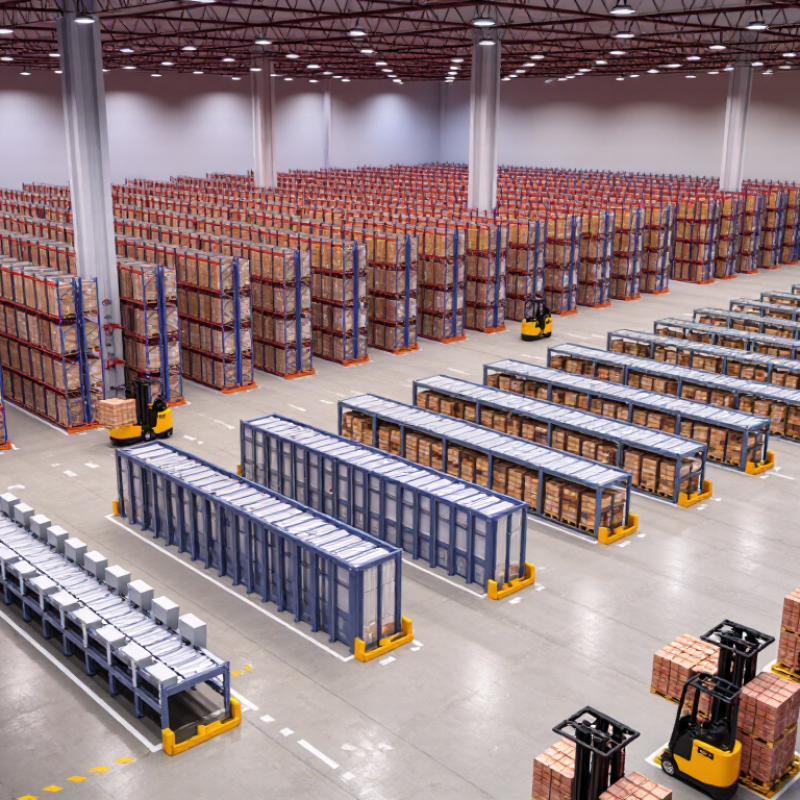
10 Best Pallet Rack Systems for Warehouses in 2026

Understanding Pallet Rack Systems and Their Role in Warehouses

Pallet rack systems turn vertical space into organized storage, keeping palletized goods accessible without covering valuable floor area. A warehouse may use selective racks for direct access to many pallet types, or denser configurations where fewer product lines move in larger batches. The right choice depends on inventory turnover, pallet dimensions, handling equipment, and available aisle space. Small details matter. A forklift needs enough clearance to approach a bay and place loads without striking frames or beams.

Each rack bay must suit its intended loads. Operators should follow the system’s rated capacities and position pallets evenly on the beams, rather than letting loads hang over the edges. Clear load labels help make limits visible during busy shifts. The floor, anchors, frame condition, and beam connections also deserve attention, especially after a layout change or impact. A tidy drawing can miss what happens at shift change. Walk the actual aisles, observe turning movements, and ask workers where congestion occurs. That feedback can expose a design flaw before it becomes routine. Rack plans are rarely perfect on the first pass; changing product sizes or forklift routes may require a careful reassessment.

Key Criteria for Choosing a Pallet Rack System in 2026

Choosing a pallet rack system starts with the load, not the catalog. Record each pallet’s weight, dimensions, and overhang, then check the rated capacity for both beams and the full rack bay. Keep a margin for uneven loads and changing inventory. Exact numbers matter.

Measure the building, too. Ceiling height, column locations, floor condition, sprinkler clearance, and forklift turning space can rule out an otherwise attractive layout. Narrow aisles may improve storage density, but only if the lift equipment can operate safely there. Selective racks offer direct access to each pallet; higher-density designs trade some access for space. A neat spreadsheet can still miss a poorly placed column or a tight turn.

Ask a qualified rack designer or structural engineer to review loads, anchoring, and site conditions, especially where seismic forces may matter. Confirm that the floor can support the proposed loads; rack uprights concentrate weight in small areas. Plan for inspections, damaged-component replacement, and future changes in pallet sizes. These costs are easy to overlook. So is downtime. I would not assume the first layout is the best one: model daily picking routes and test a sample aisle before committing. A small mock-up may reveal awkward handling that drawings cannot.

Ten Pallet Rack Systems and the Warehouse Needs They Serve

Selective pallet racking suits mixed SKUs and direct forklift access. Double-deep racks add density but require deeper-reach trucks. Drive-in racks fit large batches of similar pallets; drive-through layouts support loading from one end and unloading from the other. Push-back racks store several pallets per lane, while pallet-flow racks use gravity for faster rotation. Shuttle systems move pallets within deep lanes. Mobile racks reduce aisle space but add moving equipment. Cantilever racks hold long, awkward loads. Automated storage and retrieval systems suit high-volume, repeatable moves. Ten options, different trade-offs. Plans can mislead.

The right choice depends on pallet dimensions, rotation, lift-truck reach, floor condition, and fire protection. MHI’s 2024 Annual Industry Report found that 55% of surveyed supply-chain leaders planned to increase technology investment. That points to rising automation interest, not a reason to automate every aisle. The U.S. Census Bureau reported that e-commerce represented 16.1% of U.S. retail sales in the fourth quarter of 2024, a reminder that fast-moving orders can shape storage needs. A pallet-flow lane may help with quick turnover, while selective racks may better serve slower, varied stock. Measure clear height and aisle width on site; drawings can miss a beam, column, or sprinkler line. That trade-off matters. Even a well-designed layout can become awkward when inventory changes.

Comparing Storage Capacity, Accessibility, and Space Efficiency

Warehouse rack selection is a trade-off between pallet capacity, access, and working space. Selective pallet rack offers direct access to every pallet, but its aisles consume floor area. Drive-in rack packs pallets more tightly and suits fewer stock-keeping units with deeper inventory. It typically follows last-in, first-out handling. Double-deep layouts can reduce aisle space, though they require compatible equipment and limit access to rear pallets.

Trade-offs matter. MHI’s 2024 Annual Industry Report found that 55% of surveyed organizations planned to increase investment in supply chain innovation. That figure does not measure rack performance, but it signals growing attention to operational efficiency. Push-back and pallet-flow systems can improve density while keeping each lane accessible from one face. Their value depends on turnover, pallet consistency, and replenishment discipline.

Compare usable pallet positions, not just theoretical capacity. Measure clear height, beam levels, aisle width, pallet dimensions, and forklift turning radius. A tidy layout drawing can flatter density. In practice, congestion at a busy pick face may erase the space saved by narrower aisles. I would test peak-hour travel and replenishment before choosing a system. Have qualified professionals verify load ratings, anchoring, and operating clearances; small layout assumptions can affect safety and throughput.

10 Pallet Rack Systems for Warehouses in 2026

Relative comparison of storage density, pallet accessibility, and floor-space efficiency

How to read this chart: Scores use a relative 1–5 planning scale, not measured product specifications. High-density systems generally trade some direct pallet access for greater storage density; actual results depend on building layout, inventory, and equipment.

Safety, Installation, and Maintenance Considerations

The best pallet rack system is not simply the one with the greatest stated capacity. It must suit the loads, forklifts, and turning space in your warehouse. Before installation, record pallet dimensions and weights, then map aisle widths and sprinkler clearances. Small details matter. A beam that fits an empty bay may leave too little room for a loaded pallet.

Installation should follow the rack supplier’s layout and assembly instructions. Check that uprights are plumb, beams are fully engaged, and locking devices are in place. Anchors must match the floor and the specified design; guessing is not a harmless shortcut. Protectors can reduce damage at busy aisle ends, but they do not make collisions acceptable. Keep aisles clear during assembly, and restrict access until the structure is checked.

After the racks are in use, train operators to report bent members, loose anchors, missing locks, or impact damage promptly. Inspect high-traffic bays regularly, especially near corners and loading areas. Keep a written record of findings and repairs. It is easy to rely on a quick visual check, yet hidden damage or shifting loads may not be obvious. No checklist catches everything; recheck a bay after a significant impact, even when the damage looks minor.

Copyright 2025 Fluidra S.A. | Created by BCM Marketing Agencia Privacy Policy Legal note | Cookie policy |

Technical cookies are strictly necessary for our website to work and you can navigate through it. These types of cookies are those that, for example, allow us to identify you, give you access to certain restricted parts of the page if necessary, or remember different options or services already selected by you, such as your privacy preferences. Therefore, they are activated by default, your authorization not being necessary in this regard. Through the configuration of your browser, you can block or alert the presence of this type of cookies, although such blocking will affect the proper functioning of the different functionalities of our website.


The analysis cookies allow us to study the navigation of the users of our website in general (for example, which sections of the page are the most visited, which services are used most and if they work correctly, etc.). From the statistical information on navigation on our website, we can improve both the operation of the page itself and the different services it offers. Therefore, these cookies do not have an advertising purpose, but only serve to make our website work better, adapting to our users in general. By activating them you will contribute to this continuous improvement. You can enable or disable these cookies by checking the corresponding box, being disabled by default.


Functionality cookies allow us to remember your preferences, to personalize certain characteristics and general options of our website, every time you access it (for example, the language in which the information is presented to you, the sections marked as favorites, your browser type, etc.) Therefore, this type of cookies does not have an advertising purpose, but by activating them you will improve the functionality of the website (for example, adapting to your type of browser) and the customization of it based on your preferences (for example, by presenting the information in the language that you have chosen in previous occasions), which will contribute to the ease, usability and comfort of our page during your navigation. You can enable or disable these cookies by checking the corresponding box, being disabled by default.


Advertising cookies allow us to manage the advertising spaces included in our website based on criteria such as the content shown or the frequency in which the ads are displayed. For example, if you have been shown the same ad several times on our website, and you have not shown a personal interest by clicking on it, it will not appear again. In summary, by activating this type of cookies, the advertising shown on our website will be more useful and diverse, and less repetitive. You can enable or disable these cookies by checking the corresponding box, being disabled by default.


Behavioral advertising cookies allow us to obtain information based on the observation of your browsing habits and behaviors on the web, in order to show you advertising content that best suits your personal tastes and interests. To understand it in a very simple way, we will give you a fictitious example: if your last searches on the web were related to suspense literature, we would show you advertising about suspense books. Therefore, activating this type of cookies, the advertising that we show you on our website will not be generic, but will be oriented to your searches, tastes and interests, therefore adjusting exclusively to you. You can enable or disable these cookies by checking the corresponding box, being disabled by default.
To understand it in a very simple way, we will give you a fictitious example: if your last searches on the web were related to suspense literature, we would show you advertising about suspense books. Therefore, activating this type of cookies, the advertising that we show you on our website will not be generic, but will be oriented to your searches, tastes and interests, therefore adjusting exclusively to you. You can enable or disable these cookies by checking the corresponding box, being disabled by default.

SAVE

We use our own and third-party cookies to ensure the proper functioning of the website and to analyse our services, improve your experience on our website and show you advertisements related to your interests according to profiling based on your browsing habits (e.g. websites visited). You can accept all cookies by clicking "ACCEPT" or set or reject them by clicking here. If you would like to know more about the use of cookies, please see our COOKIE POLICY.


ACCEPT ALL
Reject no essentials


