
10 Best Nickel Alloy Tube Manufacturers for Global Buyers
FLUID HANDLING EXPERTS

Blog, all our news

10 Best Nickel Alloy Tube Manufacturers for Global Buyers

Choosing the right Nickel Alloy Tube manufacturer can shape project safety, delivery stability, and long-term operating costs. Global buyers often compare more than price. They examine alloy grades, dimensional control, surface quality, traceability, and production capacity. A tube may look acceptable during inspection but fail under heat, pressure, or corrosive media.

This guide introduces 10 leading Nickel Alloy Tube manufacturers serving international markets. It focuses on practical buying factors, including ASTM and ASME compliance, chemical composition testing, heat treatment, welding capability, and inspection documentation. Factory experience matters. So does consistent communication.

Reliable suppliers should provide material test certificates, batch identification, and clear production records. Buyers may also need third-party inspection, sample approval, or special packaging for long-distance shipping. Small details matter here. A damaged tube end can delay installation.

The selection process considers technical expertise, export experience, production equipment, quality systems, and customer support. Public certifications and available company information support the comparison, but no ranking is perfect. Manufacturing performance can vary by product size, alloy grade, and order volume. That limitation deserves attention.

Some manufacturers may be excellent for standard seamless tubes, while others handle welded, precision, or custom-engineered products better. Buyers should verify current capabilities directly before signing contracts. Ask specific questions. Request evidence.

With these points in mind, the following overview helps engineers, distributors, and procurement teams build a more dependable shortlist. It is not a substitute for technical review, but it offers a practical starting point for global sourcing decisions.
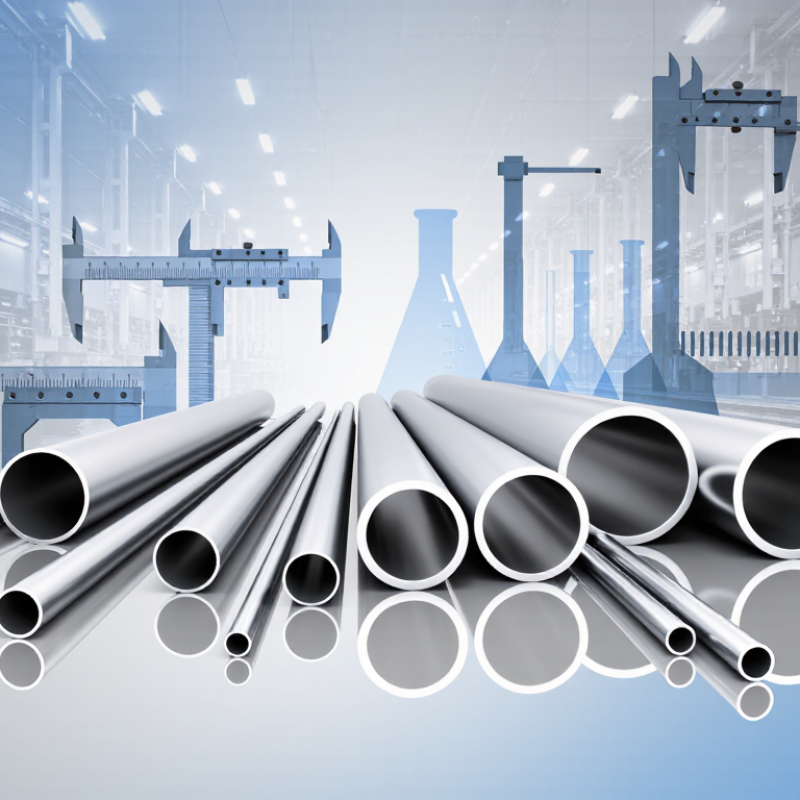
10 Best Nickel Alloy Tube Manufacturers for Global Buyers

Nickel Alloy Tubes Explained: UNS Grades, ASTM Standards, and Key Properties

Nickel alloy tubes are selected for heat, corrosion, and pressure—not for appearance alone. Their performance begins with the UNS designation, which identifies chemistry and helps buyers compare equivalent materials. Common families include nickel-chromium, nickel-molybdenum, and nickel-iron-chromium alloys. Each reacts differently to chlorides, acids, reducing conditions, and high temperatures.

ASTM standards define more than a material name. They can specify tube dimensions, manufacturing route, heat treatment, tensile strength, hardness, hydrostatic testing, and permissible defects. For example, ASTM B163 commonly covers seamless tubes for condensers and heat exchangers, while ASTM B407 addresses certain nickel-iron-chromium seamless tubes. The exact edition matters. A purchase order should state the UNS grade, ASTM specification, size, wall thickness, finish, and inspection requirements.

Properties must match the service environment. Nickel-rich alloys often resist chloride stress corrosion, but resistance depends on temperature, concentration, welding, and contamination. Molybdenum can improve localized corrosion resistance. Chromium supports oxidation resistance. Still, no grade is universally best. Small chemistry differences can change fabrication results. I have seen specifications that looked correct but omitted tube length tolerances and eddy-current testing. That omission created avoidable questions during inspection. Buyers should request mill test certificates, traceability records, and independent verification for critical applications. A practical review also checks bending radius, thermal cycling, and fitting compatibility. Something may be strong on paper, yet unsuitable in service.

How to Evaluate Manufacturers: Quality Systems, Capacity, Certifications, and Lead Times

Choosing among the 10 best nickel alloy tube manufacturers requires evidence beyond catalog claims. The USGS Mineral Commodity Summaries 2025 estimates global mined nickel production reached 3.7 million metric tons in 2024. Such scale increases supply options, but it also makes traceability more important. Request ISO 9001 certification, audit dates, and the certified production scope. Check whether it covers melting, hot working, cold drawing, heat treatment, and testing. A certificate alone is not proof of consistent tube quality. Ask for recent inspection records, including dimensional variation, tensile results, hardness, and non-destructive testing.

Capacity should be measured in qualified output, not factory floor size. Request monthly capacity by alloy, outside diameter, wall thickness, and heat-treatment condition. The International Energy Agency’s Global Critical Minerals Outlook 2024 highlights continuing pressure on nickel supply chains, so realistic lead-time data matters. Ask for the last twelve months of on-time delivery performance, average manufacturing days, and common delay causes. Also verify whether critical processes are performed internally or subcontracted. A supplier may promise eight weeks, then quietly add testing and documentation time. That detail is easy to miss. One practical concern remains: buyers often overvalue certifications and undervalue corrective-action history. Review nonconformance reports, closure times, material certificates, and sample traceability from billet to finished tube. A clean presentation can still hide weak process control.

How Global Buyers Can Evaluate Nickel Alloy Tube Manufacturers

This procurement weighting model prioritizes quality systems, production capacity, relevant certifications, lead-time reliability, and material traceability. Buyers should verify evidence such as ISO 9001 certification, applicable ASTM or ASME material standards, inspection records, production capacity, and documented delivery performance before selecting a supplier. The percentages represent evaluation priorities rather than company rankings or market-share data.

10 Leading Nickel Alloy Tube Manufacturers for Global Industrial Buyers

10 Best Nickel Alloy Tube Manufacturers for Global Buyers

The 10 leading nickel alloy tube manufacturers serve demanding sectors, including chemical processing, aerospace, power generation, and offshore engineering. Their value depends on more than production volume. Buyers should examine alloy control, welding practice, heat treatment, and inspection records. The USGS Mineral Commodity Summaries 2025 reports global nickel mine production at approximately 3.7 million metric tons in 2024. This scale supports supply, but it does not guarantee consistent tube quality. Nickel prices and energy costs still affect delivery schedules.

Experienced manufacturers typically provide tubes to ASTM, ASME, or equivalent international specifications. Strong suppliers can show heat numbers, chemical analysis, tensile results, and dimensional reports. For corrosive service, buyers should request evidence from pressure testing and intergranular corrosion testing. IEA’s Global Critical Minerals Outlook 2024 identifies nickel as an important material for clean-energy supply chains. Demand may rise, yet forecasts can change quickly. That is worth remembering.

Tips: Compare at least three quotations. Check mill certificates directly. Confirm outside diameter, wall thickness, tolerance, and surface finish. Ask about minimum order quantities and replacement procedures. A factory audit can reveal practical weaknesses, such as poor storage or unclear labeling. Do not select only by price. That shortcut often becomes expensive.

Manufacturer Comparison: Alloy Range, Tube Size, Standards, and Export Coverage

Choosing among the 10 best nickel alloy tube manufacturers requires more than comparing price. The USGS Mineral Commodity Summaries 2025 estimates 2024 global mined nickel production at about 3.7 million metric tons. This scale supports broad alloy availability, but it does not guarantee tube quality. Serious buyers should compare nickel grades such as 600, 625, 718, 800, 825, and 200, then verify chemistry through mill test certificates.

Size range is equally important. A capable manufacturer may offer tube outside diameters from 6 mm to over 500 mm, with thin walls for instrumentation and heavy walls for heat exchangers. Ask whether dimensions follow ASTM B163, B167, B407, or B423 requirements. Check tolerance tables carefully. “Custom size” can mean a long lead time.

Standards reveal manufacturing discipline. ISO 9001 systems, EN 10204 3.1 certificates, ultrasonic testing, eddy-current inspection, and hydrostatic testing provide useful evidence. The 2024 World Bank Commodity Markets Outlook also highlights continuing commodity-price uncertainty, so a stable quotation should state alloy surcharge rules and validity dates. Export coverage needs equal scrutiny: confirmed destinations, packaging methods, export documents, and experience with seaworthy crates matter more than a colorful website. I still question supplier rankings based only on product pages. Buyer references, recent inspection records, and one trial order often expose the difference.

Best Supplier Choices by Application: Heat Exchangers, Aerospace, Chemical, and Energy Sectors

Selecting nickel alloy tube suppliers depends on the application, not only on price. Heat exchanger buyers should verify thermal conductivity, wall uniformity, weld quality, and resistance to chloride corrosion. Tubes should match relevant ASTM requirements, such as ASTM B163 or ASTM B730, when applicable. The wrong grade can create expensive leakage at tube sheets.

Aerospace procurement demands tighter control. Suppliers should provide complete melt records, nondestructive testing, dimensional reports, and stable batch performance. Nickel-based alloys often serve hot sections, hydraulic systems, and fuel environments. Aerospace buyers should also check applicable aerospace material specifications. Paperwork matters. A missing trace can delay qualification.

Chemical and energy projects require different evidence. Chemical plants need resistance data for acids, alkalis, and reducing atmospheres. Energy projects often prioritize creep strength, fatigue life, and long service intervals. The U.S. Geological Survey reported global nickel mine production of approximately 3.6 million metric tons in 2023, showing the scale of this supply chain. The International Energy Agency’s Global Critical Minerals Outlook 2024 also identifies nickel supply concentration as a material procurement risk. Buyers should therefore assess refinery origin, recycling content, lead times, and contingency stock. Cost comparisons alone are incomplete. I would still question optimistic delivery promises, especially for custom sizes, because one overlooked inspection step can change the entire schedule.

Copyright 2025 Fluidra S.A. | Created by BCM Marketing Agencia Privacy Policy Legal note | Cookie policy |

Technical cookies are strictly necessary for our website to work and you can navigate through it. These types of cookies are those that, for example, allow us to identify you, give you access to certain restricted parts of the page if necessary, or remember different options or services already selected by you, such as your privacy preferences. Therefore, they are activated by default, your authorization not being necessary in this regard. Through the configuration of your browser, you can block or alert the presence of this type of cookies, although such blocking will affect the proper functioning of the different functionalities of our website.


The analysis cookies allow us to study the navigation of the users of our website in general (for example, which sections of the page are the most visited, which services are used most and if they work correctly, etc.). From the statistical information on navigation on our website, we can improve both the operation of the page itself and the different services it offers. Therefore, these cookies do not have an advertising purpose, but only serve to make our website work better, adapting to our users in general. By activating them you will contribute to this continuous improvement. You can enable or disable these cookies by checking the corresponding box, being disabled by default.


Functionality cookies allow us to remember your preferences, to personalize certain characteristics and general options of our website, every time you access it (for example, the language in which the information is presented to you, the sections marked as favorites, your browser type, etc.) Therefore, this type of cookies does not have an advertising purpose, but by activating them you will improve the functionality of the website (for example, adapting to your type of browser) and the customization of it based on your preferences (for example, by presenting the information in the language that you have chosen in previous occasions), which will contribute to the ease, usability and comfort of our page during your navigation. You can enable or disable these cookies by checking the corresponding box, being disabled by default.


Advertising cookies allow us to manage the advertising spaces included in our website based on criteria such as the content shown or the frequency in which the ads are displayed. For example, if you have been shown the same ad several times on our website, and you have not shown a personal interest by clicking on it, it will not appear again. In summary, by activating this type of cookies, the advertising shown on our website will be more useful and diverse, and less repetitive. You can enable or disable these cookies by checking the corresponding box, being disabled by default.


Behavioral advertising cookies allow us to obtain information based on the observation of your browsing habits and behaviors on the web, in order to show you advertising content that best suits your personal tastes and interests. To understand it in a very simple way, we will give you a fictitious example: if your last searches on the web were related to suspense literature, we would show you advertising about suspense books. Therefore, activating this type of cookies, the advertising that we show you on our website will not be generic, but will be oriented to your searches, tastes and interests, therefore adjusting exclusively to you. You can enable or disable these cookies by checking the corresponding box, being disabled by default.
To understand it in a very simple way, we will give you a fictitious example: if your last searches on the web were related to suspense literature, we would show you advertising about suspense books. Therefore, activating this type of cookies, the advertising that we show you on our website will not be generic, but will be oriented to your searches, tastes and interests, therefore adjusting exclusively to you. You can enable or disable these cookies by checking the corresponding box, being disabled by default.

SAVE

We use our own and third-party cookies to ensure the proper functioning of the website and to analyse our services, improve your experience on our website and show you advertisements related to your interests according to profiling based on your browsing habits (e.g. websites visited). You can accept all cookies by clicking "ACCEPT" or set or reject them by clicking here. If you would like to know more about the use of cookies, please see our COOKIE POLICY.


ACCEPT ALL
Reject no essentials


