
Best Manual Ceramic Coffee Grinder for Buyers?
FLUID HANDLING EXPERTS

Blog, all our news

Best Manual Ceramic Coffee Grinder for Buyers?

Choosing the Best Manual Ceramic Coffee Grinder means looking beyond attractive finishes and product claims. A grinder should fit your brewing habits, travel plans, and patience for hand-cranking. Coffee educator James Hoffmann has often stressed the grinder’s importance; a useful buying principle is: “Consistent grounds matter more than a polished-looking grinder.” This wording summarizes the principle rather than presenting it as a verified verbatim quotation.

A Manual Ceramic Coffee Grinder can offer a durable burr set and a compact, quiet routine, but ceramic alone does not guarantee an even grind. Check whether the adjustment steps suit your brew method, whether the handle turns smoothly, and whether the grounds chamber is easy to empty. Picture a sleepy morning: beans rattling into the hopper, a steady turn of the handle, and grounds ready for a pour-over. Small details matter.

This guide compares practical features, including grind range, capacity, portability, cleaning, and build quality. It also considers what product specifications cannot tell you, such as how comfortable the grinder feels during repeated use. No single model suits every buyer. A lightweight grinder may travel well but hold fewer beans, while a larger one may feel steadier at home. The trade-offs are real. Use the comparisons to find a grinder that suits your routine, and treat broad performance claims with care.
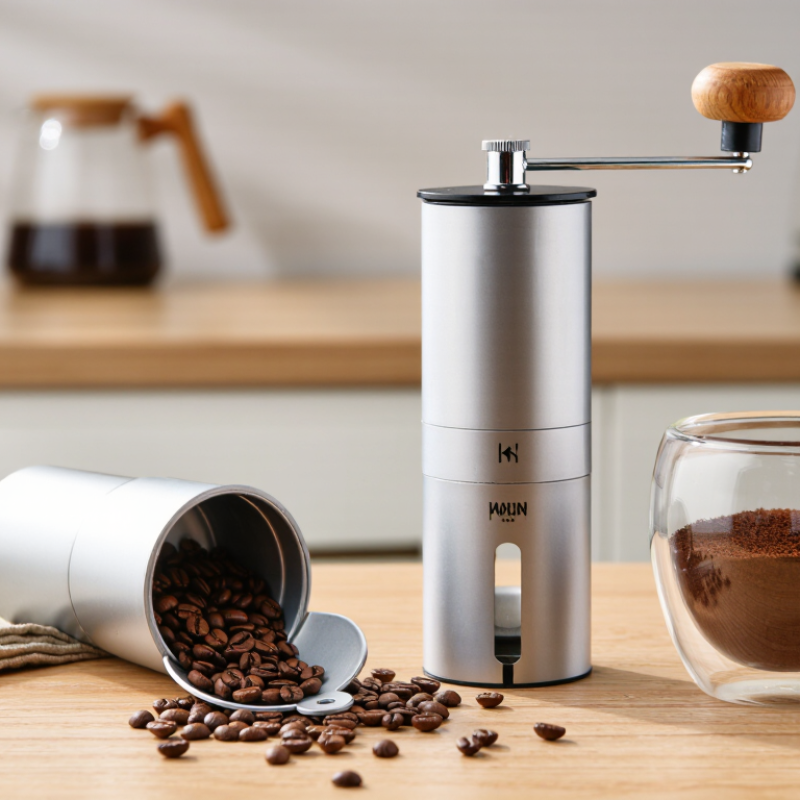
Best Manual Ceramic Coffee Grinder for Buyers?

What a Manual Ceramic Coffee Grinder Is and How It Works

A manual ceramic coffee grinder uses a hand-turned crank to break whole beans into smaller particles. Its ceramic burrs are two textured grinding surfaces, not ordinary blades. One burr stays fixed while the other turns, drawing beans between them and crushing them gradually. The gap between the burrs helps determine the grind size: a narrower gap generally produces finer grounds, while a wider gap produces coarser ones.

No motor is involved. Turning the handle moves the inner burr, and the grounds fall into a small collection chamber below. Many grinders let you adjust the burr spacing, though the steps and markings vary by design. For a pour-over, a medium grind may be a useful starting point; espresso usually calls for a much finer grind. Small adjustments can change how quickly water passes through the coffee, so taste matters more than a setting number.

Ceramic burrs resist rust and can stay sharp with careful use, but they are not unbreakable. A hard drop may chip them, and trapped coffee dust can make the handle feel rough. Brush the burr area clean and keep it dry. The rhythm takes practice. Some grinders also feel uneven at first, and that can make dialing in a recipe a little frustrating.

Key Parts and Materials in a Ceramic Burr Grinder

Best Manual Ceramic Coffee Grinder for Buyers?

Key Parts and Materials in a Ceramic Burr Grinder

A manual ceramic grinder’s burrs do the cutting, but the axle and frame help keep each turn steady. Ceramic is hard and resists corrosion, yet it can chip if the grinder is dropped or a foreign object enters the burrs. Check that the burrs sit evenly and that the adjustment ring clicks into place. A loose axle can mean uneven grounds, even with good ceramic.

The handle is often metal or reinforced plastic; the body may use stainless steel, aluminum, or wood. Metal handles feel firm, while wood adds grip but needs care around moisture. Small details matter: a stable base, smooth bearings, and a grounds cup that does not wobble.

The National Coffee Association’s 2024 National Coffee Data Trends report found that 67% of U.S. adults drank coffee in the past day.

For frequent use, inspect parts that wear or loosen, not just the burr material. Ceramic is not automatically better. Burr shape, alignment, and careful adjustment also affect grind consistency. I’d still check replacement-part availability before buying; that detail is easy to overlook.

How Grind Settings Affect Coffee Preparation

Grind settings control how quickly water draws flavor from coffee. A finer grind exposes more surface area, so extraction usually happens faster. If the grounds are too fine for a pour-over, water may drain slowly and the cup can taste harsh or dry. A coarser grind lets water pass more freely, but may leave coffee thin or sour when contact time is too short.

Match the setting to the brewing method, then adjust in small steps. For French press, start coarse; for pour-over, try a medium setting; espresso generally needs a much finer grind and a machine designed for pressure brewing. These are starting points, not rules. Bean age, roast, and even how quickly you turn a hand grinder can shift the result. Small changes matter.

Taste the difference. If a cup tastes bitter, try grinding slightly coarser; if it tastes sharp or watery, try a little finer. Change one variable at a time, and keep the coffee dose and water amount steady. A ceramic burr grinder can offer useful control, but its adjustment marks may not match another grinder’s exactly. I would not expect one setting to stay perfect as beans age. Note the setting and brew time, then revise after tasting—the process is practical, though not perfectly tidy.

Factors to Compare When Choosing a Manual Ceramic Grinder

Choosing a manual ceramic coffee grinder means comparing more than burr material. Check the adjustment steps, grind range, handle comfort, capacity, and how easily the parts come apart for cleaning. Ceramic burrs resist corrosion, but they can chip after a hard drop. A stable axle and snugly fitting body matter too; wobble can produce uneven grounds. Turn the handle slowly. Notice whether it catches or feels consistently smooth.

Grind consistency affects brewing, but it cannot guarantee a good cup by itself. The Specialty Coffee Association’s Brewing Control Chart places balanced brewed coffee around 18–22% extraction and 1.15–1.35% total dissolved solids. These figures describe brewed coffee, not grinder performance. Still, they offer a useful reason to compare results: try the same beans, dose, and brewing method with each setting. Look for fewer obvious boulders and fine particles. A quick visual check is imperfect, though, and taste should guide the final choice.

Tips: Bring a small batch of beans and test the handle with one hand. Check whether the grind setting is easy to repeat. Ask about replacement parts and cleaning instructions before buying. A compact grinder may suit travel, but its small capacity can mean extra batches. That gets annoying. Choose the model that feels manageable for your routine, not just the one with the finest adjustment dial.

Best Manual Ceramic Coffee Grinder for Buyers?

Factors to Compare When Choosing a Manual Ceramic Grinder

Use these factors as a comparison checklist. Scores show suggested buyer priority on a 1–5 scale; they are an editorial guide, not measured ratings of specific grinders. Consider grind consistency and adjustment range first, then compare capacity, cleaning, portability, and handle comfort for your routine.

How to Match a Grinder to Your Brewing Needs

A manual ceramic coffee grinder should match your brew method, not just look compact on a shelf. For French press, choose a model with steady coarse settings; uneven, powdery grounds can leave grit in the cup. For pour-over, finer adjustments help control flow when a paper filter drains too quickly. Espresso demands very small, repeatable changes, which some basic hand grinders cannot provide. That limitation matters.

The Specialty Coffee Association’s Golden Cup guidance targets 55 grams of coffee per litre of water, with an extraction yield of 18–22%. These figures do not prescribe one grind size, but they give buyers a useful testing baseline. Keep the dose and water amount steady, then adjust the grind when a brew tastes sharp or bitter. Change one variable at a time.

Think about your morning routine, too. A small ceramic burr grinder may suit one or two cups, while a long handle can make repeated grinding easier. Check how many grind settings it offers and whether adjustments stay consistent. Ceramic burrs are not automatically the best choice for every brewer; burr shape, alignment, and build quality also affect results. A little trial and error is normal. Cite the SCA brewing targets as a starting point, not a guarantee of a perfect cup.

Best Manual Ceramic Coffee Grinder for Buyers? - How to Match a Grinder to Your Brewing Needs

Brewing Need Typical Grind Range Useful Grinder Features Practical Capacity What to Check Before Buying
French press Coarse, with visibly distinct particles Stable burr alignment and enough adjustment range to produce a coarse setting without excessive fines About 30–60 g for a small-to-medium brew Look for repeatable settings and a grounds container that is easy to empty; coarse grinding can take more turns.
Pour-over Medium-fine to medium, adjusted for the brewer and drawdown time Fine adjustment steps and consistent particle size for controlled extraction About 15–30 g for one or two cups Check that the adjustment mechanism is easy to set and that the grinder can handle your usual dose in one batch.
Drip coffee maker Medium, with the final setting guided by brew time and taste Comfortable hand crank, clear setting changes, and a hopper or chamber suited to batch size About 30–60 g for several cups A small-capacity grinder may require multiple batches for a full carafe.
AeroPress-style brewing Medium-fine to coarse, depending on recipe and steep time A broad, repeatable adjustment range that makes recipe changes easy About 12–20 g for a typical single serving Prioritize portability and quick adjustment if you vary recipes or brew away from home.
Espresso Fine, often requiring very small setting changes Fine-grind capability, secure adjustment, and a burr assembly designed to maintain alignment under resistance About 16–20 g for a common double-shot dose Not every manual grinder can grind fine enough or adjust precisely enough for espresso; verify this before purchase.
Travel and occasional brewing Depends on the brewing method; a versatile range is useful Compact body, removable or foldable handle, secure grounds cup, and simple cleaning About 15–30 g for a single brew Balance portability against capacity and crank comfort; very compact designs can take more effort to hold and turn.

Buyer note: Ceramic burrs are valued for their hardness and resistance to corrosion, but burr material alone does not determine grind quality. Burr alignment, adjustment precision, build quality, and ease of use also matter. Capacity figures are practical dose examples, not a guarantee of a grinder’s maximum chamber size.

Copyright 2025 Fluidra S.A. | Created by BCM Marketing Agencia Privacy Policy Legal note | Cookie policy |

Technical cookies are strictly necessary for our website to work and you can navigate through it. These types of cookies are those that, for example, allow us to identify you, give you access to certain restricted parts of the page if necessary, or remember different options or services already selected by you, such as your privacy preferences. Therefore, they are activated by default, your authorization not being necessary in this regard. Through the configuration of your browser, you can block or alert the presence of this type of cookies, although such blocking will affect the proper functioning of the different functionalities of our website.


The analysis cookies allow us to study the navigation of the users of our website in general (for example, which sections of the page are the most visited, which services are used most and if they work correctly, etc.). From the statistical information on navigation on our website, we can improve both the operation of the page itself and the different services it offers. Therefore, these cookies do not have an advertising purpose, but only serve to make our website work better, adapting to our users in general. By activating them you will contribute to this continuous improvement. You can enable or disable these cookies by checking the corresponding box, being disabled by default.


Functionality cookies allow us to remember your preferences, to personalize certain characteristics and general options of our website, every time you access it (for example, the language in which the information is presented to you, the sections marked as favorites, your browser type, etc.) Therefore, this type of cookies does not have an advertising purpose, but by activating them you will improve the functionality of the website (for example, adapting to your type of browser) and the customization of it based on your preferences (for example, by presenting the information in the language that you have chosen in previous occasions), which will contribute to the ease, usability and comfort of our page during your navigation. You can enable or disable these cookies by checking the corresponding box, being disabled by default.


Advertising cookies allow us to manage the advertising spaces included in our website based on criteria such as the content shown or the frequency in which the ads are displayed. For example, if you have been shown the same ad several times on our website, and you have not shown a personal interest by clicking on it, it will not appear again. In summary, by activating this type of cookies, the advertising shown on our website will be more useful and diverse, and less repetitive. You can enable or disable these cookies by checking the corresponding box, being disabled by default.


Behavioral advertising cookies allow us to obtain information based on the observation of your browsing habits and behaviors on the web, in order to show you advertising content that best suits your personal tastes and interests. To understand it in a very simple way, we will give you a fictitious example: if your last searches on the web were related to suspense literature, we would show you advertising about suspense books. Therefore, activating this type of cookies, the advertising that we show you on our website will not be generic, but will be oriented to your searches, tastes and interests, therefore adjusting exclusively to you. You can enable or disable these cookies by checking the corresponding box, being disabled by default.
To understand it in a very simple way, we will give you a fictitious example: if your last searches on the web were related to suspense literature, we would show you advertising about suspense books. Therefore, activating this type of cookies, the advertising that we show you on our website will not be generic, but will be oriented to your searches, tastes and interests, therefore adjusting exclusively to you. You can enable or disable these cookies by checking the corresponding box, being disabled by default.

SAVE

We use our own and third-party cookies to ensure the proper functioning of the website and to analyse our services, improve your experience on our website and show you advertisements related to your interests according to profiling based on your browsing habits (e.g. websites visited). You can accept all cookies by clicking "ACCEPT" or set or reject them by clicking here. If you would like to know more about the use of cookies, please see our COOKIE POLICY.


ACCEPT ALL
Reject no essentials


