
10 Best LPG Gas Detectors for Global Buyers?
FLUID HANDLING EXPERTS

Blog, all our news

10 Best LPG Gas Detectors for Global Buyers?

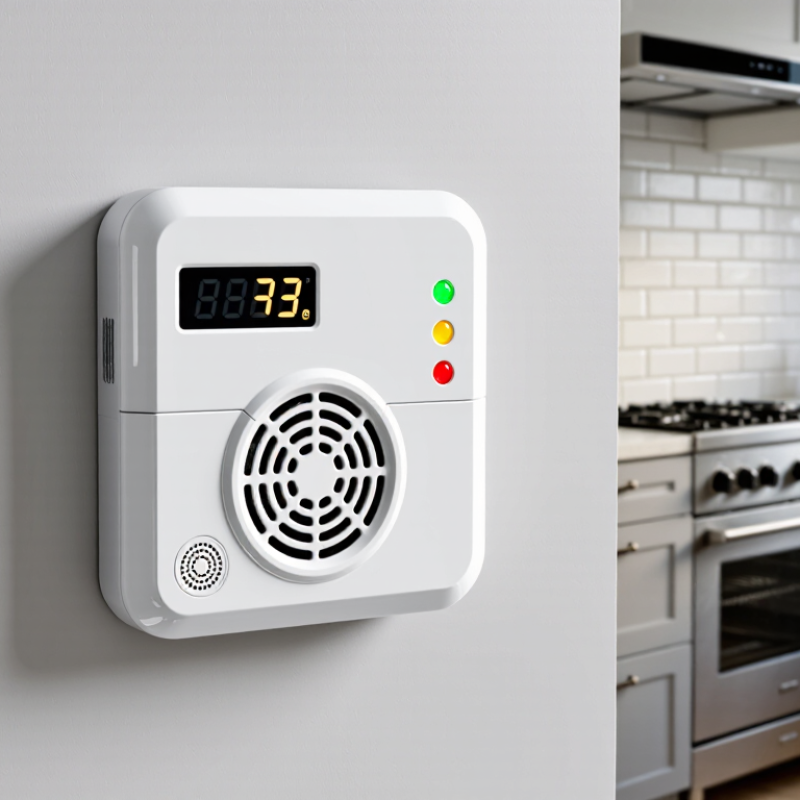
Choosing the right Lpg Gas Detector is a practical safety decision for homes, kitchens, warehouses, laboratories, and industrial facilities. LPG can collect near floors because propane and butane are heavier than air. A small leak may remain unnoticed until an ignition source appears. The right detector should respond early, resist false alarms, and remain dependable in changing temperatures.

Dr. Arthur J. Cote, a respected fire-protection engineer and former NFPA technical leader, stated, “Detection is only one layer of protection; maintenance and response complete the safety system.” This principle matters to global buyers. A detector may offer a loud alarm, digital display, relay output, or remote notification. However, these features cannot replace correct placement, regular testing, and a clear emergency procedure. Check sensor type, detection range, response time, power supply, enclosure rating, and calibration requirements. Installation details matter.

Small details matter.

This guide reviews ten Lpg Gas Detector options for different purchasing conditions. Some models suit compact apartments, while others support commercial kitchens or larger facilities. Certification claims should be verified through official documents, not attractive product pages alone. Regional voltage, plug standards, language settings, and after-sales support can also affect ownership.

No detector is perfect. False alarms may occur near solvents, steam, dust, or poor ventilation. Batteries can weaken quietly. Maintenance is easy to postpone. That is an uncomfortable weakness, but it deserves attention. A reliable purchase combines suitable technology, clear instructions, responsible installation, and ongoing testing. For international buyers, the best choice is not always the most expensive model. It is the model that fits the site and continues working when conditions become difficult.
10 Best LPG Gas Detectors for Global Buyers?

LPG’s 1.8–9.5% LEL Range and Why Detection Matters

The often-quoted 1.8–9.5% range needs careful interpretation. It describes LPG’s explosive limits, not one fixed LEL value. The NIOSH Pocket Guide lists approximately 1.8% LEL for butane and 2.1% for propane. Their upper limits reach about 8.4% and 9.5%, respectively. Outside this range, ignition may not occur, but ventilation can quickly change the mixture.

This narrow zone makes detector selection important. LPG vapor is heavier than air, so it can collect near floors, drains, pits, and enclosed storage areas. A ceiling-mounted sensor may miss a low-level leak. In practical inspections, sensor height and airflow deserve the same attention as alarm accuracy. NFPA 58 emphasizes safe LPG storage and handling, while IEC 60079-29-1 addresses performance requirements for flammable-gas detectors. These references support using equipment designed for combustible gases, with clearly defined alarm thresholds and regular functional testing.

Small errors matter. A detector can be technically certified yet poorly positioned. Dust, moisture, temperature changes, and sensor aging may also affect response time. The U.S. Chemical Safety Board has repeatedly linked weak hazard recognition and inadequate controls with serious process incidents. For global buyers, checking calibration intervals, ingress protection, operating temperature, response time, and documentation is essential. Do not rely on a single number. LPG composition varies, and that assumption needs checking.

How Catalytic, Infrared, and Semiconductor Sensors Compare in %LEL

10 Best LPG Gas Detectors for Global Buyers?

How Catalytic, Infrared, and Semiconductor Sensors Compare in %LEL

LPG detectors display concentration as a percentage of the lower explosive limit, or %LEL. A reading of 10% LEL means the gas level has reached one-tenth of its ignition threshold. Buyers should compare sensor behavior, not only screen resolution or alarm volume.

Catalytic sensors oxidize gas on a heated element and usually provide practical, affordable LPG monitoring. They need oxygen and may lose accuracy after exposure to silicone vapors, solvents, or heavy gas concentrations. Regular bump tests and calibration are essential. Small errors matter.

Infrared sensors measure gas absorption through light, without consuming the target gas. They can perform well in oxygen-deficient spaces and often maintain stable readings over longer periods. However, their response depends on the gas profile and optical path. They may cost more.

Semiconductor sensors react to changes in electrical conductivity. They are compact and sensitive, but humidity, temperature, and household vapors can influence readings. Selectivity is weaker. A high reading may require investigation rather than immediate confidence.

For a global buyer comparing ten detectors, check the stated gas type, calibration interval, alarm settings, ingress protection, and performance certificates. Ask whether the device reports methane-equivalent %LEL or LPG-specific values. That detail is easy to miss. Field conditions can defeat laboratory precision, so installation height and ventilation deserve equal attention.

Selection Benchmarks: ≤10 s Response, ±5% Accuracy, and IP Ratings

For global LPG buyers, response time, accuracy, and enclosure protection deserve practical testing. The NIOSH Pocket Guide lists propane’s IDLH concentration at 2,100 ppm. OSHA’s Chemical Data database gives a lower explosive limit of 2.1% by volume. A detector should respond within 10 seconds and alarm well below the lower explosive limit.

Accuracy of ±5% sounds precise, but buyers must ask: ±5% of reading or full scale? Those specifications are not equivalent. A calibrated detector should be tested with certified LPG or propane gas at several concentrations. IEC 60079-29-1 provides guidance for flammable-gas detection performance. Field checks still matter. Dust, temperature changes, sensor aging, and poor placement can affect results.

IP ratings show resistance to solids and water, not gas-sensing quality. IEC 60529 defines IP65 as dust-tight with protection against water jets. IP66 adds stronger water-jet resistance. Outdoor installations may need IP66, while sheltered indoor cabinets may require less. Yet an expensive enclosure cannot fix a slow sensor. That is an easy mistake. Buyers should also examine calibration intervals, alarm logging, operating temperature, and sensor replacement costs. LPG can collect near floors, so installation height needs site-specific review rather than a copied checklist.

Global Standards: IEC 60079, EN 50194, UL 1484, and ATEX

10 Best LPG Gas Detectors for Global Buyers?

Global buyers should treat certification as a safety filter, not a marketing phrase. IEC 60079 evaluates equipment for explosive atmospheres, including hazardous zones, gas groups, and temperature classes. A detector designed for LPG should match the installation area and ignition-risk assessment. EN 50194 focuses on domestic combustible-gas detectors, including alarm performance and installation-related testing. This matters near kitchens, cylinders, and enclosed utility rooms.

Regional approval also changes purchasing decisions. UL 1484 covers residential gas detectors for the North American market, while ATEX requirements apply to equipment used in potentially explosive atmospheres across the European Economic Area. ATEX marking alone does not prove suitability for every LPG location. Check the equipment category, protection method, notified-body documentation, and installation instructions. Small details matter.

The International Energy Agency reported that around 2.3 billion people still lacked access to clean cooking in 2022. LPG expansion makes dependable leak detection increasingly relevant, especially where ventilation is limited. The detector should identify propane or butane, provide an audible alarm, and support routine testing.

I would also verify sensor life, calibration intervals, ingress protection, and power-failure behavior. A certificate can be genuine yet insufficient. That is the uncomfortable part. Some product listings still blur domestic approval with hazardous-area certification, so buyers should request current test reports and installation evidence before comparing prices.

Comparative Guide to 10 LPG Detectors by Coverage, Alarms, and Cost

A practical comparison of ten LPG detectors should begin with coverage, not price. Residential units typically protect one room, while connected systems can monitor kitchens, utility rooms, and cylinders. Placement matters. LPG is heavier than air, so installers usually position sensors low, near possible leak points, but away from vents and heat sources. The EN 50194-1 standard evaluates domestic combustible-gas detectors, including alarm response and performance requirements. Look for a clear visual alert, a loud alarm above normal household noise, and a test button that works without tools. NFPA’s Home Structure Fires report found cooking equipment caused 53% of reported U.S. home structure fires from 2017 to 2021. That figure supports earlier detection around cooking areas.

The ten options differ sharply in sensing technology, alarm design, connectivity, and cost. Basic plug-in detectors often cost about 20–50 US dollars and suit small rooms. Battery models improve placement flexibility, but battery replacement is easy to forget. Connected detectors may cost 60–150 dollars, adding phone alerts and event records. Multi-sensor systems can exceed 200 dollars, especially with several monitored zones. False alarms happen. Steam, aerosol sprays, and poor positioning can reduce trust in any device. IEC 60079-29-1 provides useful performance guidance for flammable-gas detection, although household buyers should verify local certification. A detector’s advertised coverage can also be optimistic; walls, airflow, and ceiling height change real performance. Check alarm volume, sensor replacement intervals, warranty terms, and regional power compatibility before comparing the final cost.

10 Best LPG Gas Detector Reference Profiles for Global Buyers

Comparison by indicative coverage, alarm loudness, and typical retail cost. Coverage is not globally standardized, so always confirm the installation area, LPG type, local certification, and ventilation requirements before purchase.

The 85 dB alarm benchmark reflects the sound level commonly specified for domestic combustible-gas detectors. Cost figures are typical market-reference estimates in USD, not brand-specific prices.

Copyright 2025 Fluidra S.A. | Created by BCM Marketing Agencia Privacy Policy Legal note | Cookie policy |

Technical cookies are strictly necessary for our website to work and you can navigate through it. These types of cookies are those that, for example, allow us to identify you, give you access to certain restricted parts of the page if necessary, or remember different options or services already selected by you, such as your privacy preferences. Therefore, they are activated by default, your authorization not being necessary in this regard. Through the configuration of your browser, you can block or alert the presence of this type of cookies, although such blocking will affect the proper functioning of the different functionalities of our website.


The analysis cookies allow us to study the navigation of the users of our website in general (for example, which sections of the page are the most visited, which services are used most and if they work correctly, etc.). From the statistical information on navigation on our website, we can improve both the operation of the page itself and the different services it offers. Therefore, these cookies do not have an advertising purpose, but only serve to make our website work better, adapting to our users in general. By activating them you will contribute to this continuous improvement. You can enable or disable these cookies by checking the corresponding box, being disabled by default.


Functionality cookies allow us to remember your preferences, to personalize certain characteristics and general options of our website, every time you access it (for example, the language in which the information is presented to you, the sections marked as favorites, your browser type, etc.) Therefore, this type of cookies does not have an advertising purpose, but by activating them you will improve the functionality of the website (for example, adapting to your type of browser) and the customization of it based on your preferences (for example, by presenting the information in the language that you have chosen in previous occasions), which will contribute to the ease, usability and comfort of our page during your navigation. You can enable or disable these cookies by checking the corresponding box, being disabled by default.


Advertising cookies allow us to manage the advertising spaces included in our website based on criteria such as the content shown or the frequency in which the ads are displayed. For example, if you have been shown the same ad several times on our website, and you have not shown a personal interest by clicking on it, it will not appear again. In summary, by activating this type of cookies, the advertising shown on our website will be more useful and diverse, and less repetitive. You can enable or disable these cookies by checking the corresponding box, being disabled by default.


Behavioral advertising cookies allow us to obtain information based on the observation of your browsing habits and behaviors on the web, in order to show you advertising content that best suits your personal tastes and interests. To understand it in a very simple way, we will give you a fictitious example: if your last searches on the web were related to suspense literature, we would show you advertising about suspense books. Therefore, activating this type of cookies, the advertising that we show you on our website will not be generic, but will be oriented to your searches, tastes and interests, therefore adjusting exclusively to you. You can enable or disable these cookies by checking the corresponding box, being disabled by default.
To understand it in a very simple way, we will give you a fictitious example: if your last searches on the web were related to suspense literature, we would show you advertising about suspense books. Therefore, activating this type of cookies, the advertising that we show you on our website will not be generic, but will be oriented to your searches, tastes and interests, therefore adjusting exclusively to you. You can enable or disable these cookies by checking the corresponding box, being disabled by default.

SAVE

We use our own and third-party cookies to ensure the proper functioning of the website and to analyse our services, improve your experience on our website and show you advertisements related to your interests according to profiling based on your browsing habits (e.g. websites visited). You can accept all cookies by clicking "ACCEPT" or set or reject them by clicking here. If you would like to know more about the use of cookies, please see our COOKIE POLICY.


ACCEPT ALL
Reject no essentials


